Pattern recognition Normal Geometry Worksheets for Ages 3-4
3 filtered results
-
From - To
Unlock your child’s potential with our engaging Pattern Recognition Normal Geometry Worksheets designed for ages 3-4. These printable resources help little ones grasp essential math concepts through fun and interactive activities. Each worksheet focuses on identifying, creating, and completing patterns, fostering critical thinking and foundational geometry skills. Perfect for early learners, these worksheets encourage hands-on exploration while reinforcing visual recognition and cognitive development. Your child will build confidence and enthusiasm for learning as they discover the joy of patterns in shapes and colors. Download our worksheets today and take a step towards a bright mathematical future for your little learner!
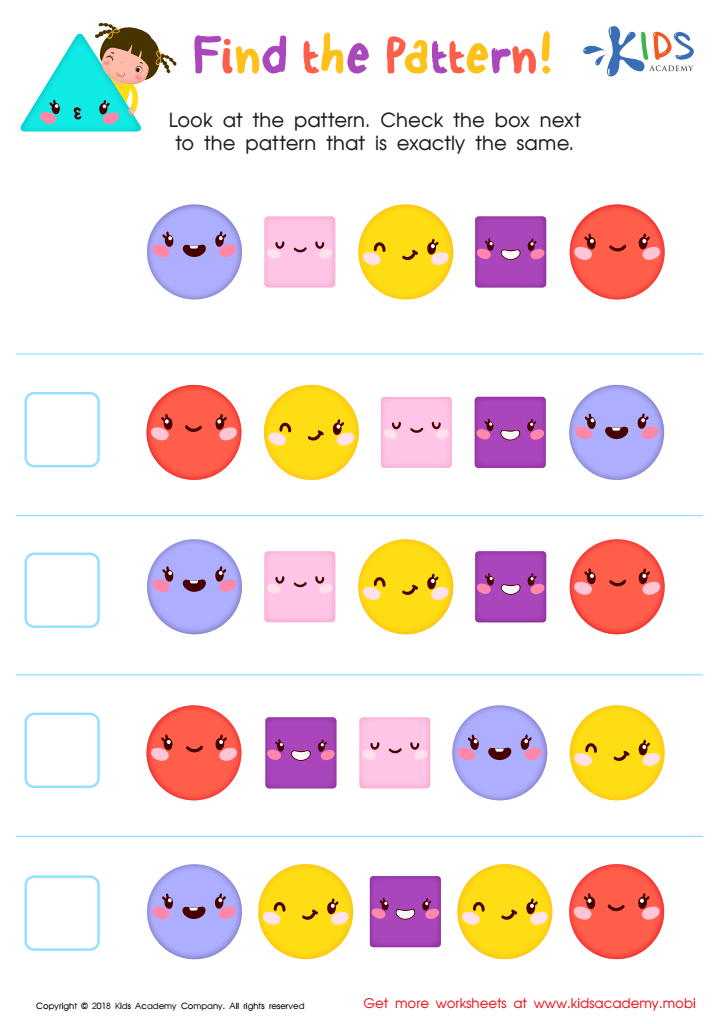
Find the Pattern Worksheet
 Assign to My Students











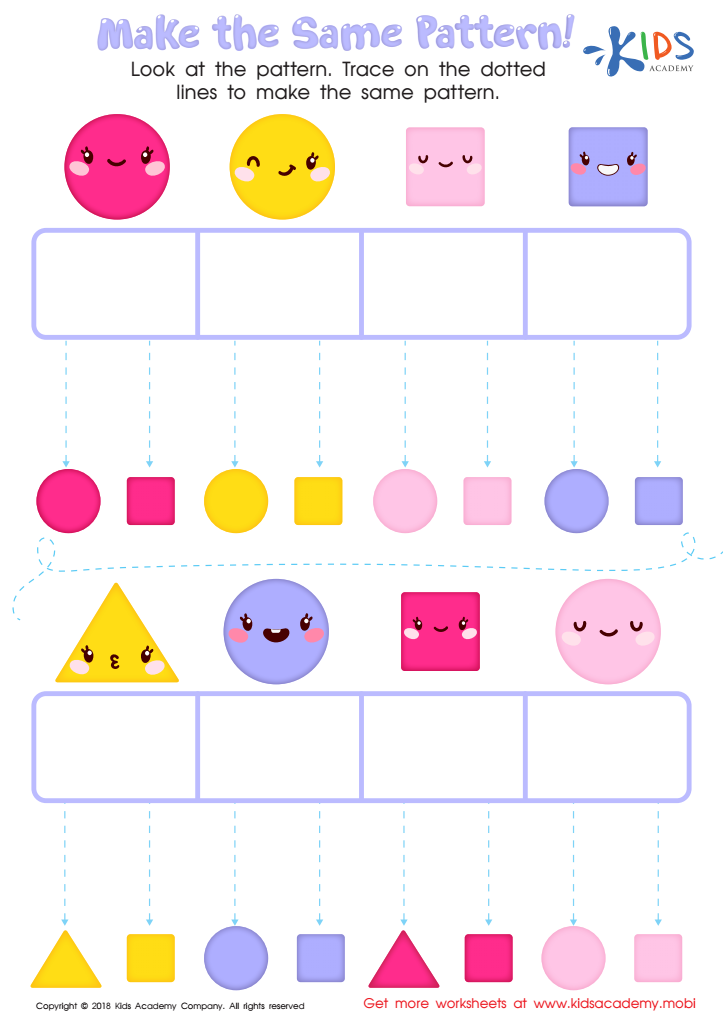
Make the Same Pattern Worksheet
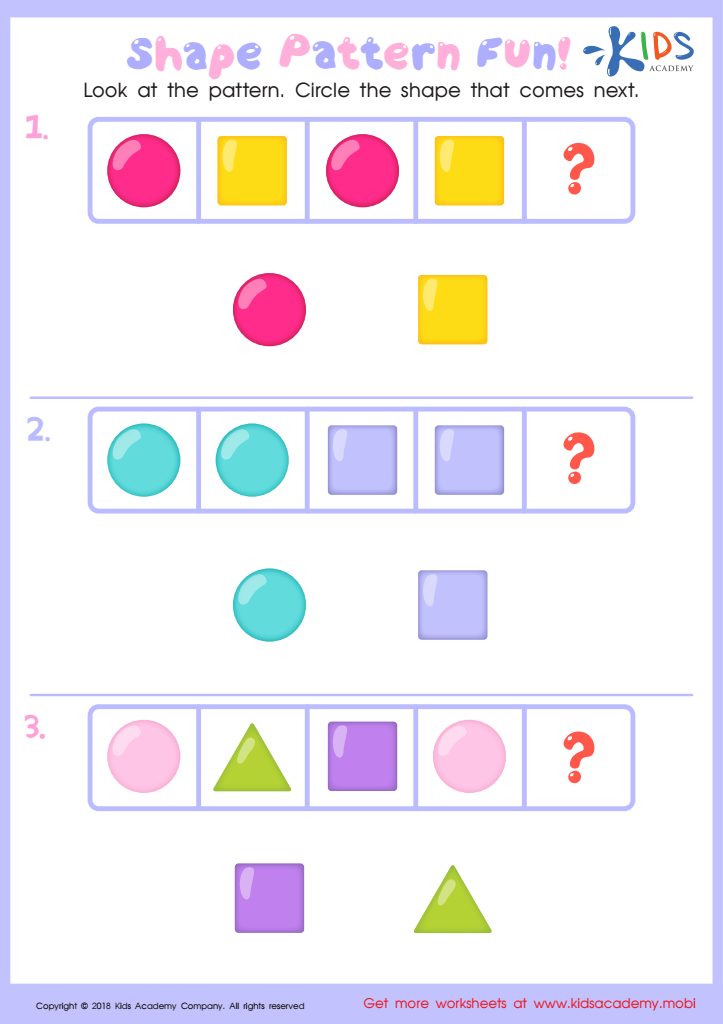
Shape Pattern Fun Worksheet








Pattern recognition and basic geometry play crucial roles in the cognitive development of children aged 3-4. During this formative age, kids are naturally curious and keen to explore their environment. Engaging with patterns helps enhance their observational skills, encouraging them to recognize similarities, differences, and repetitions in shapes and sequences. This foundational skill supports problem-solving abilities and promotes logical thinking.
Understanding normal geometry—such as recognizing basic shapes like circles, squares, and triangles—further contributes to a child's spatial awareness and visual identification skills. These early lessons establish the groundwork for more complex mathematical concepts in later years, making it essential for parents and teachers to prioritize this learning.
Moreover, incorporating activities that emphasize pattern recognition and geometry supports language development. As children describe colors, shapes, and sequences, they build vocabulary and communication skills. Additionally, these activities often promote social interaction, as kids work collaboratively to explore and create patterns, fostering teamwork and social skills.
Ultimately, caring about pattern recognition and geometry not only delivers immediate educational benefits but also cultivates critical thinking and lifelong learning skills that extend far beyond early childhood. By investing in these areas, we prepare children for future academic success and everyday problem-solving.








