Hand-eye Coordination Normal Math Worksheets for Ages 3-4
6 filtered results
-
From - To
Enhance your child's learning experience with our engaging Hand-eye Coordination Normal Math Worksheets designed specifically for ages 3-4. These worksheets provide an enjoyable way for young learners to develop essential motor skills while exploring basic math concepts. Through fun activities—such as connecting dots, tracing shapes, and counting objects—children will improve their hand-eye coordination and fine motor skills, laying a strong foundation for their academic journey. Our user-friendly and colorful designs captivate young minds, making learning both effective and entertaining. Get started today and watch your little one thrive in their math skills while having a blast!
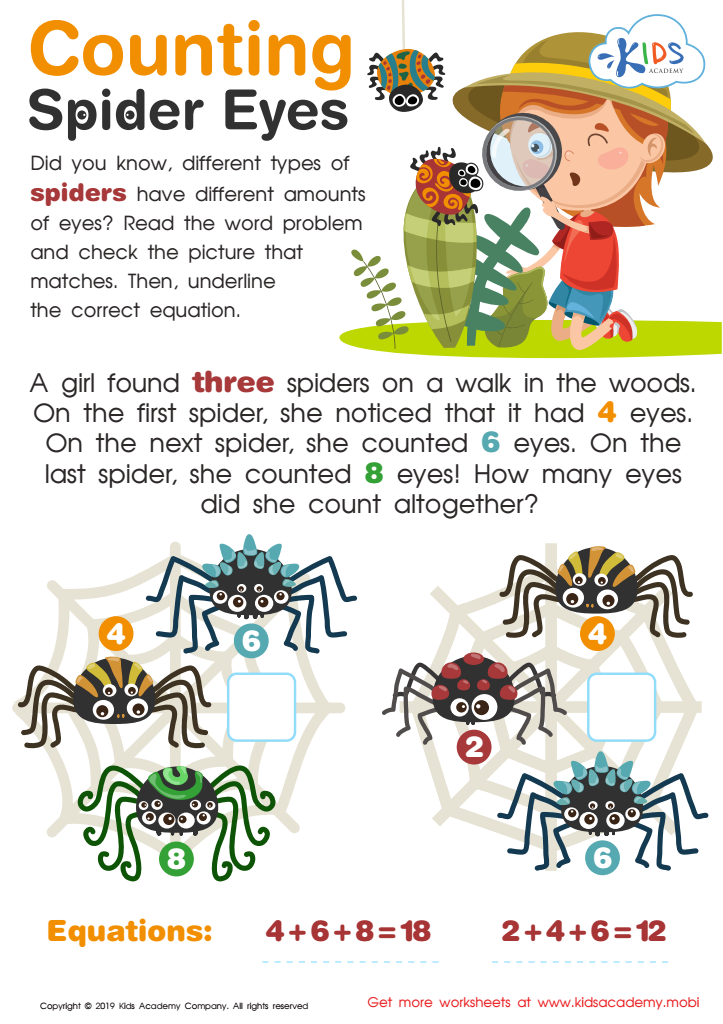
Counting Spider Eyes Worksheet
 Assign to My Students
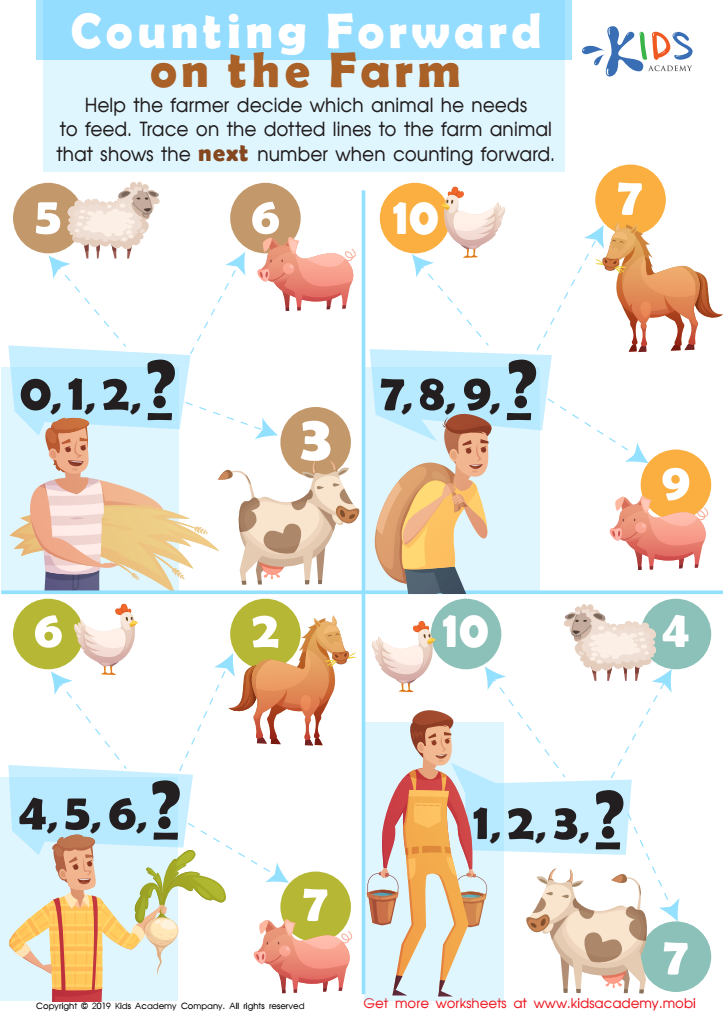
Counting Forward On the Farm Worksheet
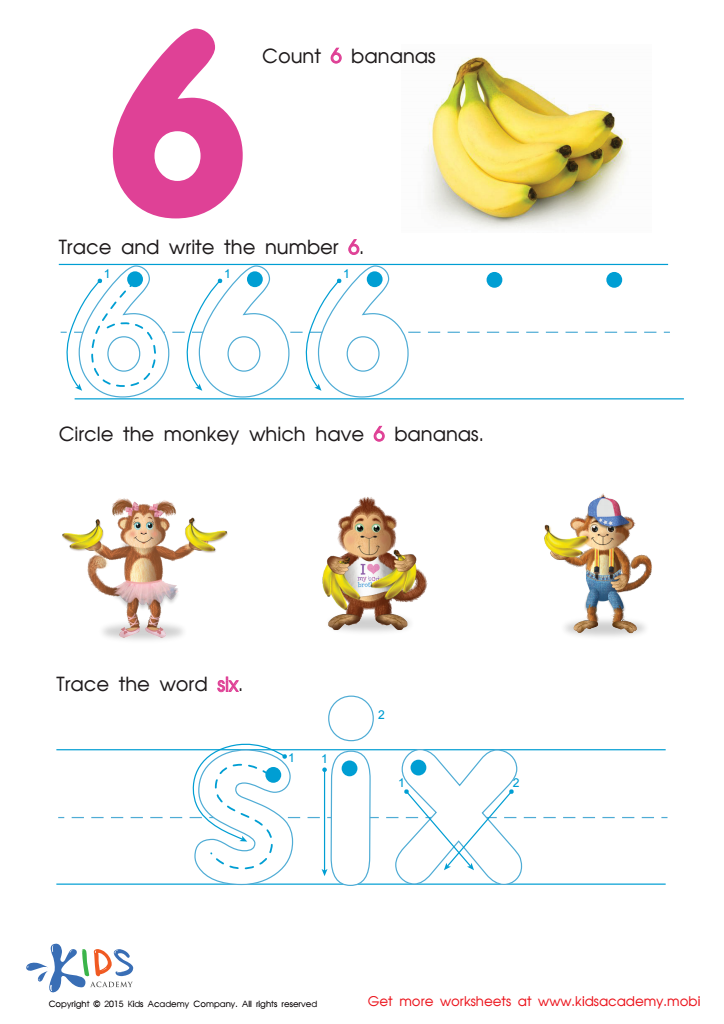
Tracing And Writing Number 6 Worksheet
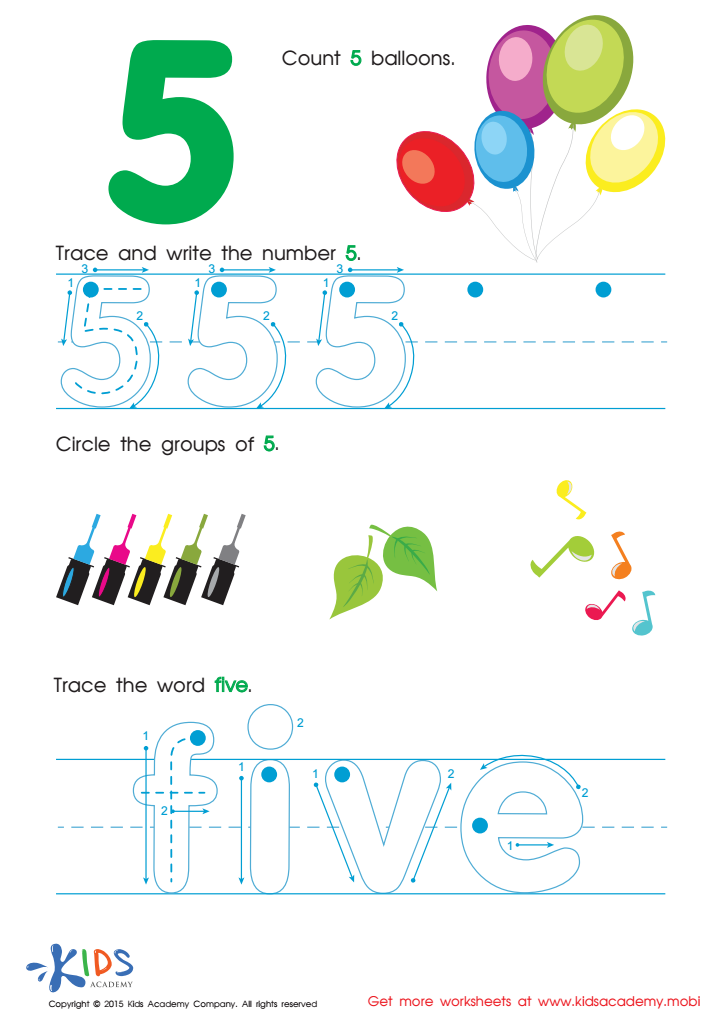
Practice Writing Number 5 Worksheet
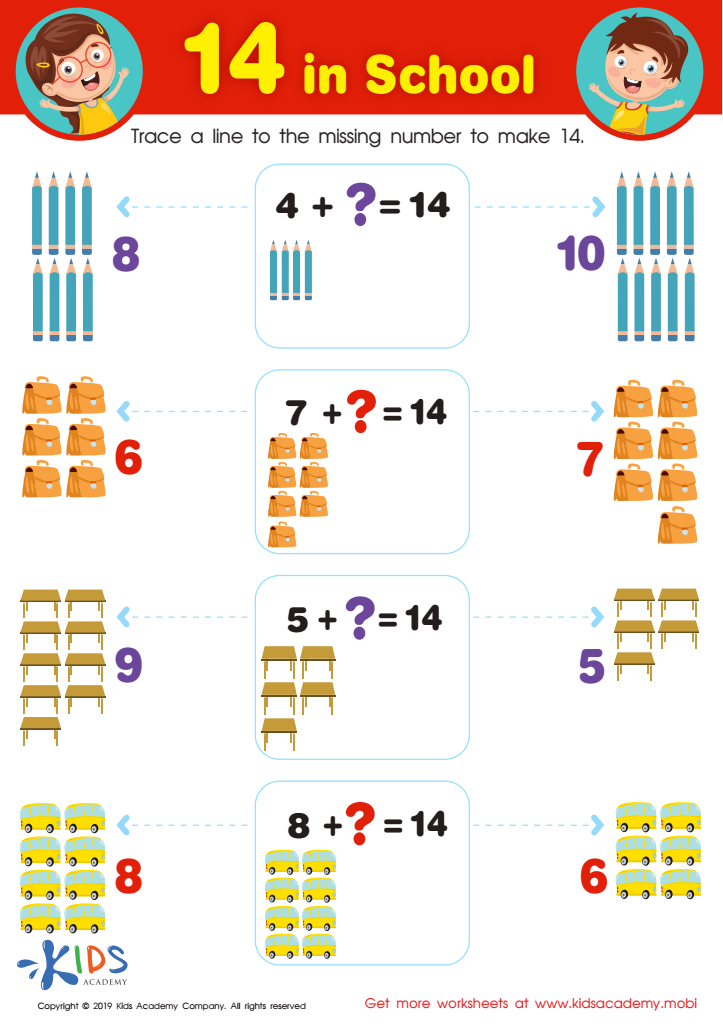
14 in School Worksheet



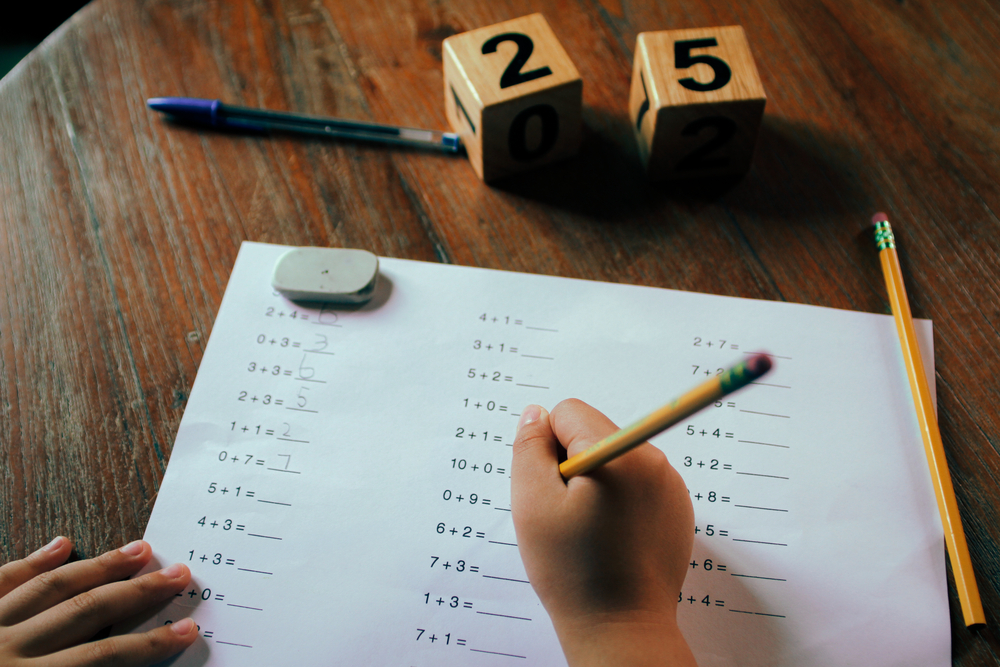


Parents and teachers should prioritize hand-eye coordination activities in early math learning for children aged 3-4 because it lays the groundwork for both cognitive and physical development. Hand-eye coordination is a critical motor skill that helps children interact with their environment effectively, from stacking blocks to tracing shapes. These foundational skills facilitate a better understanding of mathematical concepts.
At this age, children learn through play, and activities that enhance hand-eye coordination, such as threading beads or cutting shapes, also give them hands-on experience with numbers and counting. For example, organizing colored blocks not only strengthens physical skills but also introduces basic math concepts like sorting, comparing, and counting.
Furthermore, cooperation between fine motor skills and cognitive processes can boost confidence in young learners. These activities can promote problem-solving and critical thinking, which are essential in math. As children become adept at manipulating objects and participating in structured tasks, they gain a solid base for future academic success. Therefore, integrating hand-eye coordination exercises with math learning not only supports physical development but also fosters an enthusiastic, engaged learning environment that will serve children well throughout their educational journey.








