
Vocabulary enhancement Normal Life Science Worksheets for Ages 3-4
3 filtered results
Difficulty Level
Grade
Age
-
From - To
Subject
Activity
Standards
Unlock your child's potential with our Vocabulary Enhancement Normal Life Science Worksheets designed specifically for ages 3-4! These engaging worksheets introduce young learners to essential life science vocabulary in a fun and interactive way. Tailored to stimulate curiosity and understanding, each worksheet focuses on key concepts like plants, animals, and ecosystems, making science relatable and exciting. Perfect for preschool education, our materials encourage independent learning and promote language development. Watch as your little ones explore the wonders of life science while enhancing their vocabulary skills. Dive into a world of discovery and learning with our thoughtfully crafted worksheets today!
Favorites
With answer key
Interactive
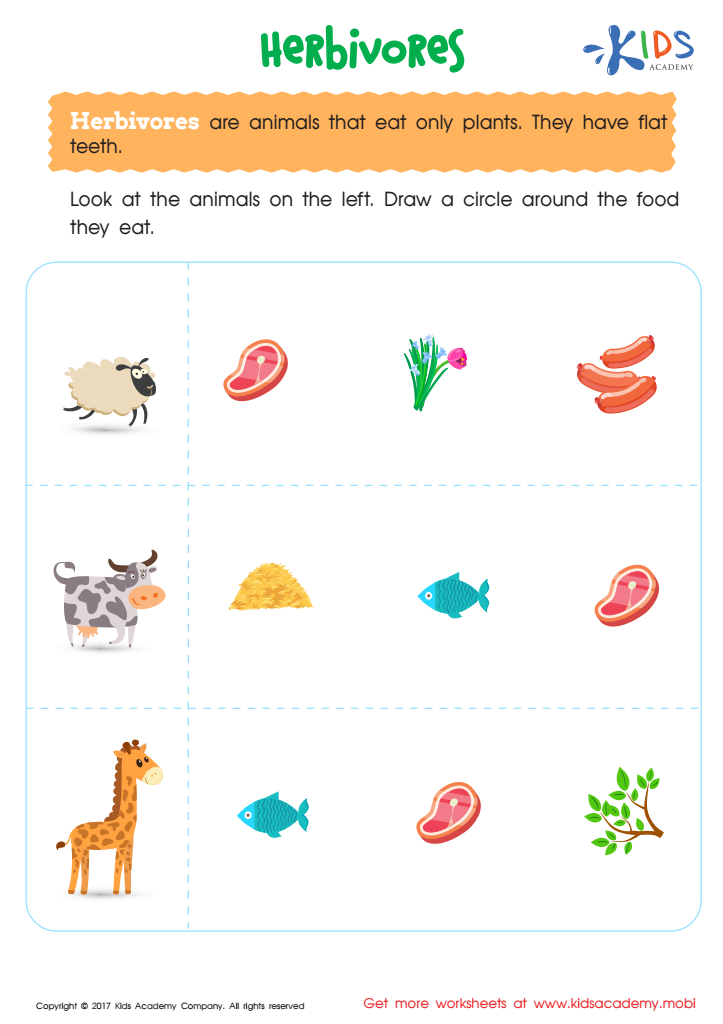
Herbivores Printable
Strengthen their vocab with these fascinating creatures, as they explore an intriguing aspect of beloved animals.
 Assign to My Students
Herbivores Printable
Worksheet
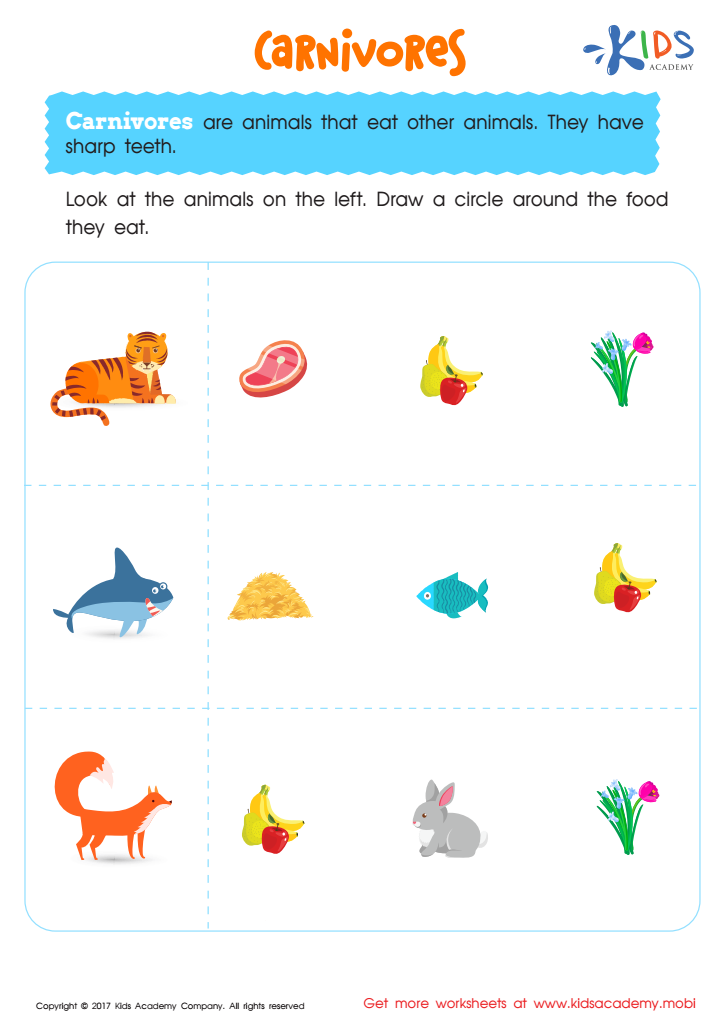
Carnivores Worksheet
Boost their vocabulary and help them explore the incredible world of carnivores.
Carnivores Worksheet
Worksheet
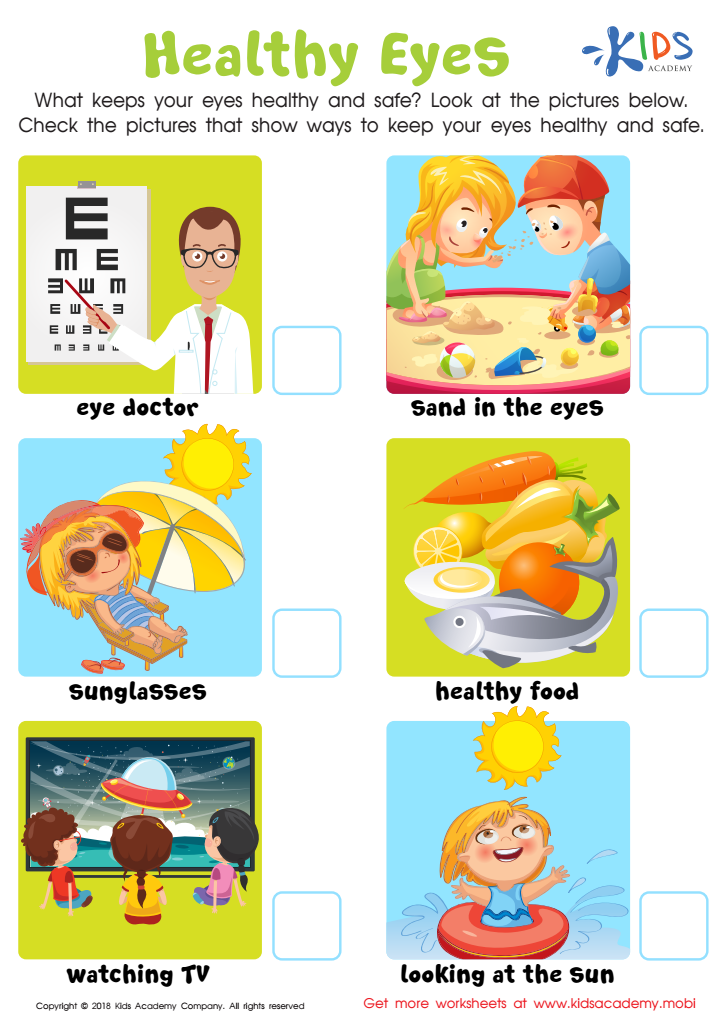
Healthy Eyes Worksheet
Does your child know how to care for their eyes? Help them understand with this worksheet. Look through the pictures together and discuss the different ways to keep the eyes healthy and safe. These include visits to the doctor, wearing sunglasses, and eating healthy food.
Healthy Eyes Worksheet
Worksheet
Join Kids Academy for Free
Who is primarily going to use this learning content?







Vocabulary enhancement in Early Life Science for ages 3-4 is crucial for several reasons. At this formative age, children are not only curious about the world around them but are also developing foundational language skills that significantly influence their cognitive development. By introducing vocabulary related to life science, such as "plant," "animal," "habitat," and "growth," educators and parents help children articulate their observations and experiences.
A rich vocabulary in life science encourages critical thinking and inquiry. As children learn to label and describe their environment, they become more engaged and self-assured in discussions about nature and living things, fostering a passion for exploration and learning. Moreover, enhanced vocabulary helps strengthen communication skills—essential for social interactions and later academic success.
Additionally, supporting vocabulary enrichment at this age lays the groundwork for a deeper understanding of broader scientific concepts in later years, encouraging children to ask questions and seek answers about their surroundings. Ultimately, parents and educators play an integral role in nurturing not only a love for science but also essential skills—boosting confidence, comprehension, and creativity—that shape future learning experiences. Investing time in vocabulary development in life sciences is therefore a meaningful step toward holistic child development.








