Shape Recognition Normal Social Studies Worksheets for Ages 3-4
3 filtered results
-
From - To
Discover engaging Shape Recognition Social Studies worksheets designed specifically for ages 3-4! These printable resources introduce young learners to essential early learning concepts through fun and interactive activities. Perfect for enhancing shape identification skills, our worksheets use vibrant visuals that capture children's attention while fostering their curiosity about the world around them. By incorporating basic shapes into social studies topics, children can explore their environment and develop critical thinking skills. Ideal for both classroom and home use, these worksheets support preschool education and promote foundational knowledge. Start your little one's learning journey today with our delightful and educational shape recognition activities!
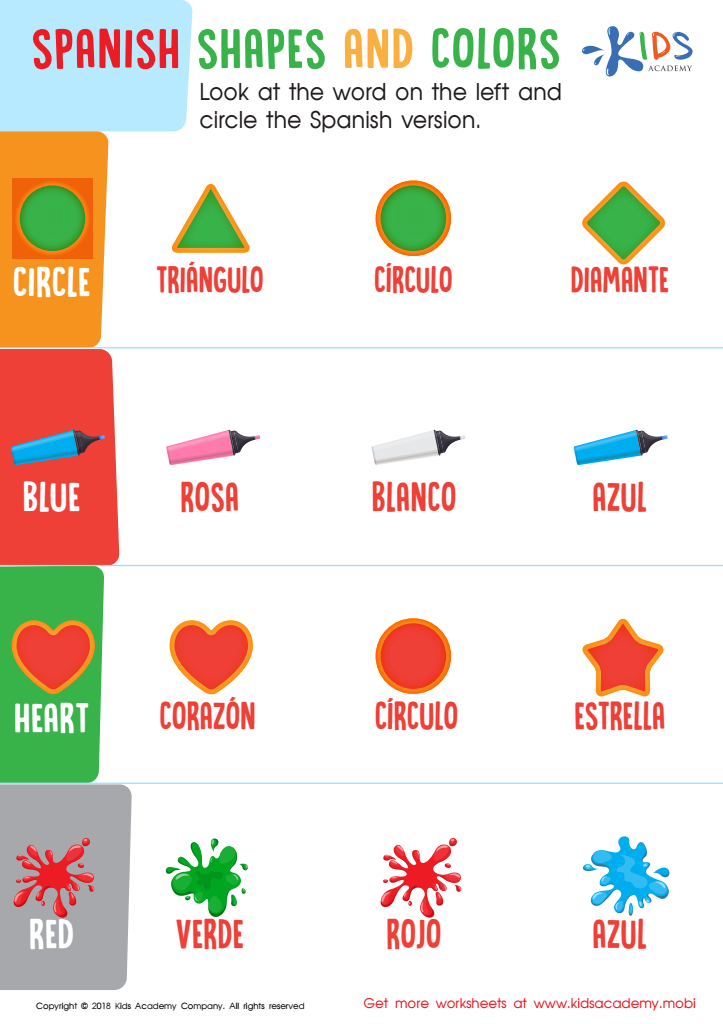
Spanish Shapes and Colors Worksheet
 Assign to My Students

Let's Check! Assessment Worksheet

Playground Worksheet


.jpg)





Shape recognition is a fundamental aspect of early childhood education that carries significant importance for children aged 3-4. Parents and teachers should care about this developmental milestone because it lays the groundwork for critical skills in various domains. First, shape recognition enhances cognitive development as children learn to identify and categorize geometrical figures, fostering their problem-solving abilities. This skill is closely linked to early math concepts, positioning children for future success in mathematics.
Moreover, recognizing shapes supports language development. As children engage in discussions about shapes, they expand their vocabulary and improve their communication skills. It also nurtures fine motor skills when children trace, draw, or manipulate various shapes. Furthermore, recognizing shapes is essential for understanding spatial relationships, which are crucial for later skills such as reading maps and navigation.
In social studies, recognizing shapes can facilitate discussions about community structures and urban planning, helping children relate to their environments. By embedding shape recognition in social studies, educators can instill a holistic understanding of their surroundings, enhancing comprehension of the world. Together, these benefits underscore why parents and teachers should prioritize shape recognition in early education, establishing a strong foundation for lifelong learning.