Color recognition Normal Writing Worksheets for Ages 3-4
10 filtered results
-
From - To
Discover the vibrant world of color with our Color Recognition Normal Writing Worksheets designed for ages 3-4! These engaging and educational printables help young learners develop essential writing skills while familiarizing themselves with a spectrum of colors. Each worksheet combines fun activities like tracing, matching, and coloring to make learning enjoyable and effective. Tailored for early childhood development, these worksheets enhance fine motor skills, hand-eye coordination, and color recognition in a playful, interactive manner. Perfect for parents and educators seeking structured yet enjoyable resources, our worksheets pave the way for confident writing and early learning success. Dive into colorful creativity today!
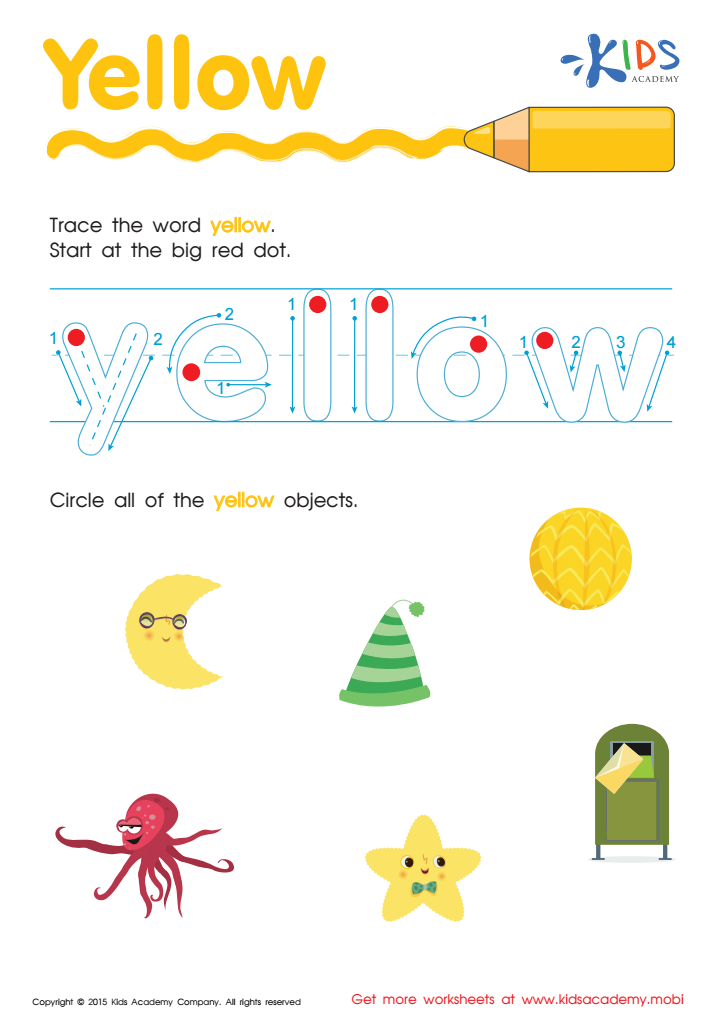
Yellow Tracing Color Words Worksheet
 Assign to My Students
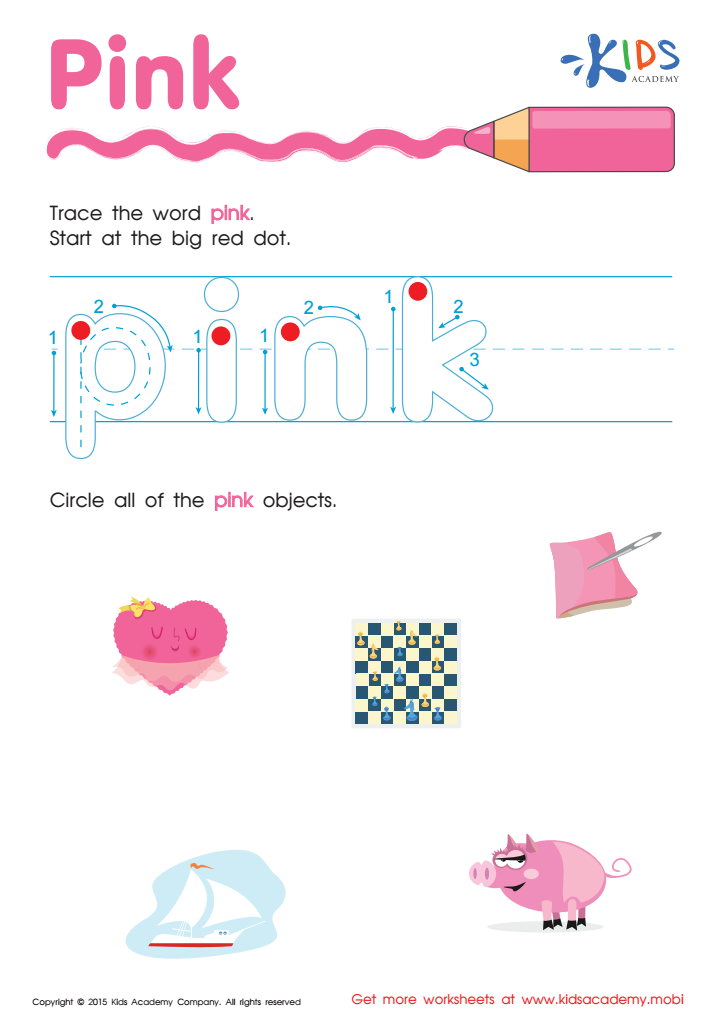
Pink Tracing Color Words Worksheet
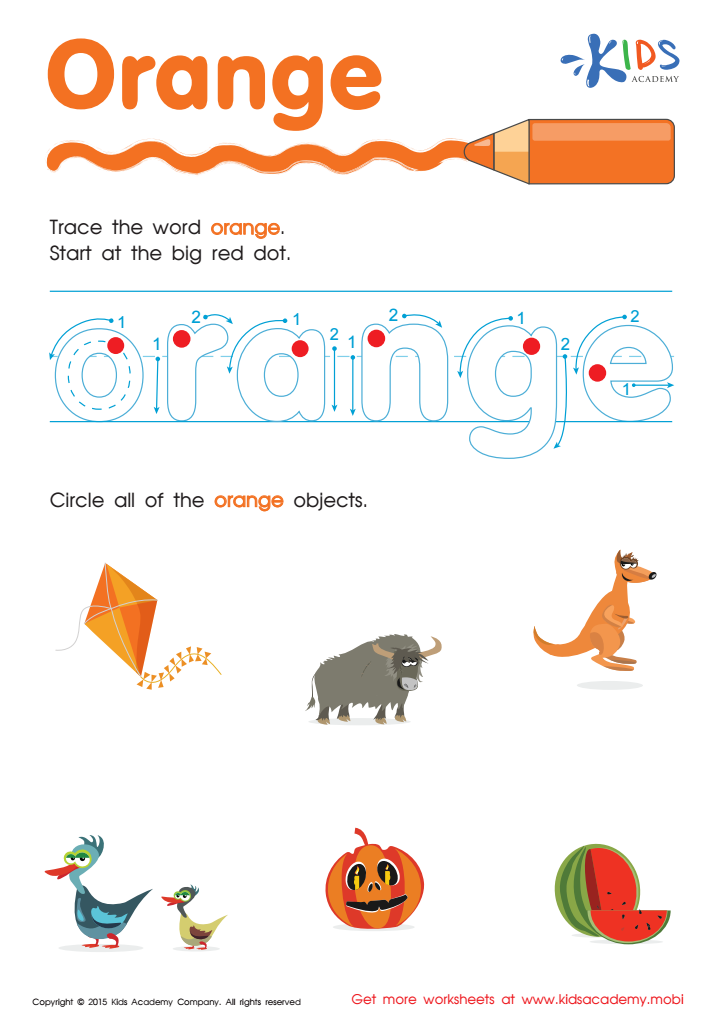
Orange Tracing Color Words Worksheet
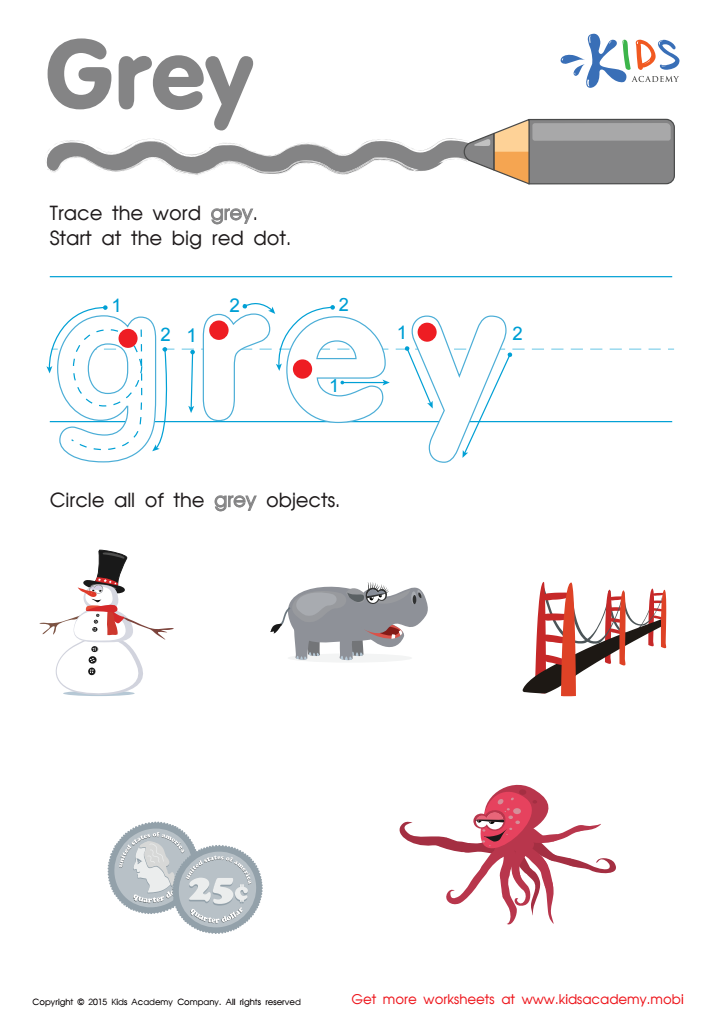
Grey Tracing Color Words Worksheet

White Tracing Color Words Worksheet
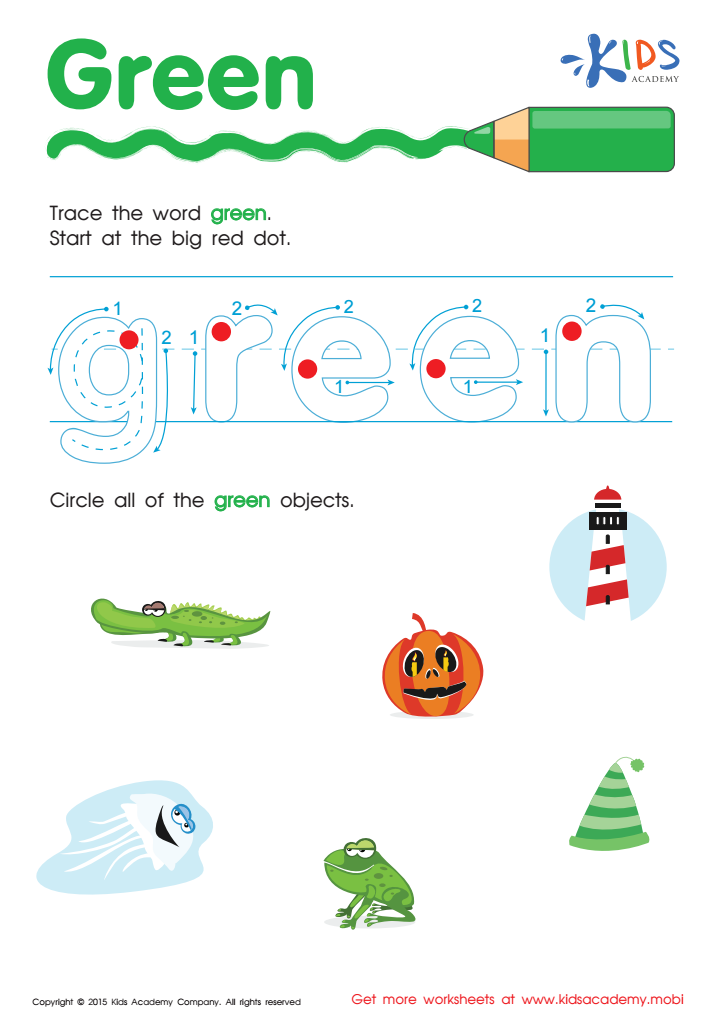
Green Tracing Color Words Worksheet
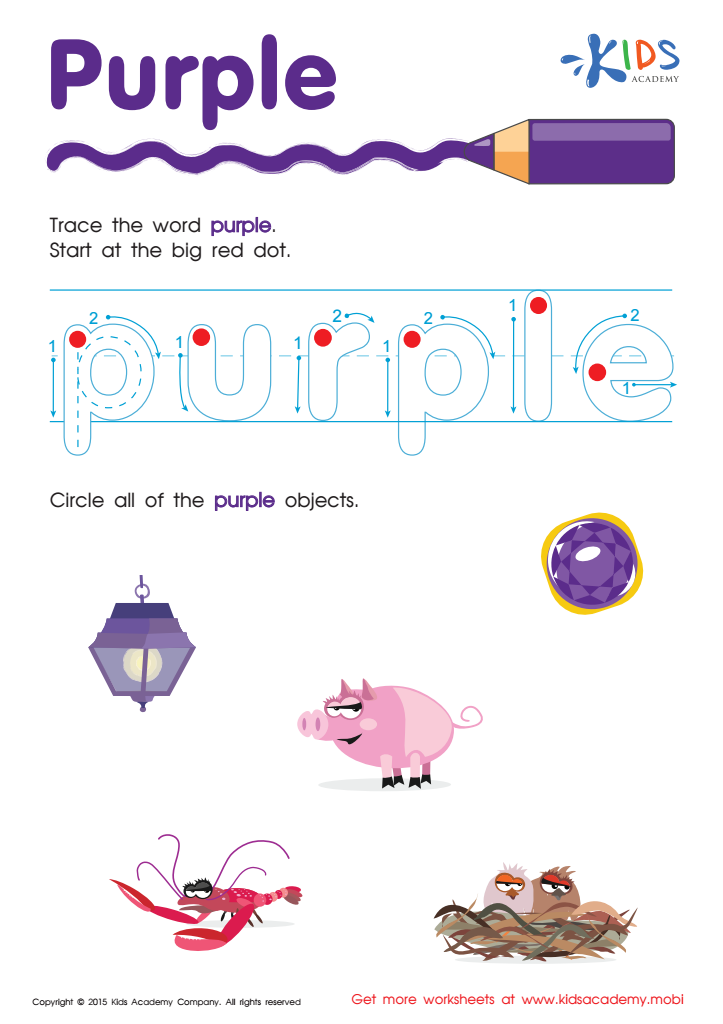
Purple Tracing Color Words Worksheet
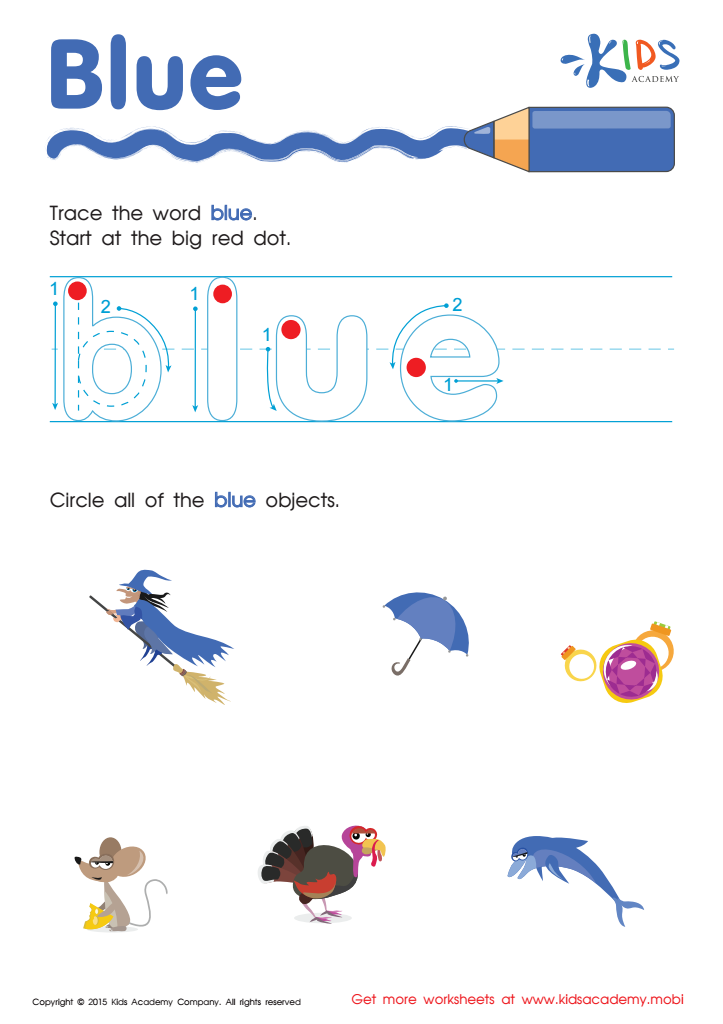
Blue Tracing Color Words Printable
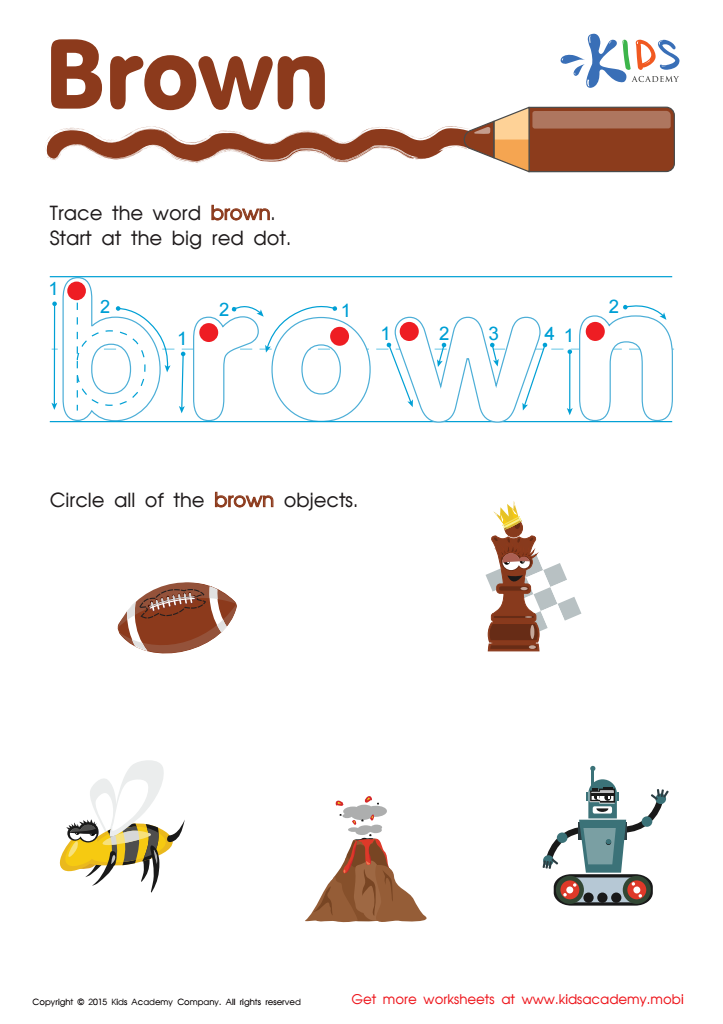
Brown Tracing Color Words Worksheet
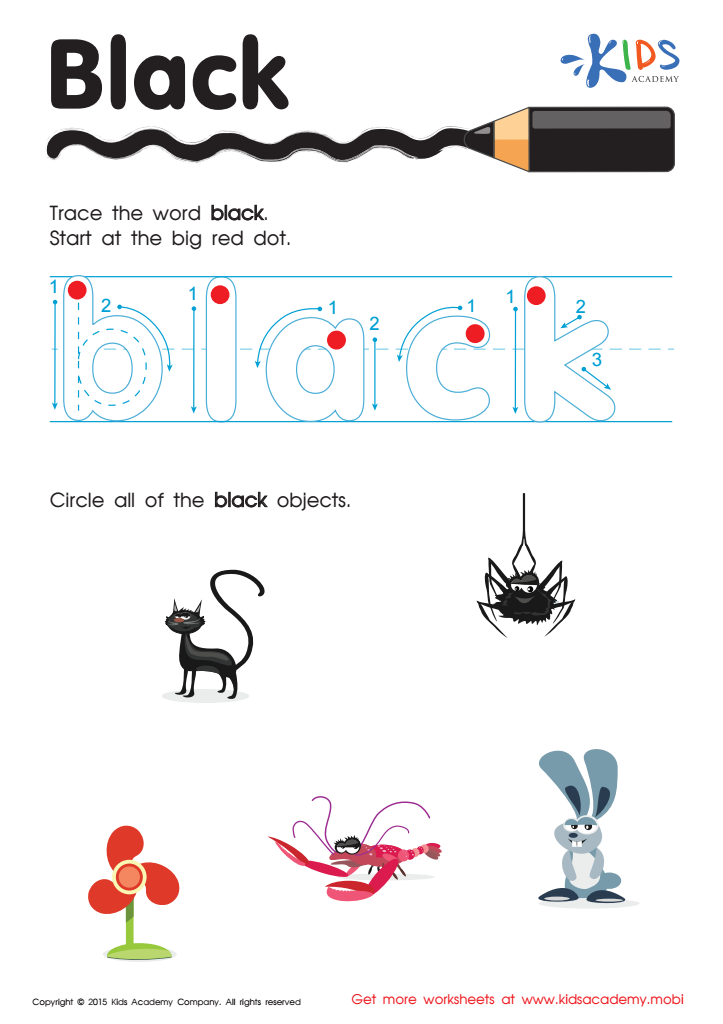
Black Tracing Color Words Printable







Color recognition is fundamental in a child's early development, laying the groundwork for crucial cognitive, physical, and social skills. By age 3 to 4, children should start recognizing and naming colors, which significantly aids in their overall learning process. Understanding colors enhances cognitive development by stimulating mental activity and improving memory. It also fosters language skills as children learn to differentiate and label colors, expanding their vocabulary and communication abilities.
Moreover, color recognition is linked to physical skills. Engaging children in activities like sorting colored objects hones their fine motor skills and hand-eye coordination. This is invaluable for tasks they will encounter later, such as writing and drawing. Socially, learning colors can be a collaborative and interactive experience, promoting teamwork and sharing. It also boosts confidence as children successfully identify and interact with their colorful environment.
Incorporating color recognition into daily routines prepares children for more complex concepts in subjects such as math and science. By solidifying this foundational knowledge, parents and teachers ensure children are well-equipped for future academic success, fostering a love for learning, creativity, and observation.akt