Problem-Solving Skills Normal Addition and Subtraction Word Problems Worksheets for Ages 3-5
14 filtered results
-
From - To
Enhance your child's problem-solving skills with our engaging normal addition and subtraction word problems worksheets designed specifically for ages 3-5. These colorful and interactive worksheets provide easy-to-understand scenarios that encourage young learners to solve basic math problems through real-life situations. Each activity fosters critical thinking, helping children build a solid foundation in math while developing essential cognitive skills. Perfect for parents and teachers looking to supplement early education at home or in the classroom! Download our worksheets today and watch your little ones master addition and subtraction concepts while enjoying interactive learning!
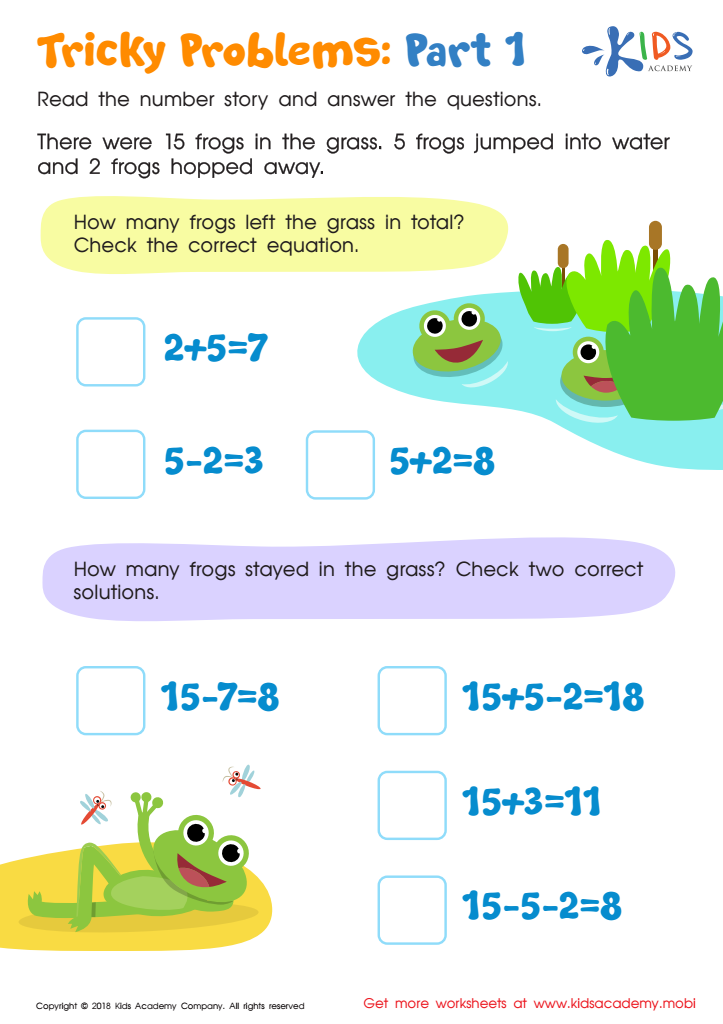
Tricky Problems Worksheet: Part 1
 Assign to My Students
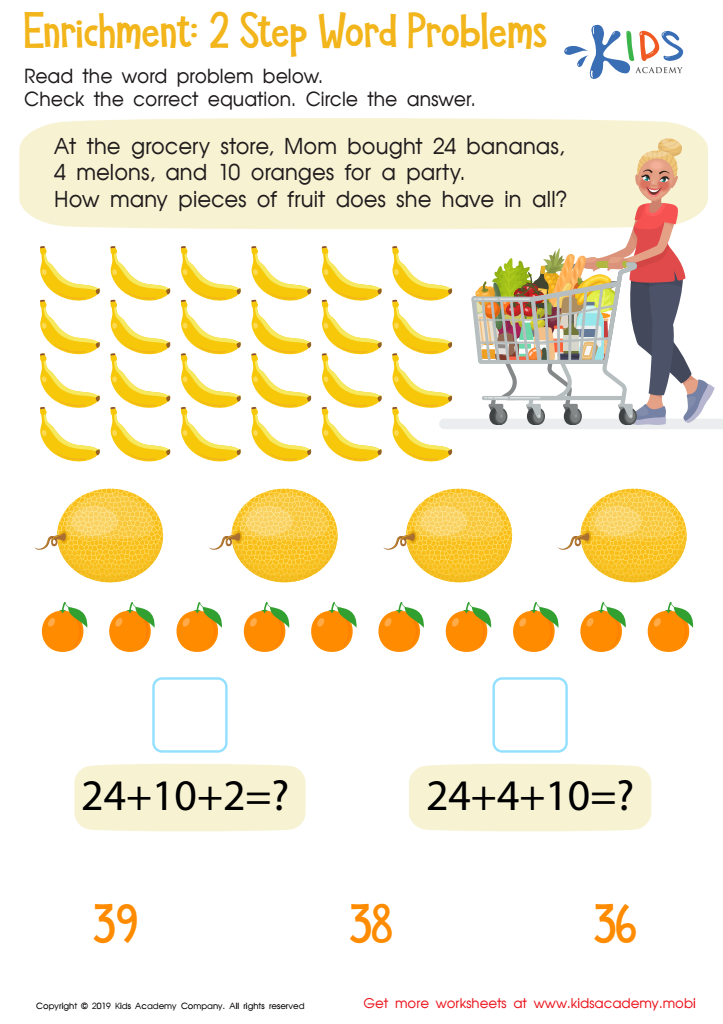
Enrichment -2 Step Word Problems Worksheet
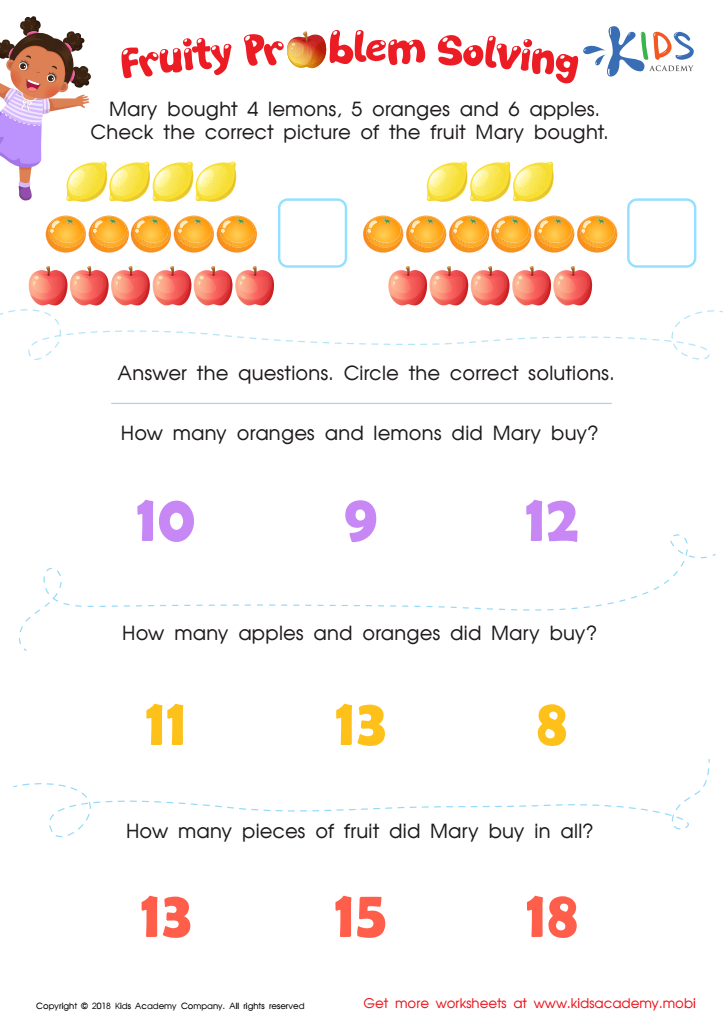
Fruity Problem Solving Worksheet
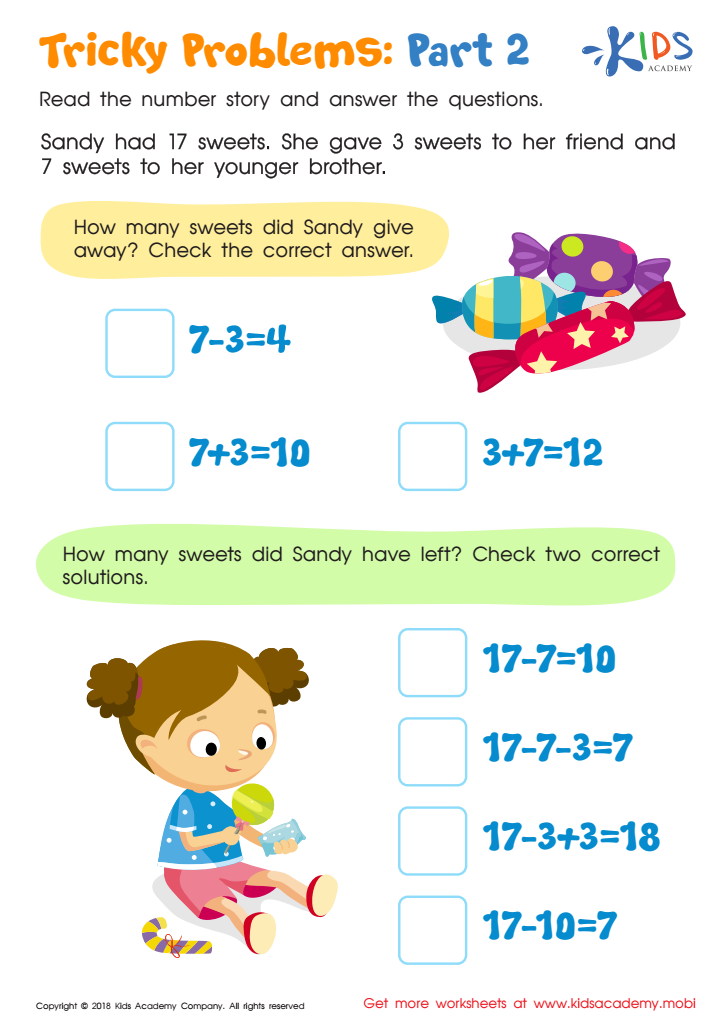
Tricky Problems Worksheet: Part 2
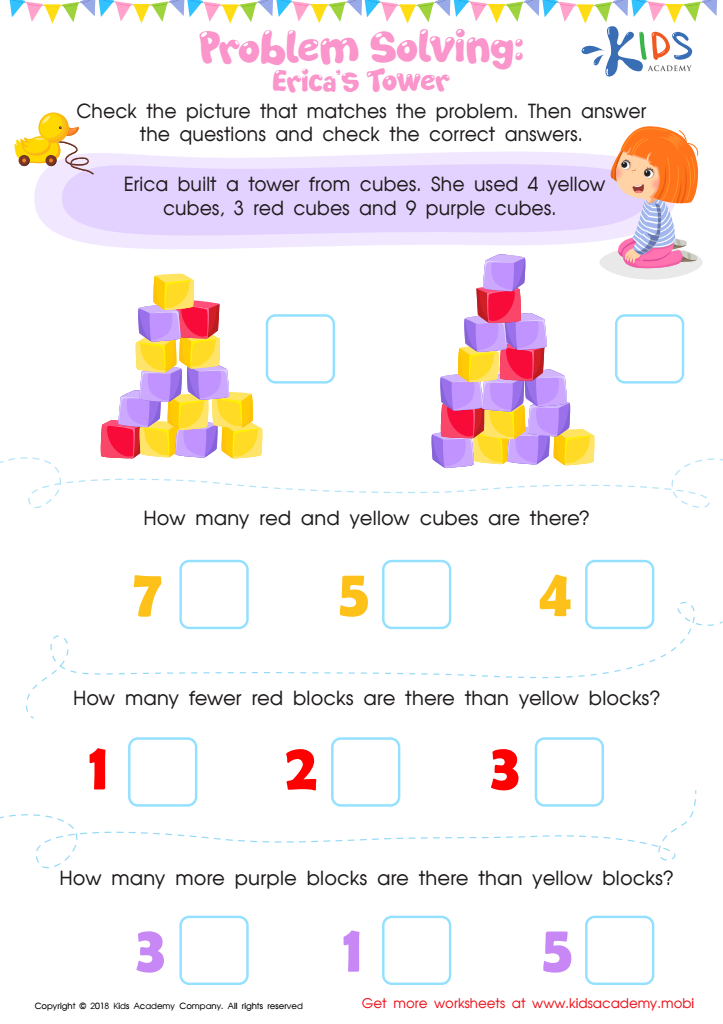
Problem Solving: Erica's Tower Worksheet
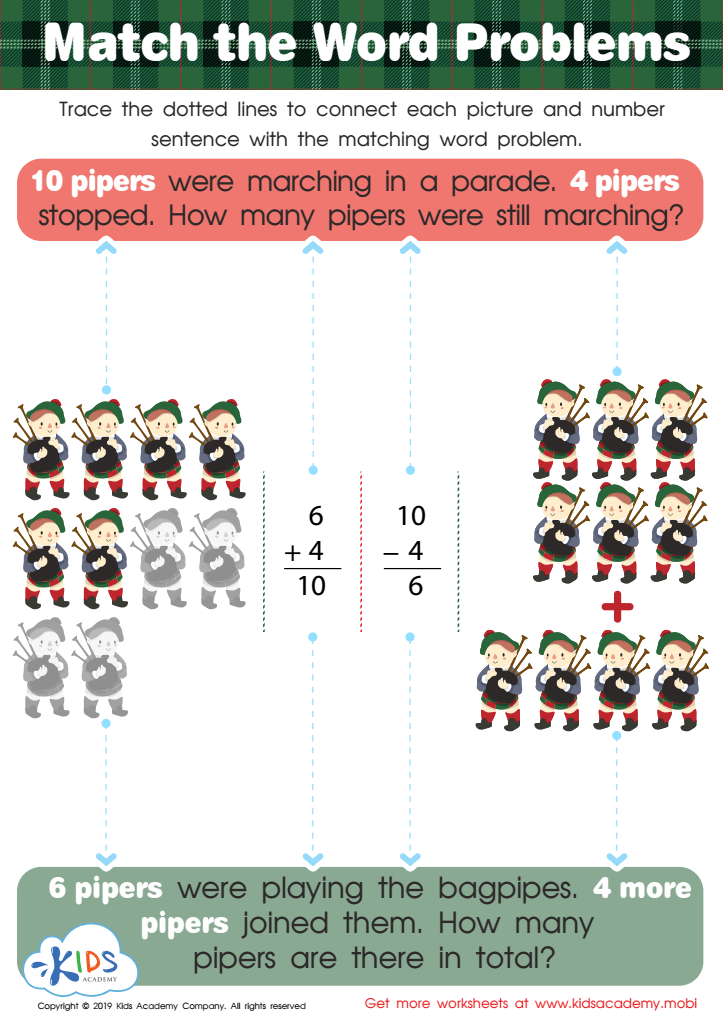
Match the Word Problems Worksheet
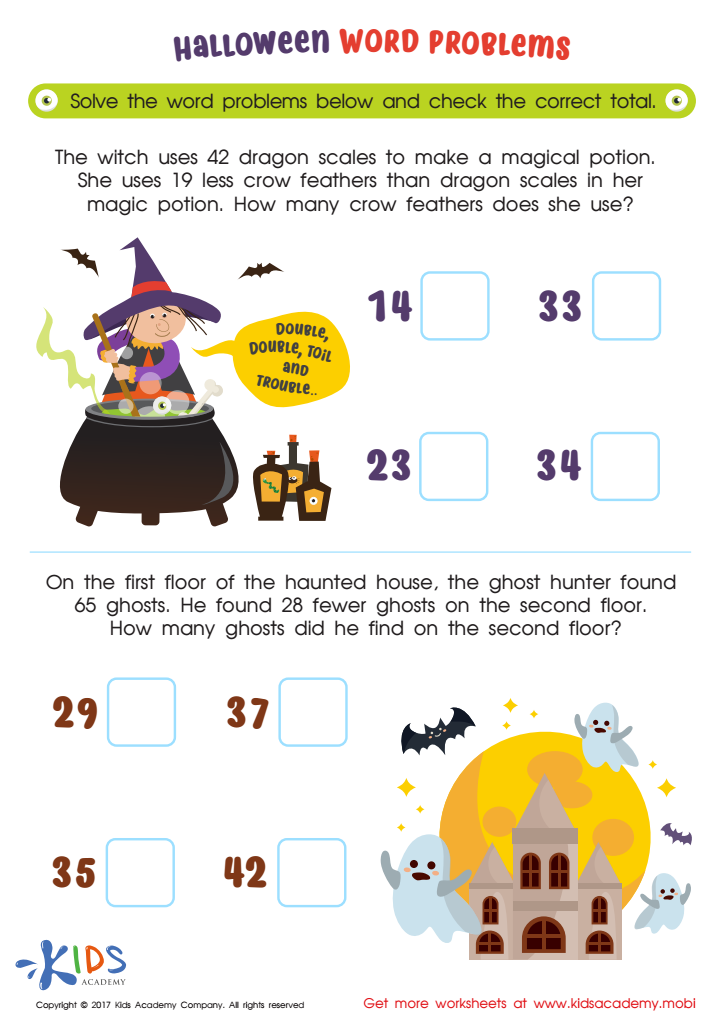
Halloween Word Problems Printable
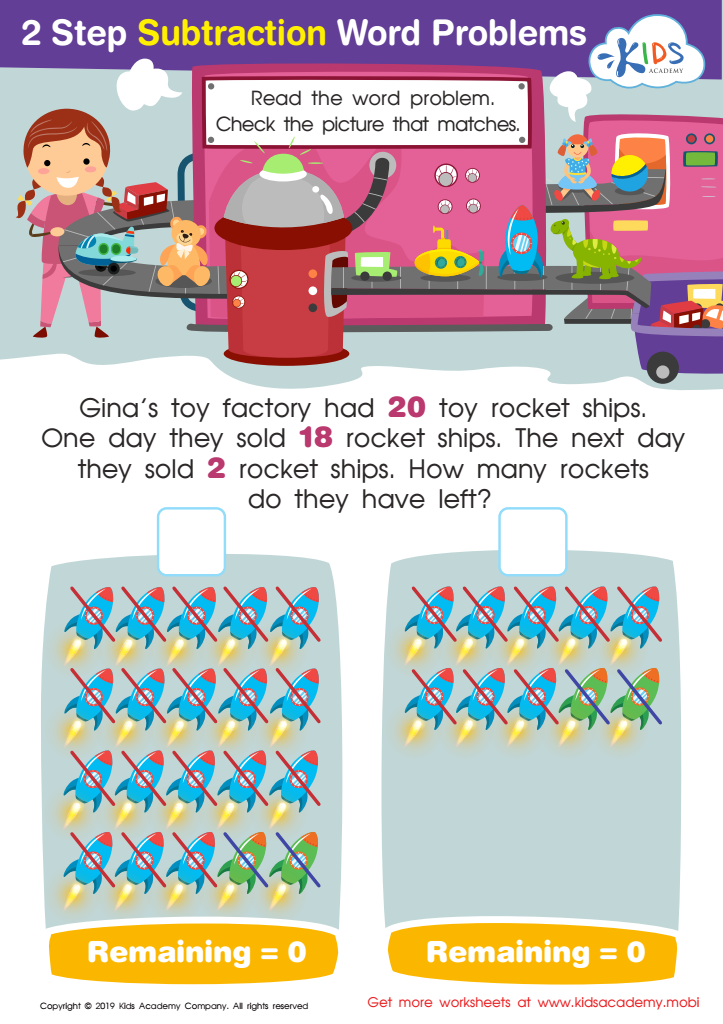
Step Subtraction Word Problems Worksheet
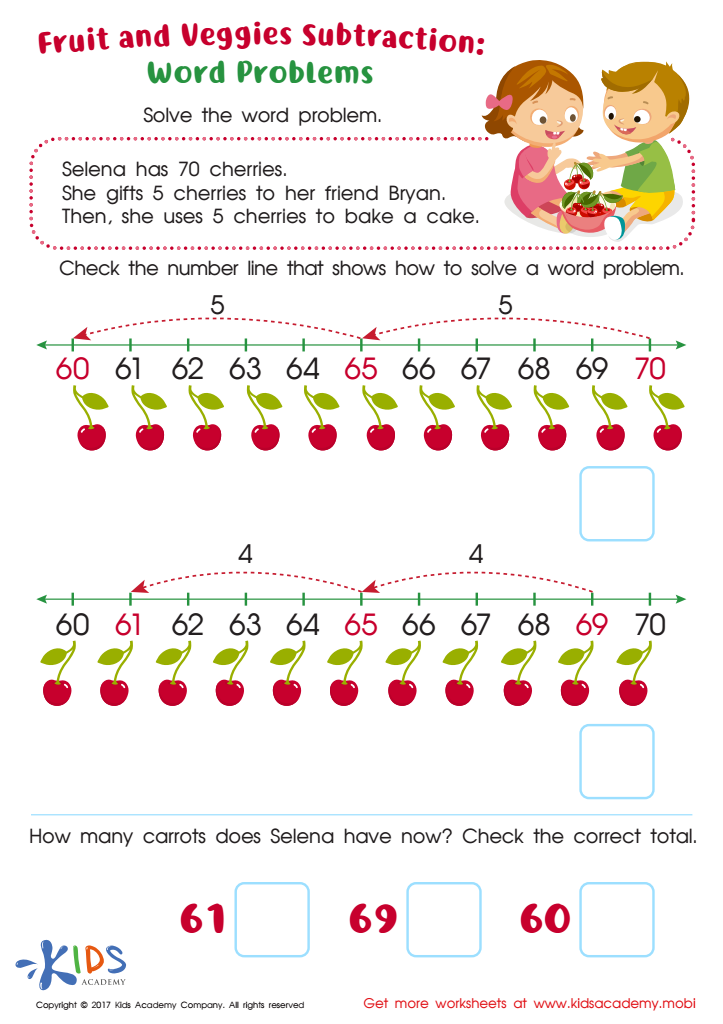
Subtraction Word Problems Free Printable
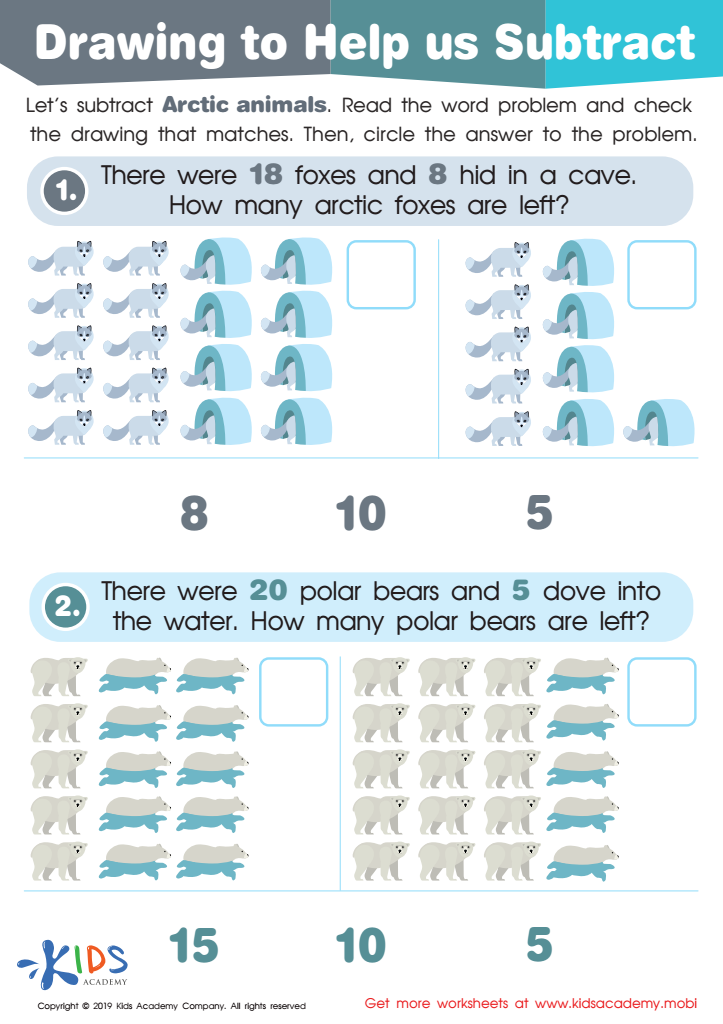
Drawing to Help Us Subtract Worksheet
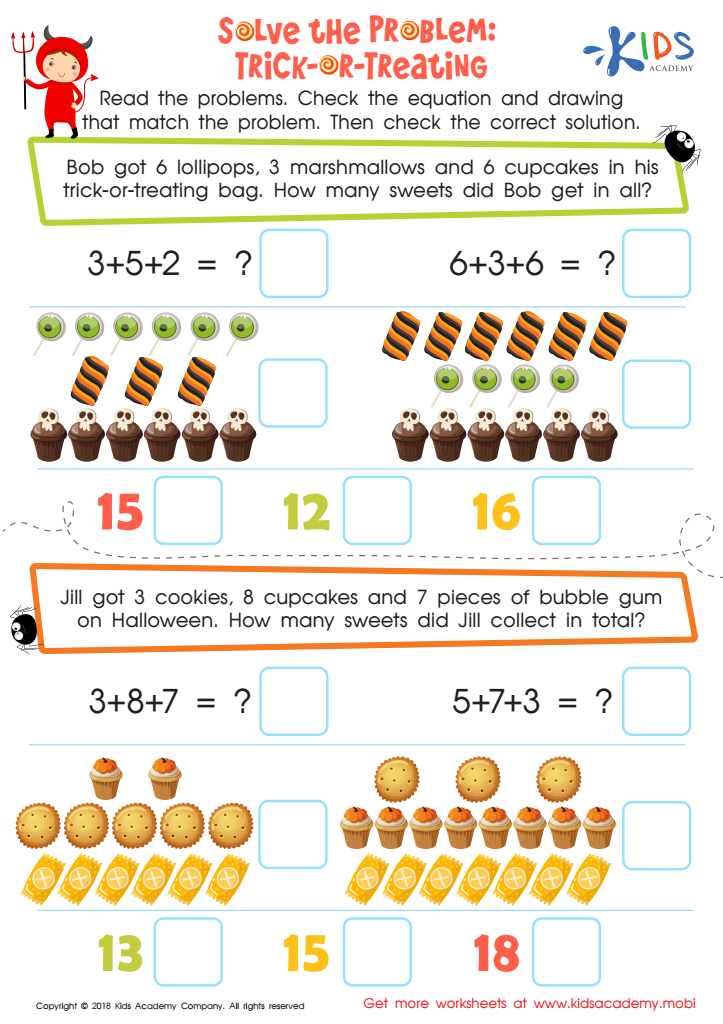
Solve the Problem: Trick–or–treating Worksheet
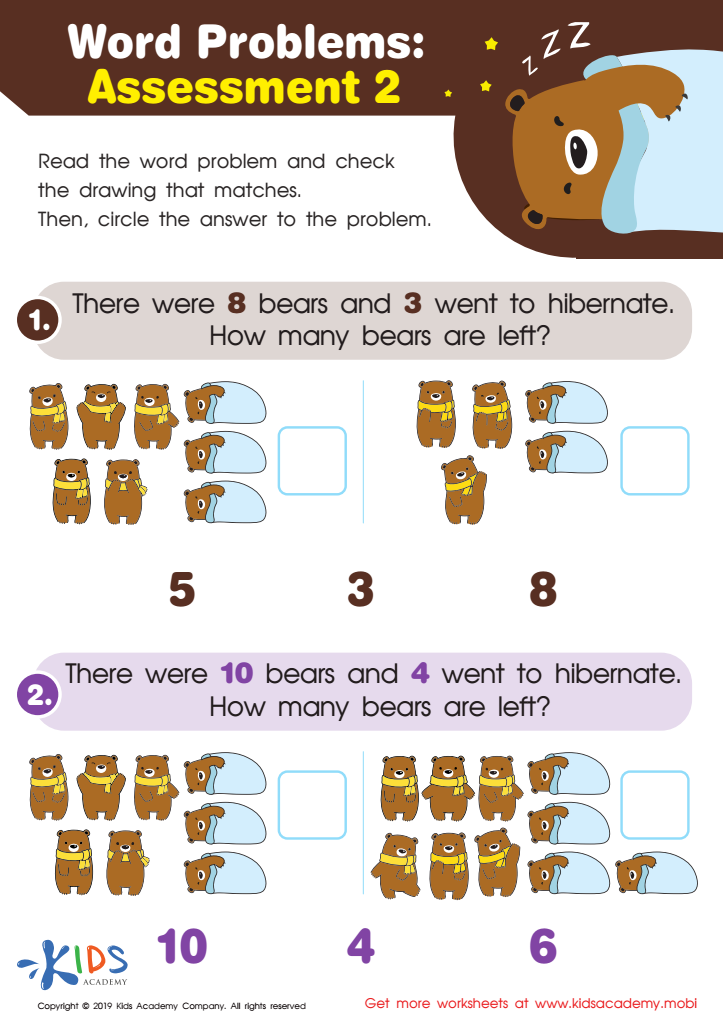
Word Problems: Assessment 2 Worksheet
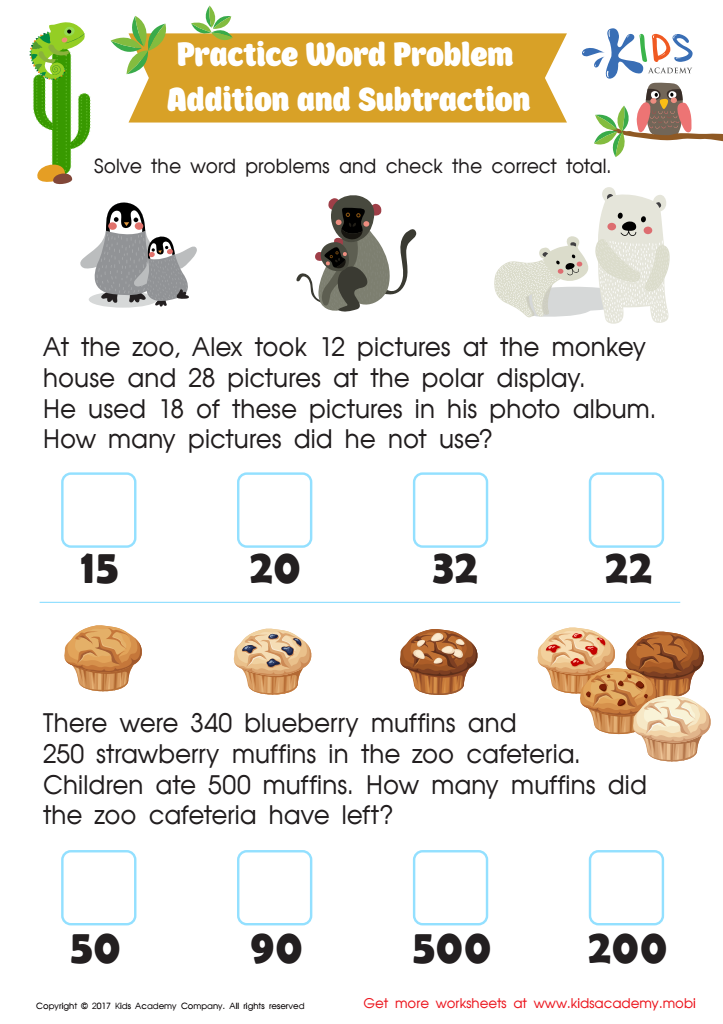
Addition and Subtraction: Word Problems Worksheet
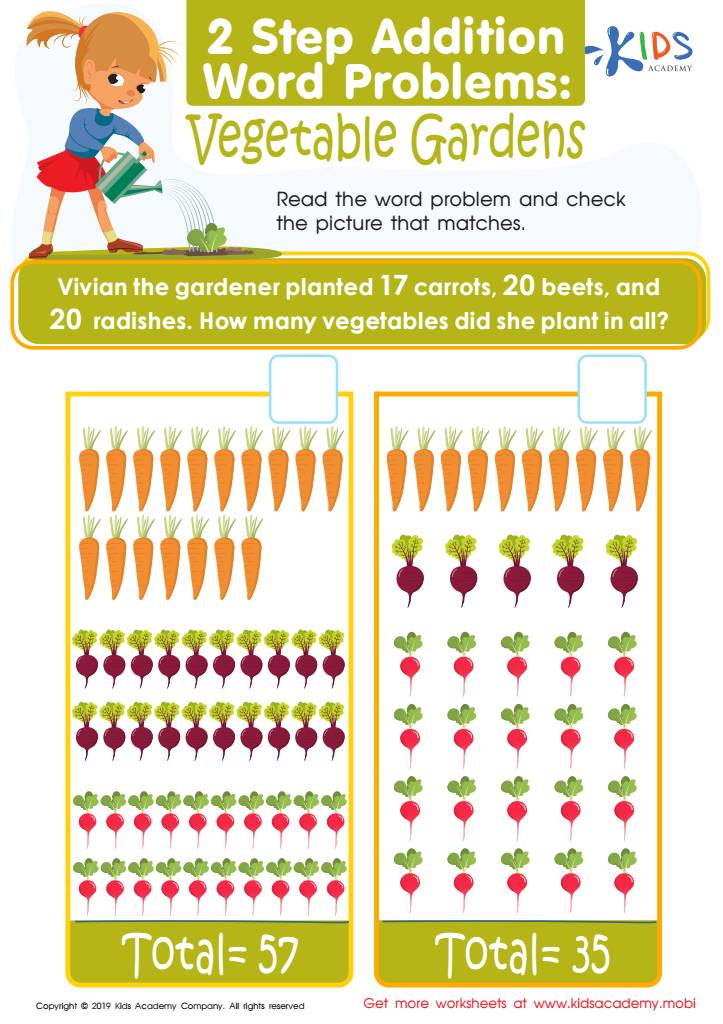
Vegetable Gardens Worksheet








Problem-solving skills, especially in the context of normal addition and subtraction word problems, are crucial for children ages 3-5, and both parents and teachers play an essential role in nurturing these skills. Early childhood is a foundational period for cognitive development, wherein kids begin to understand concepts of quantity, relationships, and critical thinking. Engaging in word problems at this stage helps children develop logical reasoning and enhances their mathematical fluency.
By regularly incorporating simple addition and subtraction word problems into play or learning activities, children learn to interpret real-world scenarios, thus bridging the gap between abstract numbers and practical application. This instills a sense of confidence as they start to identify solutions using various strategies.
Moreover, these activities promote language skills as children learn to verbalize their thought processes and articulate their reasoning. Collaborating with adults during these exercises fosters open communication, allowing adults to assess understanding, offer guidance, and address misconceptions.
Overall, investing time in developing problem-solving skills through addition and subtraction fosters a positive attitude toward math, preparing children for more complex mathematical concepts in later years. Understanding these skills emphasizes the importance of a supportive learning environment, ultimately cultivating supportive, inquiring, and resilient learners.