
Vocabulary Building Normal Math Worksheets for Ages 3-5
6 filtered results
Difficulty Level
Grade
Age
-
From - To
Subject
Activity
Standards
Explore our engaging Vocabulary Building Normal Math Worksheets designed for ages 3-5! These worksheets meld literacy and numeracy, helping young learners expand their vocabulary while developing essential math skills. Each worksheet is carefully crafted to stimulate early learning through fun, interactive activities that incorporate counting, number recognition, and basic math concepts alongside vocabulary enhancement. Our resources are perfect for classrooms or home use, making learning a delightful experience. Foster a love for language and mathematics in your little ones with our creative and educational worksheets that promote cognitive development and enhance communication. Start building a strong foundation for lifelong learning today!
Favorites
With answer key
Interactive
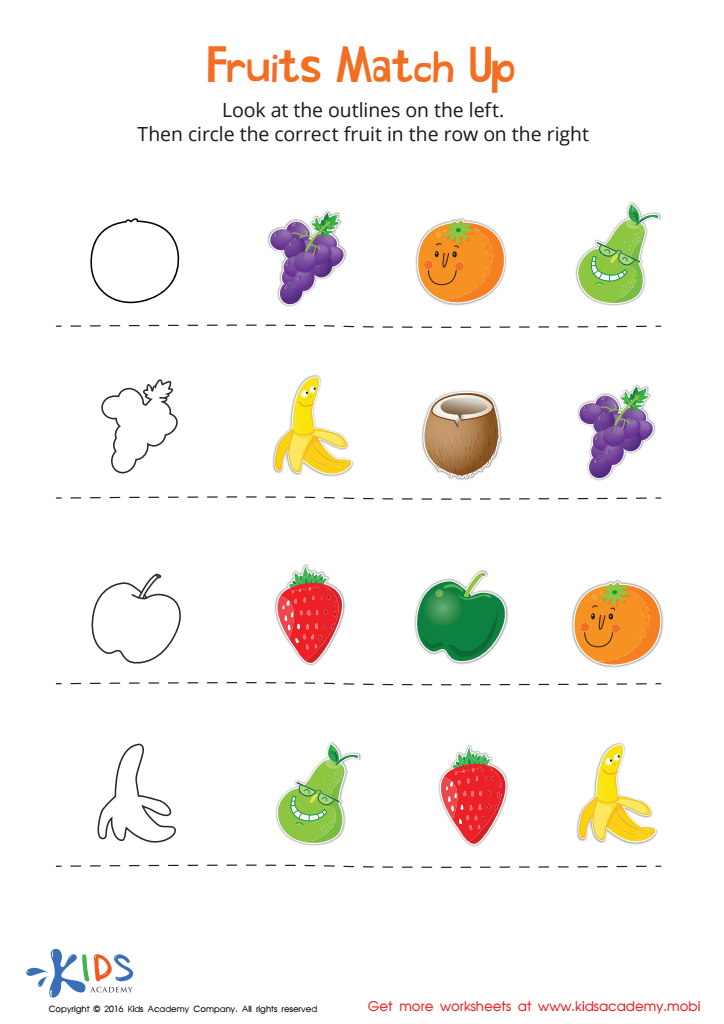
Fruits Match Up Worksheet
Motivate your child to count and sharpen their spatial reasoning skills with this vivid fruit worksheet.
 Assign to My Students
Fruits Match Up Worksheet
Worksheet
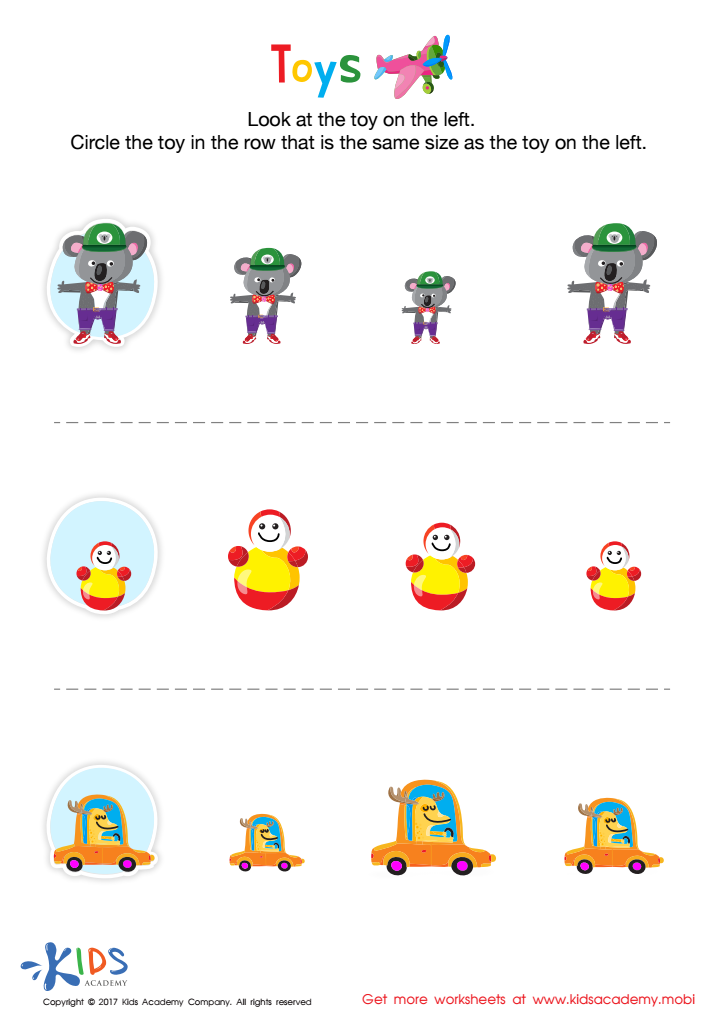
Matching: Classifying Toys by Size Worksheet
Sorting worksheets are an effective way to help your preschooler learn life and educational skills. Spatial awareness, direction recognition, and reading directions all help build a strong foundation for future educational success.
Matching: Classifying Toys by Size Worksheet
Worksheet
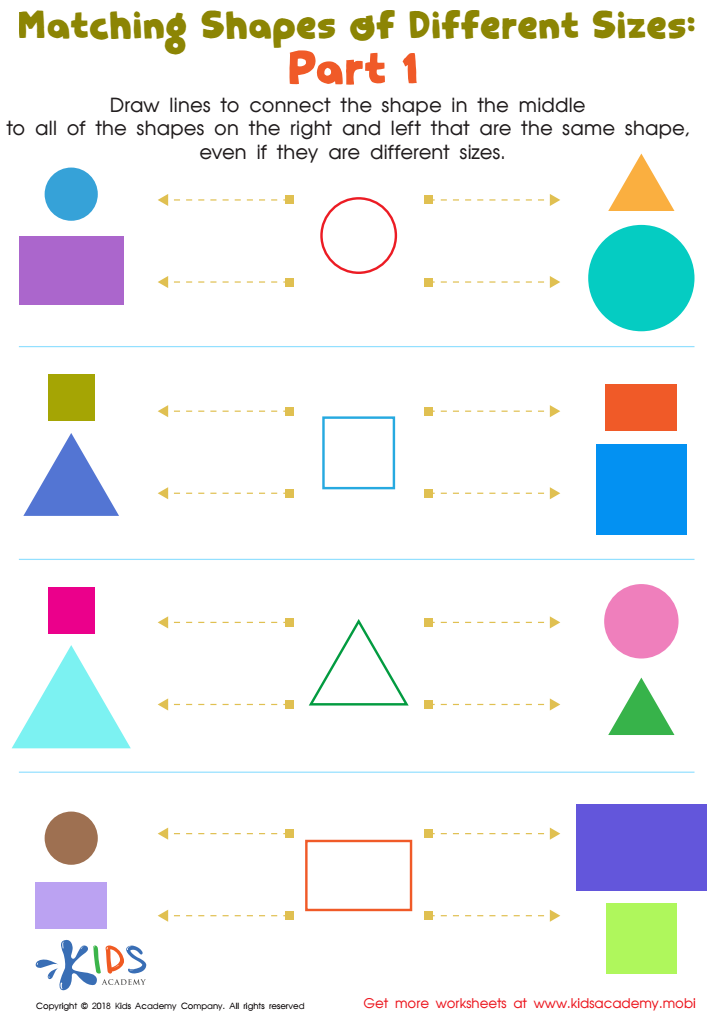
Geometry: part 1 Worksheet
Test your student's shape knowledge with this beginner-level geometry worksheet. This fun, challenging printable PDF will sharpen spacial recognition skills as they match shapes of different sizes. Get started now!
Geometry: part 1 Worksheet
Worksheet
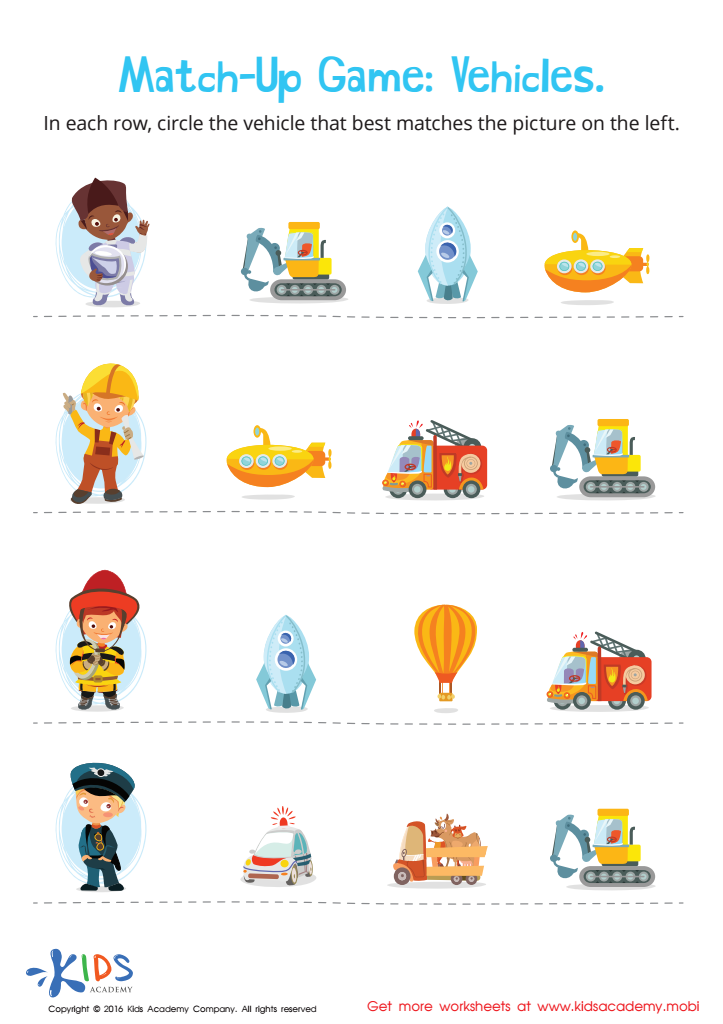
Vehicles Worksheet
Beep, beep! Your little driver will love this matching game! Matching vehicles with their drivers can help your child discover new jobs and practice problem-solving skills. It can even start a conversation about different careers. Don’t be surprised if they start playing with more cars and trucks! Use this and other sorting activities to practice with colors, shapes and patterns.
Vehicles Worksheet
Worksheet
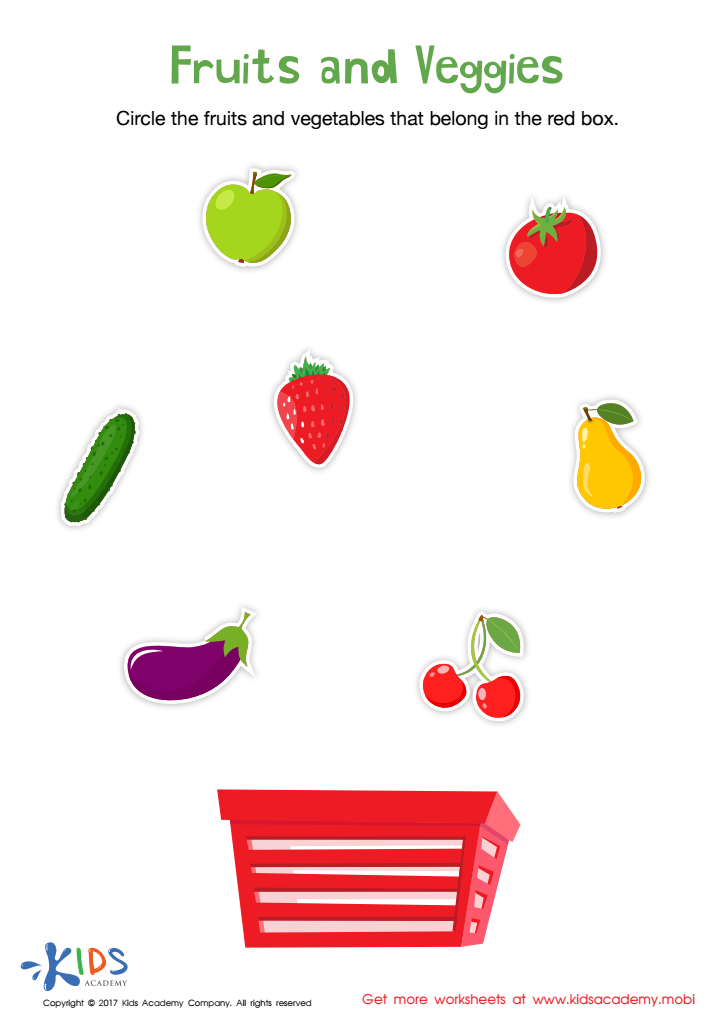
Classifying Fruits and Veggies by Color Sorting Worksheet
Worksheet
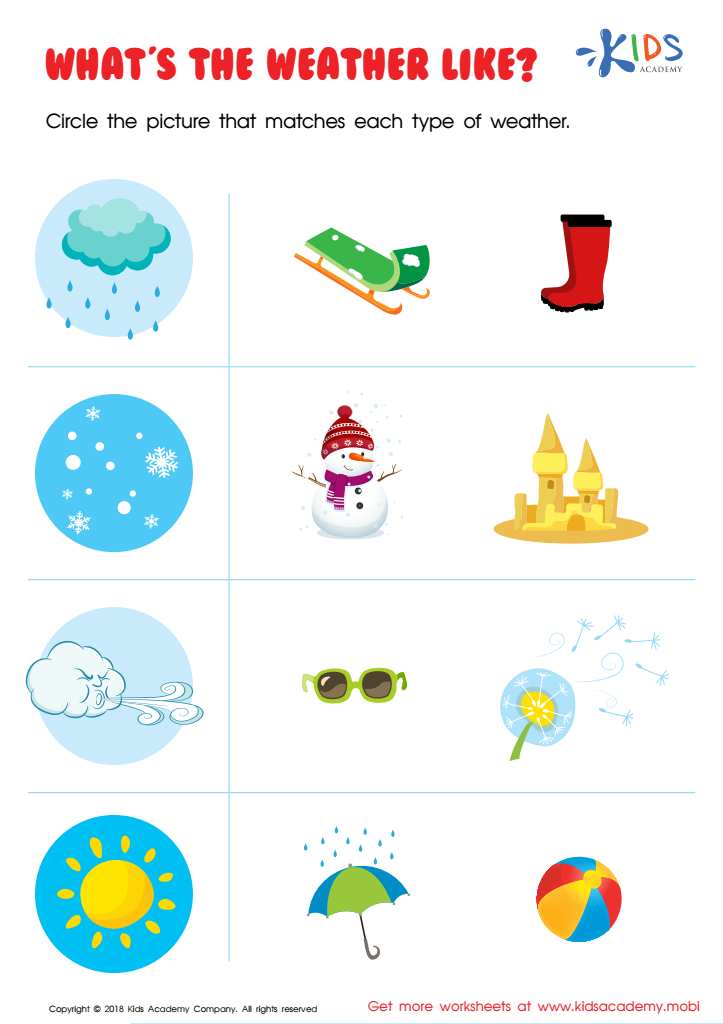
What's the Weather Like? Worksheet
Help budding meteorologists practice matching weather to seasons with this PDF worksheet. Picture clues help identify seasons and fine motor skills are practiced circling the correct weather patterns. Bright and engaging characters make learning fun and reinforce weather knowledge.
What's the Weather Like? Worksheet
Worksheet
Join Kids Academy for Free
Who is primarily going to use this learning content?


.jpg)





Vocabulary building during the early years is crucial for young children, especially those aged 3-5, as it lays the groundwork for successful communication and learning. For parents and teachers, focusing on vocabulary in the context of normal math is particularly important. At this stage, children are naturally curious and eager to explore concepts. Building their vocabulary around mathematical terms helps them articulate their understanding and provide a strong foundation for more advanced math skills.
Research indicates that a robust vocabulary is directly linked to literacy and cognitive development. When children learn mathematical vocabulary—like "add," "subtract," "more," and "less"—they begin to grasp essential concepts that go beyond numbers. It allows them to make connections between language and math, enhancing their ability to think critically and solve problems.
Moreover, discussing math using appropriate vocabulary helps foster a positive learning environment where children feel empowered to engage in discussions. Teachers and parents play a vital role in this by introducing math-related language in daily activities through counting games, measuring ingredients in cooking, or discussing shapes during playtime. Ultimately, enhancing children’s vocabulary in math promotes not only academic success but also boosts their confidence and curiosity, preparing them for lifelong learning.








