Pattern recognition Normal Patterns Worksheets for Ages 3-5
5 filtered results
-
From - To
Discover our engaging "Pattern Recognition Normal Patterns Worksheets" designed specifically for children ages 3-5! These interactive worksheets help young learners develop essential pattern recognition skills through fun activities and colorful illustrations. Kids will explore simple patterns, enhancing their critical thinking and cognitive abilities as they identify, continue, and create patterns. Tailored for preschool and kindergarten readiness, these worksheets support early math and sequencing skills while providing an enjoyable learning experience. Ideal for parents and educators, our resources foster a love for learning in a playful environment. Prepare your child for academic success with our delightful and educational worksheets today!
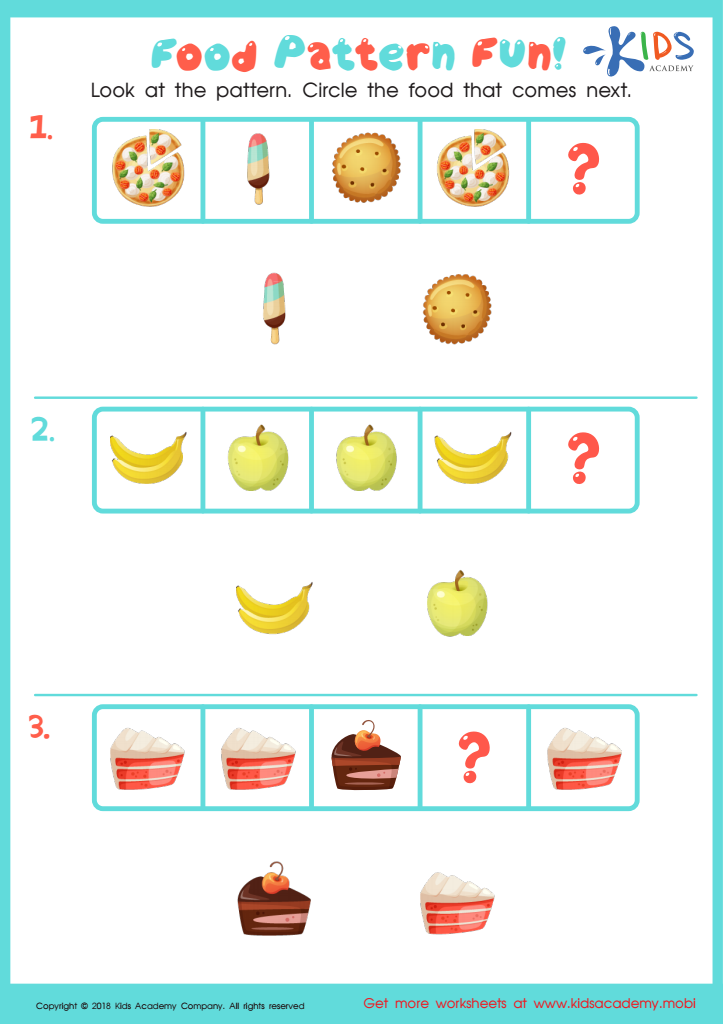
Food Pattern Fun Worksheet
 Assign to My Students
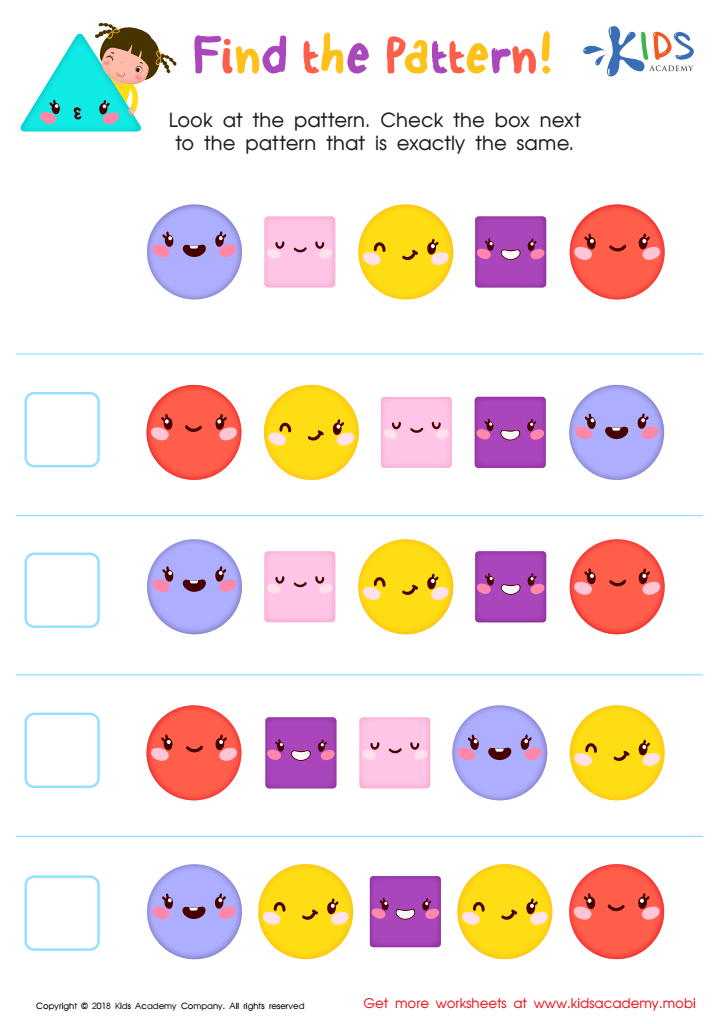
Find the Pattern Worksheet
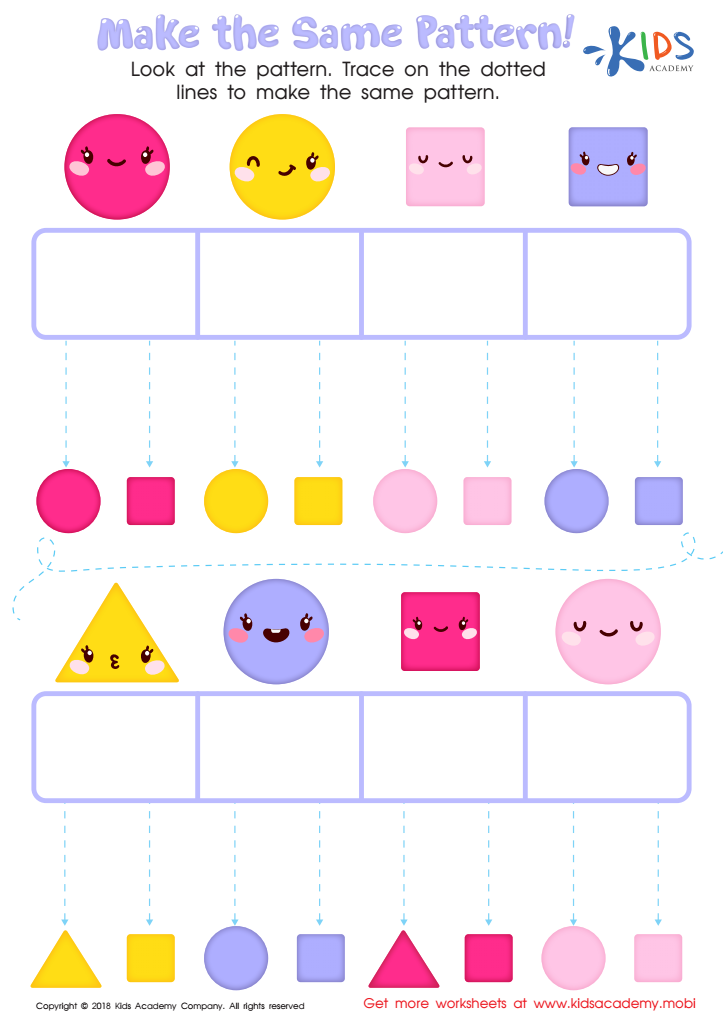
Make the Same Pattern Worksheet
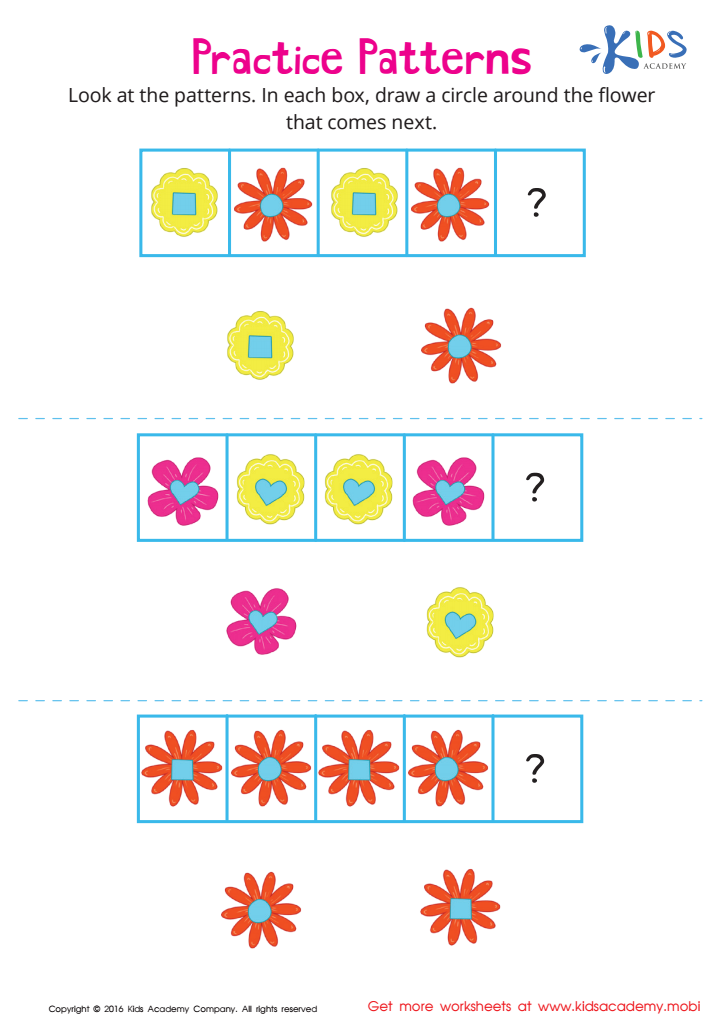
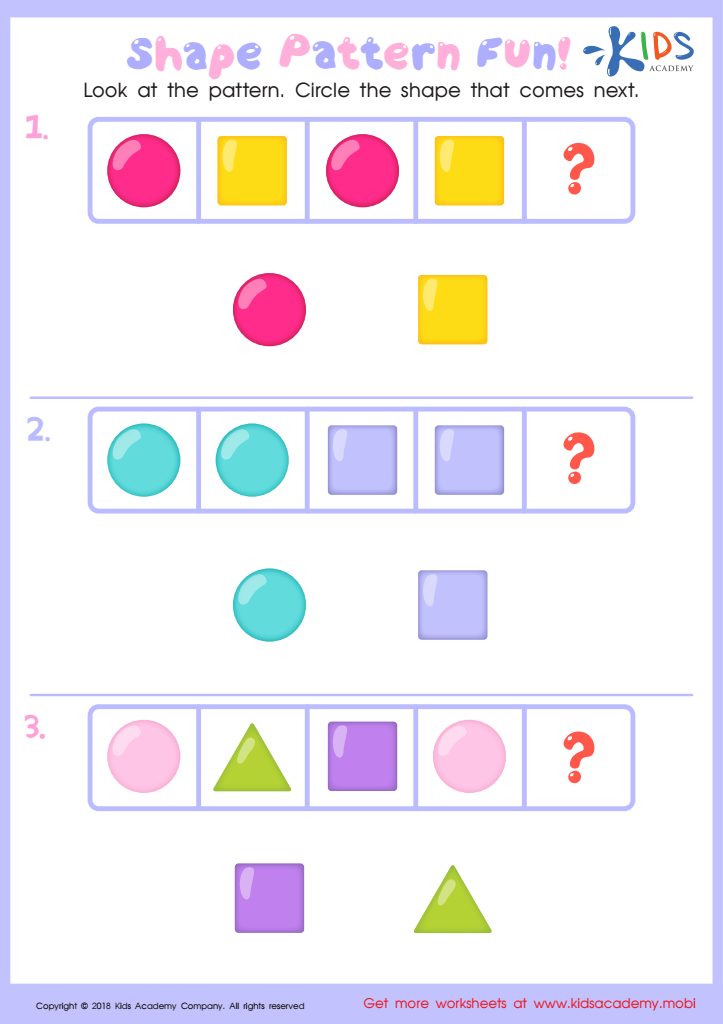
Shape Pattern Fun Worksheet







Pattern recognition is a foundational cognitive skill vital for children aged 3-5, making it an essential area of focus for both parents and teachers. At this developmental stage, young learners are naturally curious and eager to understand the world around them. Recognizing patterns helps them make sense of their experiences, enhancing their problem-solving abilities and critical thinking skills.
Engaging with normal patterns—such as sequences, rhymes, and colors—supports early mathematics and literacy development. Children learn to anticipate and predict, such as identifying what comes next in a sequence or recognizing repetitions in songs and stories. This ability not only lays the groundwork for more complex mathematical concepts but also enhances language skills as children connect sounds and meanings.
Moreover, fostering pattern recognition can boost children's confidence, allowing them to tackle new challenges with a sense of accomplishment. It encourages exploration and creativity as they identify and create their patterns in art, music, or movement. For teachers and parents, encouraging this type of learning creates a rich environment where children can thrive, preparing them for future academic success while nurturing their innate curiosity and joy in learning. Helping young children recognize and appreciate patterns cultivates a springboard for lifelong skills and intellectual exploration.








