
Reading comprehension Normal Animals Worksheets for Ages 3-5
5 filtered results
Difficulty Level
Grade
Age
-
From - To
Subject
Activity
Standards
Discover our engaging "Reading Comprehension Normal Animals Worksheets" designed specifically for ages 3-5. These printable worksheets are perfect for young learners to develop essential reading skills while exploring the fascinating world of animals. Each exercise is thoughtfully crafted to enhance comprehension, vocabulary, and critical thinking through fun, age-appropriate activities. Featuring colorful illustrations and simple texts, these worksheets will capture your child's imagination and make learning about animals a delightful experience. Ideal for preschool and kindergarten settings, these resources support early education and foster a lifelong love of reading and learning.
Favorites
With answer key
Interactive
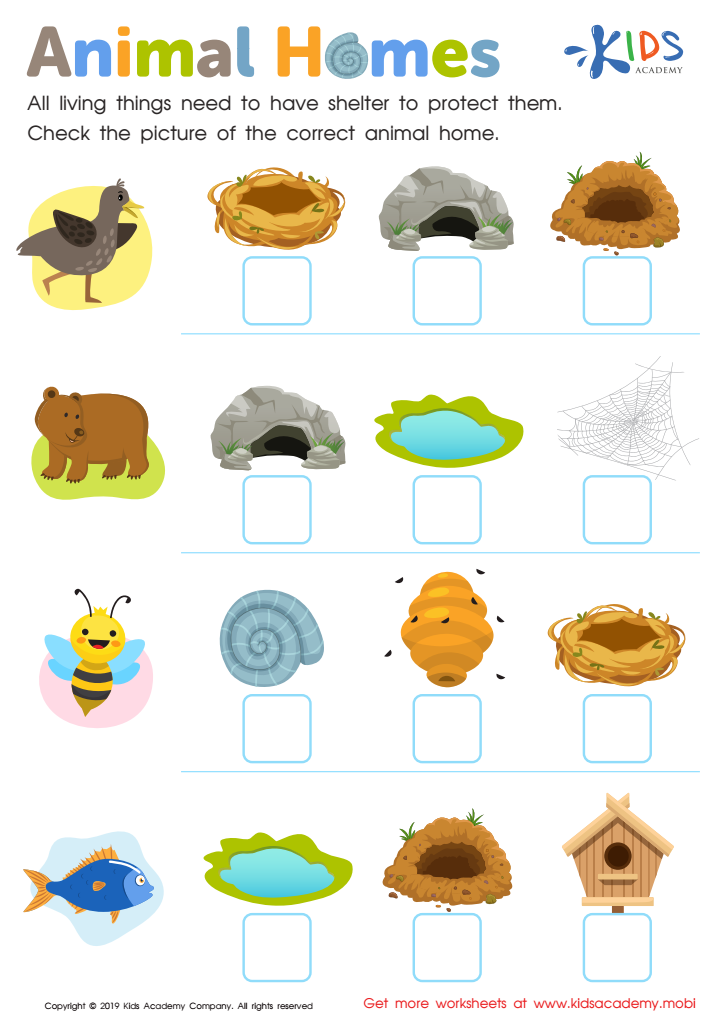
Animal Homes Worksheet
Students have homes where they can do things they love, sleep and stay safe from bad weather. Check the worksheet for animals and their shelters. Ask your kids to identify each and match the animal home to the picture. (80 words)
 Assign to My Students
Animal Homes Worksheet
Worksheet
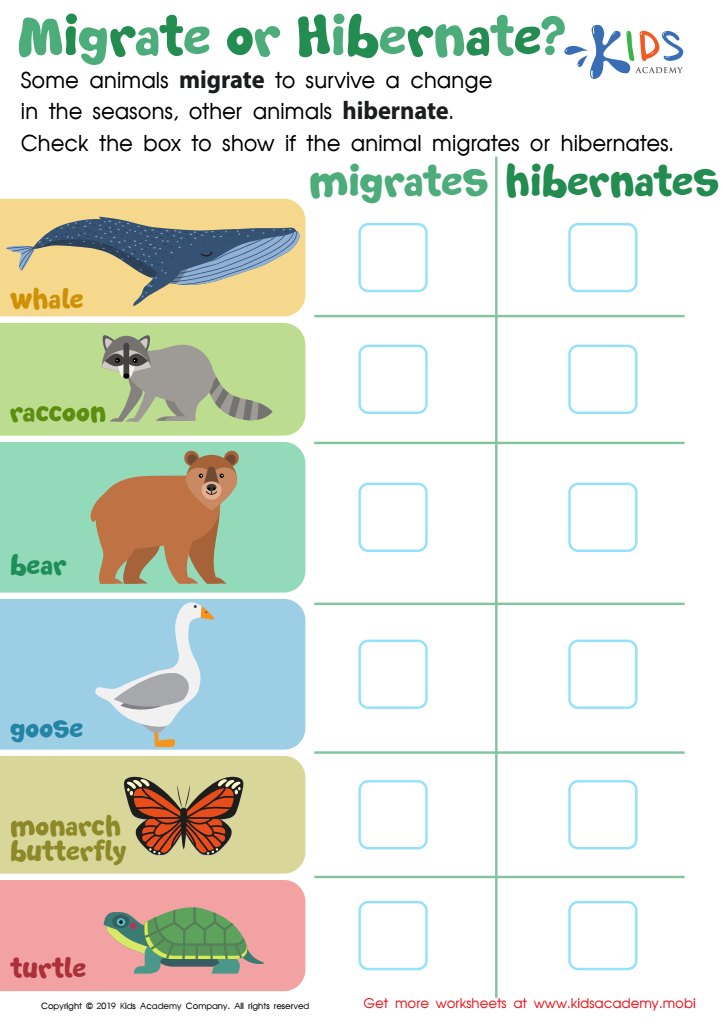
Migrate or Hibernate? Worksheet
Many animals survive by either migrating or hibernating when the weather changes. Migration involves traveling in flocks or herds to a more temperate climate, while hibernation is when animals stay in their homes and eat and sleep for a long period of time. Show your kids this worksheet and help them decide which strategy animals use to cope with the changing weather.
Migrate or Hibernate? Worksheet
Worksheet
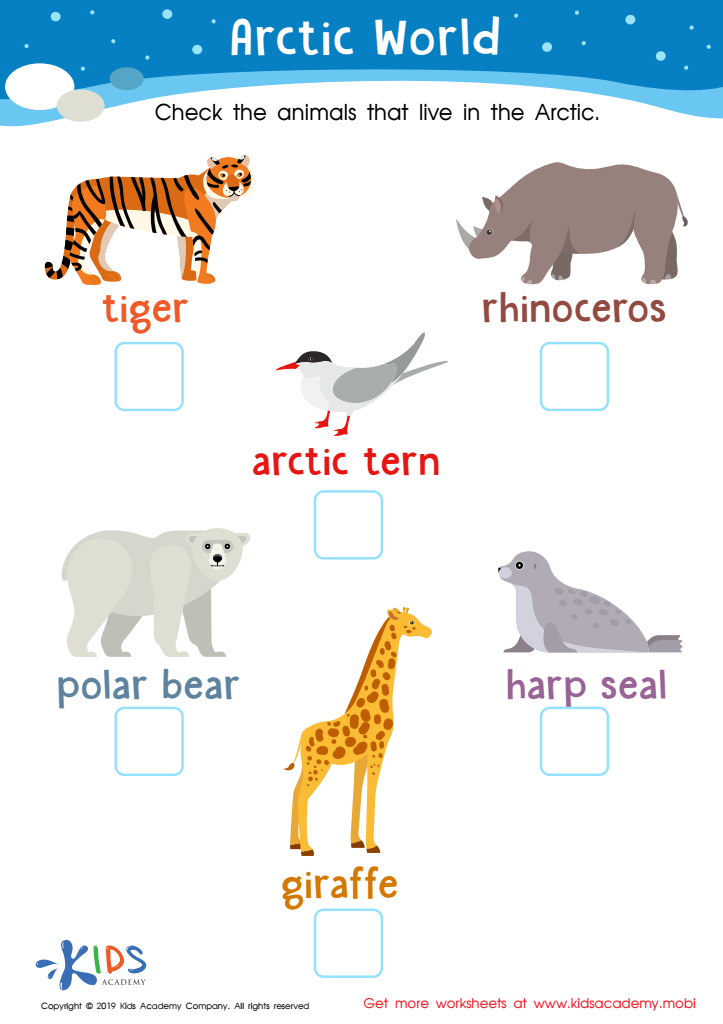
Arctic World Worksheet
Ask your students if they know where the Arctic is located and what lives there. If not, use a world atlas to show them. The Arctic is very cold and snow-covered; native animals have adapted to survive the harsh conditions. Look at the animals in the worksheet and help your students decide which ones live in the Arctic.
Arctic World Worksheet
Worksheet
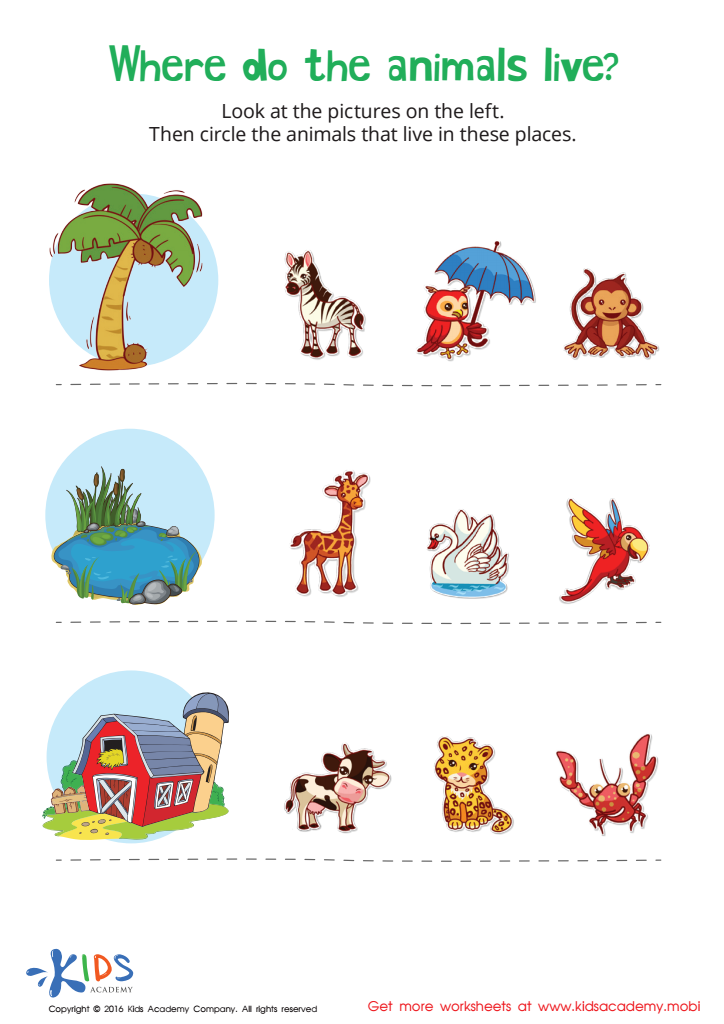
Where Animals Live Worksheet
Teaching early reading and math skills is important, but don't forget about science. With the Where Animals Live PDF worksheet, kids can identify their favorite animals and the environments they live in. Ask them what type of environment the animals like and introduce them to geography. It's great for logical reasoning and classification skills. Your kid will practice with their favorite animals and love the trip to the zoo afterwards!
Where Animals Live Worksheet
Worksheet
Join Kids Academy for Free
Who is primarily going to use this learning content?




%20(1).jpg)



Reading comprehension is a vital skill that forms the foundation for a child’s educational journey. When it comes to understanding stories like "Normal Animals" aimed at children ages 3-5, its importance cannot be overstated. At this early developmental stage, children's brains are rapidly expanding, and reading comprehension helps in several crucial ways. First, it enhances vocabulary and language skills. By listening to or reading stories, children pick up new words and phrases, which aids in their verbal expression and understanding.
Secondly, reading comprehension fosters cognitive development. Stories about "Normal Animals" often include narratives that boost critical thinking, questioning, and problem-solving skills as children make sense of the storyline. Importantly, comprehending such stories cultivates empathy and emotional intelligence. As children connect with characters and their experiences, they learn to understand different perspectives and emotions.
Additionally, early reading sets the stage for future academic success. A solid grasp of reading comprehension skills early on increases the likelihood of success in later schooling where advanced textual analysis is required. Lastly, it helps instill a love for reading. Engaging young minds with stories they can relate to nurtures a lifelong passion for literature, enriching their lives in countless ways.
Thus, parents and teachers should immensely value reading comprehension activities for children aged 3-5 to foster well-rounded cognitive, linguistic, and emotional development.








