Normal Silent Vowels Worksheets for Ages 3-6
3 filtered results
-
From - To
Unlock your child's reading potential with our "Normal Silent Vowels Worksheets" for ages 3-6. These engaging, printable activities focus on teaching young learners the concept of silent vowels in a fun and interactive way. Perfect for preschool and kindergarten students, the worksheets enhance phonemic awareness, improve reading skills, and build a strong foundation in early literacy. Designed by early education experts, each worksheet features colorful illustrations and simple instructions, making learning enjoyable and effective. Visit our website to download these essential resources and give your child a head start in their reading journey!
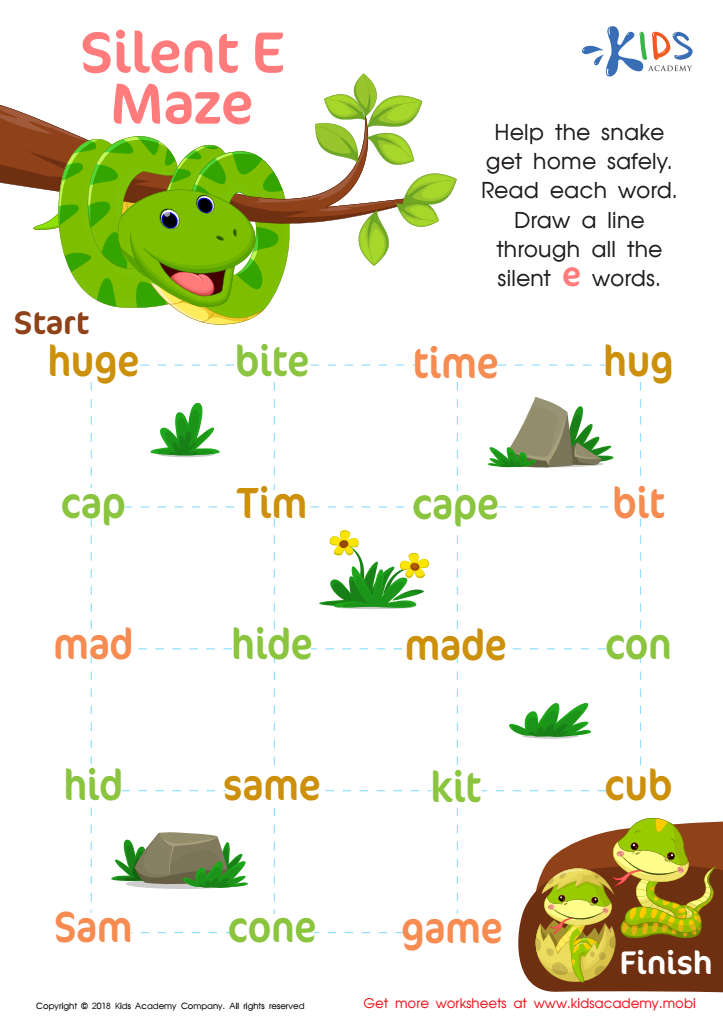
Silent E Maze Worksheet
 Assign to My Students
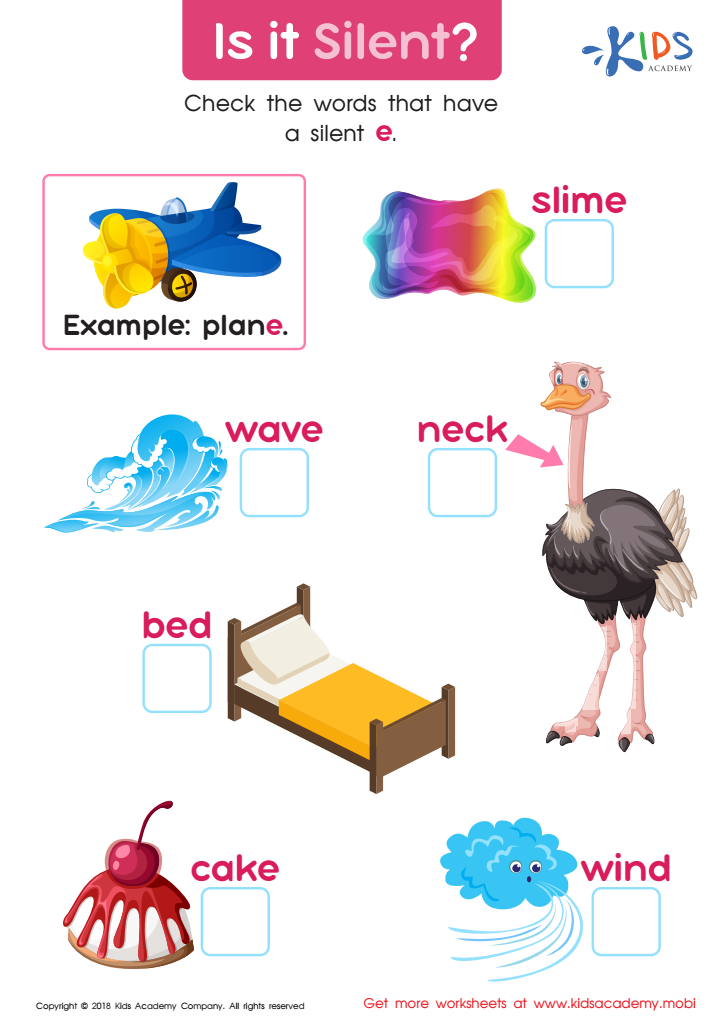
Is It Silent? Worksheet
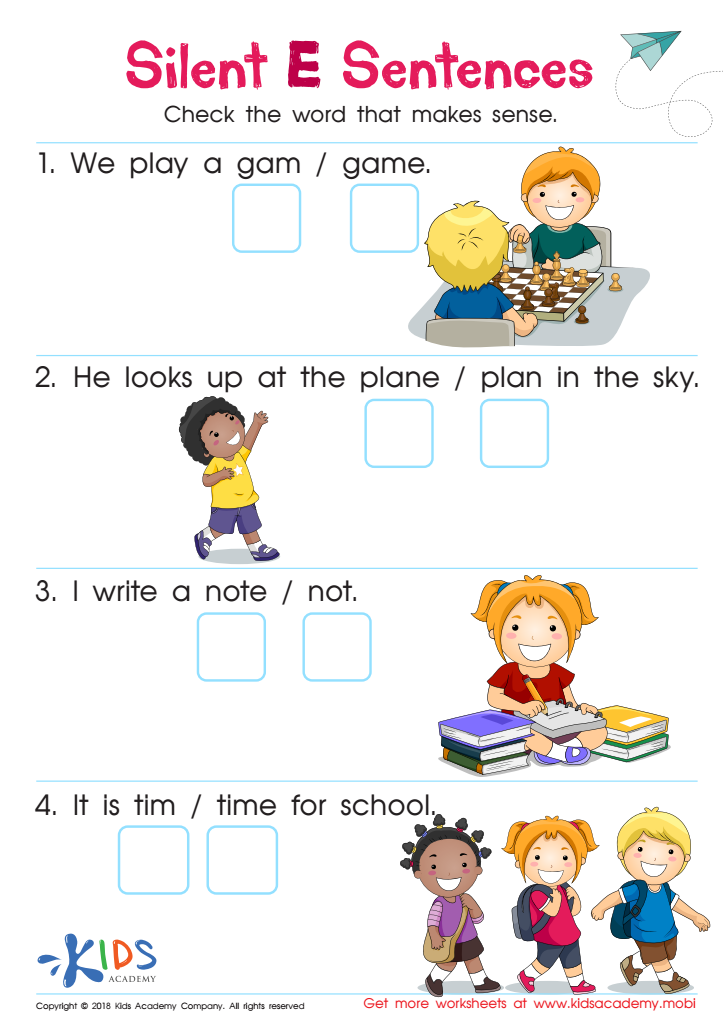
Silent E Sentences Worksheet


Normal Silent Vowels are vital for the literacy development of children aged 3-6 as they form the foundation for proficient reading and spelling. When parents and teachers focus on these silent vowels, they help children understand the intricacies of the English language, paving the way for future academic success.
These vowels often appear in common words, and early recognition prevents misunderstandings when children encounter them in texts. For instance, understanding that the 'e' in "bake" and "kite" is silent but modifies the preceding vowel sound is crucial. This promotes more accurate reading, which is key for developing fluency and comprehension skills.
Moreover, familiarity with silent vowels aids in spelling. Young children are often phonetic spellers, writing words as they sound. By learning about silent vowels early on, children can begin to grasp the non-phonetic aspects of English, improving their spelling accuracy and written communication.
Lastly, teaching these principles bolsters children's confidence. When children decode words successfully, it builds their sense of achievement and eagerness to learn. Therefore, investing time in teaching Normal Silent Vowels equips children with essential tools for literacy that will support their educational journey and foster a love for reading.