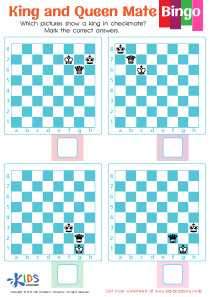
Number Recognition Normal Chess Worksheets for Ages 3-6
3 filtered results
-
From - To
Welcome to our engaging "Number Recognition Normal Chess Worksheets," designed especially for children aged 3-6! These interactive worksheets blend the classic game of chess with foundational math skills to help young learners recognize and understand numbers. Each activity incorporates fun chess-themed elements, making learning enjoyable and exciting. By using these worksheets, children will enhance their number recognition while developing critical thinking skills through strategic play. Perfect for home or classroom use, our resources provide a unique approach to early math education. Download now and watch your little ones improve their numeracy skills while having a blast with chess!
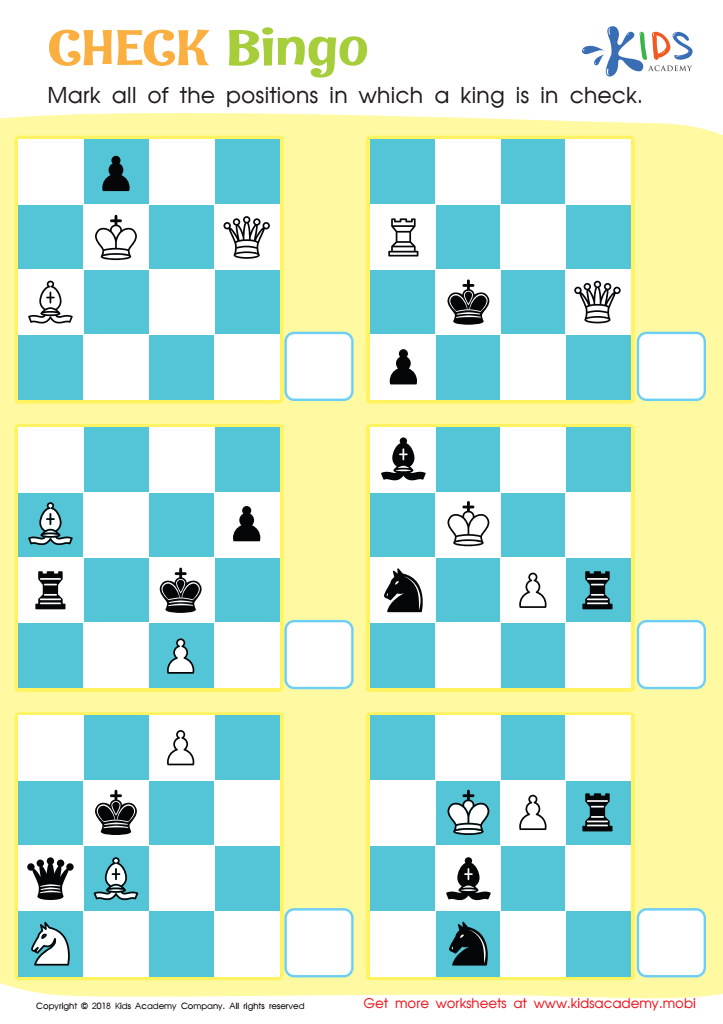
Check Bingo Worksheet
 Assign to My Students
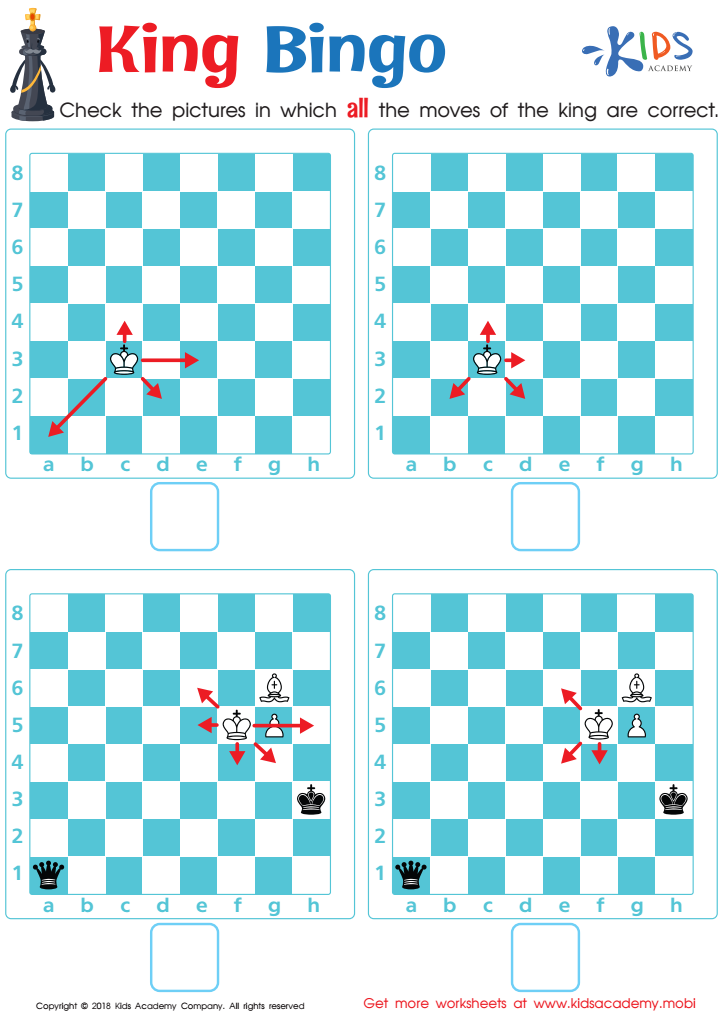
King Bingo Worksheet
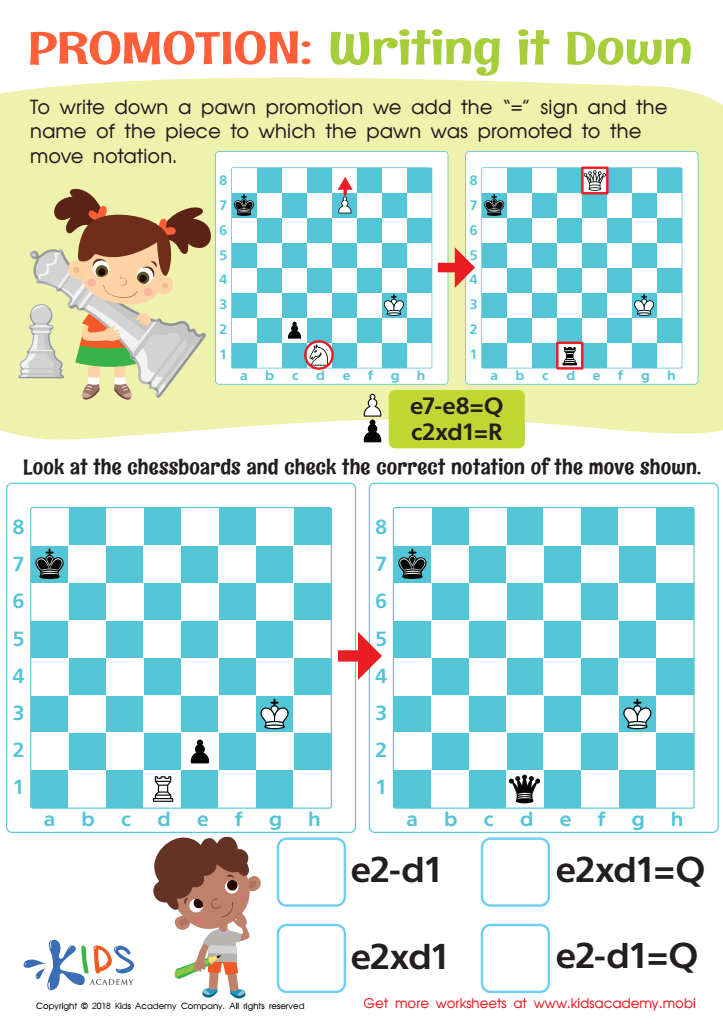
Writing it Down Worksheet








Number recognition is a fundamental skill that lays the groundwork for children's mathematical understanding and cognitive development. For children aged 3-6, learning to recognize numbers is vital as it promotes counting, simple arithmetic, and overall math literacy. Parents and teachers should care about fostering this skill because it directly influences a child’s future academic success.
Introducing number recognition through engaging methods such as games, songs, and activities can make learning enjoyable and interactive. The early years are crucial for brain development; thus, activities that involve number recognition stimulate cognitive skills and encourage neural growth. Moreover, this foundational learning fosters responsibilities such as recognizing numerical symbols in everyday life, including house numbers, age, and time, enhancing a child's independence and confidence.
Chess, though primarily a strategic game, can also be integrated in teaching number recognition. By counting pieces, understanding moves, and recognizing patterns, children enhance not only their numerical skills but also critical thinking and problem-solving abilities. Encouraging number recognition through diverse avenues, including play-based learning and games like chess, sets the stage for a well-rounded education, empowering children with essential skills for their future.