Math problem-solving Normal Worksheets for Ages 3-6
3 filtered results
-
From - To
Discover our engaging Math Problem-Solving Worksheets designed for children ages 3 to 6! These worksheets help young learners develop essential math skills through fun and interactive activities. Tailored to match their developmental stages, they cover basic concepts such as counting, addition, subtraction, and pattern recognition. Each worksheet aims to foster critical thinking and improve problem-solving abilities while keeping young minds curious and enthusiastic about learning math. Ideal for preschool and kindergarten students, our resources support early childhood education at home or in the classroom. Download our printable worksheets today and make math an exciting adventure for your little ones!
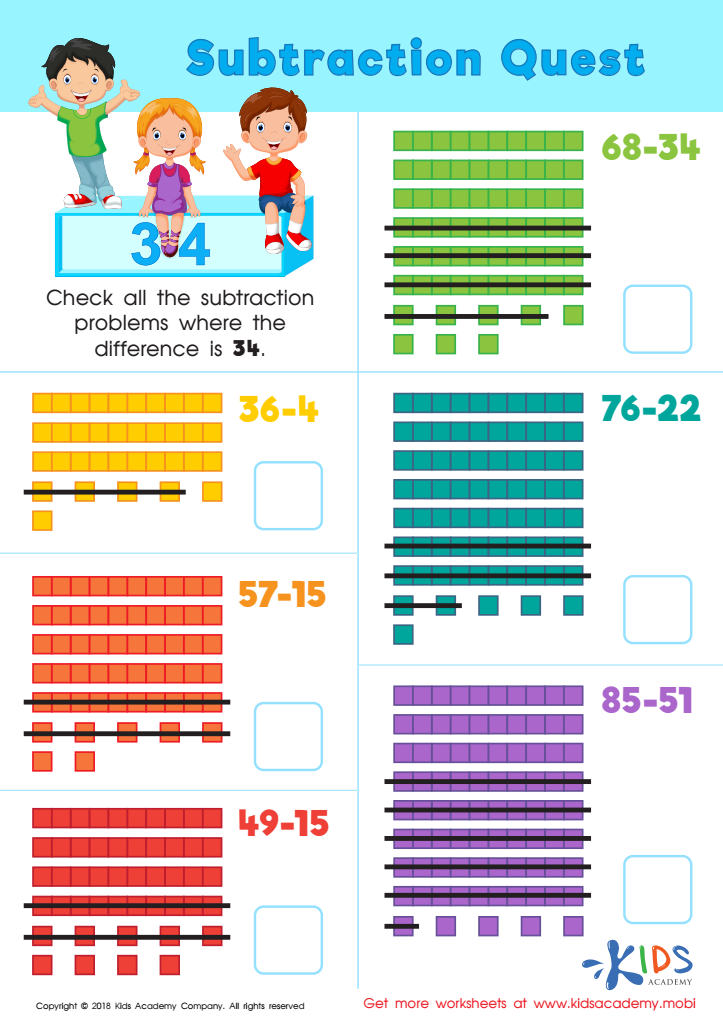
Subtraction Quest Worksheet
 Assign to My Students
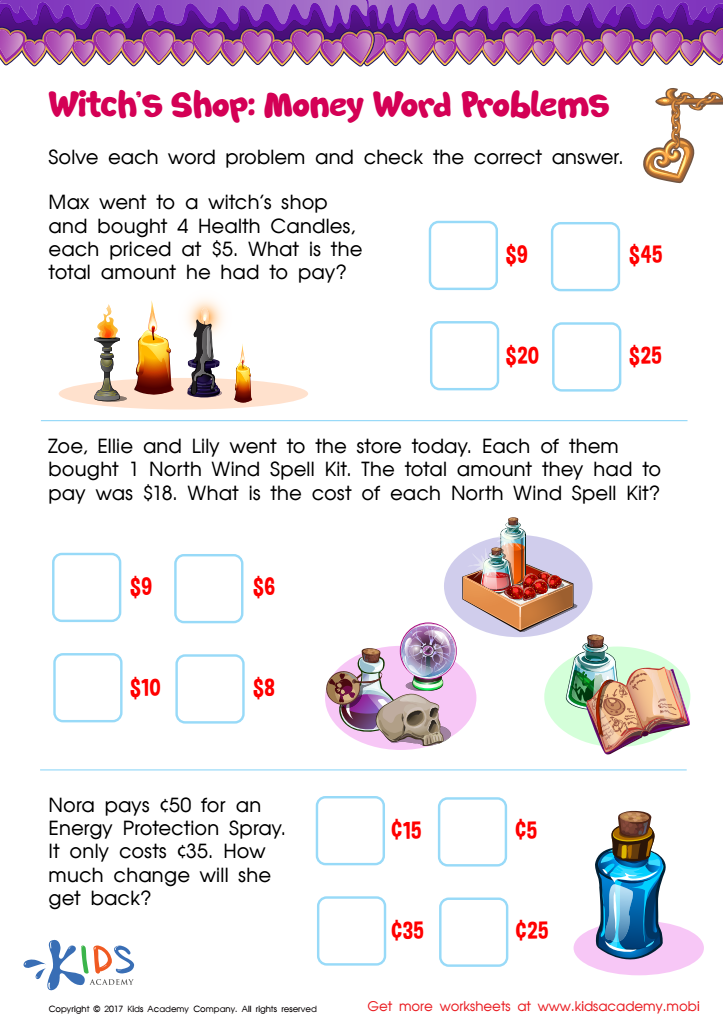
Money Word Problems Printable
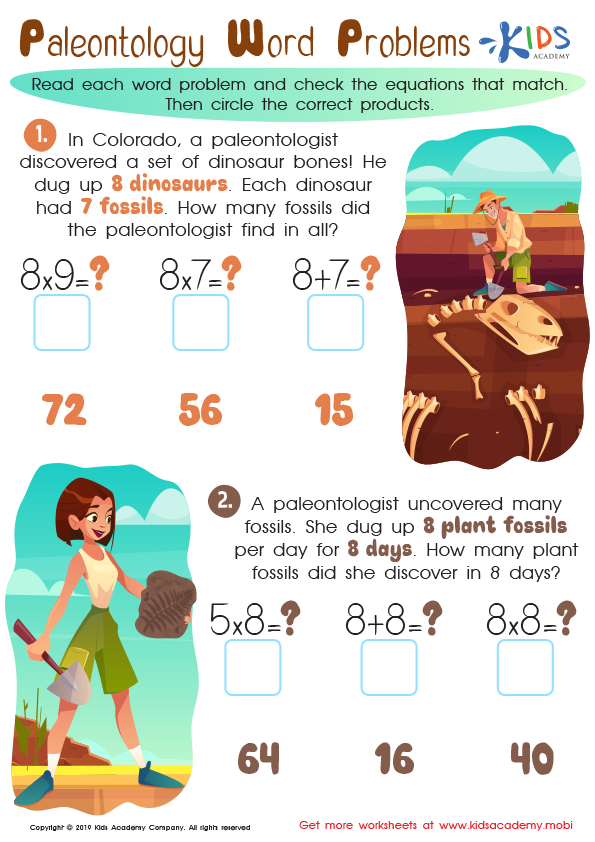
Archeology Word Problems Worksheet







.jpg)
Math problem-solving for children aged 3-6 years is crucial for several reasons. At this formative stage, children are developing foundational skills that will support their later academic success. Engaging in math problem-solving helps young learners enhance their logical reasoning and critical thinking abilities. It encourages curiosity and exploration, fostering a love for learning that extends beyond math.
Additionally, math is not just about numbers; it involves understanding patterns, relationships, and spatial awareness. By encouraging problem-solving in early math, parents and teachers help children build essential skills such as counting, measurement, and shape recognition in a fun, engaging manner. Mastering these concepts lays the groundwork for more complex math in later years.
Moreover, early exposure to math problem-solving can significantly impact a child's confidence and self-esteem. As they successfully solve problems, they gain a sense of accomplishment, encouraging persistence and resilience in the face of challenges. This process ultimately contributes to a positive attitude toward learning overall.
In nurturing math problem-solving from ages 3-6, parents and teachers play a vital role in preparing children for lifelong success, both in academics and everyday situations involving math. Thus, their involvement is crucial in achieving these developmental milestones.








