Phonics comprehension Normal Worksheets for Ages 3-6
3 filtered results
-
From - To
Welcome to our Phonics Comprehension Normal Worksheets designed specially for ages 3-6! These engaging and interactive worksheets aim to enhance early literacy skills through phonics activities that promote reading readiness. Each printable worksheet fosters a fun learning environment, helping children recognize sounds, improve vocabulary, and develop essential comprehension skills. Our carefully crafted exercises are ideal for home or classroom use, ensuring that young learners build a solid foundation in reading. Unlock your child's potential with our diverse range of activities that not only educate but also inspire a love for learning. Begin their phonics journey today!
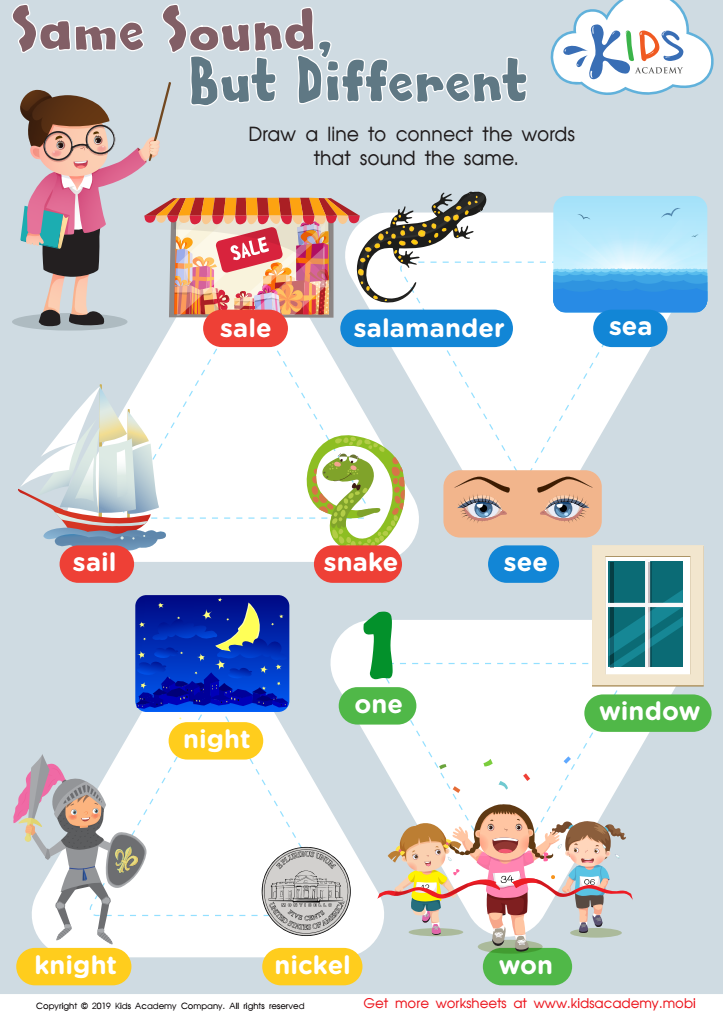
Sound Different Worksheet
 Assign to My Students
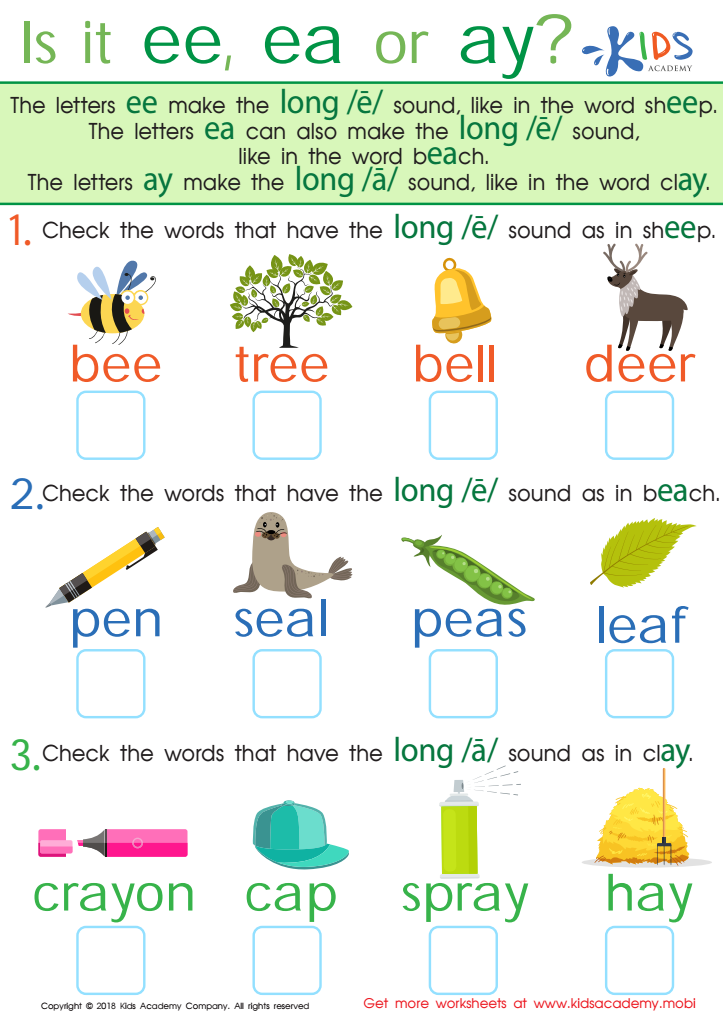
Is It EE, EA, or AY? Worksheet
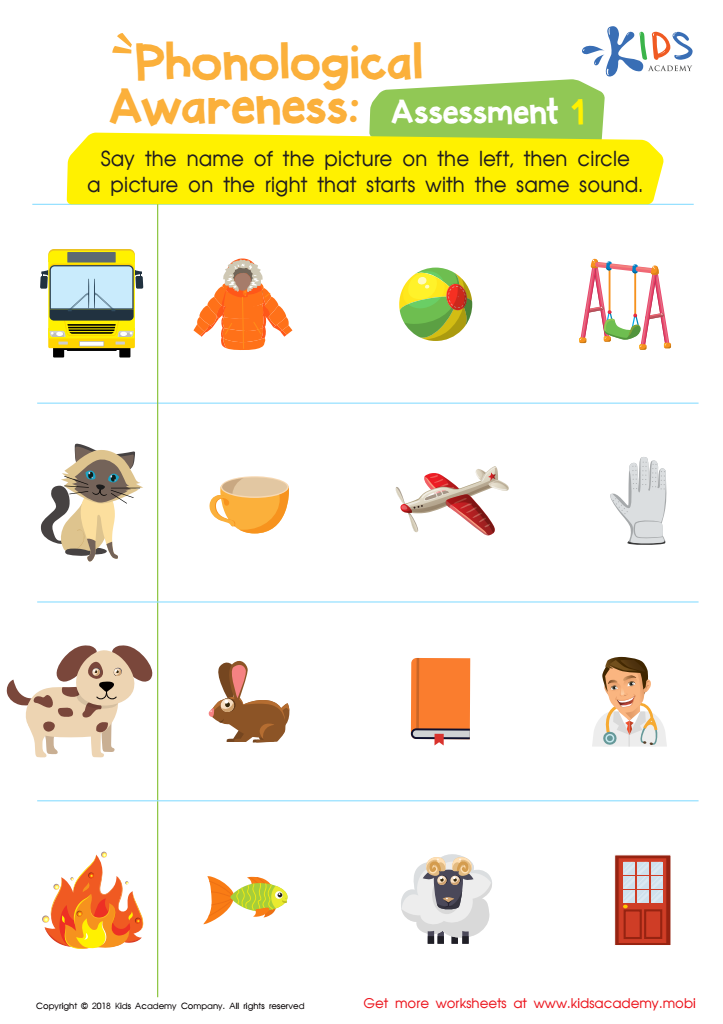
Phonological Awareness: Assessment 1 Worksheet



.jpg)



Understanding phonics is pivotal for children aged 3-6 as it lays the foundation for their reading and writing skills. Phonics teaches children the relationship between letters and their corresponding sounds, enabling them to decode words, which is crucial for early literacy development. When parents and teachers prioritize phonics comprehension, they help children develop essential skills such as phonemic awareness, sound blending, and segmenting, which promote effective reading strategies.
Moreover, early investment in phonics sets the stage for academic success, as proficient reading skills are closely linked to overall literacy and learning outcomes. Children who grasp phonics tend to experience less frustration with reading, fostering a positive attitude towards literacy. This, in turn, promotes a love for reading, encouraging exploration and creativity.
Additionally, phonics comprehension supports communication skills, as children learn to express themselves through writing. Parents and educators can bolster this learning by engaging children in phonics games, songs, and reading aloud together.
In summary, prioritizing phonics comprehension for children aged 3-6 is vital for developing strong literacy skills, boosting confidence, and encouraging lifelong learning habits. When caregivers actively participate in this educational journey, they play a crucial role in shaping their child’s future success.








