
Counting skills Normal Addition Facts Worksheets for Ages 3-6
5 filtered results
Difficulty Level
Grade
Age
-
From - To
Subject
Activity
Standards
Enhance your child's early math abilities with our Counting Skills Normal Addition Facts Worksheets, designed for ages 3 to 6. These engaging worksheets provide a fun and interactive way for young learners to grasp essential counting and addition concepts. Featuring vibrant illustrations and playful activities, children will develop confidence in their counting skills while mastering basic addition facts. Our thoughtfully designed exercises promote hands-on learning, making math enjoyable and accessible. Encourage your child's math journey today with these tailored worksheets that foster foundational skills for future success! Download now and watch your little one thrive in their mathematical adventures!
Favorites
With answer key
Interactive
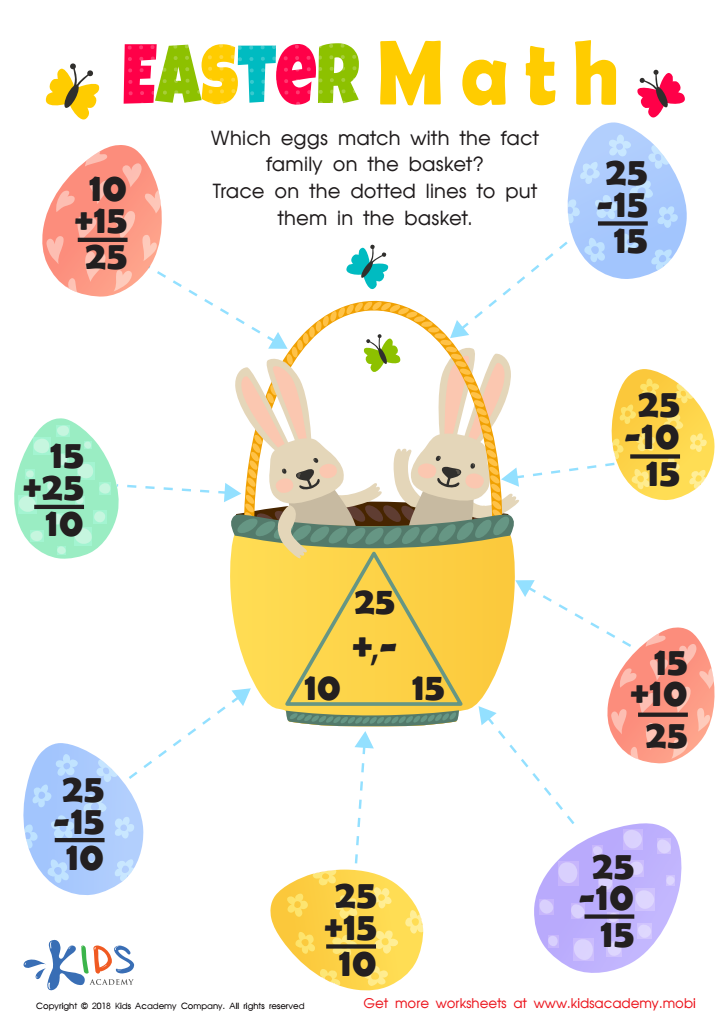
Fact Families: Easter Math Worksheet
Kids will love this vibrant PDF packed with Easter math fun! Match facts with the colorful eggs, add and subtract multiples of five to boost automaticity, and have a blast with the bunny friends!
 Assign to My Students
Fact Families: Easter Math Worksheet
Worksheet
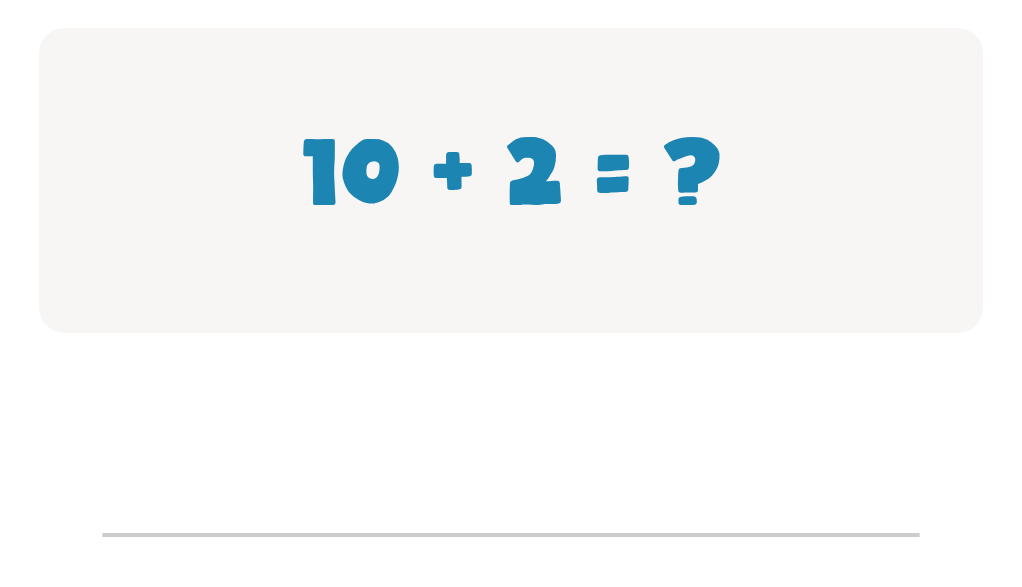

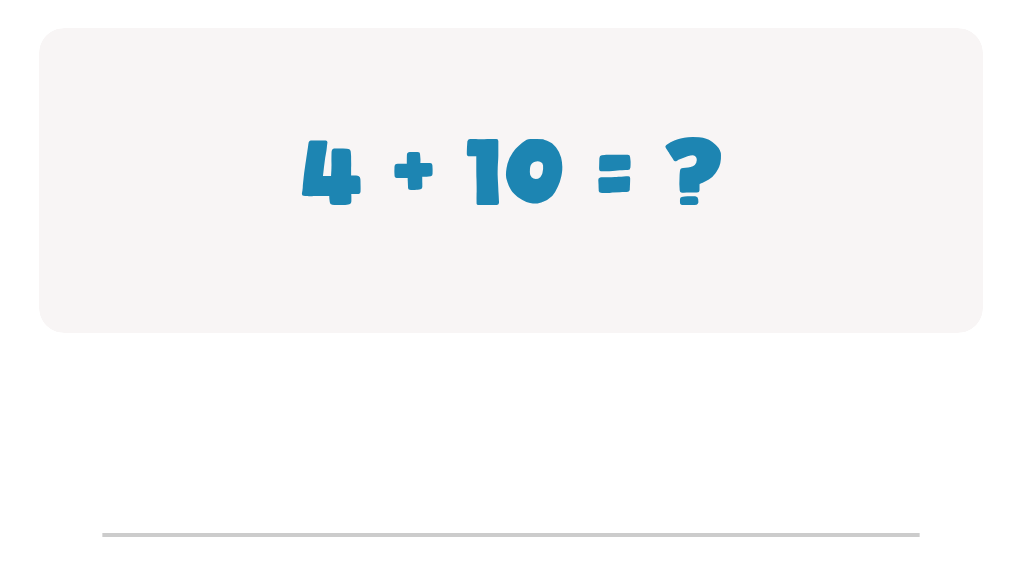
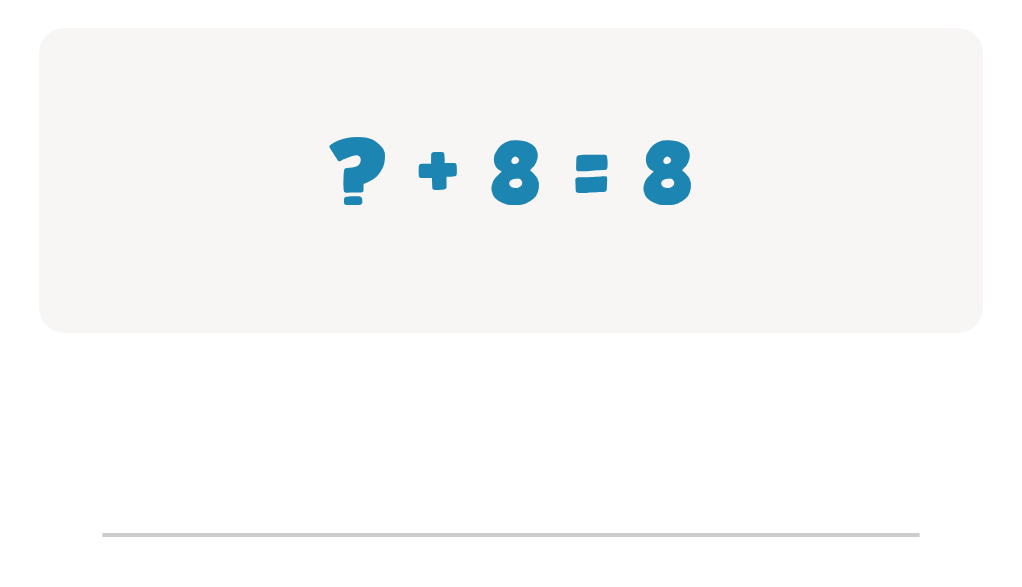

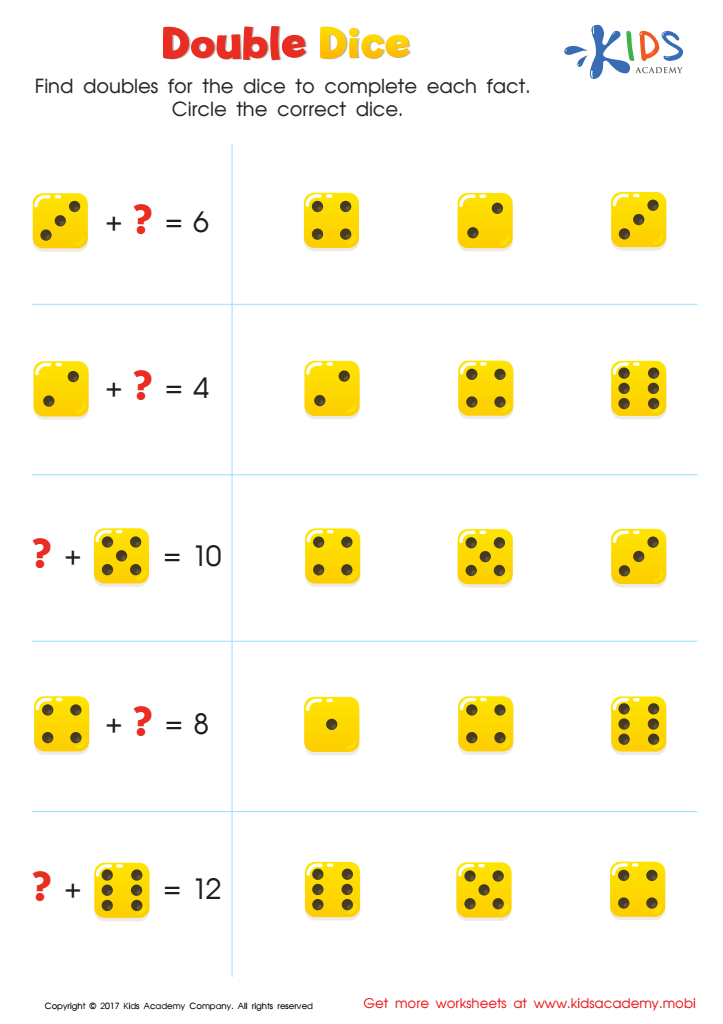
Addition Facts: Double Dice Worksheet
Are you looking for ways to make maths more engaging for kids? Maths can be a bore, but by teaching kids from an early age that it can be fun, they won't struggle with it. This worksheet is a great way to start: your child needs to identify the number on the left dice and find its double on the right. The sum of the two dice is also given.
Addition Facts: Double Dice Worksheet
Worksheet
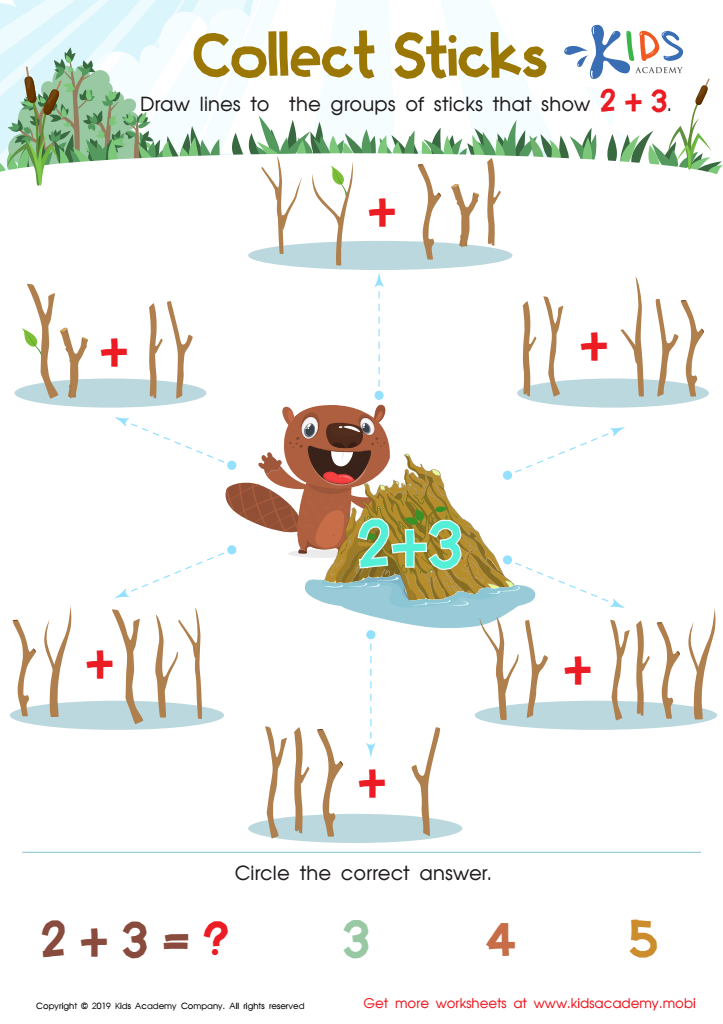
Collect Sticks Worksheet
Let math be fun for your kids with a simple and colorful worksheet exercise. Addition and subtraction can be daunting, but you can make it enjoyable with exercises like this one. Get them to draw lines to the groups of sticks that show 2+3 and watch them light up.
Collect Sticks Worksheet
Worksheet
14 in School Worksheet
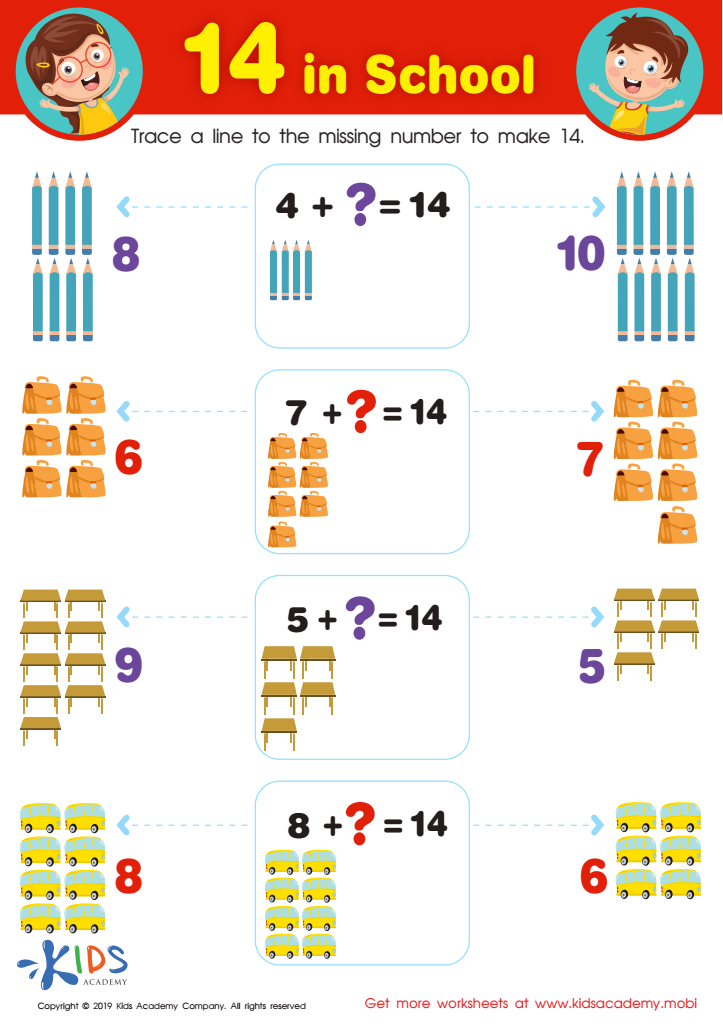
Remind your kids that adding different sets of numbers can give the same total (e.g. 2+3=5, 4+1=5). Ask them for more examples. Afterwards, work through the exercise. Help them count the objects and trace a line to the missing number that makes the total 14.
14 in School Worksheet
Worksheet
Growing with 15 Worksheet
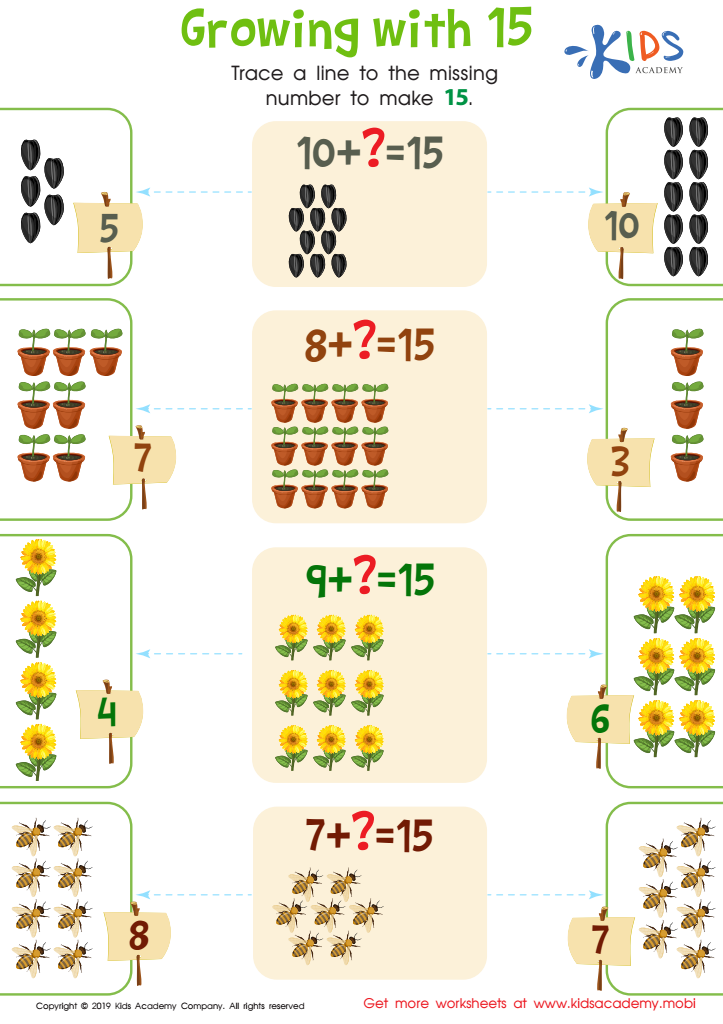
Remind your kids that adding different sets of numbers can give the same total (e.g. 2+3=5, 4+1=5). Test their understanding by asking them for more examples. Move onto the worksheet: count objects, then trace the line to the number making a total of 15.
Growing with 15 Worksheet
Worksheet
Join Kids Academy for Free
Who is primarily going to use this learning content?








Counting skills and normal addition facts are fundamental building blocks in early childhood mathematics that significantly impact a child's cognitive development. For children aged 3-6, the focus on counting and addition lays the groundwork for future math competency. By mastering these skills, children learn to recognize numbers, understand their relationships, and develop critical problem-solving abilities.
Parents and teachers should care because these foundational skills foster mathematical thinking, enhance verbal communication around numbers, and promote logical reasoning. Early exposure to counting and simple addition helps children develop a comfort with numeracy, reduces math anxiety later, and boosts their overall confidence.
Developing counting skills also supports other academic areas, such as literacy—children learn pattern recognition and sequencing, which are essential in reading and writing. Engaging activities, such as counting games and interactive play, can make learning enjoyable and meaningful, establishing a positive attitude towards math early on.
Moreover, skills learned in these formative years often correlate with academic success. By prioritizing counting and addition, parents and teachers empower children with critical tools for lifelong learning, setting them on a path toward achievement in math and beyond. Thus, nurturing these skills is crucial for fostering a mathematically literate and confident generation.








