Critical Thinking Normal Geometry Worksheets for Ages 3-6
5 filtered results
-
From - To
Unlock your child's potential with our Critical Thinking Normal Geometry Worksheets designed for ages 3-6! These engaging, age-appropriate worksheets combine fun and learning, helping young minds explore foundational geometric concepts. Each activity encourages critical thinking skills, fostering creativity and problem-solving through interactive challenges. From identifying shapes to understanding spatial relationships, these worksheets make learning geometry delightful. Ideal for both classroom and home use, they empower children to approach challenges confidently and independently while building essential skills for future learning. Start your child's journey into the world of geometry today, and watch their critical thinking skills flourish with engaging tasks designed just for them!
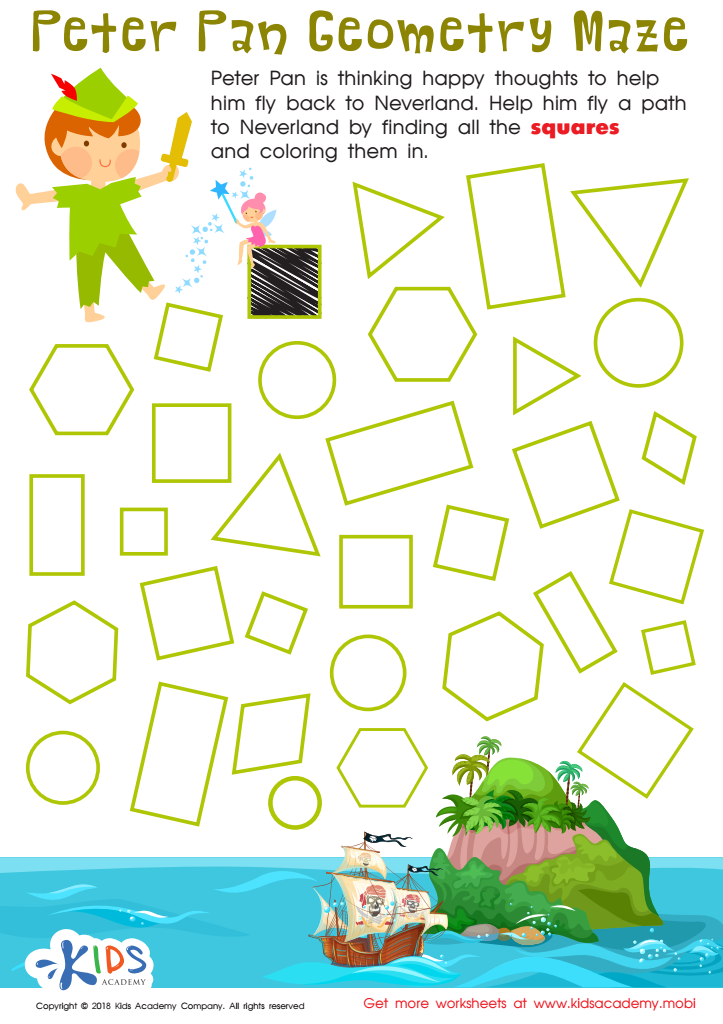
Peter Pan Worksheet
 Assign to My Students











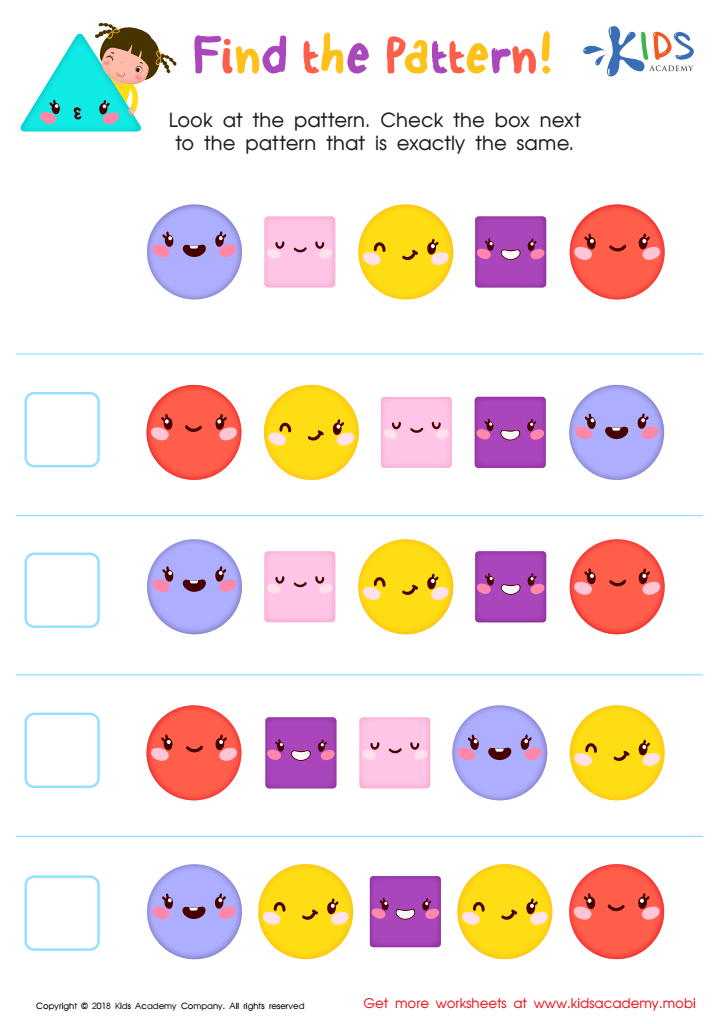
Find the Pattern Worksheet
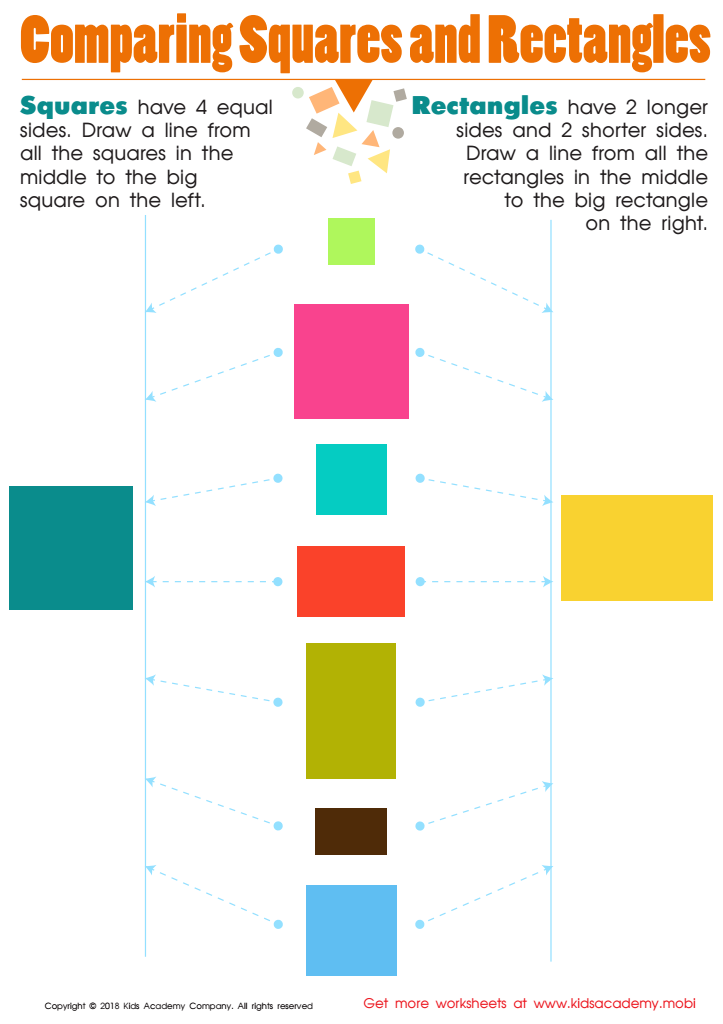
Comparing Squares Rectangles Worksheet
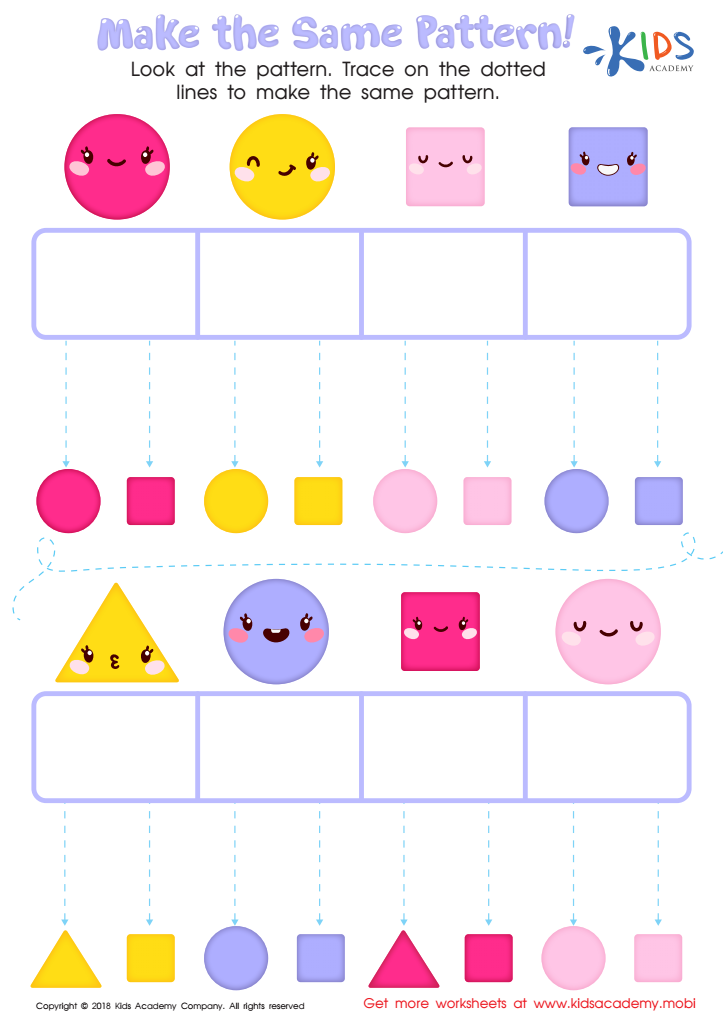
Make the Same Pattern Worksheet
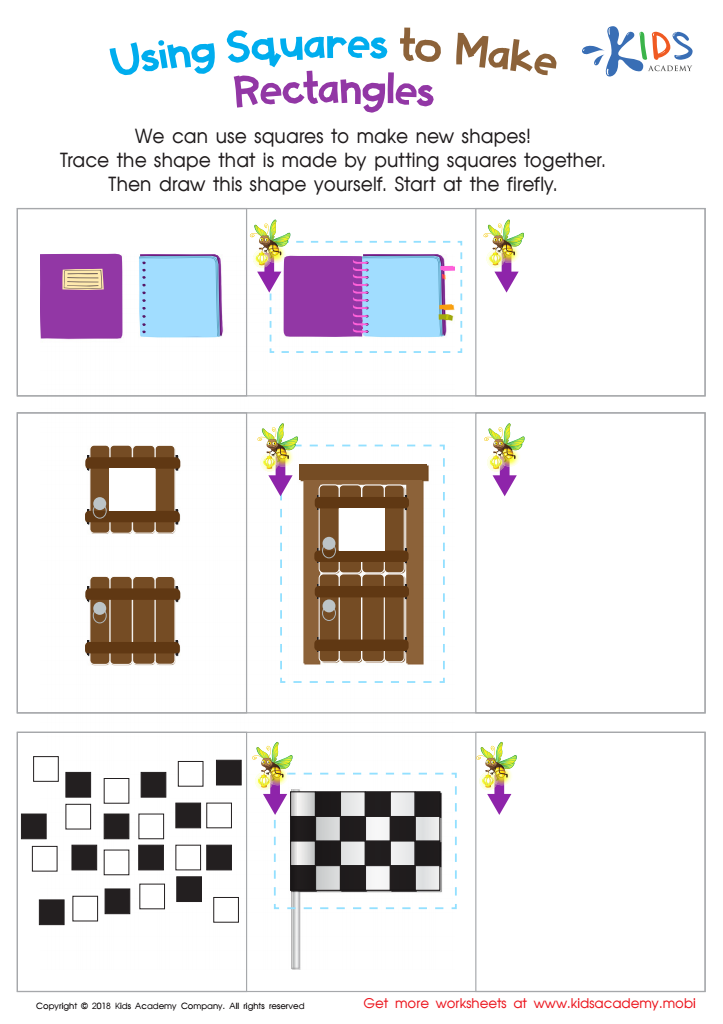
Using Squares to Make Rectangles Worksheet








Critical Thinking in Normal Geometry for ages 3-6 is essential for fostering foundational skills that children will use throughout their lives. Engaging young learners with geometric concepts promotes spatial awareness, logic, and problem-solving skills. At this age, children's brains are highly receptive to new information, making it a prime time to introduce critical thinking exercises related to shapes, patterns, and measurements.
Understanding basic geometric concepts aids in cognitive development, as children learn to observe relationships between objects, identify patterns, and make connections between different ideas. This enhances not only mathematical thinking but also language and analytical skills. When children engage in activities like sorting, classifying, and comparing shapes, they practice reasoning and decision-making, skills that form the backbone of critical thinking.
Additionally, integrating Critical Thinking in geometry helps students develop a growth mindset. They learn that challenges can be tackled through exploration and inquiry, empowering them to face future academic scenarios with confidence. For parents and teachers, nurturing these skills ensures that children are well-prepared for more complex problem-solving tasks later in their education, laying a strong groundwork for future learning in mathematics and beyond. Overall, prioritizing critical thinking in early geometry education is vital for holistic development.








