
Enhancing Counting Skills Normal Math Worksheets for Ages 3-6
7 filtered results
Difficulty Level
Grade
Age
-
From - To
Subject
Activity
Standards
Boost your little one's counting abilities with our "Enhancing Counting Skills" normal math worksheets designed for ages 3-6. These engaging worksheets offer fun, interactive activities that promote early numeracy through colorful illustrations and hands-on learning experiences. With a variety of exercises, children will practice counting, identifying numbers, and solving simple problems, all while developing critical thinking skills. Perfect for at-home learning or classroom use, our worksheets cater to diverse learning styles and make math enjoyable. Watch your child's confidence soar as they master essential counting skills! Download now and watch their excitement for math grow!
Favorites
With answer key
Interactive
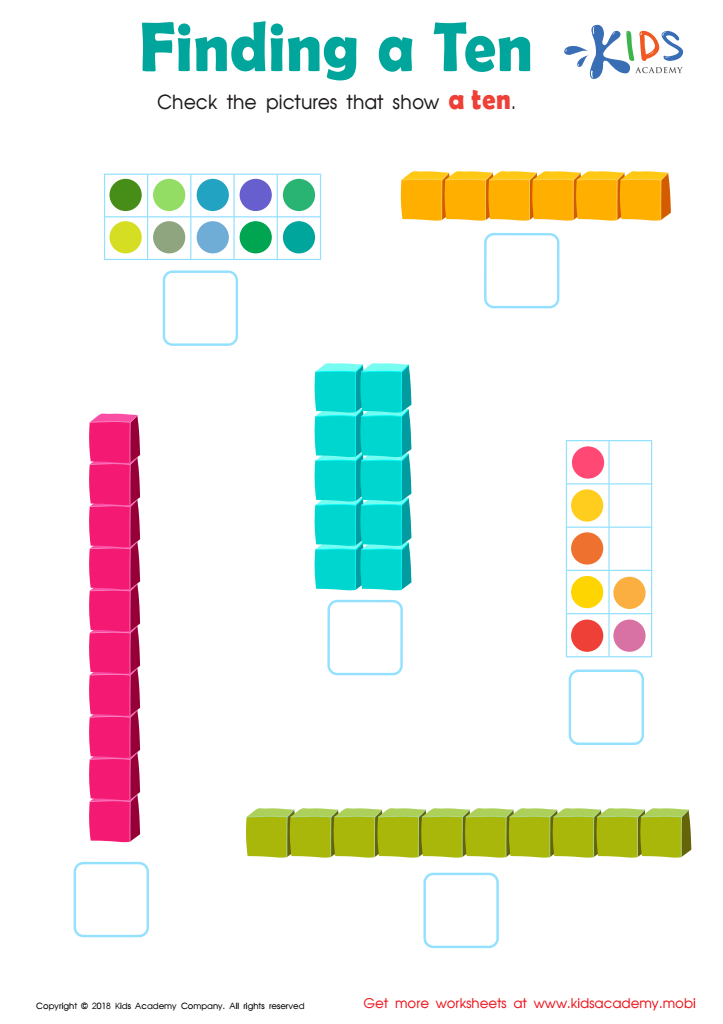
Finding a Ten Worksheet
Can your child count to ten? Distinguish groups of ten? This free printable worksheet uses shapes and colors to help first graders learn to count and understand what groups of numbers look like. It's fun and easy to comprehend, helping kids master the fundamentals of math.
 Assign to My Students
Finding a Ten Worksheet
Worksheet
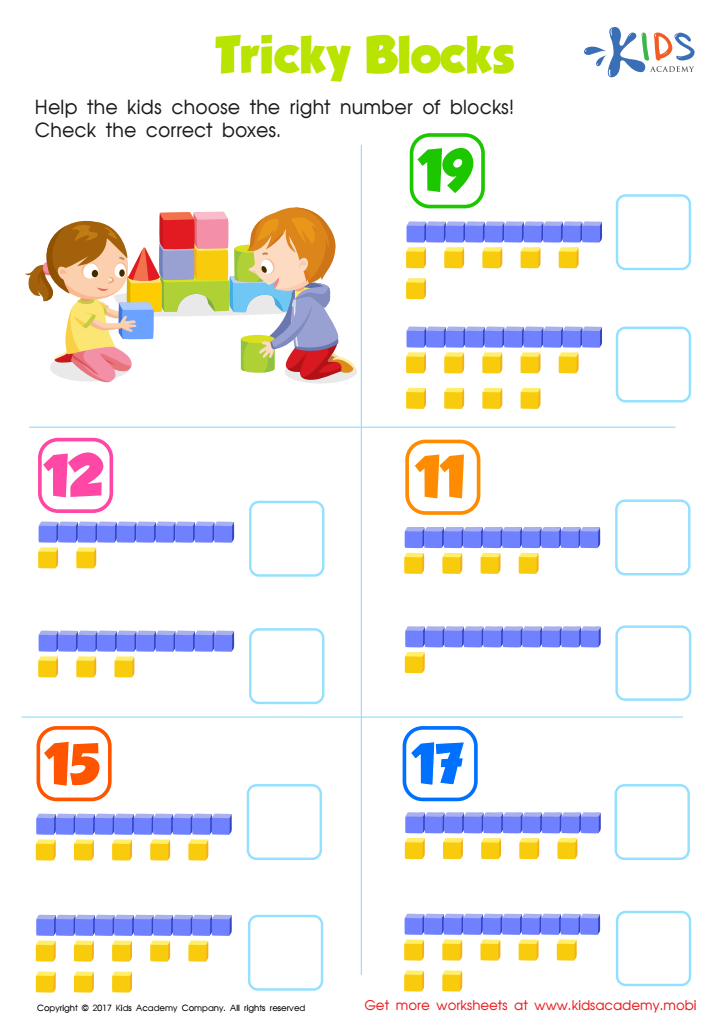
Tricky Blocks Worksheet
Help your child count with this printable worksheet. You'll be able to explain the technicalities of each answer as you work together to count the boxes and choose the correct number in the spaces provided. This will help your child better understand the concept and will go faster than if they do it alone.
Tricky Blocks Worksheet
Worksheet
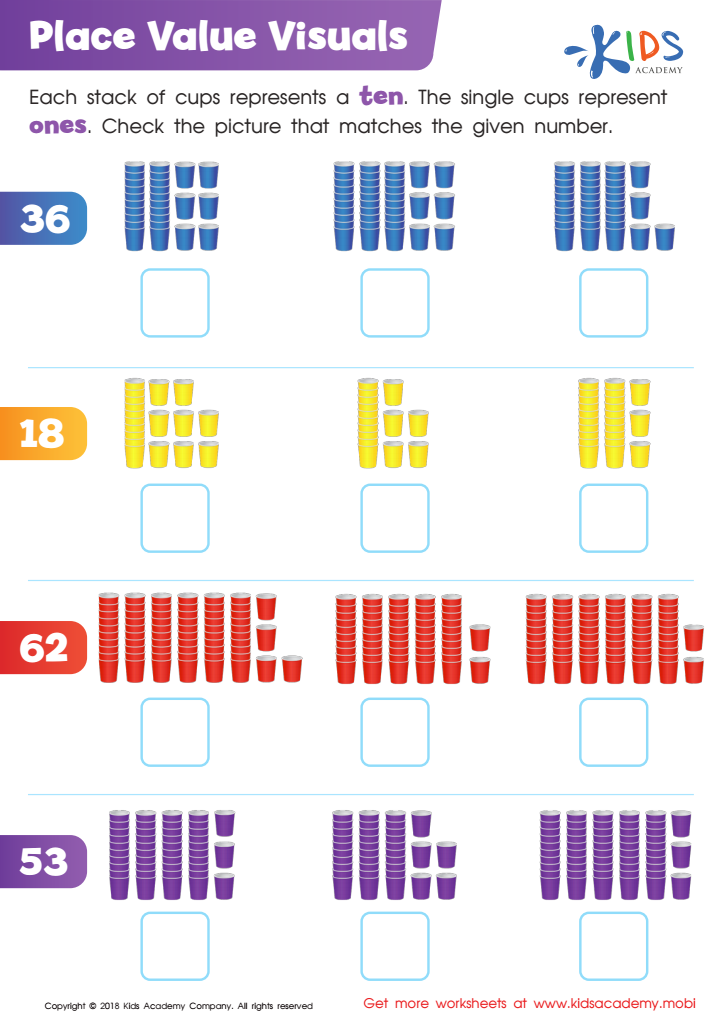
Place Value Visuals Worksheet
Help your child count the cups in each picture, using the simple rule that each stack is 10 and each single cup is 1. Ask them to match the number on the left to the picture on the right. No need to count each cup individually; since each stack is 10, 3 stacks is 30 and so on.
Place Value Visuals Worksheet
Worksheet
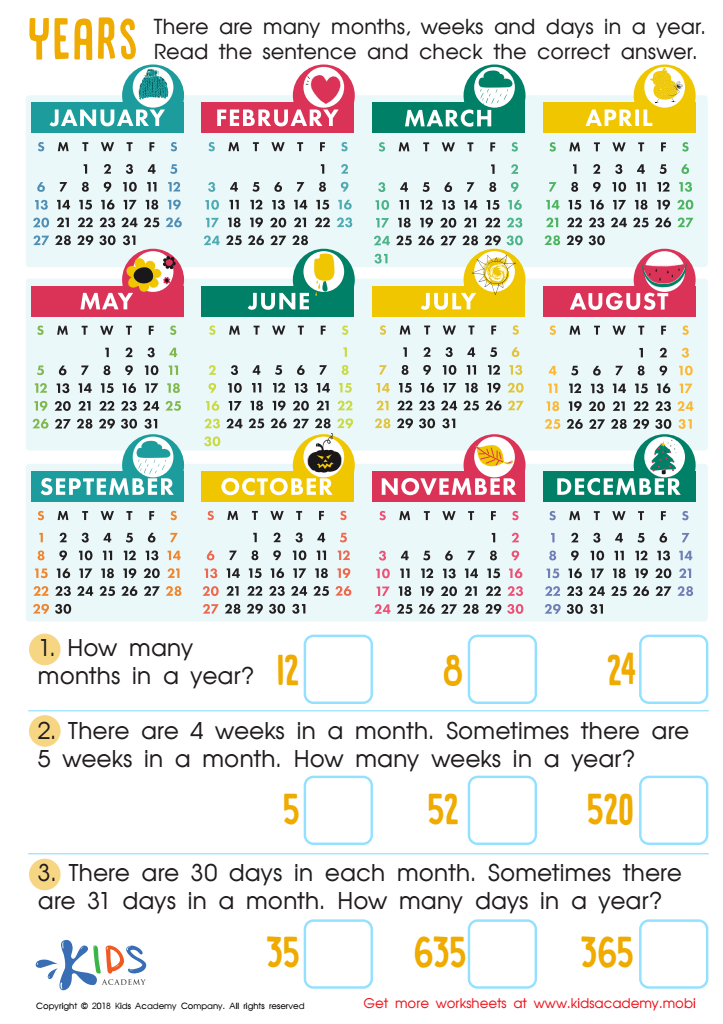
Years Worksheet
This worksheet is a great way to test your children's knowledge of the calendar. Ask them if they can name the days of the week and months in a year. Read and discuss the questions with them and help them find the right answers. Encourage them to check their answers.
Years Worksheet
Worksheet
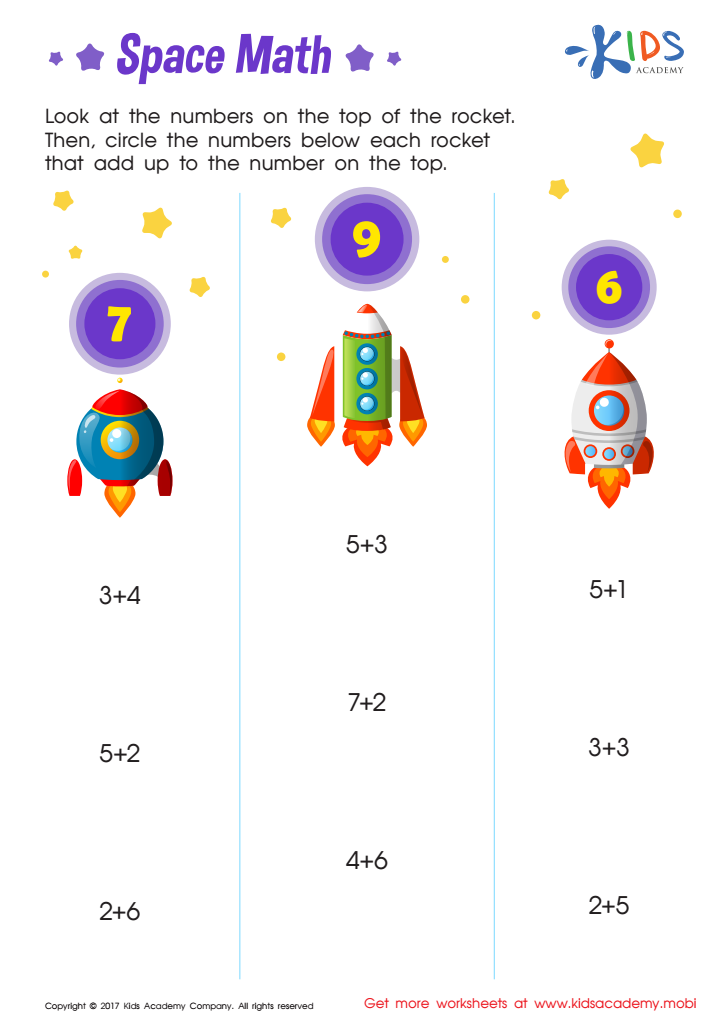
Addition: Space Math Worksheet
Fun and engaging space-themed practice with vivid pictures and matching numbers will make learning more meaningful. Take their math skills out of this galaxy today with Kids Academy!
Addition: Space Math Worksheet
Worksheet
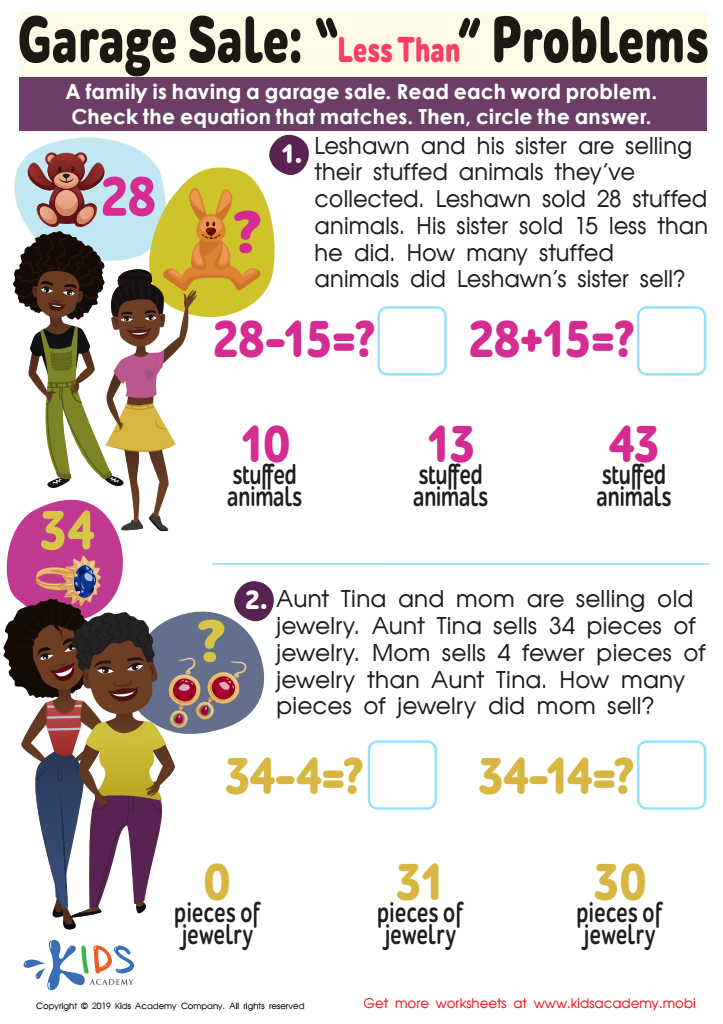
Garage Sale Less Than Worksheet
Kids often struggle with math word problems. This worksheet offers practice, using a real-world situation: friends having a garage sale. Students read each problem, extract the relevant information, match it with the correct equation and solve. Great for honing those essential problem-solving skills!
Garage Sale Less Than Worksheet
Worksheet
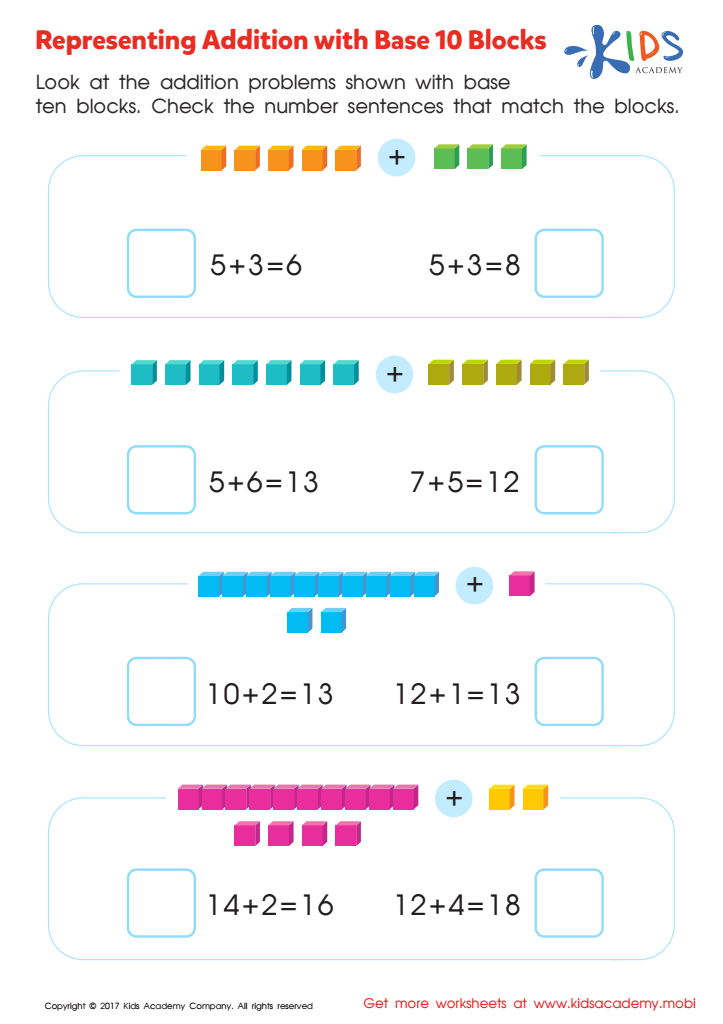
Representing Addition with Base 10 Blocks Worksheet
Solve addition problems with your little one: help them count the blocks, then select the correct equation from the choices. Circle the answer. Word play and math make a winning combo!
Representing Addition with Base 10 Blocks Worksheet
Worksheet
Join Kids Academy for Free
Who is primarily going to use this learning content?








Enhancing counting skills in children ages 3-6 is crucial for their cognitive and mathematical development. During these formative years, children are naturally curious and eager to learn. By focusing on counting, parents and teachers lay a solid foundation for future math concepts. Early counting skills aid children in developing number recognition, number sense, and the ability to perform simple arithmetic operations, which are all essential for succeeding in school.
Moreover, strengthening counting skills can boost a child's confidence in their abilities, fostering a positive attitude toward math. Engaging activities such as games, songs, and hands-on experiences can make learning fun and interactive, helping children grasp concepts easily.
Early exposure to counting also enhances critical thinking and problem-solving skills. These developmental benefits extend beyond academics; they improve social skills as children often work in groups during counting activities, learning to collaborate and communicate effectively.
In today’s fast-paced, technology-driven world, these foundational skills are essential not only for academic success but also for everyday tasks such as budgeting and measuring. Therefore, parents and teachers should prioritize enhancing counting skills to set children on a path toward lifelong learning and success.








