
Writing practice Normal Math Worksheets for Ages 3-6
3 filtered results
Difficulty Level
Grade
Age
-
From - To
Subject
Activity
Standards
Explore our engaging Writing Practice: Normal Math Worksheets, tailored for children aged 3-6! Designed to align with early math learning standards, our worksheets combine writing practice with fun math activities. Young learners will develop their number recognition, counting, and fine motor skills through interactive exercises. Each worksheet is crafted to make math enjoyable, featuring vibrant illustrations and easy-to-understand instructions. Perfect for at-home learning or classroom use, our printable resources support foundational math skills and build confidence in young mathematicians. Help your child succeed with our expertly designed worksheets that inspire a love for learning.
Favorites
With answer key
Interactive
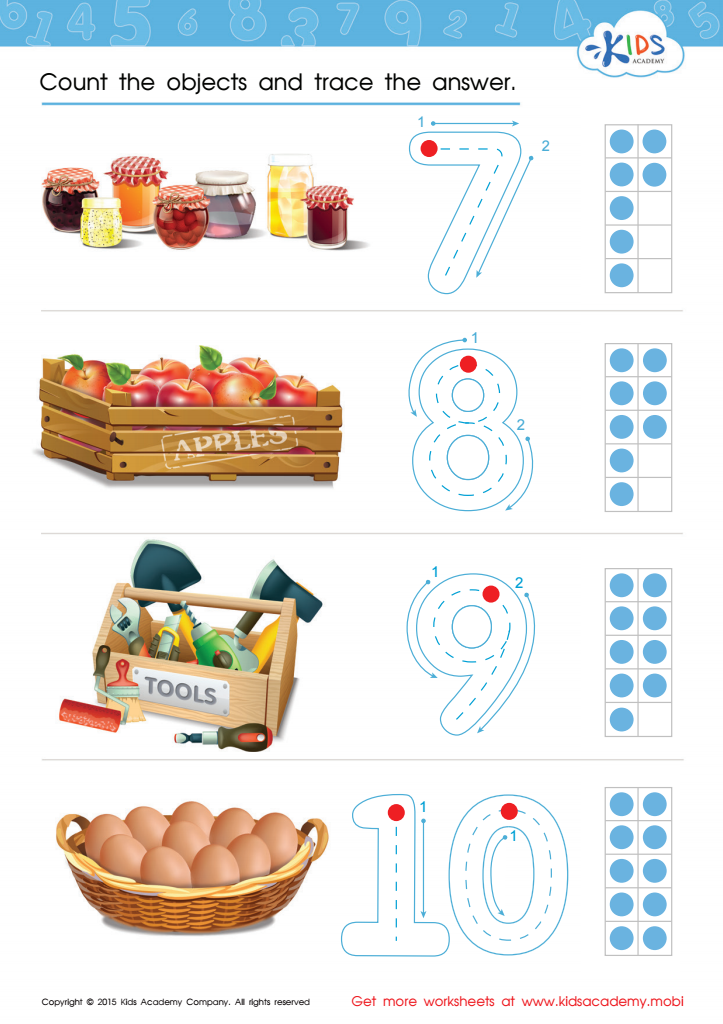
Count and Trace 7 – 10 Worksheet
Let your child develop a lifelong love of math with Kids Academy's printable math worksheet based on the innovative Singapore Math method. It uses funny pictures and graphs to help solve math problems. Check out our amazing collection of free printable math worksheets now!
 Assign to My Students
Count and Trace 7 – 10 Worksheet
Worksheet
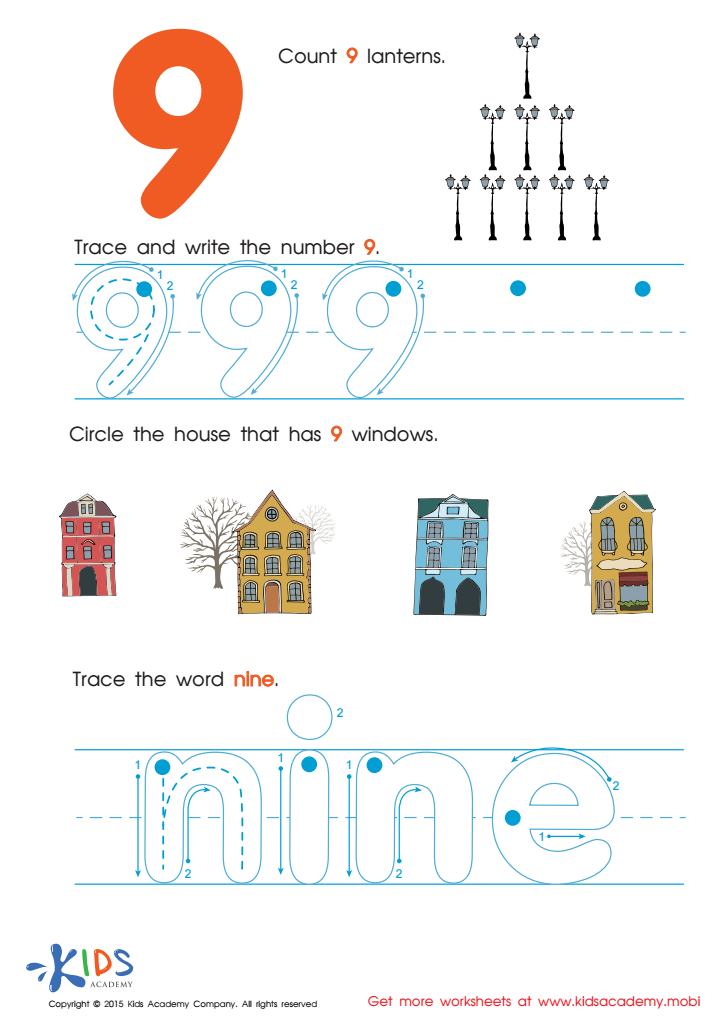
Tracing And Learning to Write Number 9 Worksheet
Explore our collection of learning numbers worksheets and make teaching numbers to preschoolers easier with Kids Academy. Trace numbers, circle houses with the specified number of windows, write the corresponding number words and revise previous numbers regularly to help kids learn.
Tracing And Learning to Write Number 9 Worksheet
Worksheet
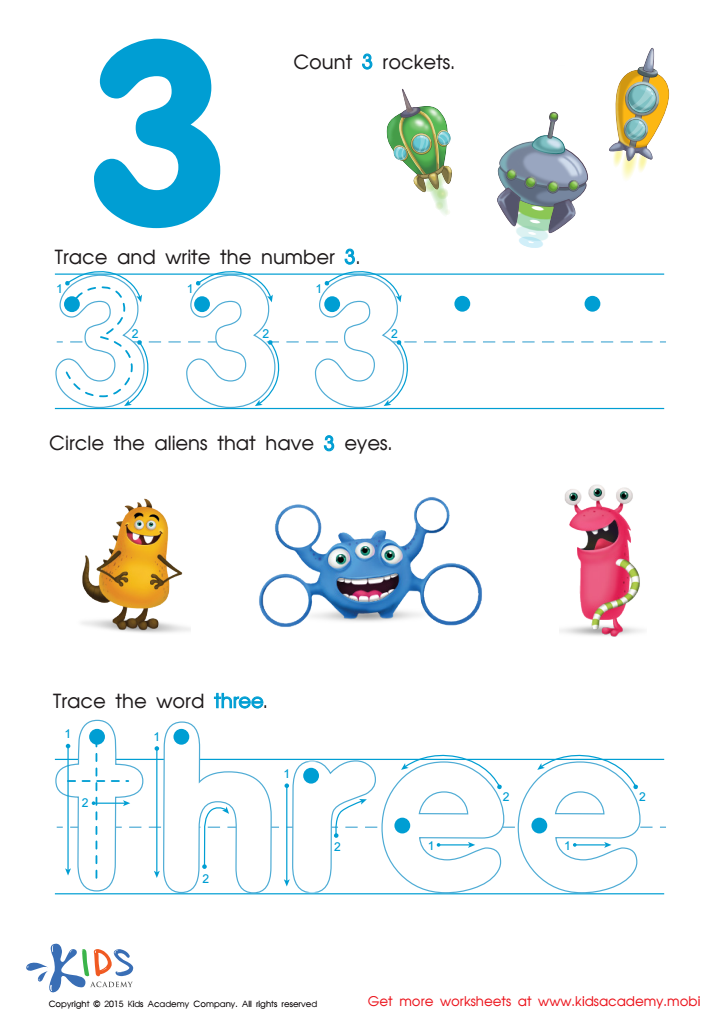
Learning Number Three Worksheet
Learn to count with aliens! Trace the number 3 and circle aliens with 3 eyes. Explore our web site for more number games and activities for preschoolers.
Learning Number Three Worksheet
Worksheet
Learning Skills
Join Kids Academy for Free
Who is primarily going to use this learning content?








Writing practice in normal math for children aged 3-6 is highly beneficial and should be a priority for both parents and teachers. During these formative years, young minds are extraordinarily receptive and impressionable, enabling foundational skills to take root more deeply. Integrating writing with math helps solidify their understanding by encouraging active learning and reinforcing concepts through multiple modalities.
First, writing numbers and simple math problems helps children develop fine motor skills, crucial for handwriting. It enhances coordination and dexterity, laying groundwork for not just academics but daily tasks requiring precision and control.
Second, engaging in written practice deepens cognitive development. When children consistently write numbers and math problems, they simultaneously enhance their memory, comprehension, and problem-solving capabilities. This routine fosters better retention and a stronger grasp of basic mathematical concepts like counting, addition, and subtraction.
Additionally, parents and teachers can identify and address learning gaps early on by monitoring writing activities. This personalized attention can prevent future struggles and help each child thrive according to their individual pace and learning style.
In summary, writing practice in normal math for young children bridges critical developmental benchmarks and bolsters their overall academic journey, making it an essential activity to support rigorously.








