Sentence construction Normal Reading Comprehension Worksheets for Ages 3-6
3 filtered results
-
From - To
Unlock your child's reading potential with our engaging Sentence Construction Normal Reading Comprehension Worksheets designed for ages 3-6! These printable worksheets provide a fun and interactive way for young learners to develop essential language skills. Children will explore sentence formation and structure through colorful exercises that enhance both comprehension and creativity. Each worksheet features simple sentences that encourage kids to think critically about language while building vocabulary. Perfect for teachers and parents, these resources are ideal for literacy-focused activities at home or in the classroom. Start your child's reading journey today with our carefully crafted worksheets that promote early reading success!
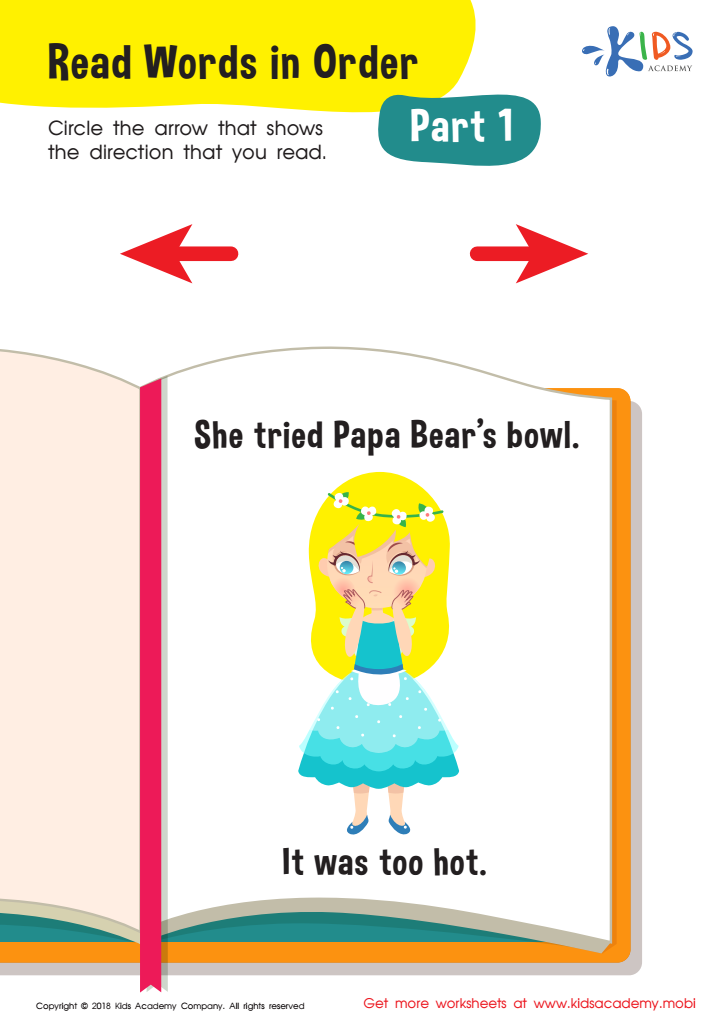
Read Words Order Part 1 Worksheet
 Assign to My Students
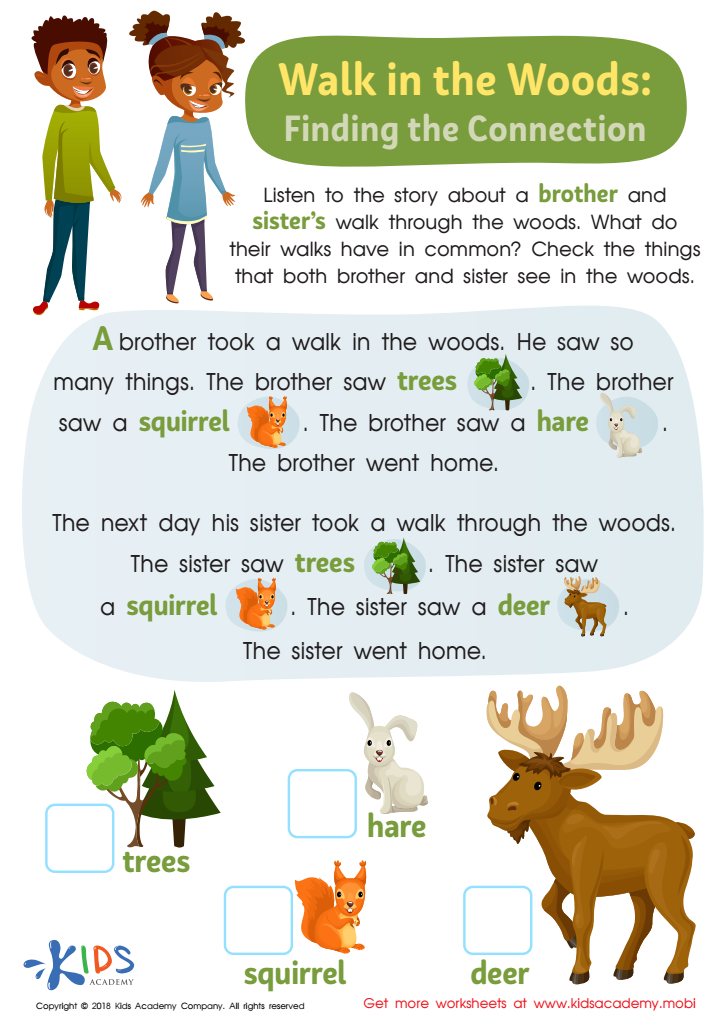
Walk In the Woods: Finding Connections Worksheet
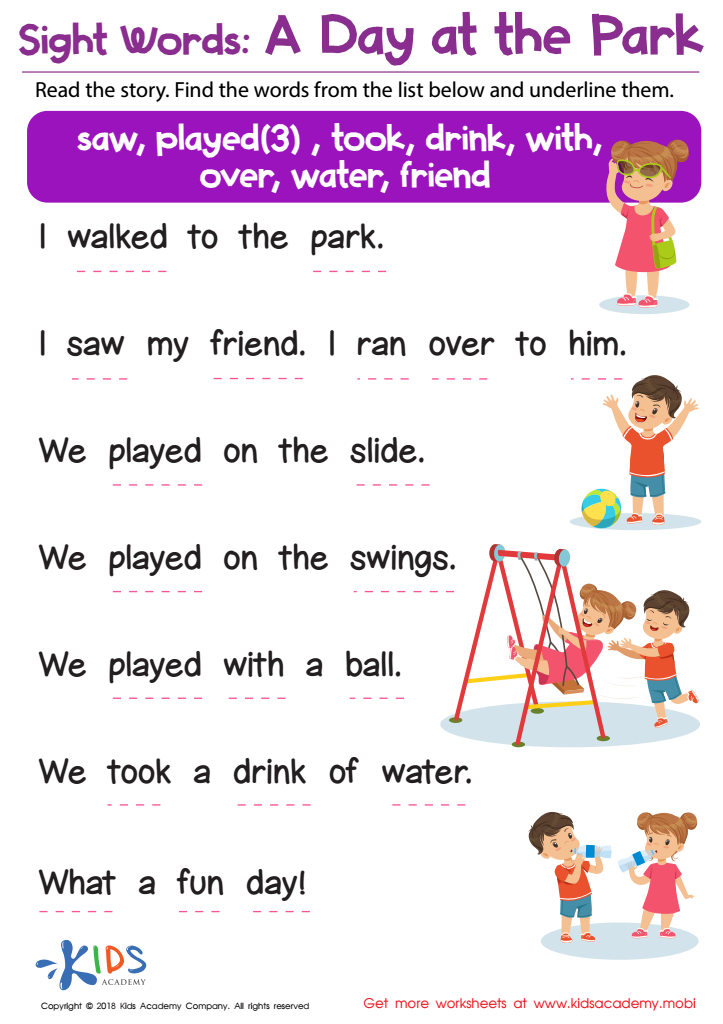
Sight Words: A Day at the Park Worksheet








Sentence construction and reading comprehension are vital components of early literacy development for children aged 3-6. At this critical stage, children begin to understand the structure of language, which lays the groundwork for their ability to communicate effectively. Parents and teachers play an essential role in nurturing this skill, as it significantly impacts a child's ability to convey thoughts and ideas clearly.
Understanding sentence construction helps children to form coherent narratives, recognize grammar patterns, and expand their vocabulary. By engaging in activities that promote sentence building, such as storytelling or interactive reading, adults can foster a love for language and literacy that lasts a lifetime. Furthermore, strong sentence construction skills contribute to overall reading comprehension.
As children enhance their reading comprehension, they develop critical thinking abilities. They learn to make connections between texts, comprehend story elements, and grasp the meaning behind the written word. These skills are not just foundational for academic success but also crucial for effective social interaction.
Ultimately, investing time in sentence construction and reading comprehension ensures that children enter formal education equipped with essential language skills, setting them on the path to lifelong learning and effective communication. By prioritizing this development in young learners, parents and teachers can create a supportive environment for success.








