Handwriting practice Normal Tracing Words Worksheets for Ages 3-6
13 filtered results
Difficulty Level
Grade
Age
-
From - To
Subject
Activity
Standards
Welcome to our Handwriting Practice Normal Tracing Words Worksheets, designed specifically for children ages 3 to 6! These engaging worksheets help young learners develop their fine motor skills and improve handwriting. Each tracing activity features simple, age-appropriate words that kids can easily recognize and memorize. By practicing with these worksheets, children will gain confidence in writing, enhancing their literacy skills while having fun. Ideal for parents and teachers, our printable resources support early learning at home or in the classroom. Start your child's handwriting journey today with our beautifully designed, user-friendly worksheets! Explore and watch them thrive in their writing skills!
Favorites
With answer key
Interactive
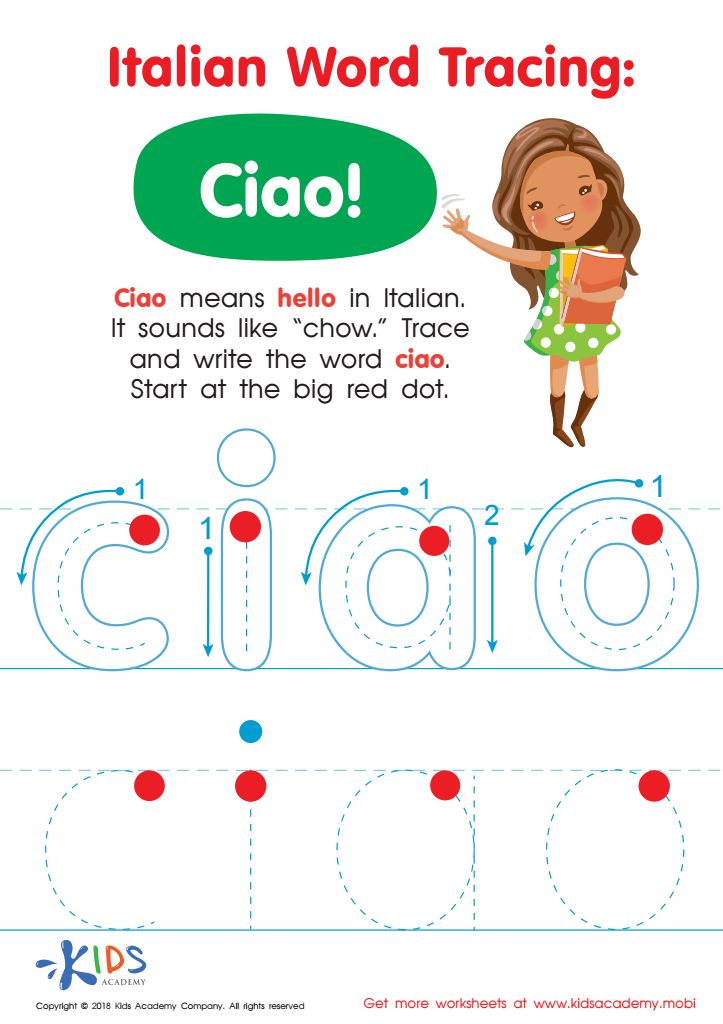
Italian Word Tracing: Ciao Worksheet
Help kids learn to greet people in different languages with this fun worksheet! Featuring the Italian word 'Ciao', it helps kids trace and learn the pronunciation. Plus, it teaches hand-eye coordination and fine-motor skills. Global connectivity can start with this activity!
 Assign to My Students
Italian Word Tracing: Ciao Worksheet
Worksheet
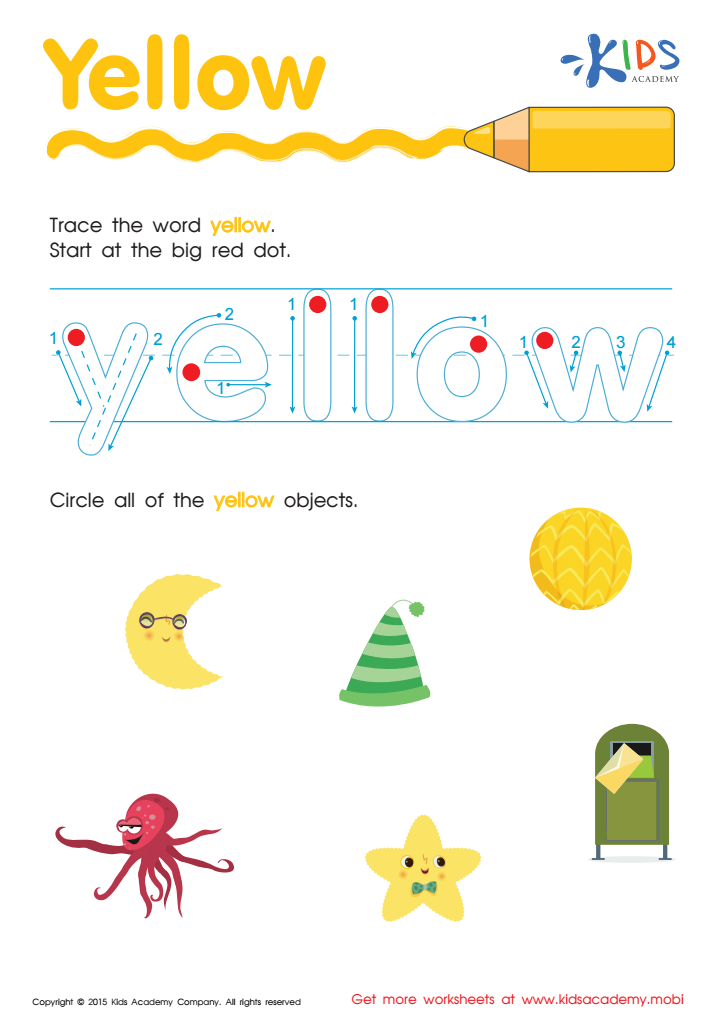
Yellow Tracing Color Words Worksheet
Tracing is a great way to start learning handwriting! Our printable worksheet helps your kindergartener practice and master the basics. They'll trace lines and fill in the word "yellow" with bright colors, sure to captivate and inspire them for more practice. Check out here for more tracing of color words.
Yellow Tracing Color Words Worksheet
Worksheet
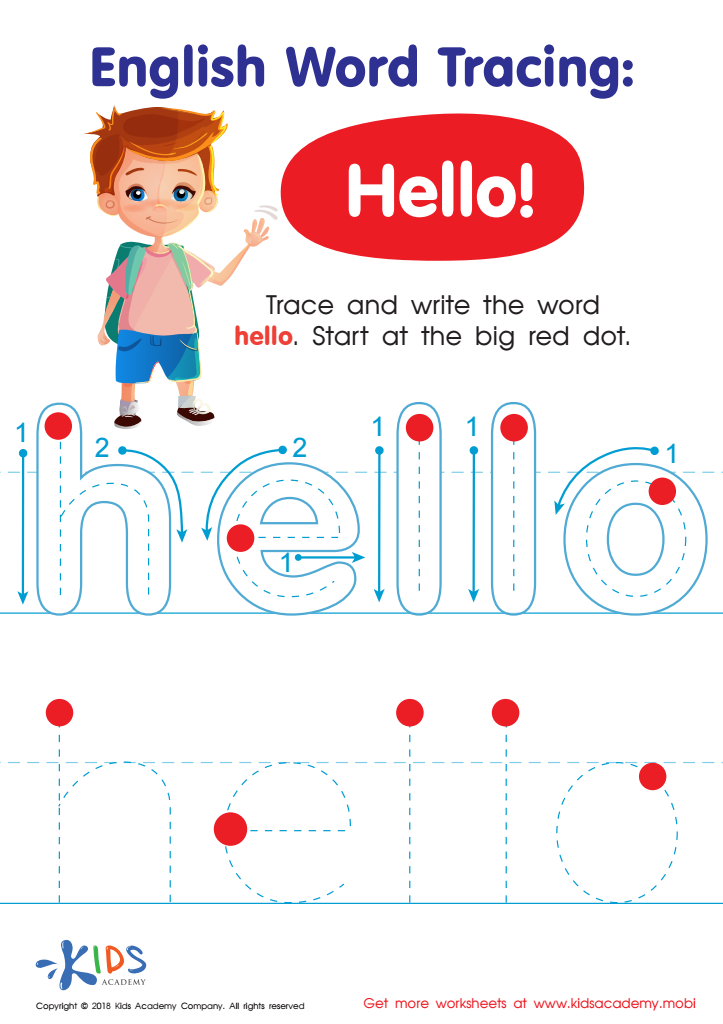
English Word Tracing: Hello Worksheet
Searching for free worksheets to help your kids refine their motor skills, handwriting and English word knowledge? Get this cheerful PDF! It offers your children the chance to practice tracing words like Hello, while following a top-to-bottom, left-to-right patterning.
English Word Tracing: Hello Worksheet
Worksheet
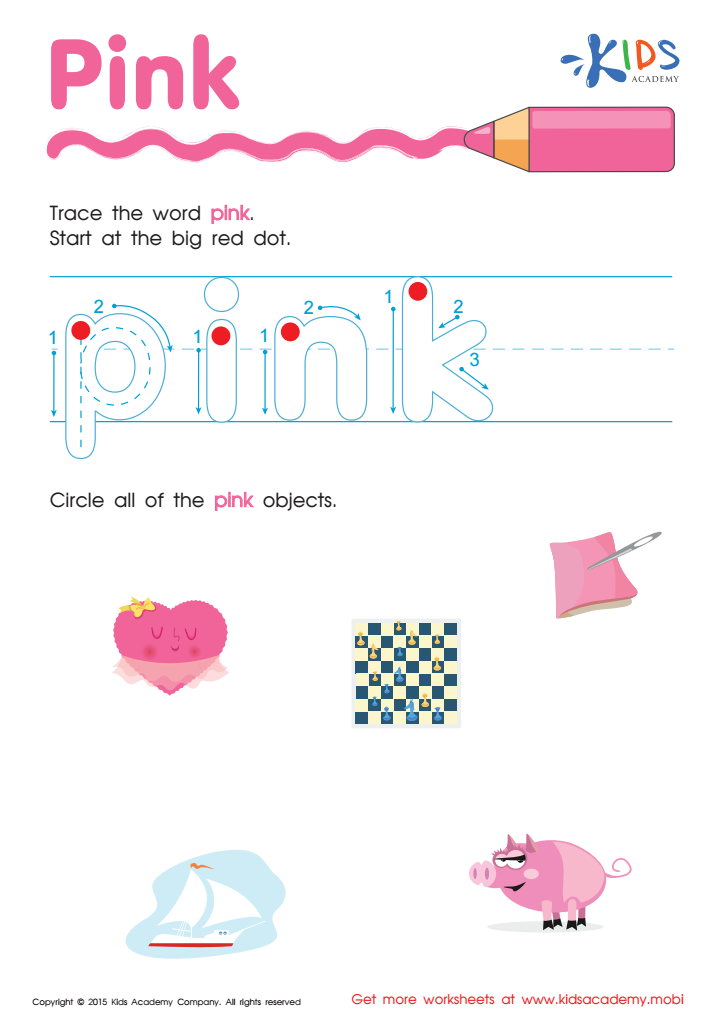
Pink Tracing Color Words Worksheet
Trace 'pink' with a pink crayon for an exciting handwriting lesson! Build fine motor skills and learn about sight words with this fun printable. Get creative and give it a splash of color for a colorful learning experience. For more tracing color words, explore here.
Pink Tracing Color Words Worksheet
Worksheet
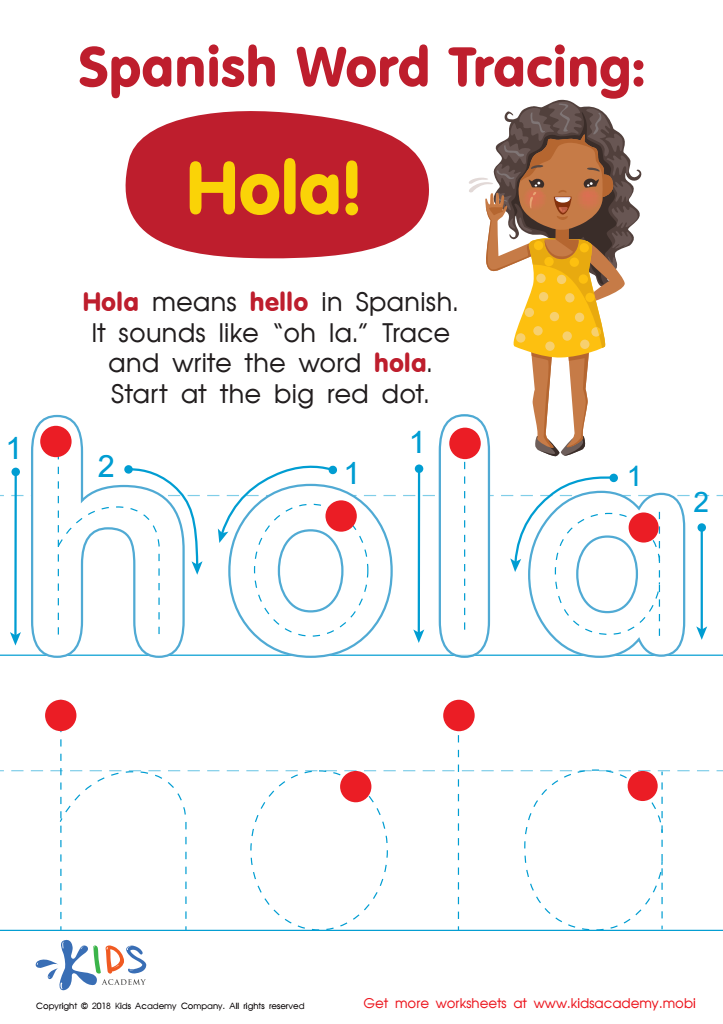
Spanish Word Tracing: Hola Worksheet
This PDF provides a fun way for students to learn "Hola" (Hello) in Spanish! Kids can practice fine motor and handwriting skills while they trace the letters. They'll get the hang of top-to-bottom, left-to-right patterning while they learn how to say and write in Spanish. With practice, they'll soon feel confident speaking and writing Spanish!
Spanish Word Tracing: Hola Worksheet
Worksheet
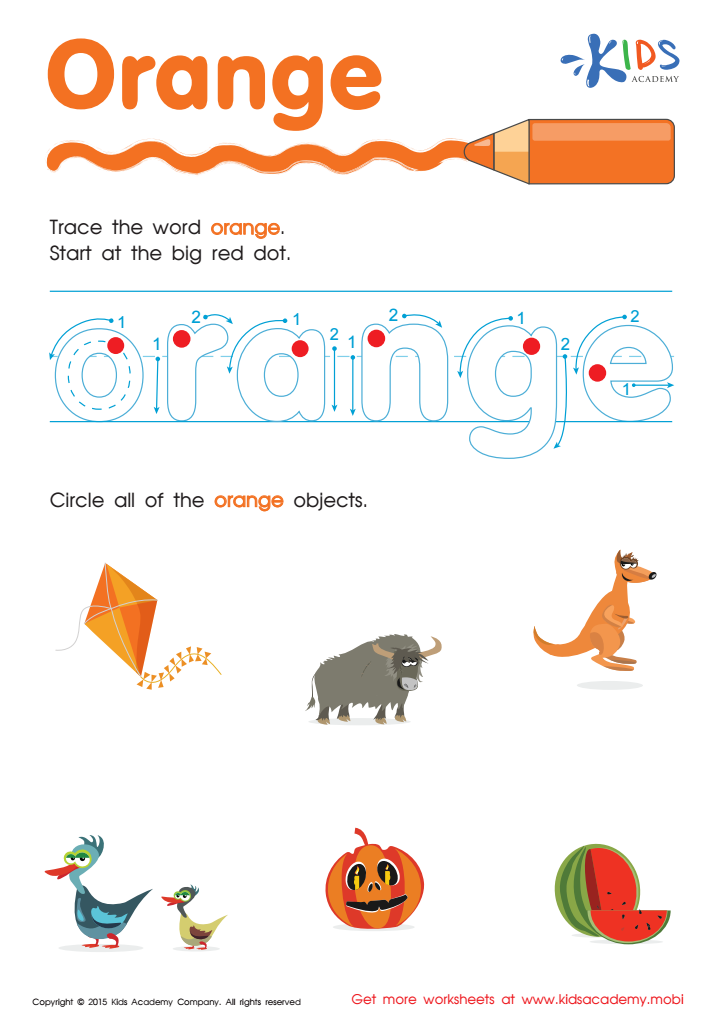
Orange Tracing Color Words Worksheet
This worksheet will surely bring a smile to your kid's face, even if orange isn't their favorite color. Let them trace the word "orange" and use an orange crayon. Ask them to find orange objects in their room for even more fun. Handwriting practice has never been more fun and exciting!
Orange Tracing Color Words Worksheet
Worksheet
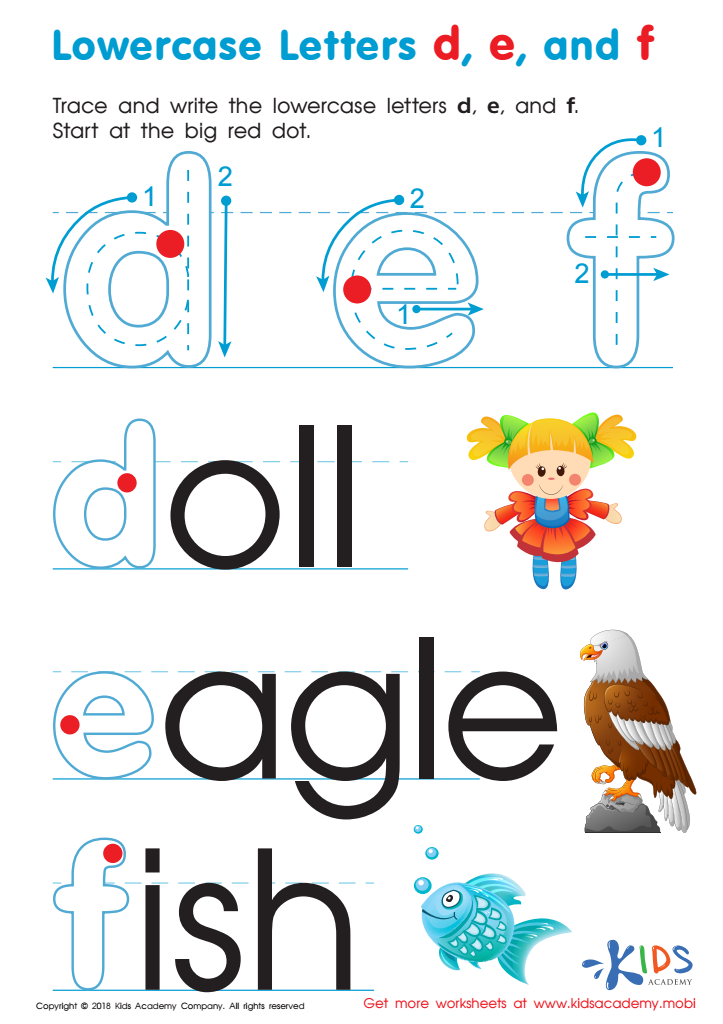
Lowercase Letters d e f Worksheet
Help your child learn the alphabet letters by tracing and writing the lowercase letters d, e, and f. Begin at the big red dot and follow the dots. This worksheet will help your little one gain a better understanding of the letters.
Lowercase Letters d e f Worksheet
Worksheet
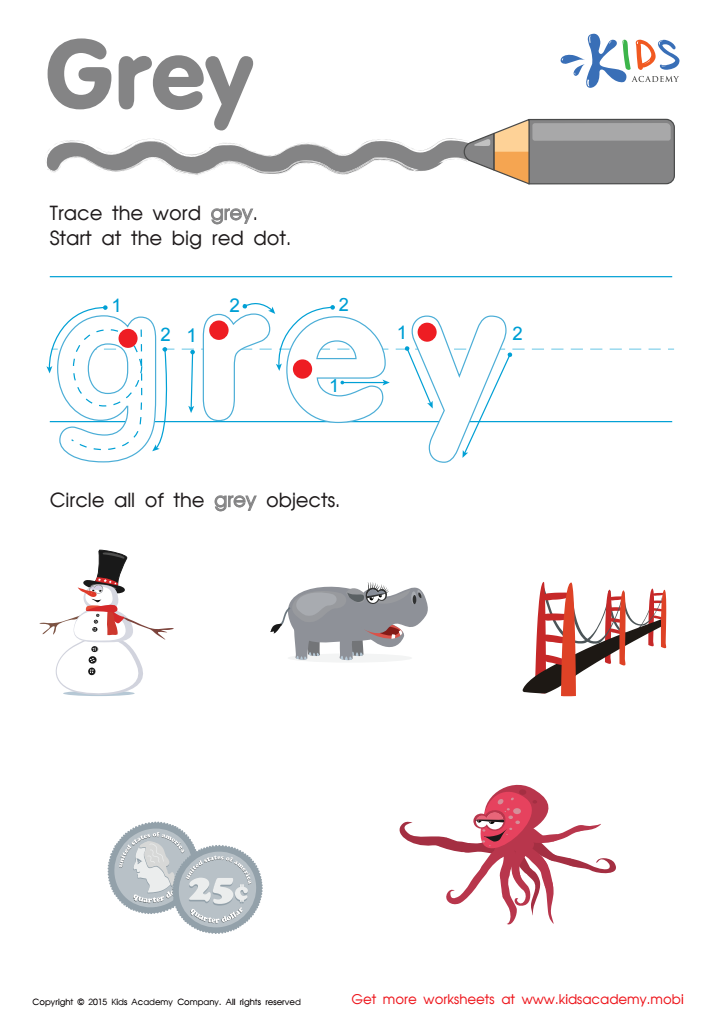
Grey Tracing Color Words Worksheet
Help your kindergartener boost their writing skills with this free printable handwriting worksheet! They can trace the sight word "grey" with a grey crayon, starting at the big red dots. Sounding out and tracing the letters can help strengthen their handwriting. Ask them to name and circle all the grey objects to give extra practice. Get more free worksheets here!
Grey Tracing Color Words Worksheet
Worksheet
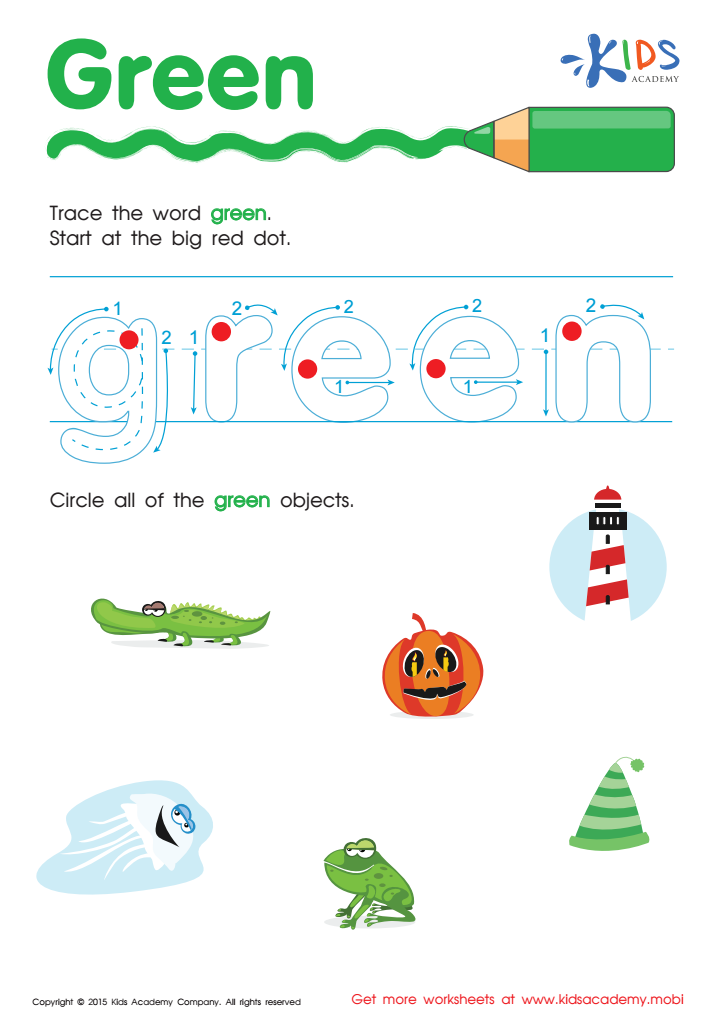
Green Tracing Color Words Worksheet
Encourage writing and spelling practice with this vibrant free handwriting worksheet. Have your child trace the new name of a primary color, "green," and circle green items in the picture. Ask them what else can be green for a challenging activity. Through this worksheet, your kindergartener can learn and play at the same time. For more free printables, look here.
Green Tracing Color Words Worksheet
Worksheet
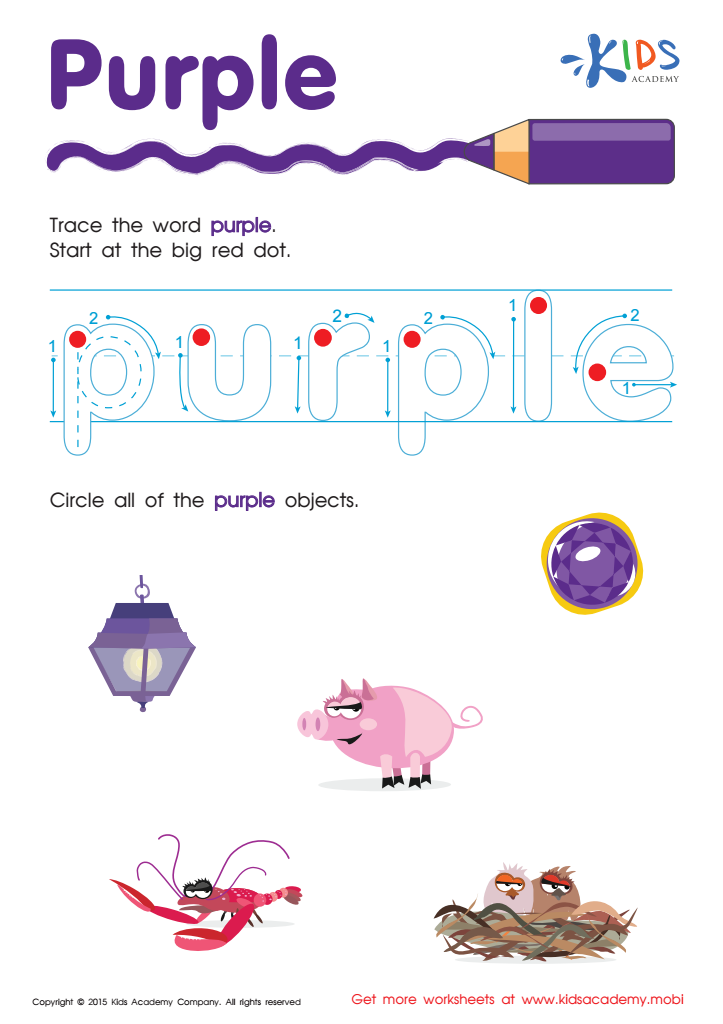
Purple Tracing Color Words Worksheet
Help your kindergartener practice their handwriting with this fun, free printable. They'll trace and color the word “purple”, starting at the big red dots, and pick out and circle all the purple objects they see. They'll get to train their fine motor muscles while having fun! Check out here for more handwriting practice.
Purple Tracing Color Words Worksheet
Worksheet
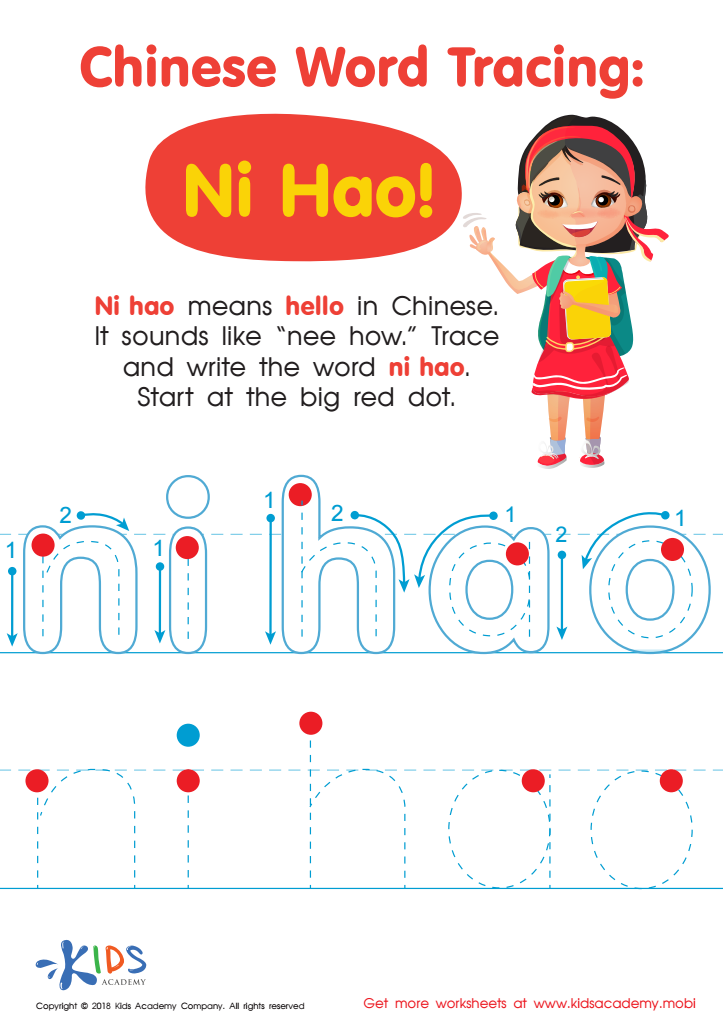
Chinese Word Tracing: Ni Hao Worksheet
Kids can learn to say "Ni hao" with this fun tracing worksheet. The free PDF helps kids write and say the Chinese greeting while also developing fine-motor, handwriting and reading skills. With red guide dots and traceable lines, kids will learn top-to-bottom and left-to-right patterning for fluent reading.
Chinese Word Tracing: Ni Hao Worksheet
Worksheet
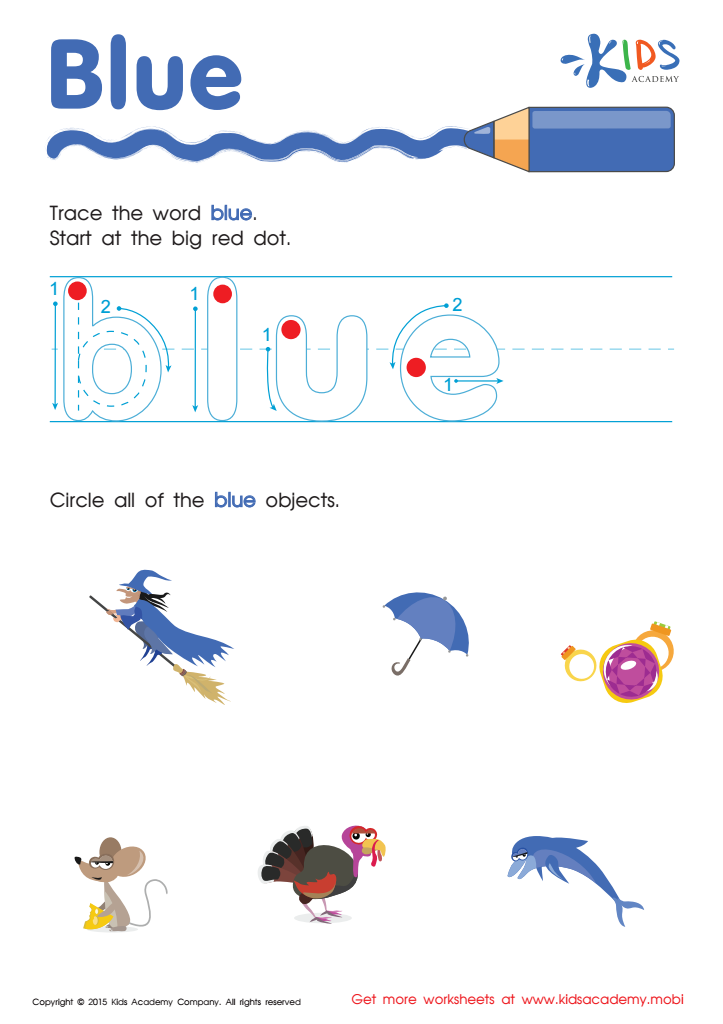
Blue Tracing Color Words Printable
Encourage your child's motor skills by having them trace the word "blue" with their blue crayon on this free printable handwriting worksheet, starting at the red dots. Ask them to circle all the blue objects they see. Check out here for more handwriting practice.
Blue Tracing Color Words Printable
Worksheet
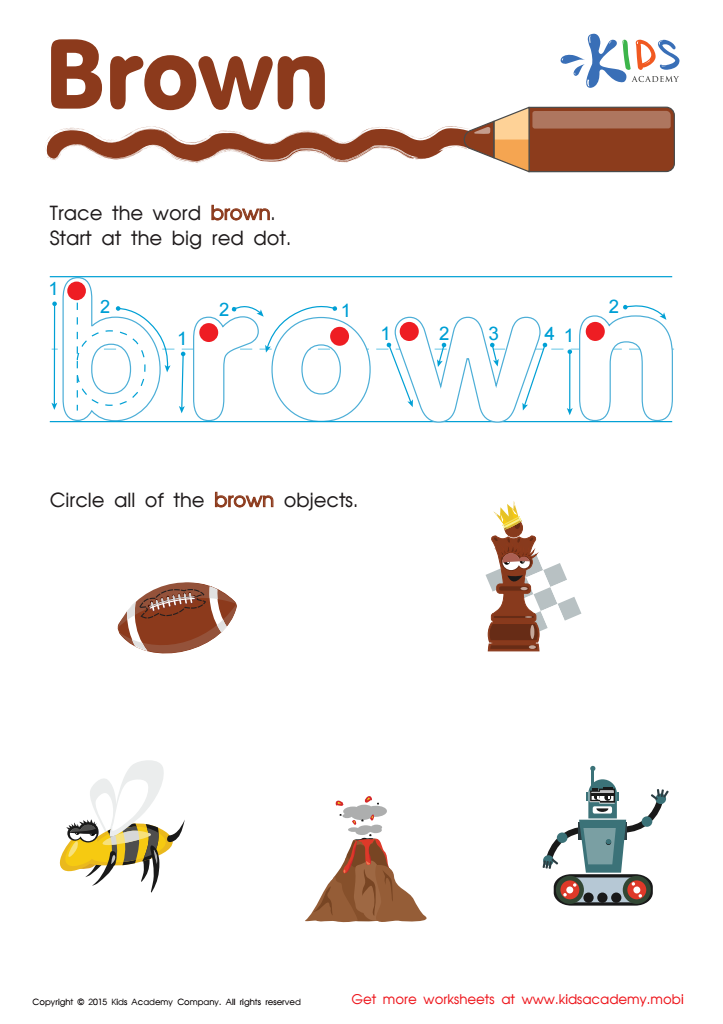
Brown Tracing Color Words Worksheet
This worksheet helps kids develop fine motor muscles and practice writing. Have them trace the word "brown" with a crayon, then find the brown objects in the picture. Ask them to look around and say what's brown in their room to make it more fun. Writing basics and a bit of fun - check out this free printable handwriting worksheet! For more tracing color words, check out here.
Brown Tracing Color Words Worksheet
Worksheet
Join Kids Academy for Free
Who is primarily going to use this learning content?








Handwriting practice, particularly tracing words, is crucial for children aged 3-6 for several reasons. First, it enhances fine motor skills, which are foundational for a child’s overall development. Tracing helps strengthen the small muscles in their hands and fingers, improving their dexterity and coordination, which are essential for various daily activities, from writing to buttoning shirts.
Additionally, handwriting practice supports literacy development. As children trace familiar words, they become more aware of letters, phonetics, and the formation of words, which lays the groundwork for reading and writing. This practice also promotes letter recognition, essential for developing reading skills later on.
Moreover, handwriting encourages cognitive development. Engaging in tracing activities requires focus, consistency, and patience, fostering essential cognitive skills. Children learn through repetition and experience, reinforcing their understanding of distinct letter shapes and sounds.
Finally, handwriting offers a sense of accomplishment. Mastering the ability to write – even through tracing – boosts confidence and encourages a positive attitude towards learning.
In conclusion, handwriting practice such as tracing normal words is fundamental for young children's physical, cognitive, and emotional growth, making it a vital area for parents and teachers to emphasize in early education.