Sound differentiation Normal Alphabet Worksheets for Ages 3-7
3 filtered results
-
From - To
Enhance your child's learning experience with our "Sound Differentiation Normal Alphabet Worksheets," designed specifically for ages 3-7. These engaging worksheets help young learners develop critical phonemic awareness by focusing on distinguishing sounds associated with each letter of the alphabet. Colorful illustrations and interactive activities keep children motivated while they master the sounds that form the foundation of reading and writing. Perfect for preschool and early elementary educators, these worksheets provide a fun way for kids to improve their language skills through creative exercises. Foster a love for learning and boost confidence in sound recognition with our expertly crafted worksheets today!
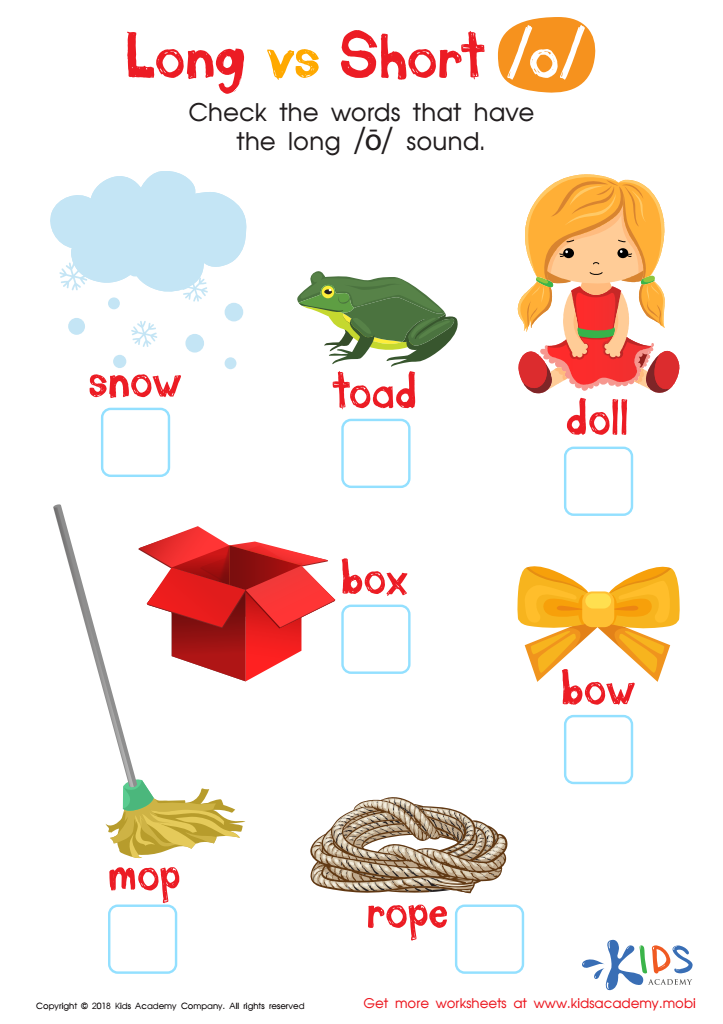
Long vs Short O Reading Worksheet
 Assign to My Students
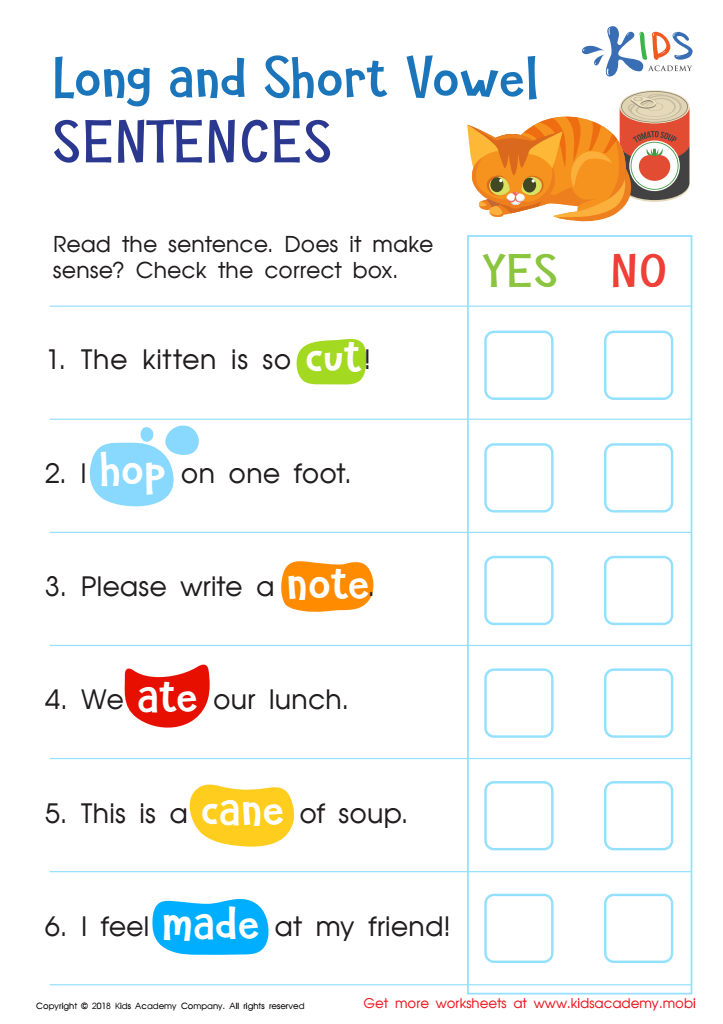
Long and Short Vowel Sentences: Assessment Worksheet
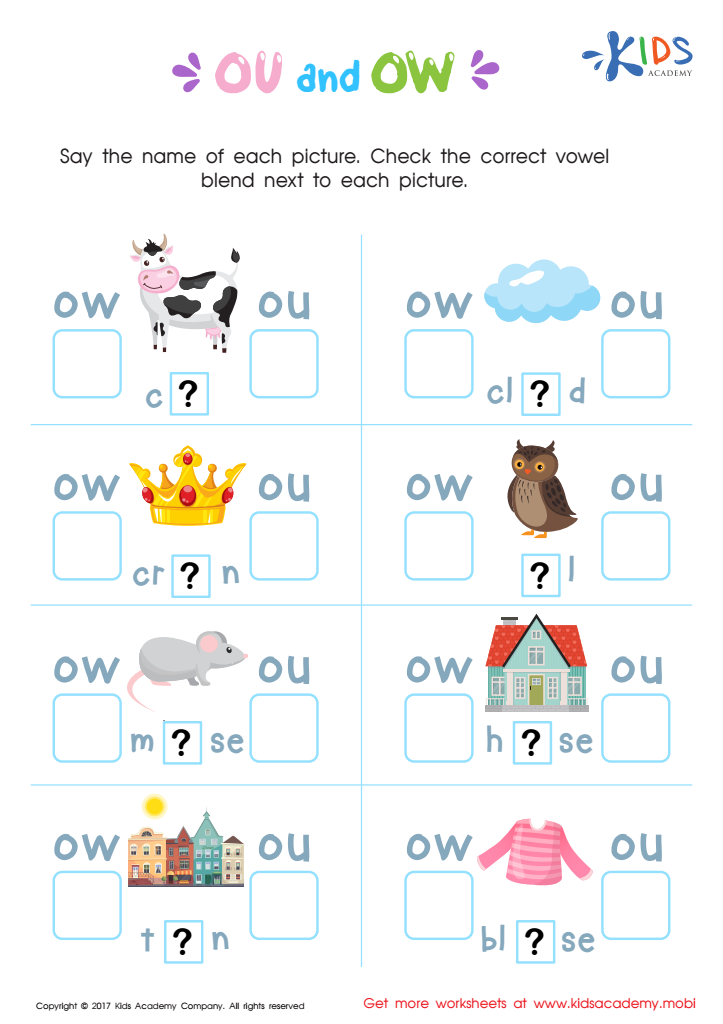
OU and OW Words Worksheet








Sound differentiation using the normal alphabet is crucial for children aged 3-7, as it lays a solid foundation for literacy and communication skills. During these formative years, children are developing their phonemic awareness, which helps them recognize and manipulate the sounds in words. Sound differentiation promotes critical skills such as listening, vocabulary acquisition, and ultimately, reading fluency.
When parents and teachers engage children in sound differentiation activities, such as identifying similar and different sounds, it enhances their ability to decode words. This skill is essential for early reading, as it helps children understand the connection between sounds and their corresponding letters. Additionally, sound differentiation fosters confidence in verbal communication, encouraging children to express themselves clearly.
Furthermore, this learning enhances cognitive development by promoting critical thinking and problem-solving as children categorize sounds and recognize patterns. Effective sound differentiation practices not only benefit literacy but also support overall language development, social interaction, and emotional expression.
In summary, sound differentiation is a vital aspect of early education that merits attention from parents and teachers, ensuring children are equipped with the necessary skills for their academic journey and lifelong learning.







