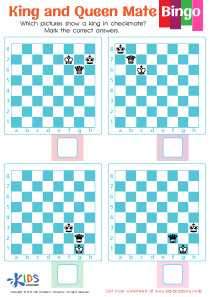
Chess strategy understanding Normal Chess Worksheets for Ages 3-7
3 filtered results
-
From - To
Introduce your child to the basics of chess with our engaging Normal Chess Worksheets for Ages 3-7. Designed to make strategy learning fun and accessible, these worksheets help young learners grasp fundamental chess concepts, enhance critical thinking, and develop problem-solving skills. Through interactive exercises, children will learn about piece movements, the importance of planning ahead, and the basics of capturing and defending. Perfect for beginners, these worksheets provide a solid foundation in chess strategy, paving the way for a lifetime of strategic thinking and enjoyment. Unlock your child's potential with our expertly crafted, age-appropriate chess resources.
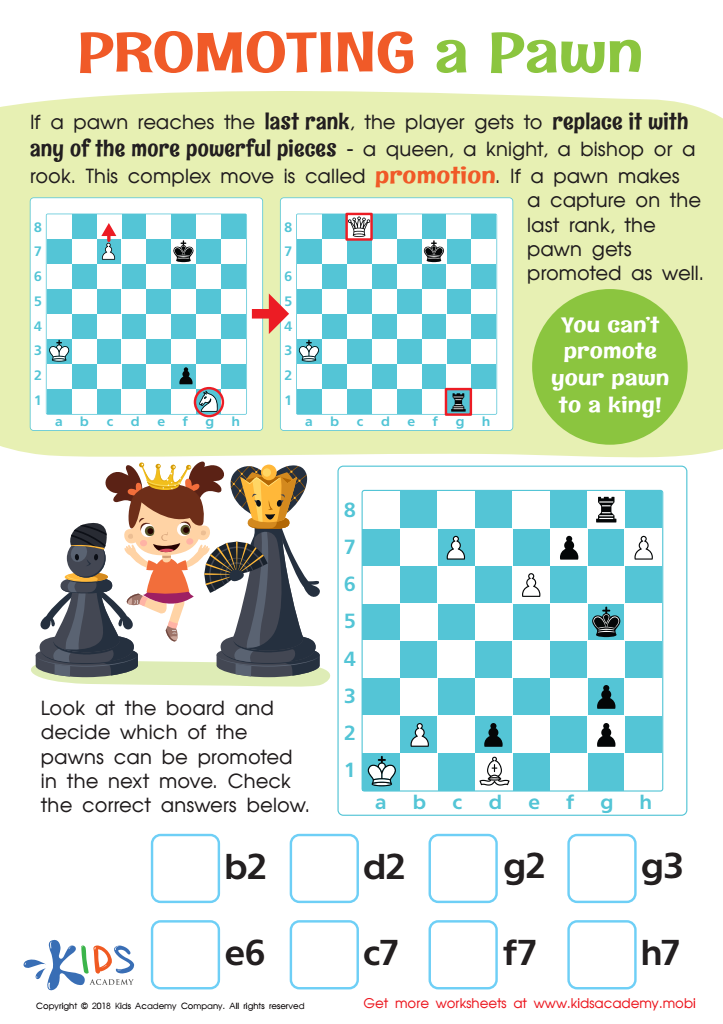
Promoting a Pawn Worksheet
 Assign to My Students
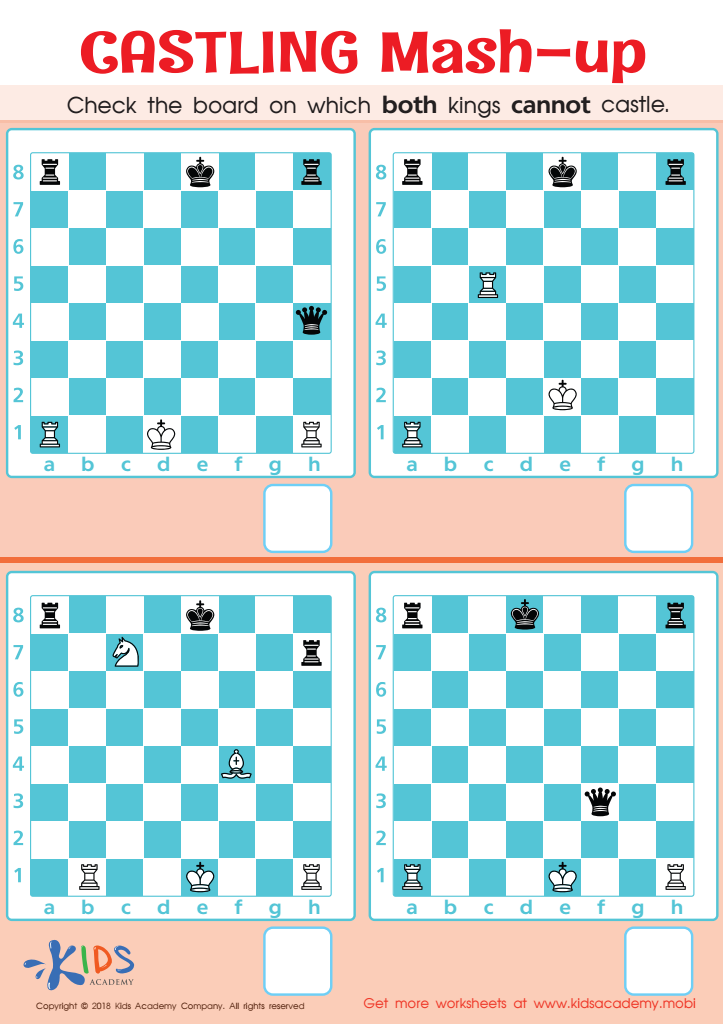
Castling Mash–up Worksheet
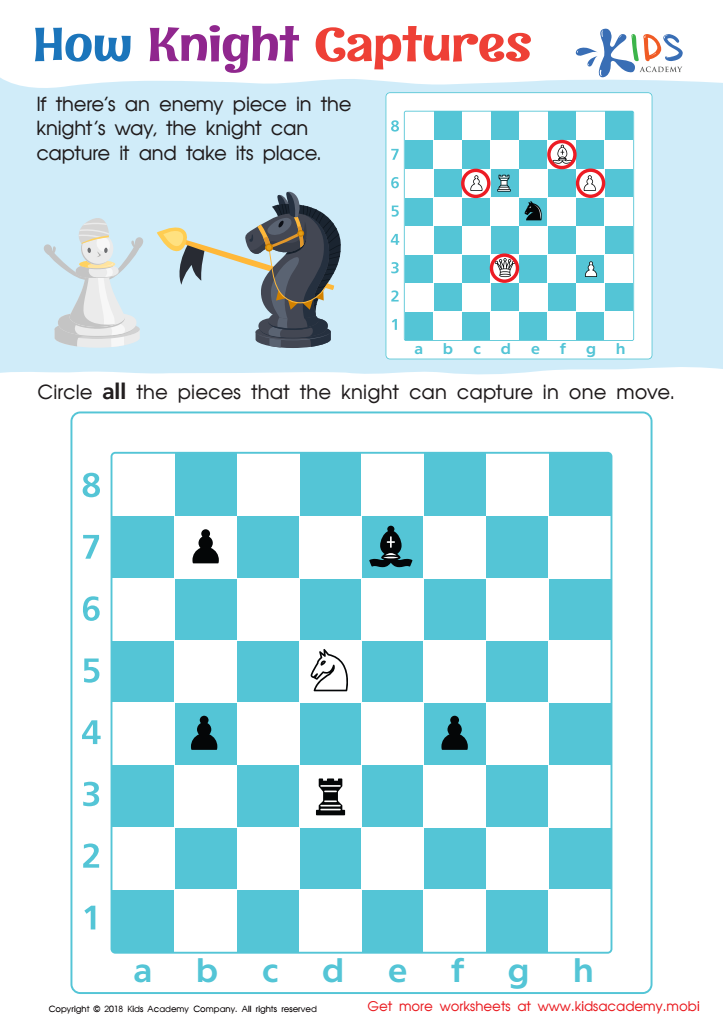
How Knight Captures Worksheet





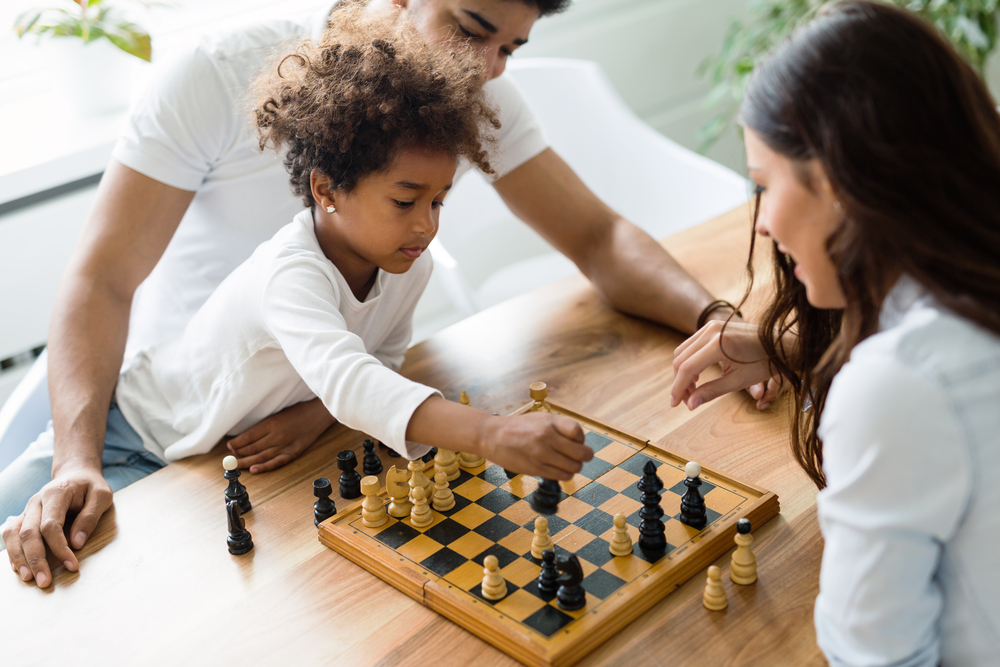
Introducing children ages 3-7 to chess and its basic strategies can yield significant benefits in their overall development. Chess is more than just a game; it's a valuable educational tool that can enhance cognitive, emotional, and social skills even at a young age.
First and foremost, understanding chess strategy promotes critical thinking and problem-solving skills. It requires anticipating opponents' moves, planning several steps ahead, and making informed decisions, all of which help develop a child's ability to think logically and strategically. This early encounter with strategic planning fosters a mindset conducive to tackling academic challenges later on.
Moreover, chess improves concentration and patience. The game demands sustained focus and the traits of waiting for one's turn, skills crucial for academic success and daily interactions. Children learn to pay attention to detail and to handle the frustration of losing, thereby building resilience.
Socially, playing chess can enhance interpersonal skills. Engaging with peers or adults in a structured yet competitive way teaches sportsmanship, respect, and communication. These benefits are not confined to the game but spill over into the child's behavioral patterns in various other activities.
Parents and teachers who encourage learning chess provide children with a multifaceted educational experience that extends well beyond the chessboard, supporting their holistic growth and preparing them for future challenges.