
Enhance critical thinking Normal Worksheets for Ages 3-7
3 filtered results
Difficulty Level
Grade
Age
-
From - To
Subject
Activity
Standards
Our "Enhance Critical Thinking" printable worksheets, tailored for children ages 3-7, help young minds build essential cognitive skills through engaging and thought-provoking activities. These expertly designed exercises encourage logical reasoning, problem-solving, and analytical thinking in a playful and age-appropriate manner. Ideal for both classroom use and at-home practice, the worksheets cover diverse topics that stimulate curiosity and learning. Developed by educational professionals, our worksheet collection aims to lay a strong foundation for academic success and lifelong critical thinking abilities. Boost your child’s cognitive development today with Kids Academy’s premier resources!
Favorites
With answer key
Interactive
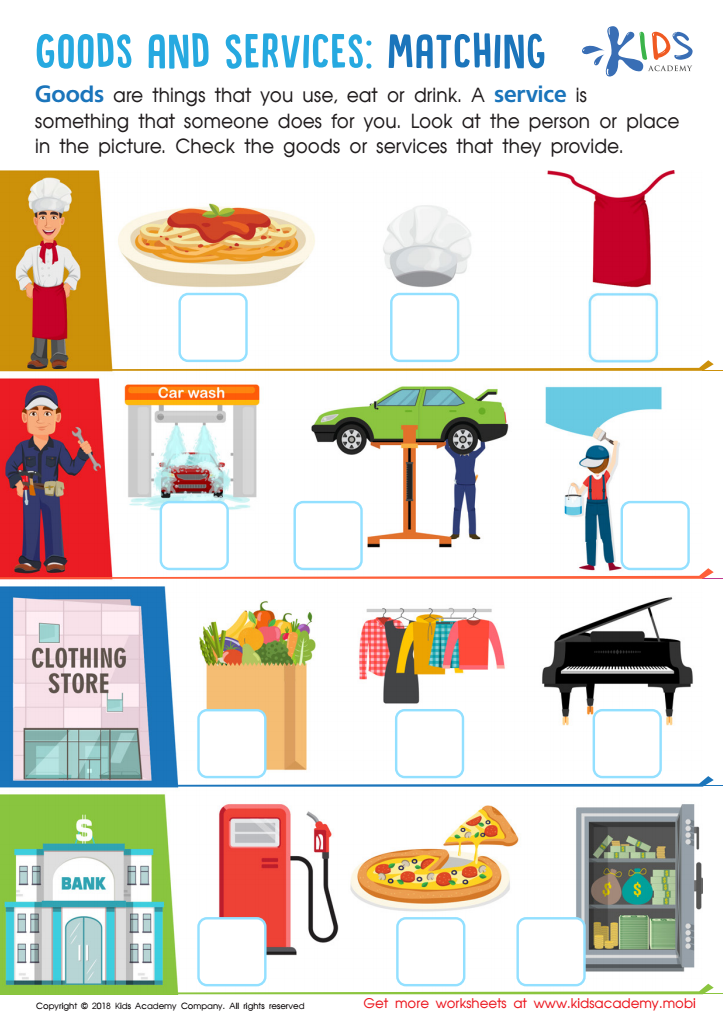
Goods and Services: Matching Worksheet
Goods are things that you use, eat or drink. Ask your kids to give examples of goods and services. Challenge them to identify the people and places in the worksheet, and check the goods or services they provide from the options on the right side.
 Assign to My Students
Goods and Services: Matching Worksheet
Worksheet
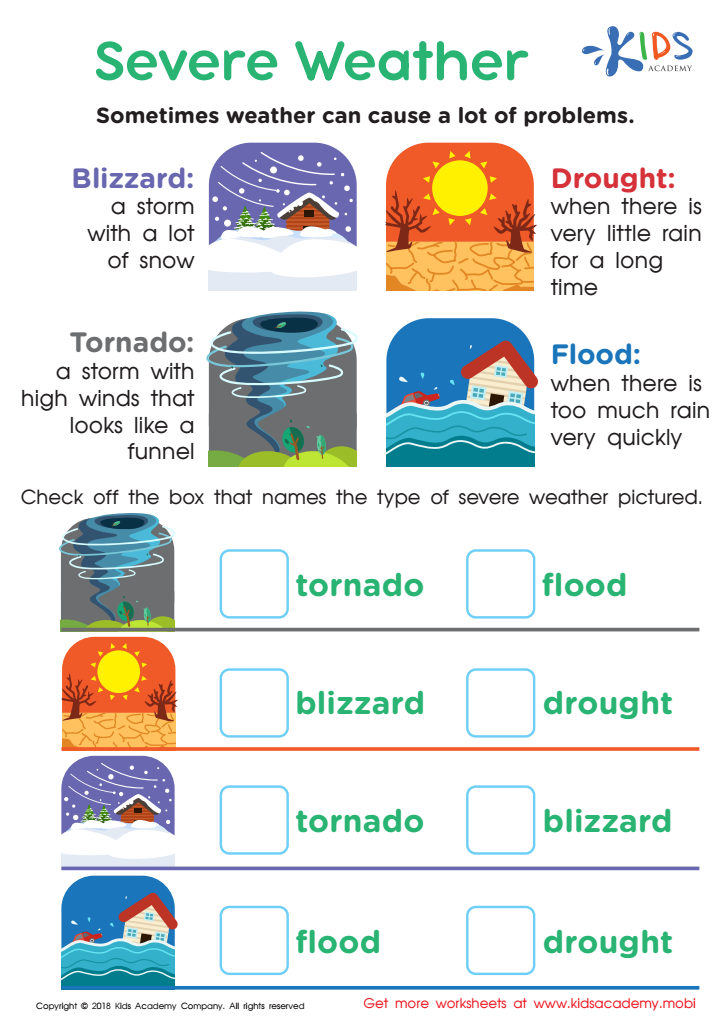
Severe Weather Worksheet
Weather can be dangerous, so teach your kids to stay safe with this interactive weather worksheet. Review the descriptions of tornadoes, blizzards, floods, and drought and match them with the colorful pictures. Tick the boxes to correctly identify each image and complete the sheet.
Severe Weather Worksheet
Worksheet
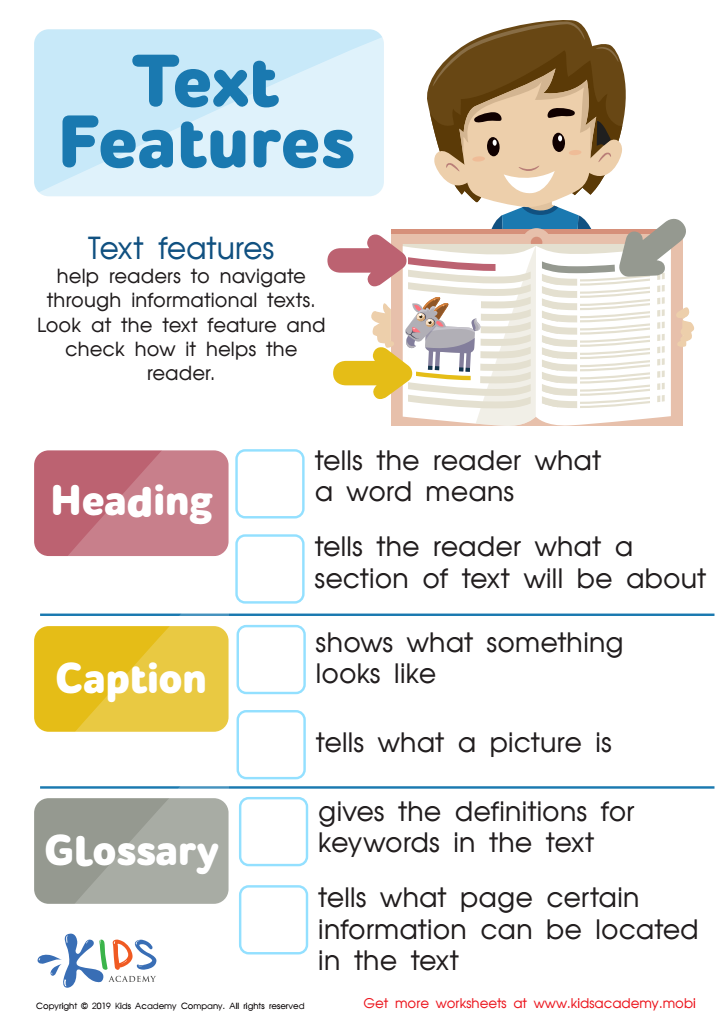
Text Features Worksheet
Help your kids get better at processing and analyzing texts by getting them to practice. Our worksheet with text features will help them find their way. This will help them understand how the features assist in finding information. Encourage practice, and they'll be able to improve quickly.
Text Features Worksheet
Worksheet
Join Kids Academy for Free
Who is primarily going to use this learning content?






Parents and teachers should prioritize enhancing critical thinking in children ages 3 to 7 because these formative years lay the foundation for a lifetime of learning and problem-solving. Critical thinking encompasses skills such as reasoning, analyzing, and making connections, all essential for academic success and daily decision-making. When young children engage in activities that challenge their thinking—such as solving puzzles, asking questions, or exploring cause and effect—they build neural pathways that fortify brain development.
Critical thinking also fosters independence and resilience. Children learn to consider different perspectives, leading to improved social interactions and empathy. They become more curious and motivated learners, traits that boost their confidence in tackling new challenges. For instance, a child who learns to think critically about how to share toys fairly might carry forward that skill into resolving conflicts collaboratively in later years.
Furthermore, in our increasingly complex world, early development of critical thinking equips children with the ability to navigate information and discern fact from fiction. These skills counteract the risks of misinformation and cultivate informed, thoughtful future citizens. Therefore, investing in critical thinking activities at these early ages not only supports immediate cognitive and social development but also prepares children for more advanced educational pursuits and responsible adulthood.








