Identifying story elements Normal Worksheets for Ages 3-7
3 filtered results
-
From - To
Welcome to our "Identifying Story Elements Normal Worksheets" designed for children ages 3-7! Our engaging worksheets help young learners explore the fundamental elements of storytelling, including characters, settings, plots, and themes. Each worksheet is tailored to stimulate creativity and enhance critical thinking skills through fun activities and illustrations. Perfect for early grade teachers and parents alike, these resources foster a love for reading and storytelling in young children. With clear instructions and vibrant designs, our worksheets provide interactive learning experiences that develop comprehension and narrative skills. Dive into the world of stories and spark imagination with our delightful offerings!
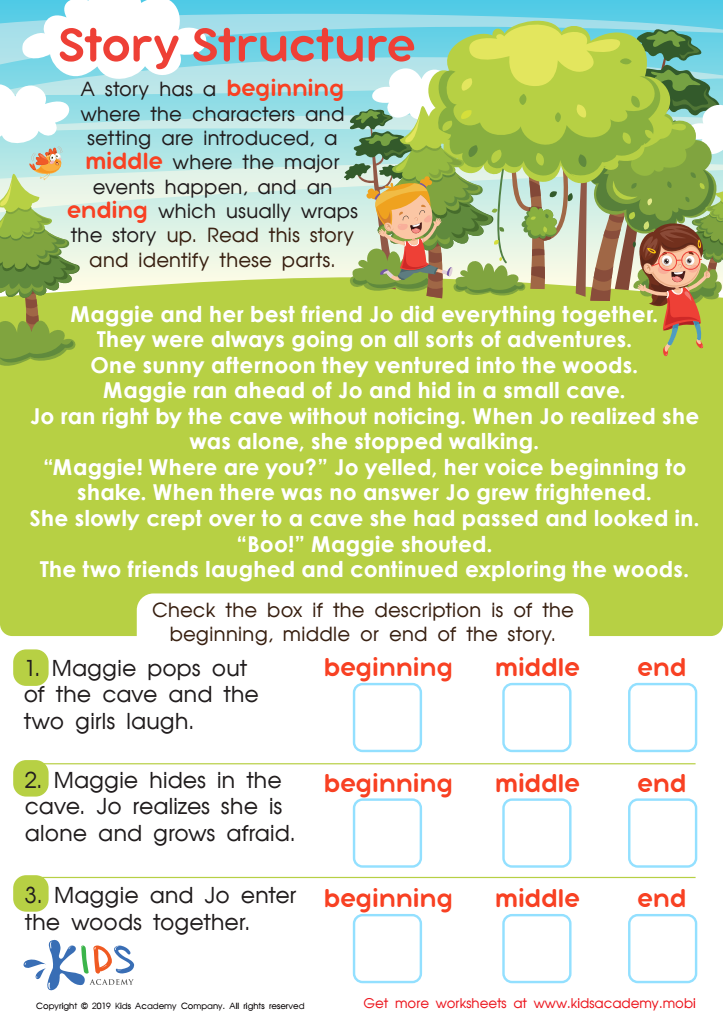
Story Structure Worksheet
 Assign to My Students
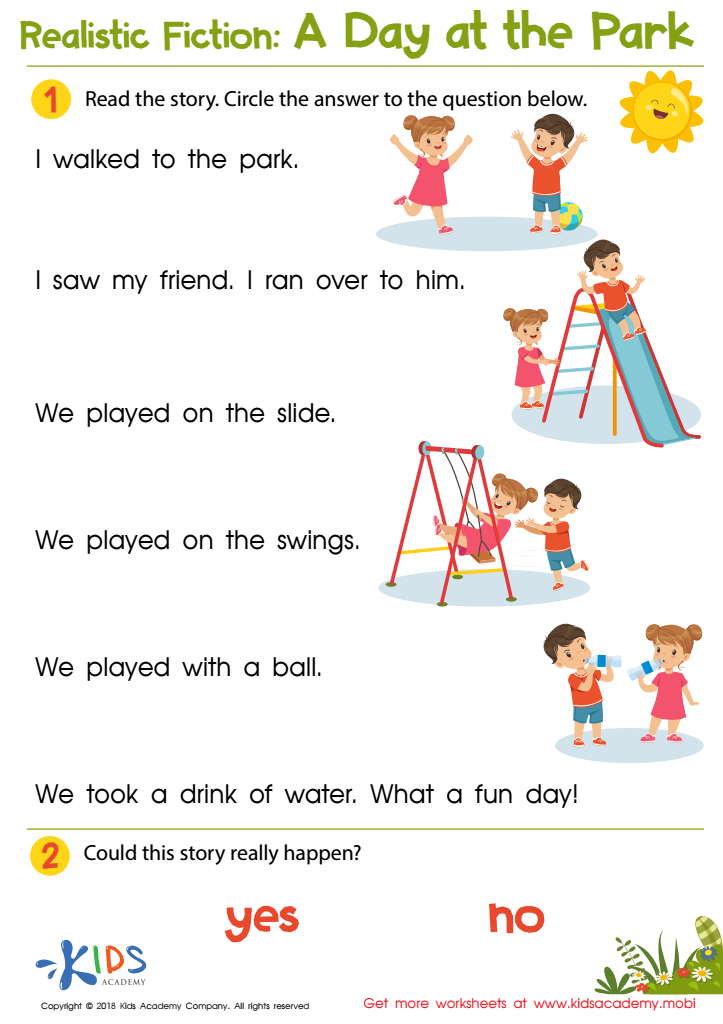
A Day at the Park Worksheet
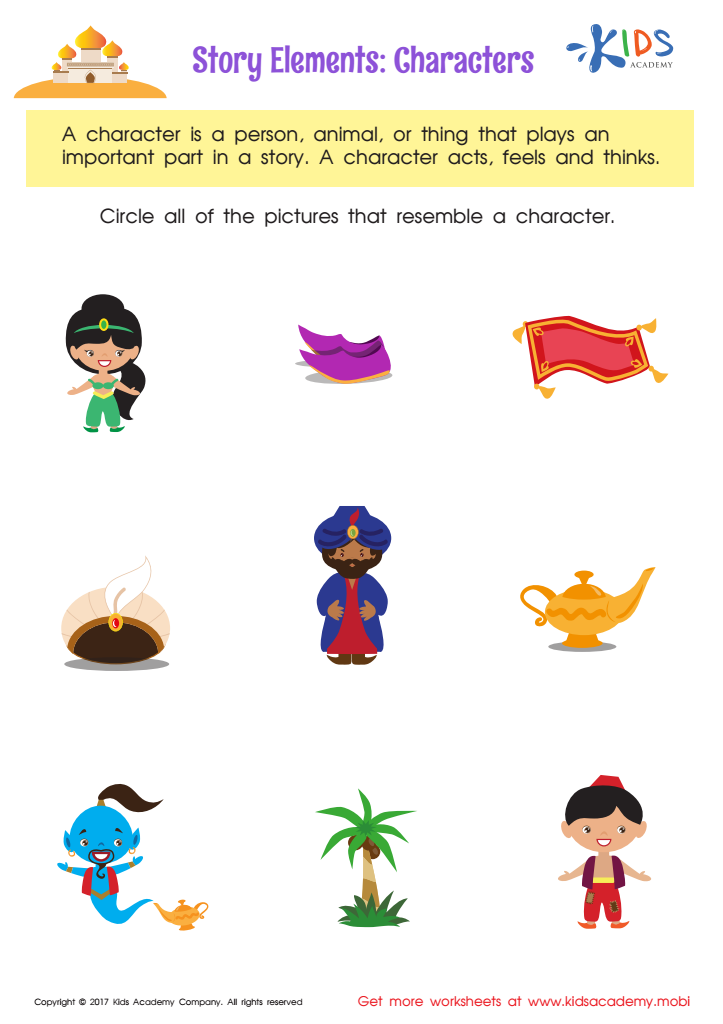
Story Elements Printable







Identifying story elements is crucial for children aged 3-7 as it lays the foundation for their reading and comprehension skills. During these formative years, young learners begin to explore narratives, and understanding basic story elements—such as characters, setting, plot, conflict, and resolution—enhances their ability to engage with and understand stories more deeply.
For parents and teachers, fostering this skill helps children develop critical thinking and analytical skills. By discussing these elements, children learn to make predictions, infer meanings, and understand character motivations, which boost their overall literacy. Moreover, recognizing story elements promotes creativity; children can generate their own stories, enhancing their imaginative capabilities.
Furthermore, this knowledge assists in building relationships and enhancing communication. As children share their interpretations of stories and relate them to their experiences, they practiced verbal expression and confidence. Understanding story elements also fosters a love for reading, transforming it from a task to an enjoyable experience.
Overall, emphasizing story elements not only supports academic growth but also helps children become more thoughtful, expressive, and imaginative individuals, preparing them for future learning and social challenges.








