Number comparison Normal Worksheets for Ages 3-7
5 filtered results
-
From - To
Welcome to our engaging collection of number comparison worksheets tailored for children aged 3-7! These worksheets are designed to help young learners understand and practice the concept of comparing numbers in a fun and interactive way. With vibrant illustrations and user-friendly layouts, children can easily grasp the basics of greater than, less than, and equal to. Our resources support early math skills development, ensuring that your child builds a solid foundation while enhancing their confidence in number recognition and comparison. Download and print these worksheets today to inspire a love for learning through enjoyable hands-on activities!
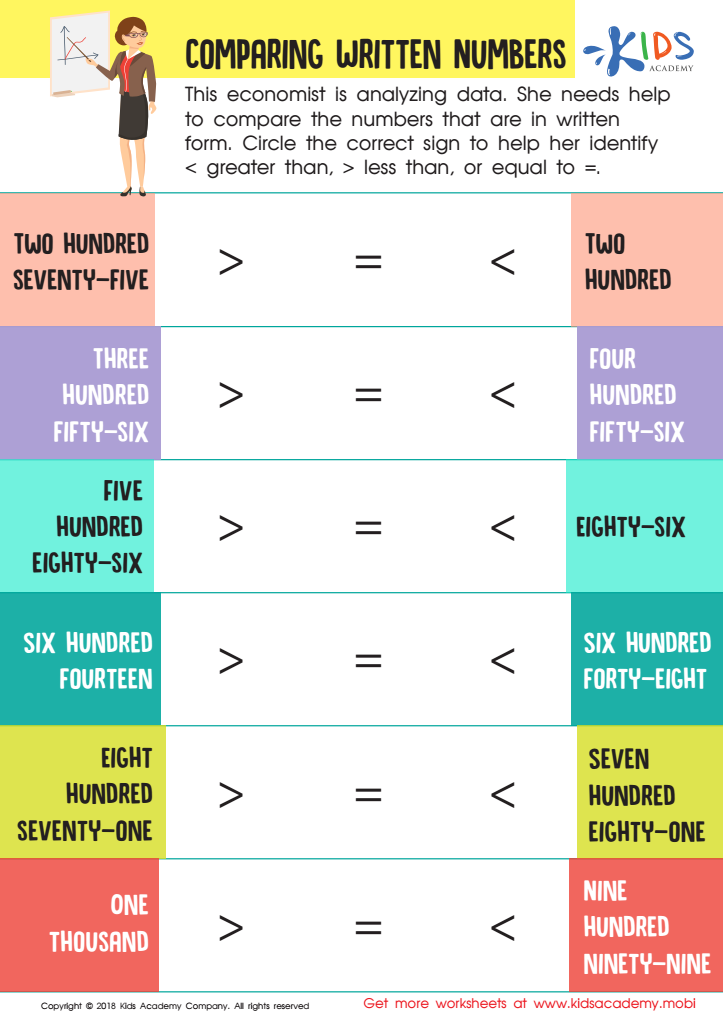
Comparing Written Numbers Worksheet
 Assign to My Students
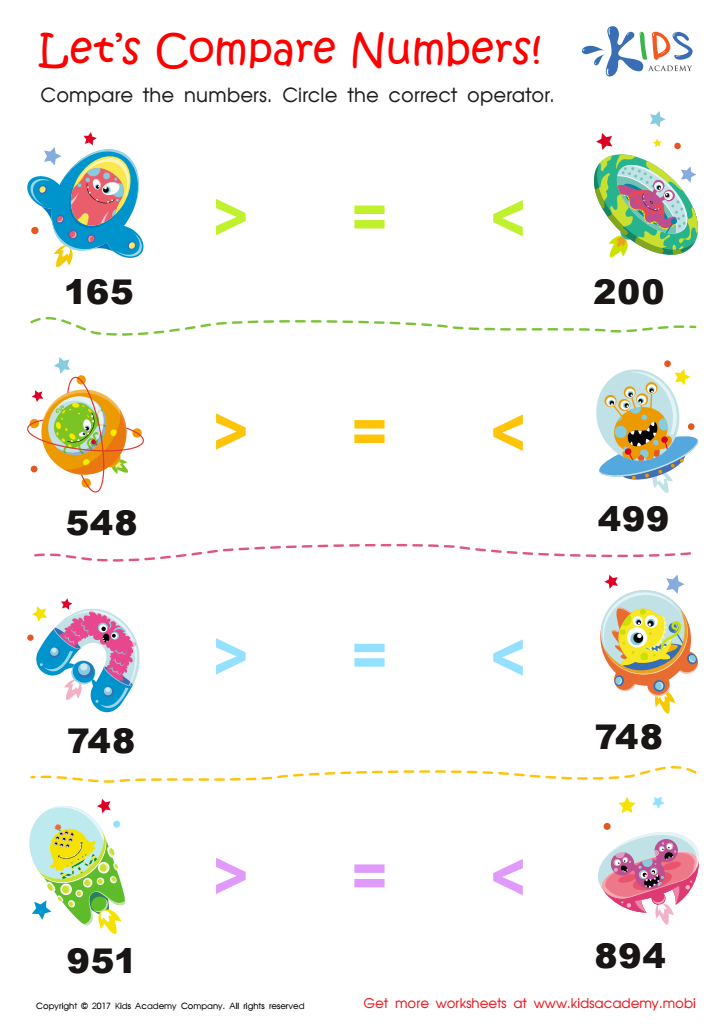
Comparing Numbers Worksheet for 2nd Grade
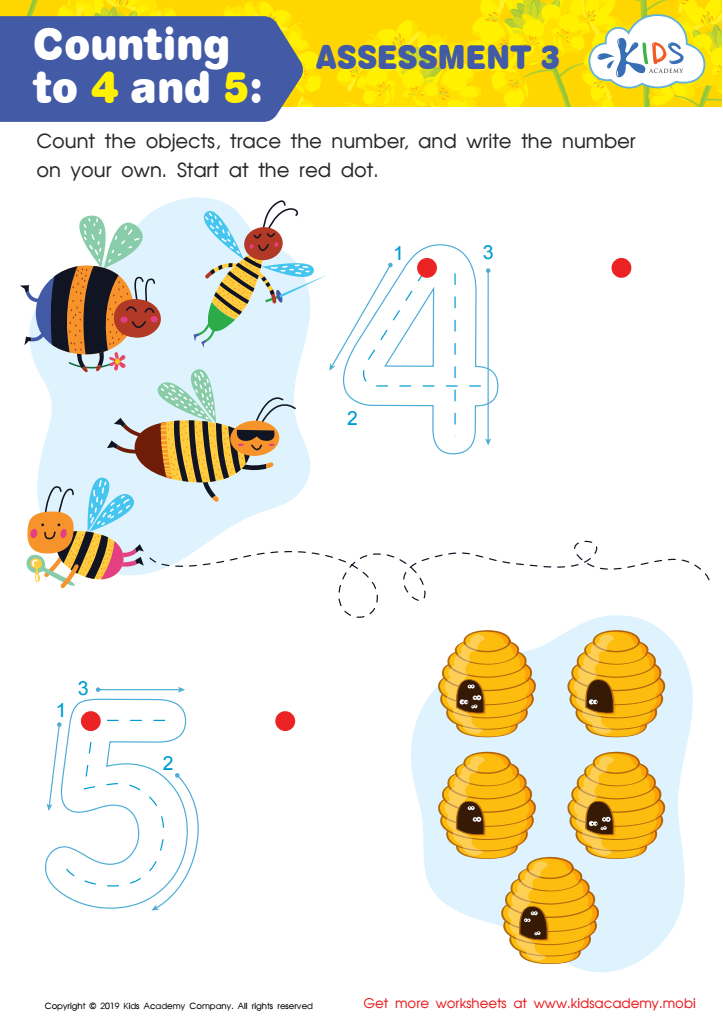
Counting to 4 and 5: Assessment 3 Worksheet
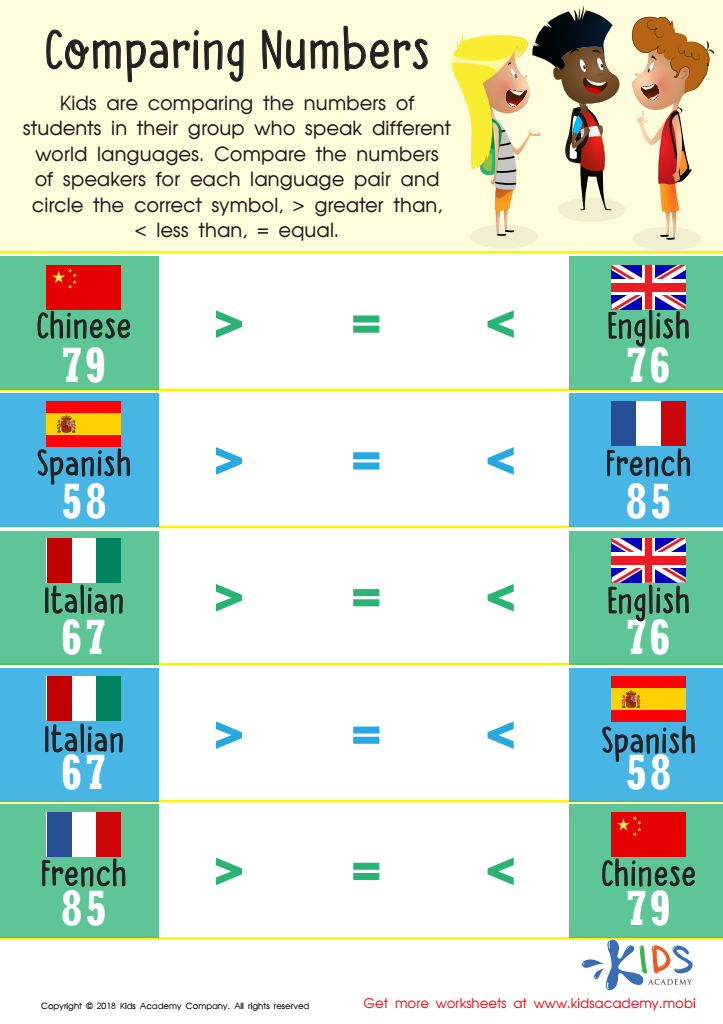
Comparing Numbers Worksheet for 1st Grade
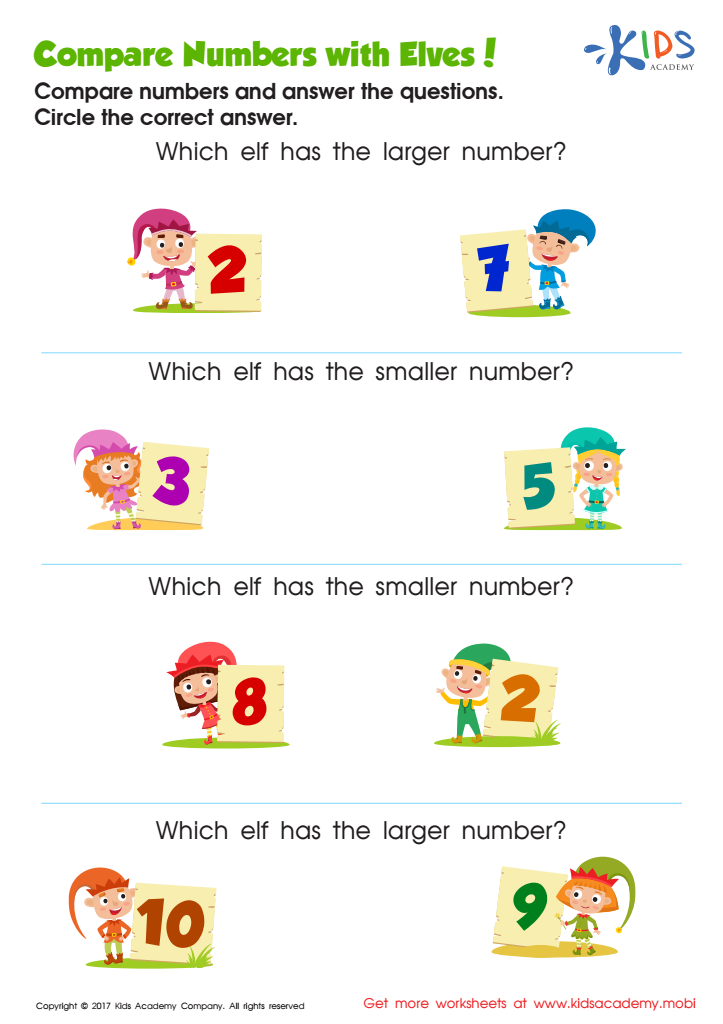
Comparing Numbers Worksheet for Kindergarten







Number comparison is a fundamental mathematical skill that develops in children aged 3 to 7, and it serves as a cornerstone for more advanced arithmetic concepts. At this age, kids begin to understand quantities, numerical relationships, and the concept of "more" or "less.” By engaging in number comparison activities, such as comparing groups of objects or using visual aids like number lines, children can enhance their cognitive abilities while building a strong numerical foundation.
Parents and teachers should care about this skill because it fosters early mathematical literacy, promoting critical thinking and problem-solving skills. Understanding number comparison helps children make sense of the world around them, enabling them to analyze and interpret various situations, from sharing snacks to understanding ranking systems. Moreover, mastering this skill can boost children's confidence and enjoyment in learning maths, helping to prevent future math anxiety.
Through guided play and structured activities, educators and caregivers can create an enriching environment where children thrive. By emphasizing number comparison at this crucial developmental stage, adults can ensure children are prepared to tackle more complex math concepts in the future, ultimately paving the way for academic success and a lifelong love for learning.








