Phonics understanding Normal Worksheets for Ages 3-7
3 filtered results
-
From - To
Explore our engaging "Phonics Understanding Worksheets" designed for children ages 3 to 7. These thoughtfully crafted worksheets aim to enhance early literacy skills through interactive and fun activities that promote phonemic awareness. Featuring colorful illustrations and age-appropriate exercises, these resources help young learners identify letters, understand sound-letter correlations, and develop essential reading skills. Each worksheet encourages children to explore phonics in a playful manner, making learning enjoyable and effective. Perfect for classroom use or at-home practice, our worksheets support educators and parents in nurturing foundational skills that pave the way for a lifelong love of reading.
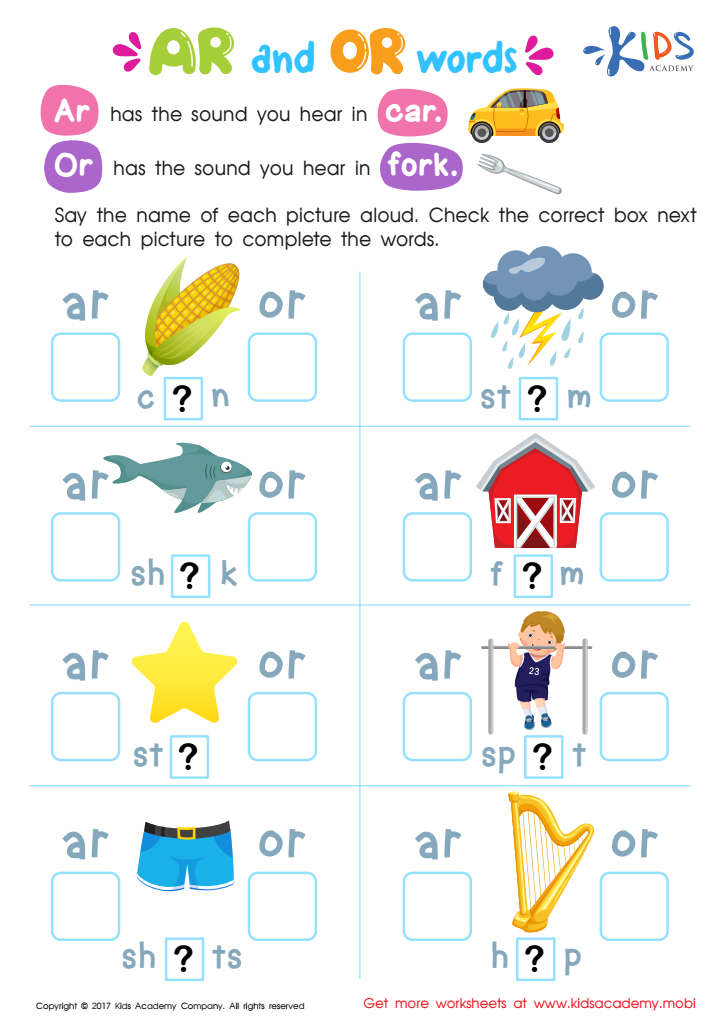
Ar and Or Words Phonics Worksheet
 Assign to My Students
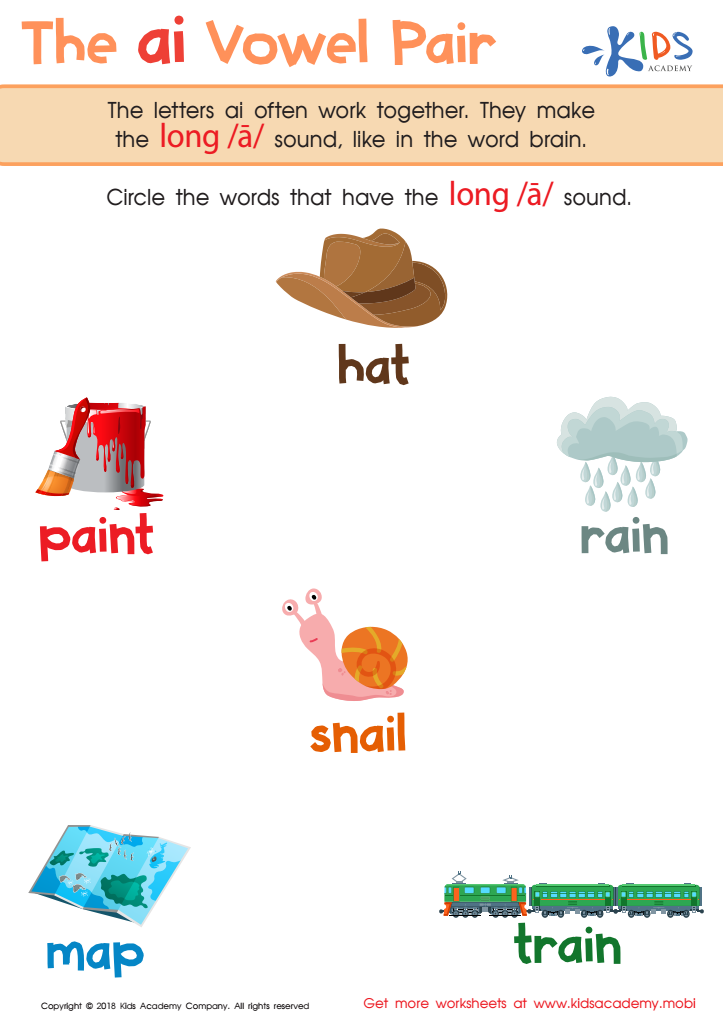
The AI Vowel Pair Worksheet
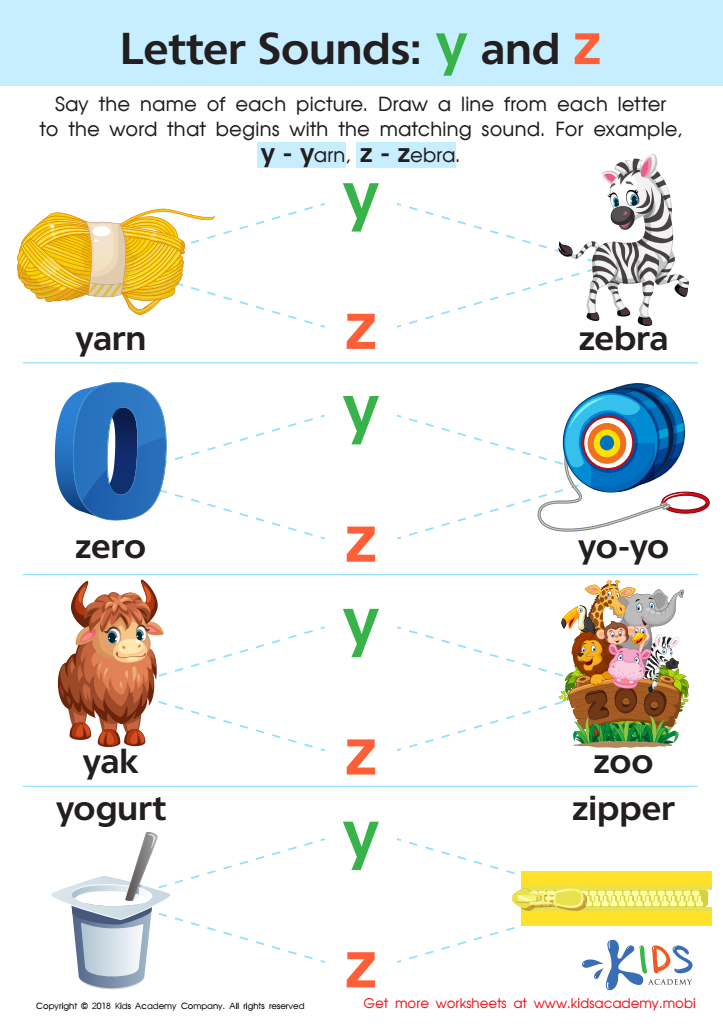
Letter Y and Z Sounds Worksheet








Phonics understanding is crucial for children ages 3-7, as it lays the foundation for reading and writing skills. During this developmental stage, children are naturally inclined to explore language and sounds, making it an ideal time to introduce phonics. Phonics teaches the relationship between letters and their corresponding sounds, enabling children to decode words effectively. This understanding fosters independent reading, enhances vocabulary, and improves overall literacy, which is essential for academic success.
Moreover, phonics instruction can boost a child’s confidence and motivation when approaching reading tasks. When children grasp phonics, they are more likely to engage with texts, experiencing enjoyment and understanding in their reading journeys. For parents and teachers, fostering phonics knowledge is also an avenue for meaningful engagement with children, as it allows for collaborative learning and exploration of language.
Additionally, a solid grounding in phonics can help prevent future reading difficulties, setting children on a path to lifelong learning. In today's fast-paced digital world, where literacy skills are more important than ever, ensuring that children develop strong phonics understanding is an investment in their future success, both academically and personally. By prioritizing phonics instruction, adults play a crucial role in shaping young readers and writers.








