Reading analog clocks Normal Worksheets for Ages 3-7
3 filtered results
-
From - To
Welcome to our engaging "Reading Analog Clocks Normal Worksheets" designed for children ages 3-7! These interactive worksheets help young learners develop essential time-telling skills using vibrant, age-appropriate activities. Through fun exercises, kids will familiarize themselves with clock faces, hour and minute hands, and recognizing different times. Our resources encourage hands-on practice, promoting confidence and understanding in reading analog clocks. Perfect for both classroom settings and at-home learning, these worksheets make mastering time-telling enjoyable and effective. Give your child the tools they need to succeed with our thoughtfully crafted activities tailored to their developmental stage!
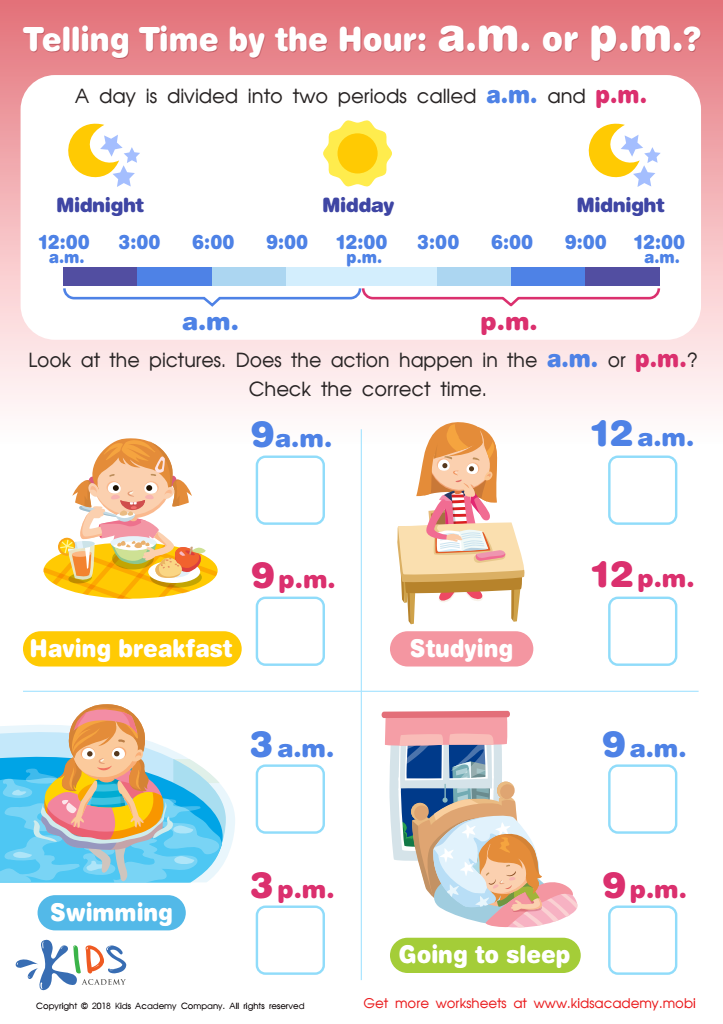
Tilling Time by the Hour: a.m. or p.m.? Worksheet
 Assign to My Students
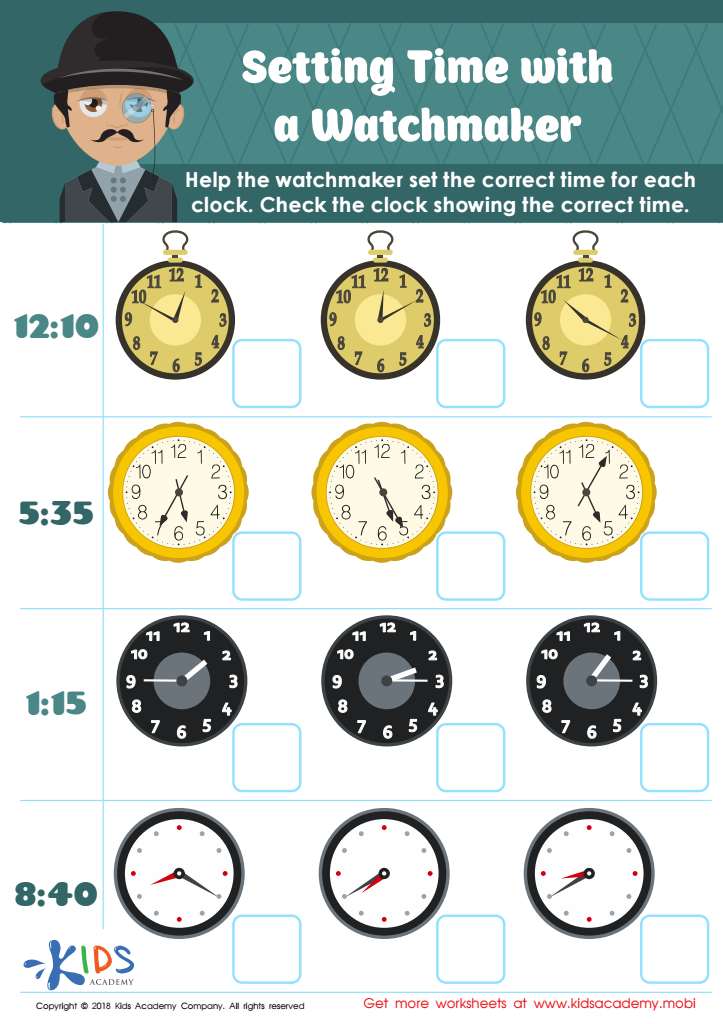
Setting Time with Watchmaker Worksheet
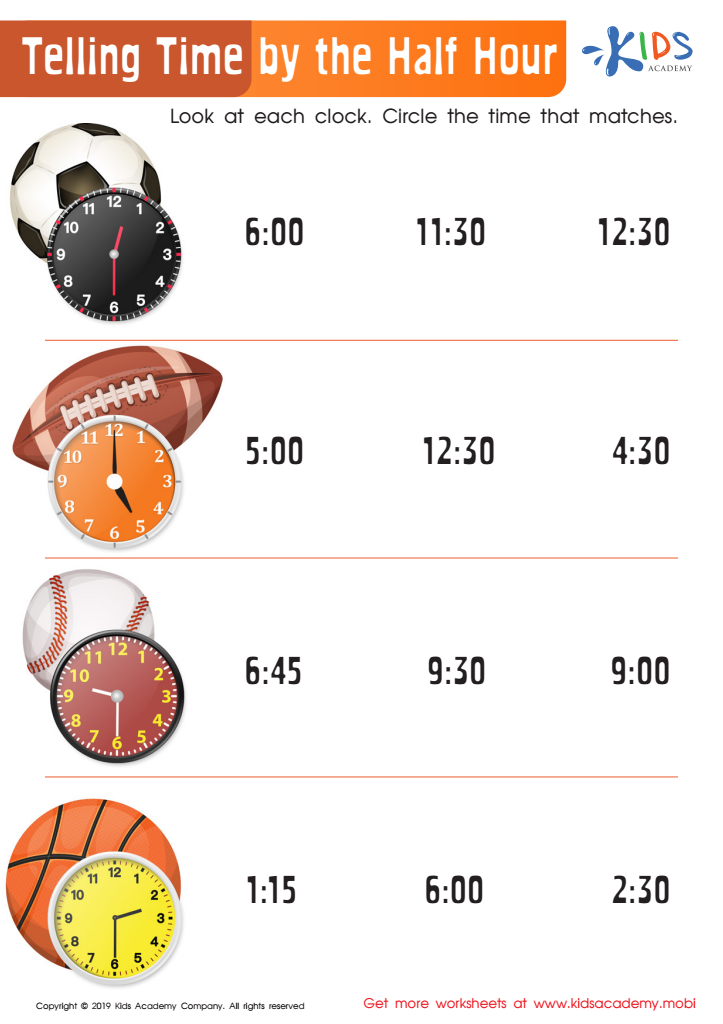
Telling Time by the Half Hour Worksheet







Understanding how to read analog clocks is an essential skill that promotes both numerical literacy and cognitive development in children aged 3 to 7. Unlike digital clocks, which display time in a straightforward number format, analog clocks introduce children to the concepts of counting, fractions, and spatial awareness. Teachers and parents should care about imparting this skill, as it lays a foundation for critical thinking and problem-solving.
As children learn to read analog clocks, they also practice fine motor skills by moving the clock hands and developing their understanding of time as a concept. This understanding fosters a variety of skills, including the ability to manage time effectively — a key competency as children start school and participate in structured activities. It also cultivates responsibility, as children learn the importance of punctuality.
Additionally, engaging with analog clocks can serve as a fun, hands-on learning experience, enhancing parent-child or teacher-student interactions through games and activities centered around telling time. Thus, encouraging children to connect with the traditional concept of time fosters a sense of curiosity and confidence that can benefit them academically and socially in the long run.








