
Sound discrimination Normal Worksheets for Ages 3-7
3 filtered results
Difficulty Level
Grade
Age
-
From - To
Subject
Activity
Standards
Enhance your child's auditory skills with our "Sound Discrimination Normal Worksheets for Ages 3-7." Designed for early learners, these engaging worksheets help develop critical listening abilities, allowing children to differentiate between various sounds and improve their phonetic awareness. With fun activities that capture their attention, these resources are perfect for home or classroom use. Foster a love for learning through interactive exercises that also promote cognitive development and fine motor skills. Explore a wide range of options tailored to suit your child’s learning pace! Start their journey toward becoming confident listeners and communicators today! Visit us for vibrant, creative worksheets!
Favorites
With answer key
Interactive
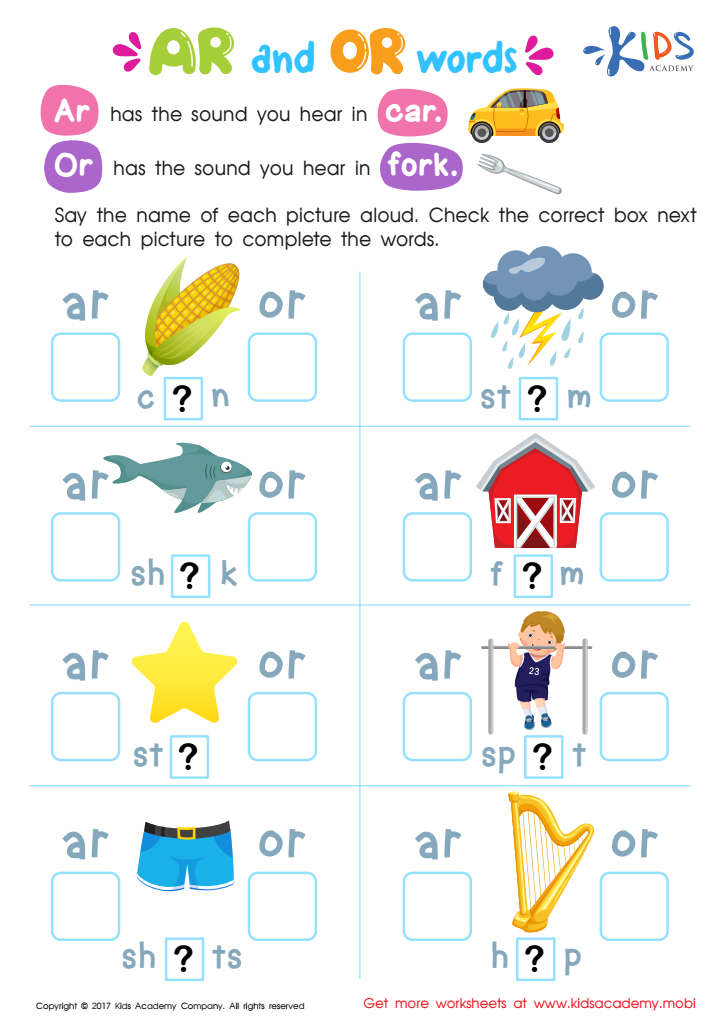
Ar and Or Words Phonics Worksheet
Master the distinct digraphs 'ar' and 'or' with this fun phonics worksheet from Kids Academy! With meaningful illustrations, it'll guide your child to choose the right one. Get ready for the great results!
 Assign to My Students
Ar and Or Words Phonics Worksheet
Worksheet
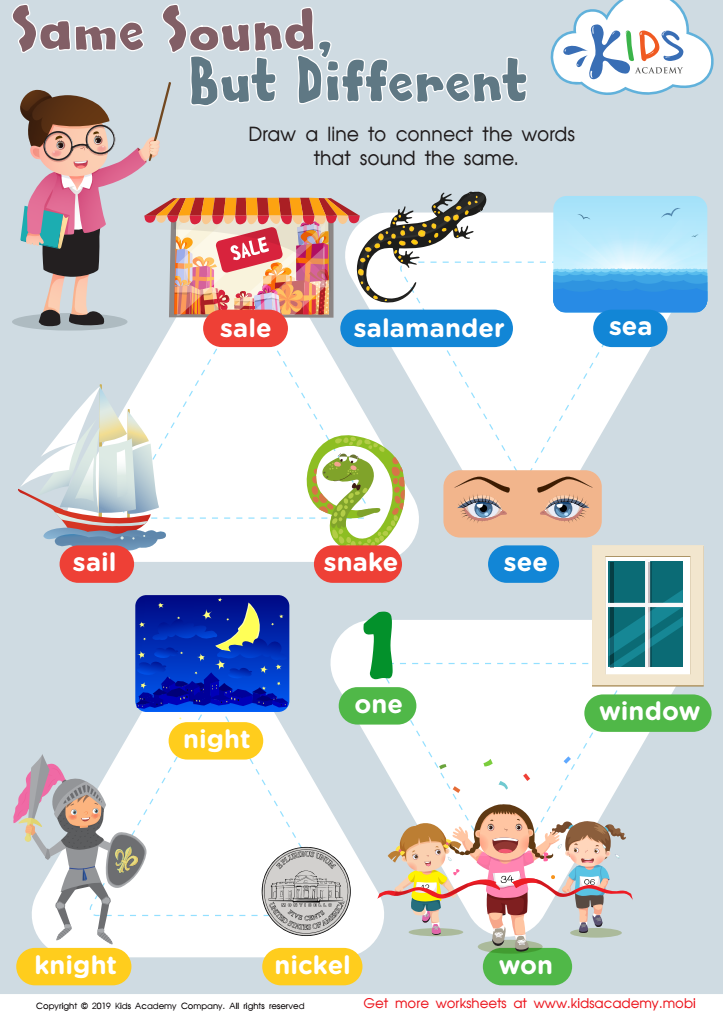
Sound Different Worksheet
Homophones can be tricky for new readers and writers. This PDF worksheet helps kids understand the differences using pictures. It asks them to draw lines to connect the homophones and provides concrete imagery for reference. It's a great way to learn the right definition and spelling of words that sound the same.
Sound Different Worksheet
Worksheet
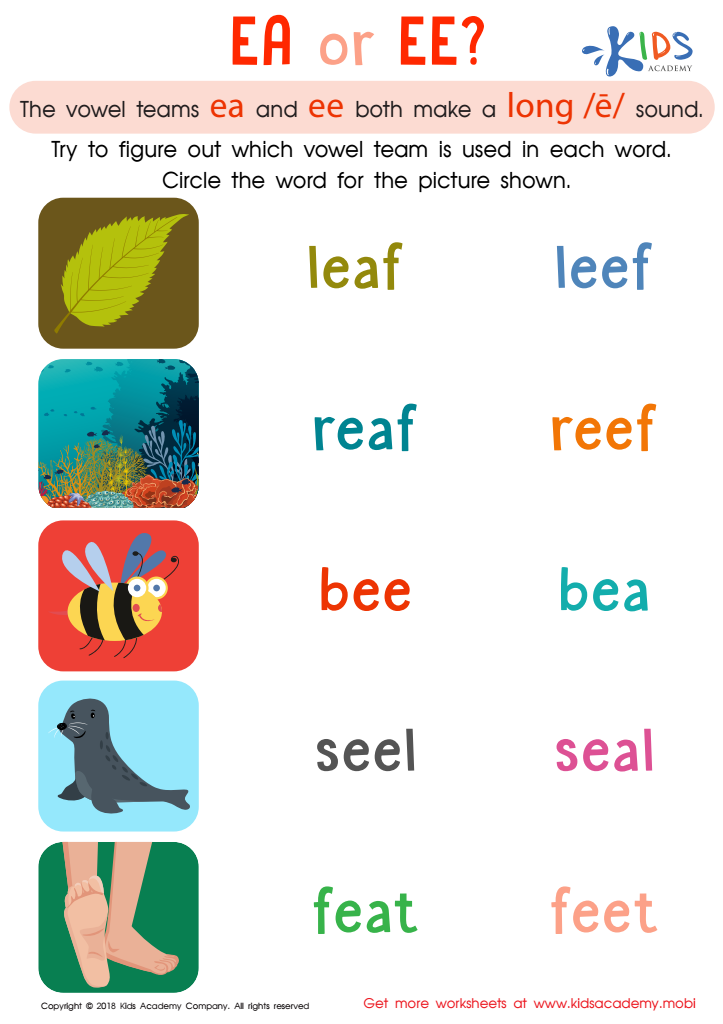
Reading: EA and EE Worksheet
Confused by the long E sound's varying spellings? Give students practice with this printable. It will improve their reading and spelling skills by helping them identify the correct spellings for words with the /ee/ and /ea/ vowel teams. Clear up the confusion and sharpen their skills.
Reading: EA and EE Worksheet
Worksheet
Join Kids Academy for Free
Who is primarily going to use this learning content?








Sound discrimination is a critical skill for young children aged 3 to 7 as it serves as a foundational element for language development and academic success. This ability allows children to discern differences between various sounds, which is essential for effective communication and learning to read. When parents and teachers nurture sound discrimination, they enrich a child's vocabulary, improve phonemic awareness, and help them develop strong listening skills.
In early childhood, children are naturally curious and attuned to sounds in their environment. By honing their sound discrimination skills, they become more adept at recognizing letters, differentiating between similar words, and ultimately, mastering reading. Moreover, these skills can impact overall academic performance, as sound discrimination influences not just literacy, but also subjects like math and science, where precise language and comprehension are necessary.
Furthermore, developing sound discrimination can also facilitate social interactions. Children with solid auditory skills are usually more effective communicators, which enhances their friendships and group dynamics. For these reasons, it’s imperative that parents and teachers actively engage in activities and strategies that promote sound discrimination, thereby laying a robust foundation for lifelong learning and communication skills.








