Time recognition Normal Worksheets for Ages 3-7
5 filtered results
-
From - To
Enhance your child's understanding of time with our engaging Time Recognition Normal Worksheets designed specifically for ages 3-7. These worksheets provide interactive and visually appealing activities that help young learners grasp essential time concepts, such as recognizing clocks, understanding hours and minutes, and differentiating between morning, afternoon, and evening. Tailored to suit various learning styles, our worksheets encourage students to develop critical thinking and fine motor skills while having fun. Ideal for home or classroom use, these resources are perfect for building a solid foundation in time-related learning. Download now to bring excitement to your child's journey in mastering time recognition!
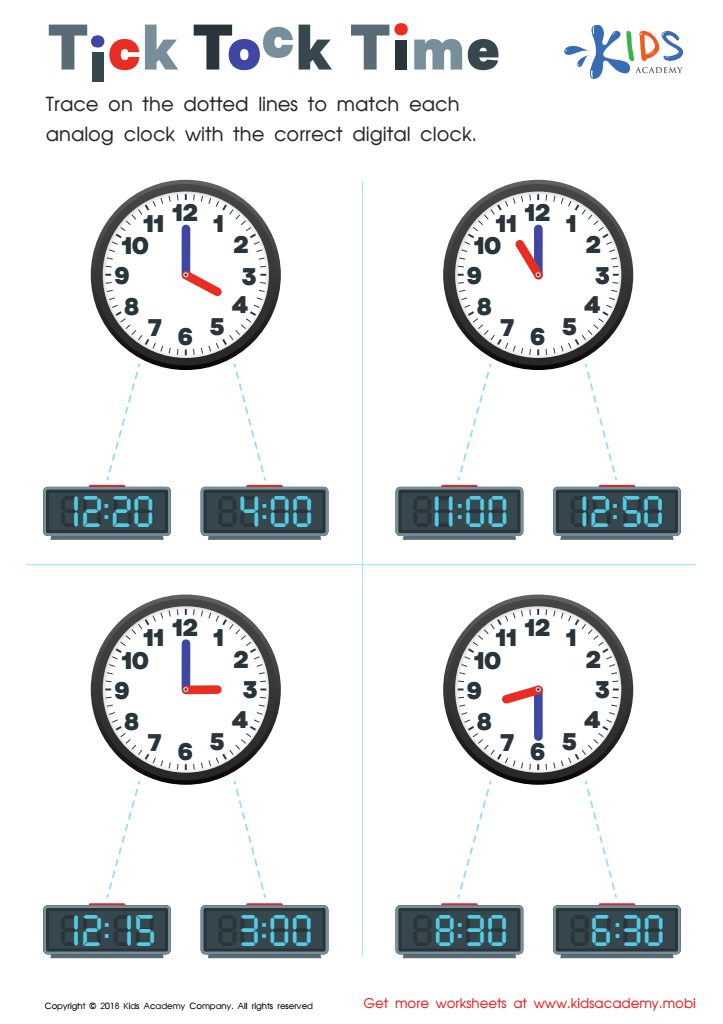
Tick Tock Time Worksheet
 Assign to My Students
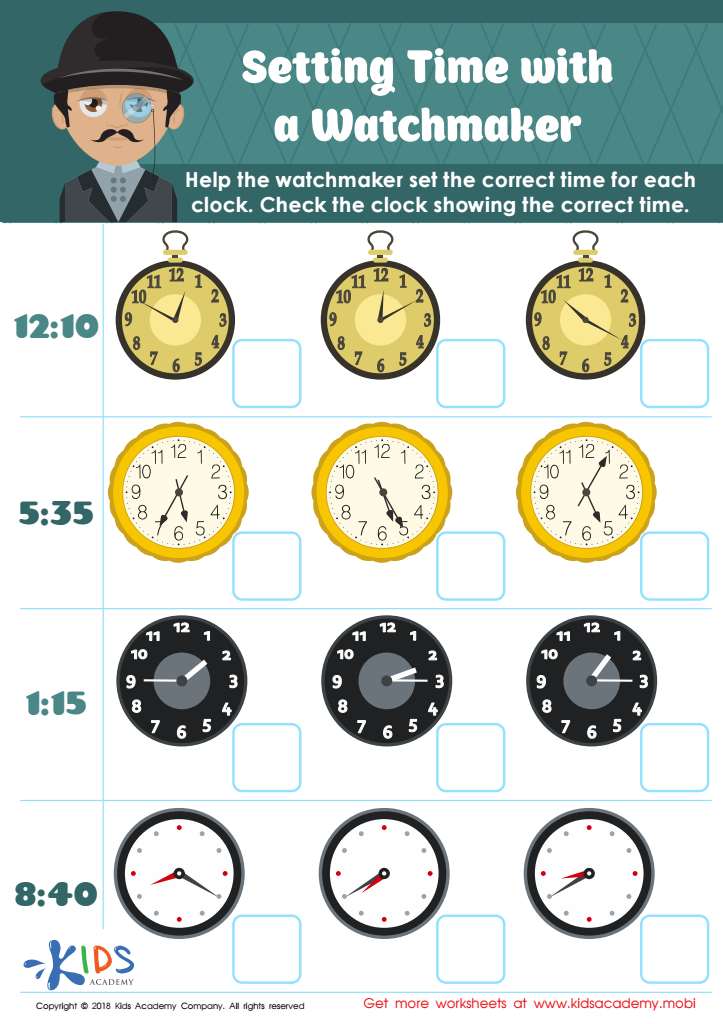
Setting Time with Watchmaker Worksheet
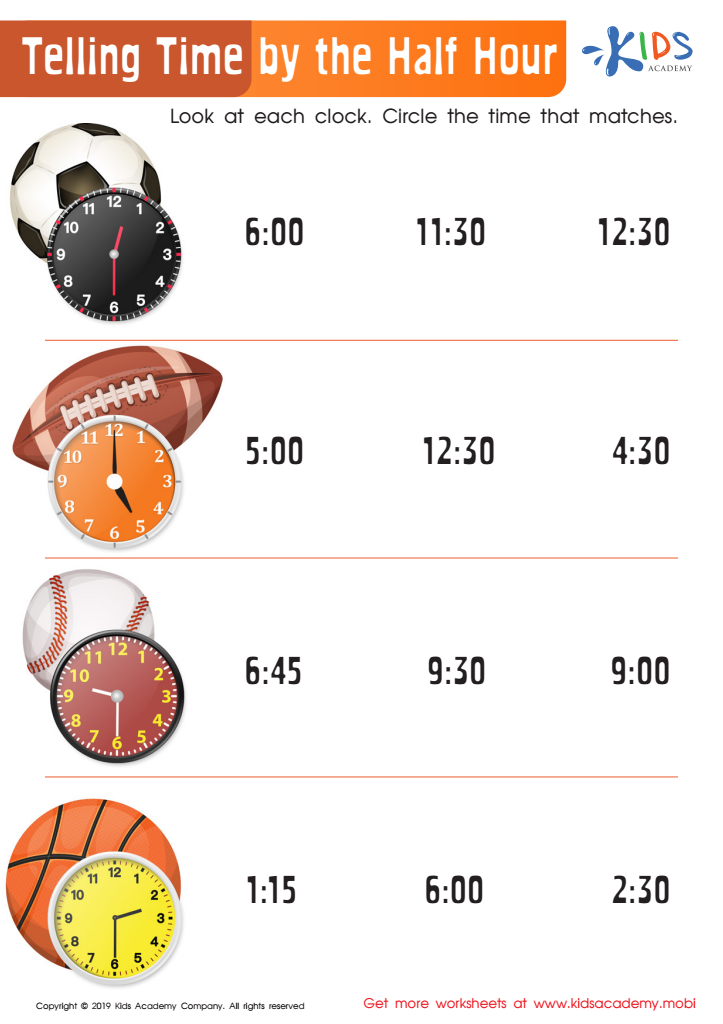
Telling Time by the Half Hour Worksheet
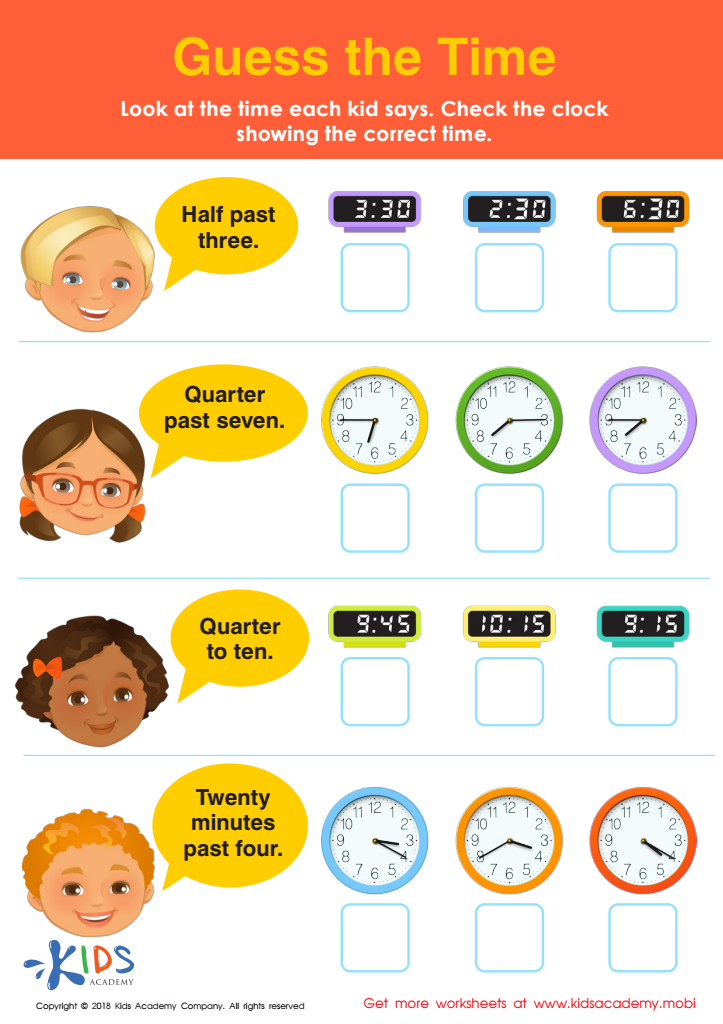
Guess the Time Worksheet
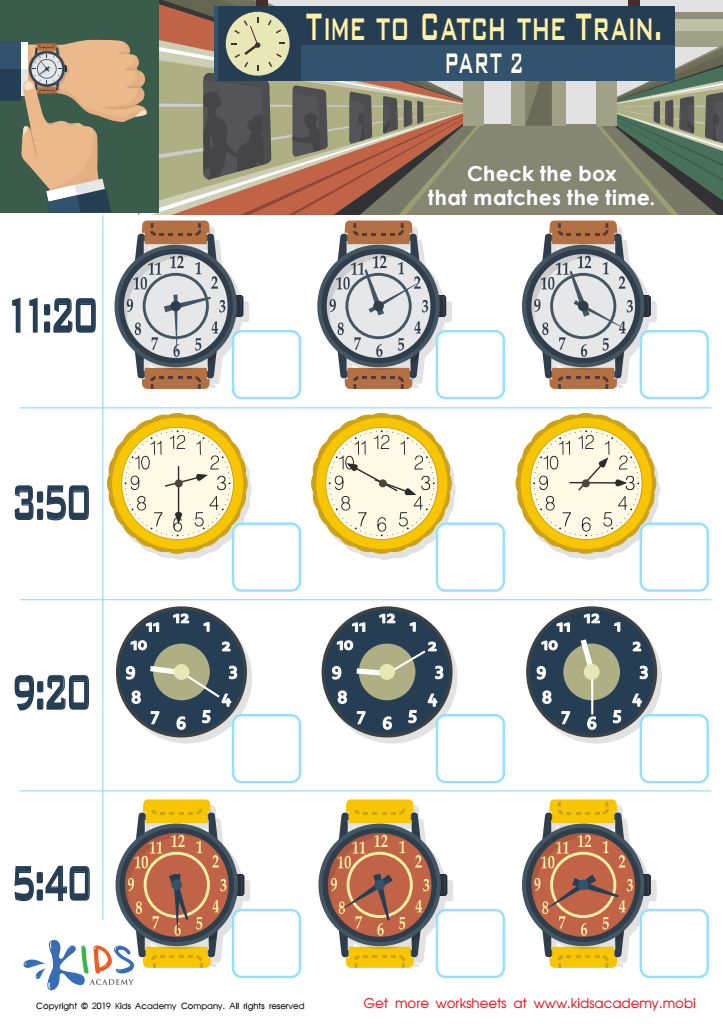
Time to Catch the Train Part 2 Worksheet






Time recognition is a crucial skill for children aged 3-7 as it lays the foundation for their understanding of daily routines, schedules, and the concept of time itself. This developmental stage is marked by growing curiosity and comprehension, making it an opportune time for parents and teachers to introduce the basics of time-telling.
Caring about time recognition fosters independence, as children learn to manage their schedules and understand transitions between activities, leading to a sense of autonomy. It enhances their learning experience, enabling them to anticipate upcoming events, which reduces anxiety and instills confidence. Moreover, understanding time helps improve social skills, as children become adept at acknowledging when to engage with peers or come together for group activities.
Additionally, time recognition is linked to cognitive development; it encourages problem-solving and critical thinking as children learn to measure the intervals and durations of various activities. Teachers and parents who emphasize this skill can better support their child's overall development and emotional well-being. In essence, time recognition is not merely about reading clocks; it enhances children's organizational abilities and prepares them for the structured world beyond early childhood. Therefore, investing in this skill is invaluable for lifelong learning.








