Understanding forces Normal Worksheets for Ages 3-7
3 filtered results
-
From - To
Explore our "Understanding Forces Normal Worksheets" designed for young learners aged 3-7! These engaging and interactive worksheets introduce foundational concepts of forces through fun activities tailored to ignite curiosity and support early STEM learning. Children will discover the basics of push and pull, friction, and magnetism while enhancing their fine motor skills. Each worksheet is crafted to foster critical thinking and comprehension in a playful environment, making learning enjoyable. Perfect for classrooms or home activities, these resources encourage hands-on experience and exploration. Dive into the exciting world of forces and watch your child’s understanding and imagination soar!
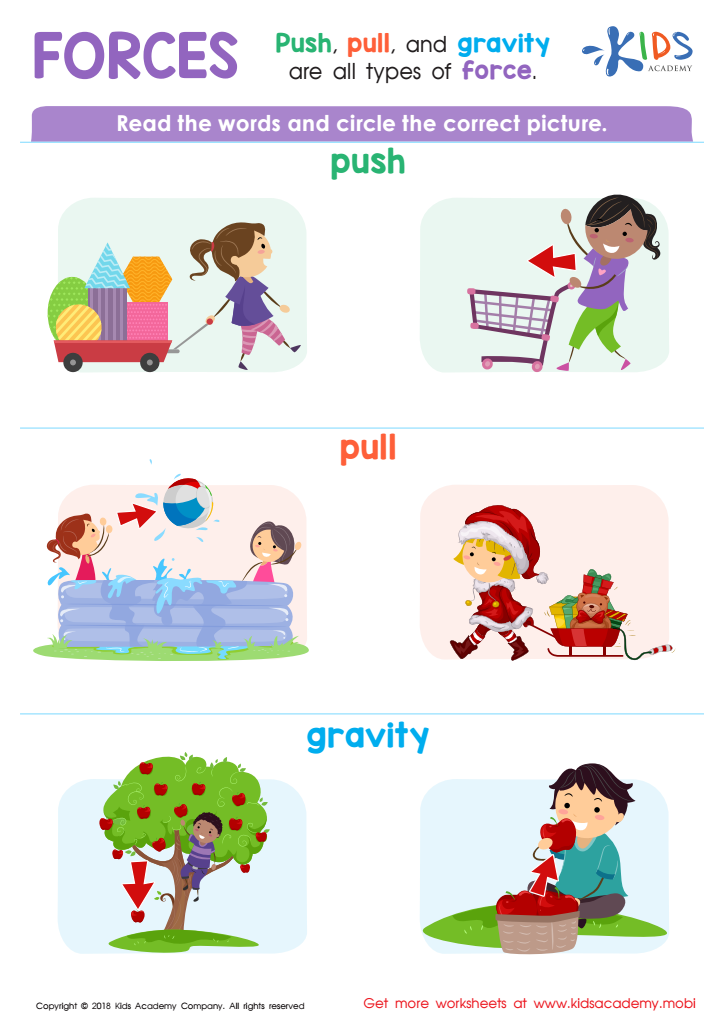
Forces Worksheet
 Assign to My Students
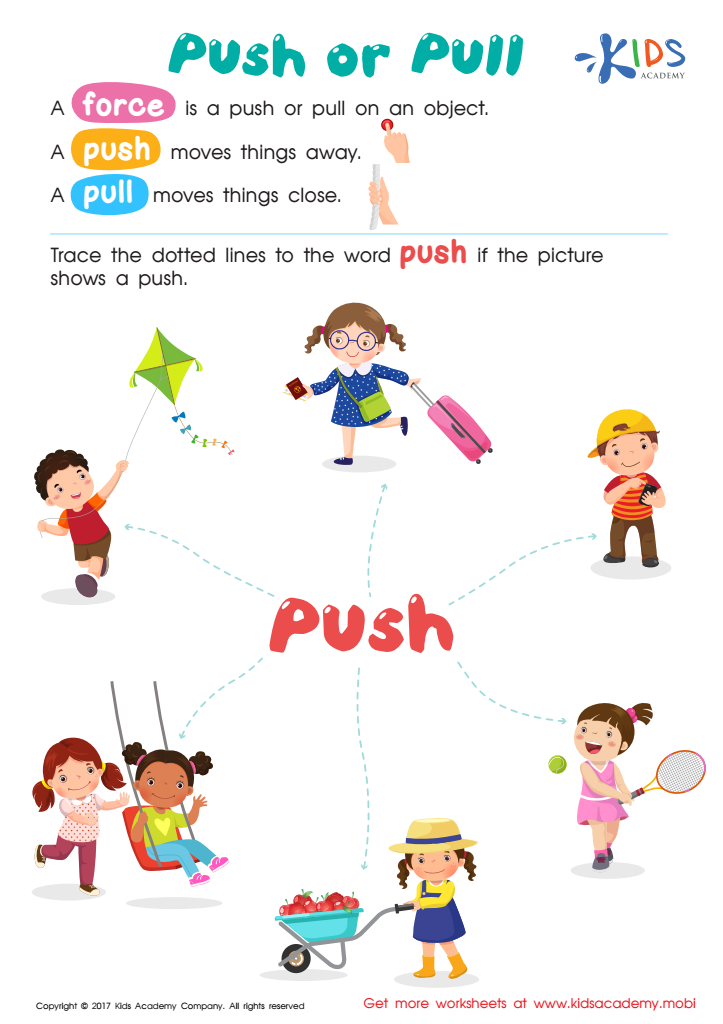
Push or Pull Worksheet
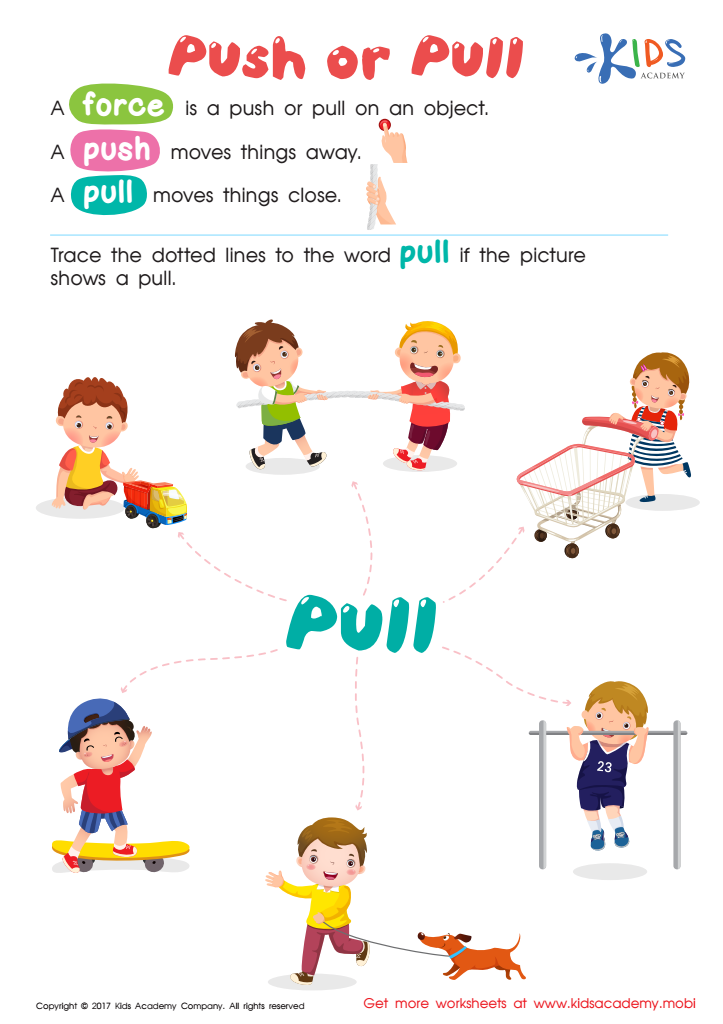
Pull or Push Worksheet







.jpg)
Understanding forces, such as normal force, is crucial for the development of essential scientific concepts in young children. For ages 3-7, children are naturally curious about how and why things move, and introducing them to the idea of forces helps to build a foundation for their future understanding of science and physics.
Parents and teachers play a vital role in nurturing this curiosity. When they engage children in simple discussions and hands-on activities related to normal force—like how a table supports a book or what happens when they jump on the ground—they foster critical thinking skills and encourage exploration. These early experiences help children to develop observational skills, enhance logic, and strengthen problem-solving abilities.
Moreover, grasping the concept of forces encourages children to make connections between their everyday experiences and scientific principles, thereby making learning more relevant and exciting. This foundational knowledge can also ignite a long-lasting interest in inquiry and STEM (science, technology, engineering, and math) subjects. By emphasizing such concepts at a young age, parents and teachers ensure that children are not only prepared for future academic success but also equipped to make sense of the world around them.








