Understanding fractions Normal Worksheets for Ages 3-7
6 filtered results
-
From - To
Discover engaging worksheets designed to help children ages 3-7 understand fractions with ease. Our "Understanding Fractions Normal Worksheets" provide simple, interactive exercises that introduce young learners to the basics of fractions. These downloadable resources encourage hands-on learning through visual aids and fun activities, making complex concepts accessible to early learners. Ideal for both classroom and home use, our worksheets support skill development in a structured, enjoyable way, ensuring kids gain confidence in their understanding of fractions. Start your child’s mathematical journey with these educator-approved tools that lay a solid foundation for future success.
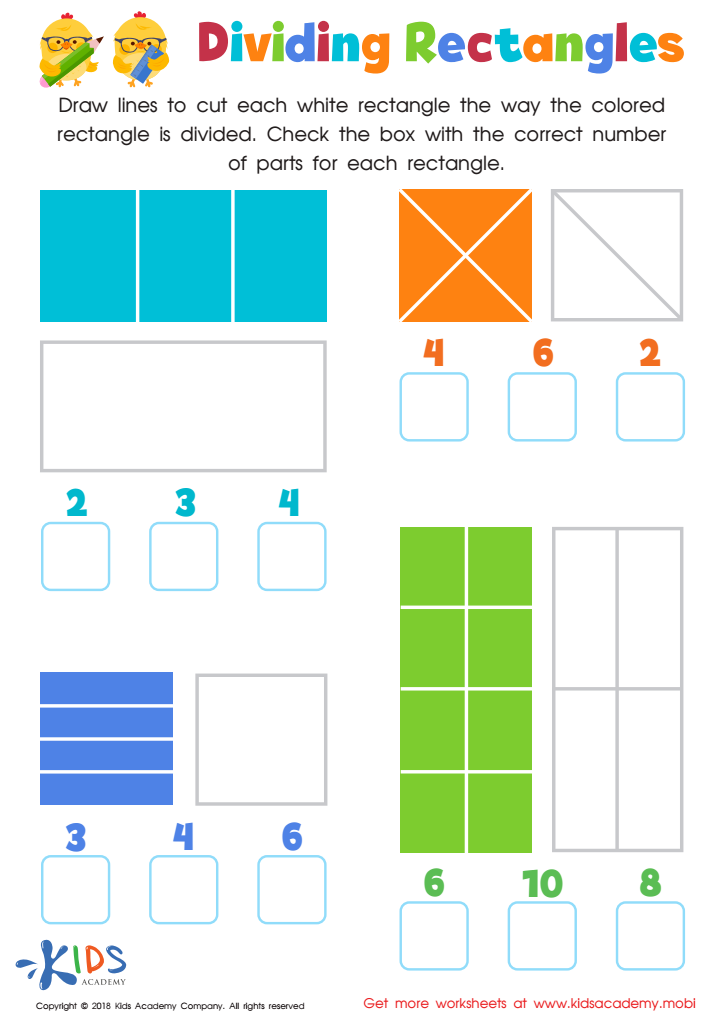
Dividing Rectangles Worksheet
 Assign to My Students
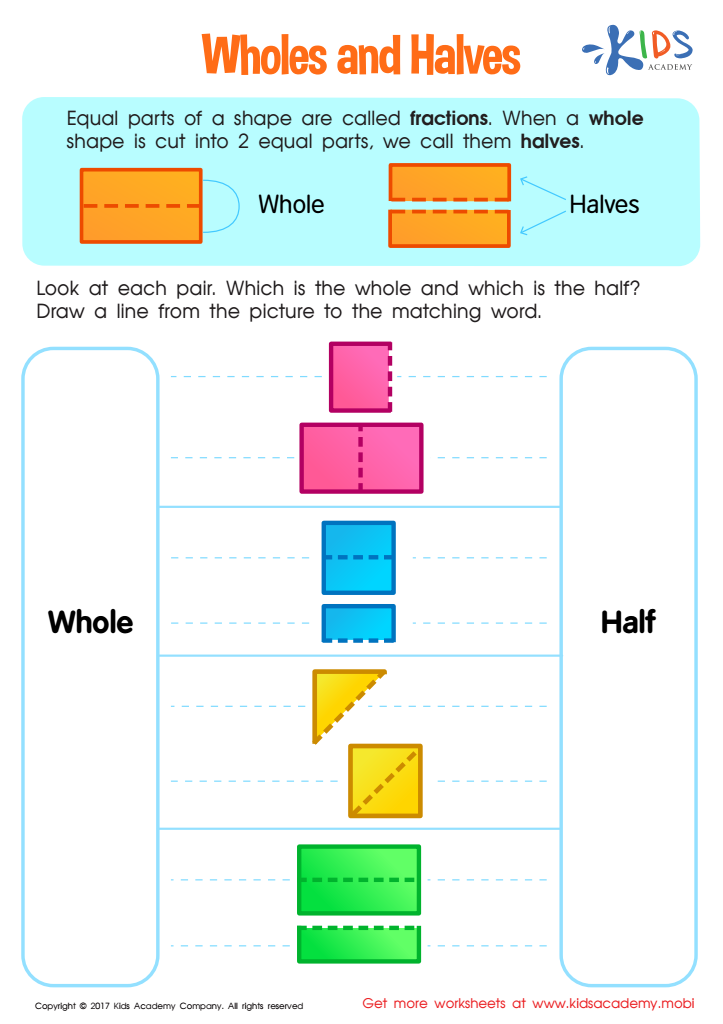
Wholes and Halves Worksheet
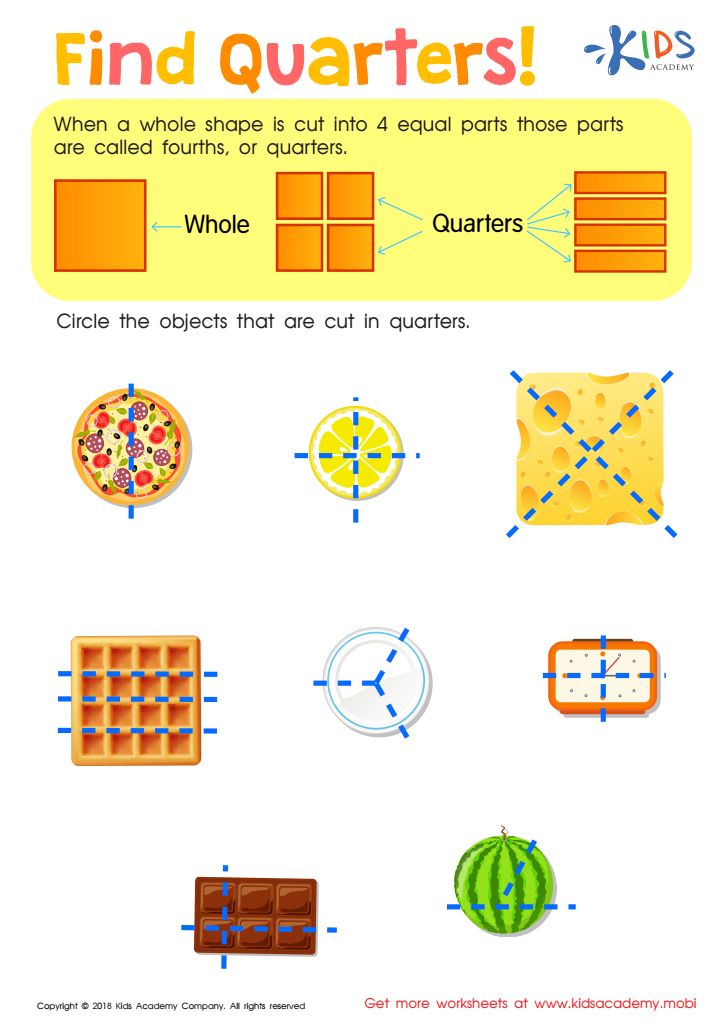
Find Quarters Worksheet
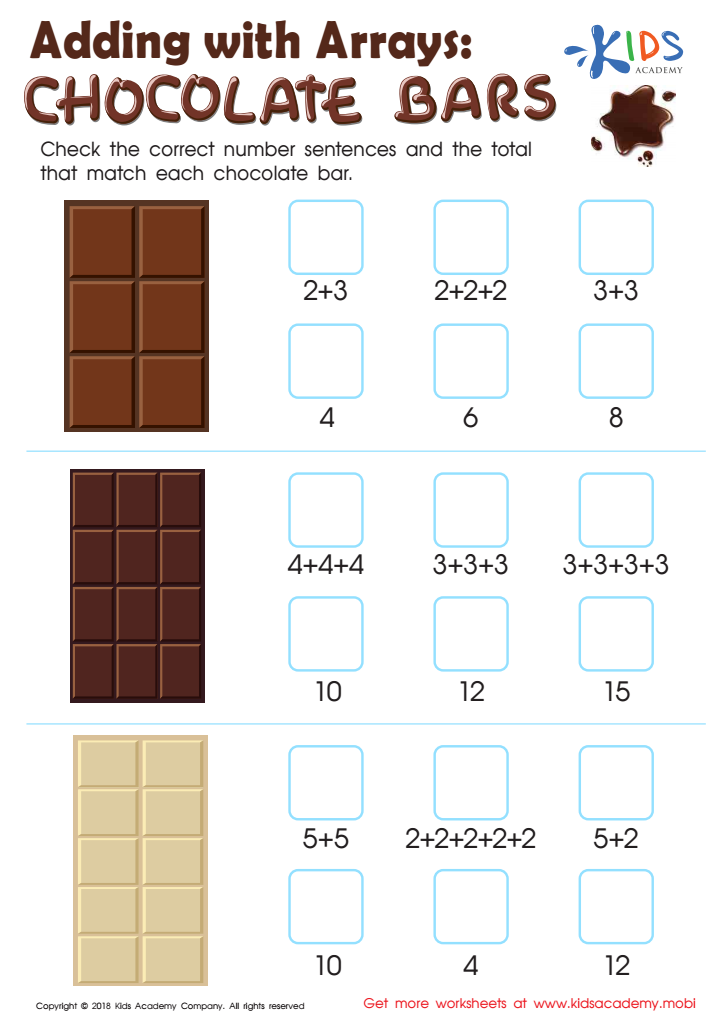
Adding with Arrays: Chocolate Bars Worksheet
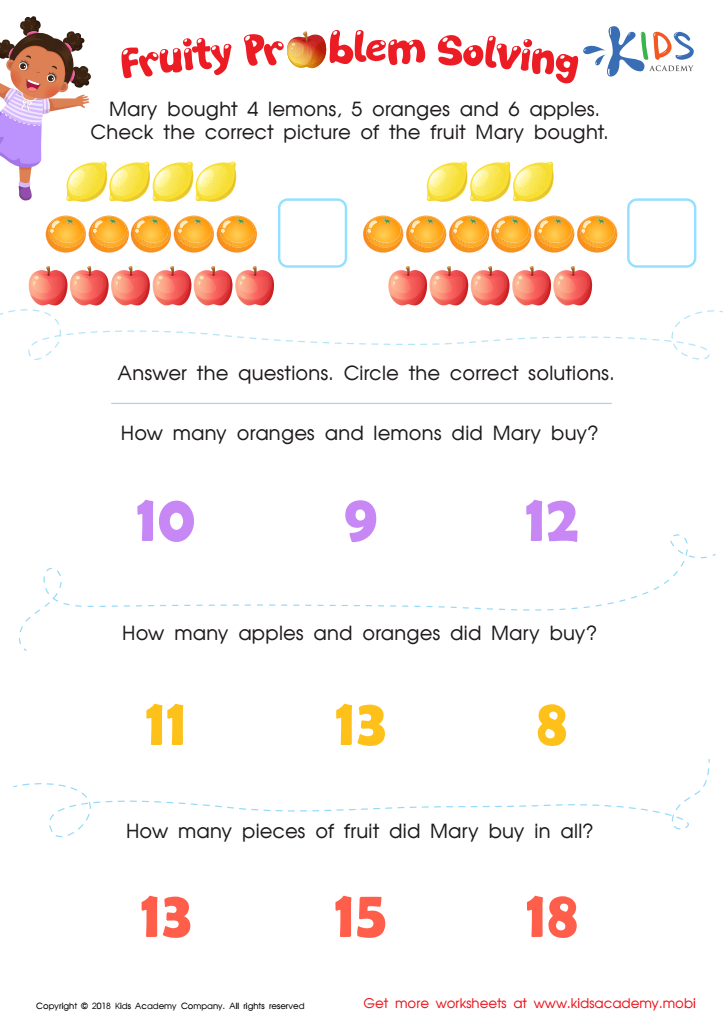
Fruity Problem Solving Worksheet
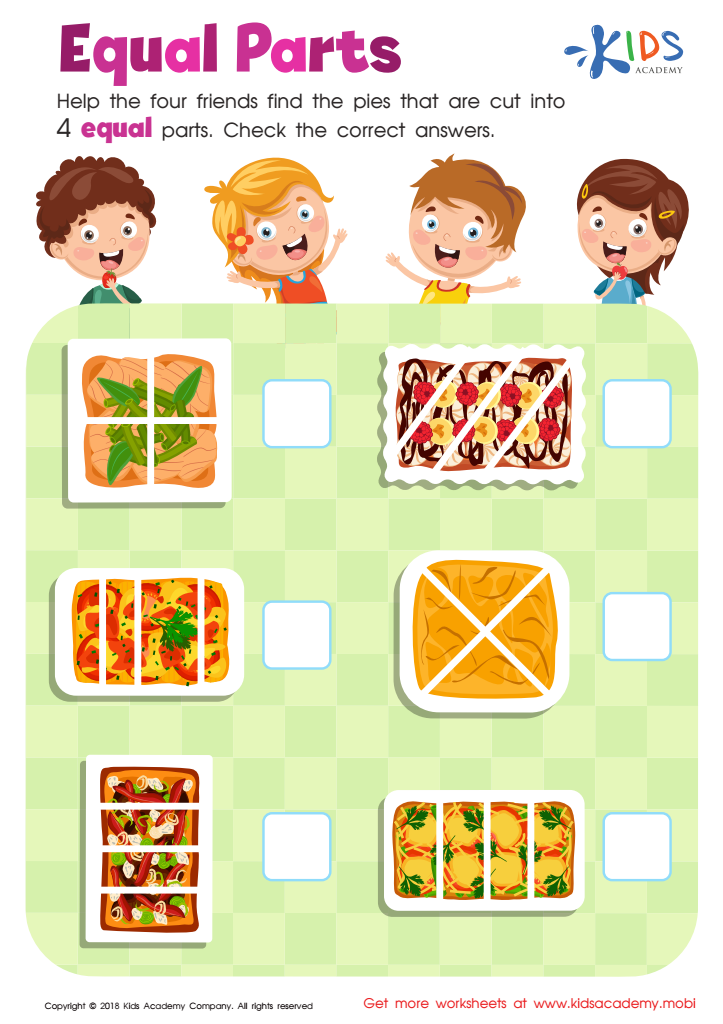
Equal Parts: Food Worksheet







Understanding fractions is crucial even for young children aged 3-7, as it lays a strong foundation for future mathematical learning and everyday life skills. At these ages, children are naturally curious and capable of grasping simple mathematical concepts when appropriately introduced through play and everyday experiences. Learning fractions helps in developing critical thinking, problem-solving abilities, and spatial awareness.
Parents and teachers should care about teaching fractions early as it aids in understanding the concept of fairness and sharing, vital social skills for young learners. For instance, sharing toys fairly among friends or dividing snacks can make these abstract concepts more relatable and fun. Introducing fractions at a young age can also improve a child's confidence in handling more complex mathematical problems later in school.
Moreover, familiarity with fractions helps children in other areas, such as time management (understanding half an hour) and even in developing early engineering skills, like building blocks by comprehending parts of a whole. Teachers and parents can utilize games, interactive activities, and practical examples to make learning fractions a natural part of children’s daily routines. Nurturing an early understanding of fractions fosters a positive attitude towards math, encouraging a lifelong interest and proficiency in the subject.








