Understanding number relationships Normal Worksheets for Ages 3-7
3 filtered results
-
From - To
Understanding Number Relationships Worksheets for Ages 3-7 is designed to foster early math skills in young learners. These expert-crafted worksheets help children grasp fundamental numerical concepts such as counting, comparing, and sequencing numbers. Each activity is tailored to deliver age-appropriate challenges, ensuring engaging and educational experiences that build a strong math foundation. Perfect for parents and teachers, these worksheets cater to various learning styles, making math fun and accessible. Gain crucial skills in problem-solving and logical thinking while nurturing a positive attitude towards mathematics. Set your child on the path to math success with these essential resources.
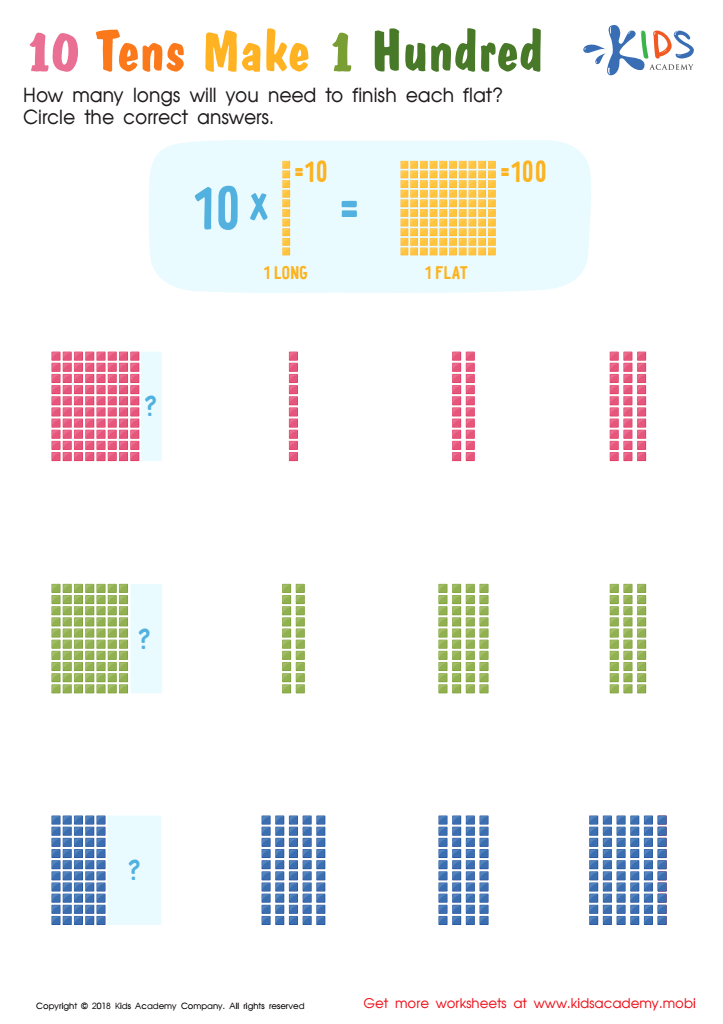
10 Tens Make 1 Hundred Worksheet
 Assign to My Students
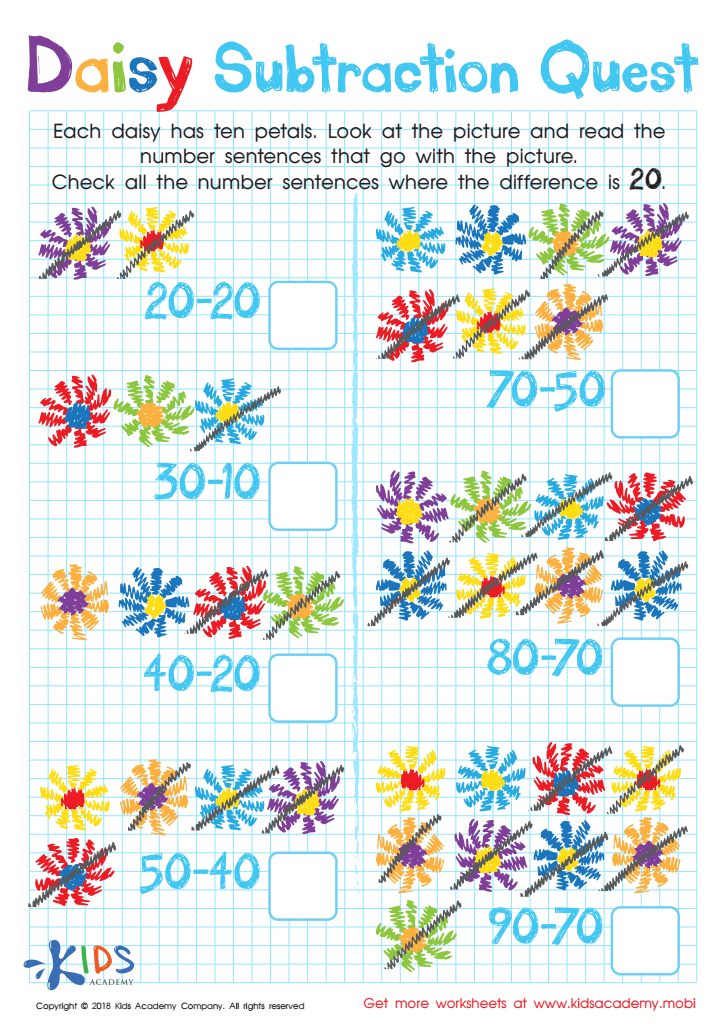
Daisy Subtraction Quest Worksheet
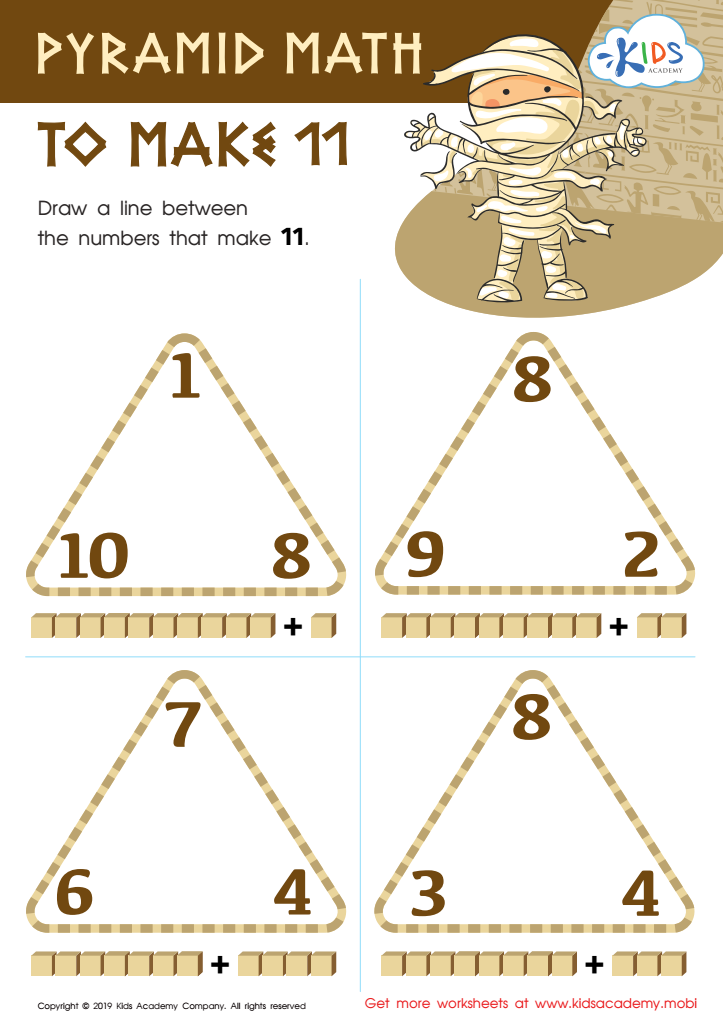
Pyramid Math to Make 11 Worksheet








Understanding number relationships is crucial for children aged 3-7 because it lays the foundation for their future mathematical learning and overall cognitive development. During these early years, children are naturally building their comprehension of numbers and how they interrelate, such as recognizing that the number 5 is made up of 2 and 3 or understanding that 4 is less than 7. This fundamental concept is known as number sense and is essential for solving more complex mathematical problems later in life.
Parents and teachers should prioritize fostering strong number relationships because they enhance critical thinking and reasoning skills. When children grasp these relationships, they develop the ability to estimate, make logical deductions, and recognize patterns—all skills crucial for academic success beyond mathematics. These skills also encourage confidence in approaching new learning situations.
Moreover, a solid understanding of number relationships can positively impact a child’s attitude towards mathematics. Early struggles with math can lead to anxiety and a fixed mindset about their abilities, while early success fosters a sense of achievement and enjoyment. Activities that promote exploring number relationships, such as counting games, puzzles, and number stories, make learning interactive and enjoyable, ensuring children remain engaged and motivated. Developing these foundational skills from a young age sets the stage for a lifelong love and competence in mathematics.








