
Verb identification Normal Worksheets for Ages 3-7
6 filtered results
Difficulty Level
Grade
Age
-
From - To
Subject
Activity
Standards
Our Verb Identification Normal Worksheets are meticulously designed for young learners aged 3-7 to enhance their understanding of action words. Through engaging and interactive activities, these worksheets simplify verb identification, helping early readers recognize and use verbs in sentences. Perfect for both classroom and home learning environments, each sheet offers fun exercises that reinforce grammar basics, fostering language skills and confidence in young minds. Download now and watch your child's language abilities flourish with our expertly crafted educational resources tailored for early childhood development. Explore more at Kids Academy to enrich your child's learning journey.
Favorites
With answer key
Interactive
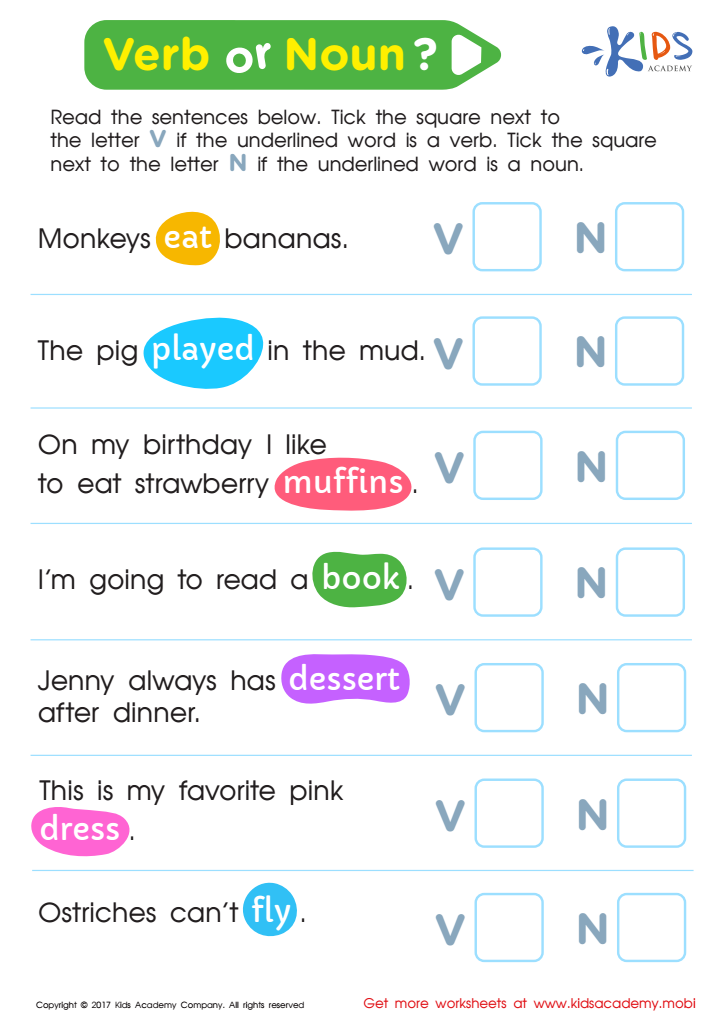
Verb or Noun Worksheet
This worksheet will help your child identify verbs and nouns quickly. With colorful highlights and simple sentences, they'll master parts of speech in no time! Get ahead of the game with this incredible worksheet.
 Assign to My Students
Verb or Noun Worksheet
Worksheet
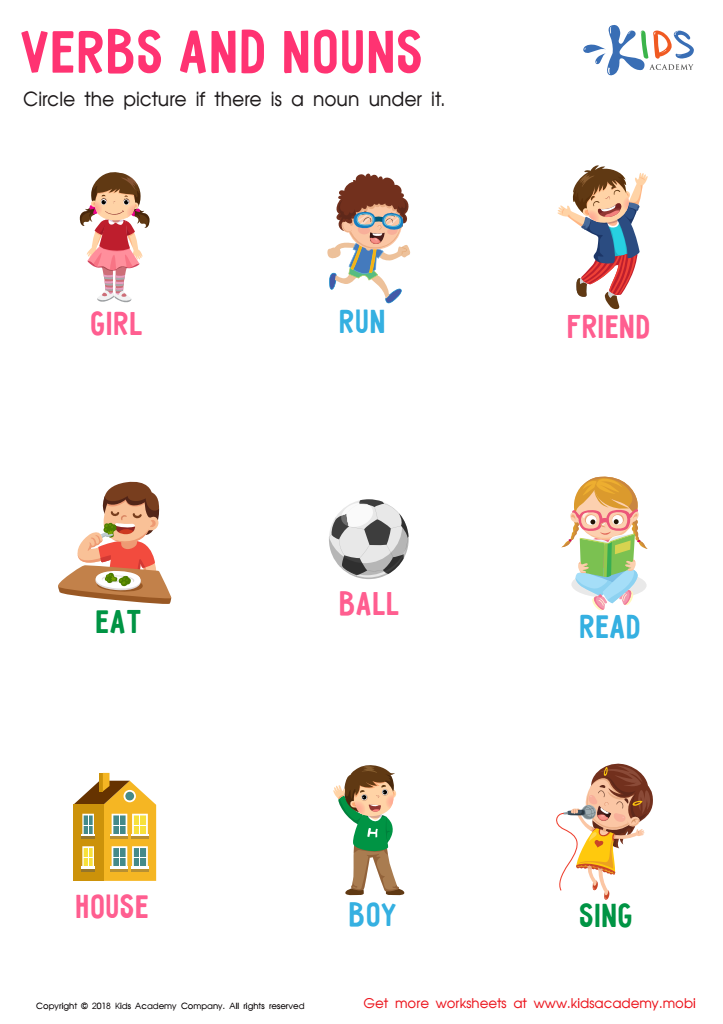
Verbs and Nouns Worksheet
Your child should have basic knowledge of verbs and nouns before starting this worksheet. Go through it with them and ask them to circle the pictures with nouns under them. This way, they'll become more familiar with parts of speech.
Verbs and Nouns Worksheet
Worksheet
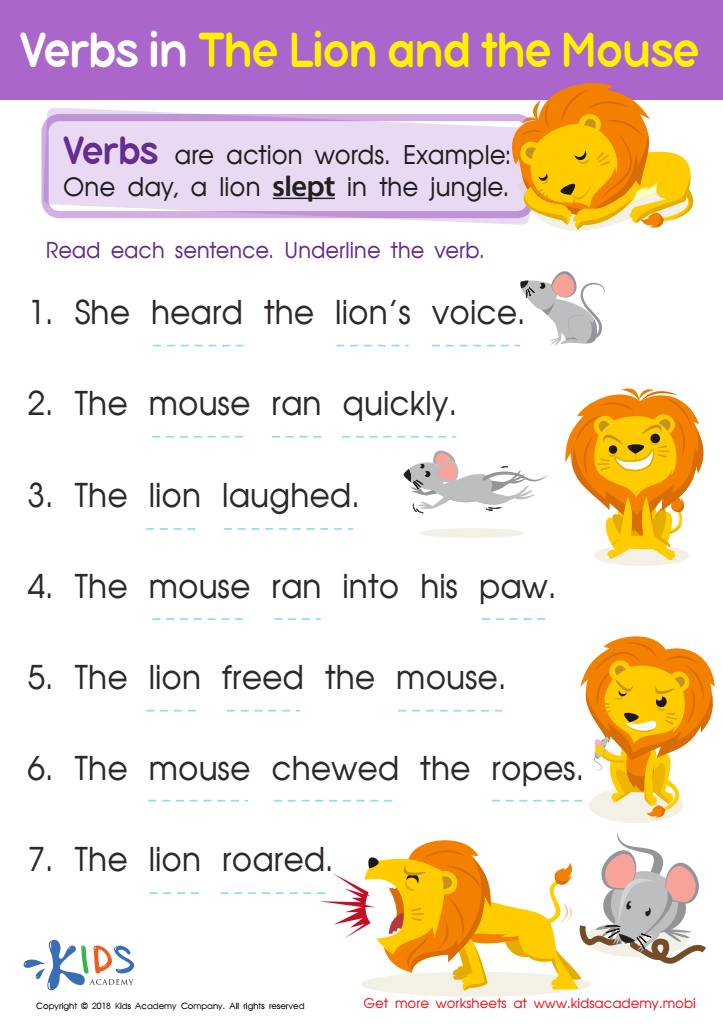
Verbs in The Lion and the Mouse Worksheet
This grammar worksheet is perfect for young learners starting to learn parts of speech. It includes action verbs, which can be used in conjunction with the story The Lion and the Mouse. Students can read the sentences and choose the verb. Understanding and using verbs helps children read and write with expression.
Verbs in The Lion and the Mouse Worksheet
Worksheet
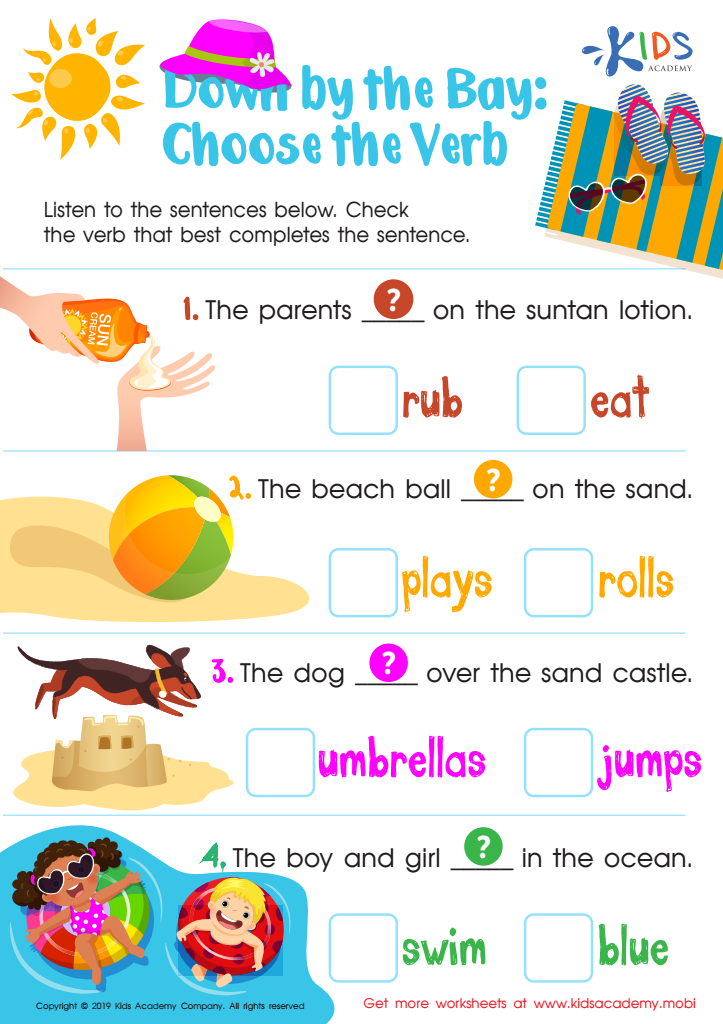
Down by the Bay: Choose the Verb Worksheet
Teach your kids about verbs: words that describe actions, like 'playing', 'eating', 'talking'. Ask your child to give their own verbs, then read the sentences in a worksheet and help them pick the best one for each question.
Down by the Bay: Choose the Verb Worksheet
Worksheet
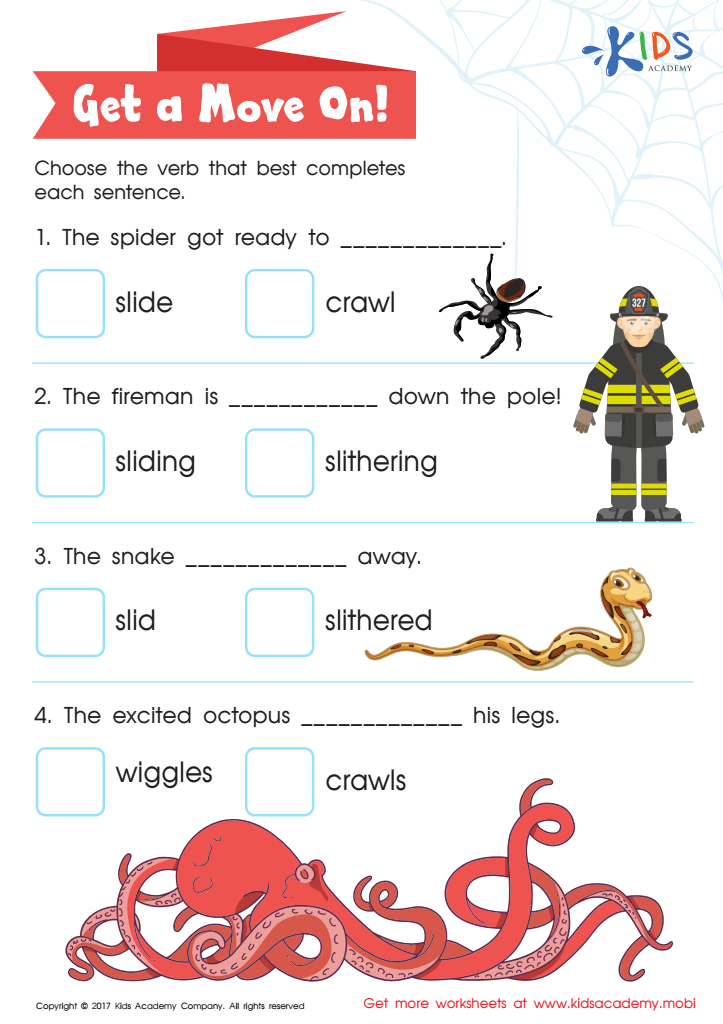
Verb Worksheet
Help your child learn verbs with this fun verb worksheet for grade 2! Firemen slide down poles, spiders crawl - they'll learn while they select the right verb in each sentence.
Verb Worksheet
Worksheet
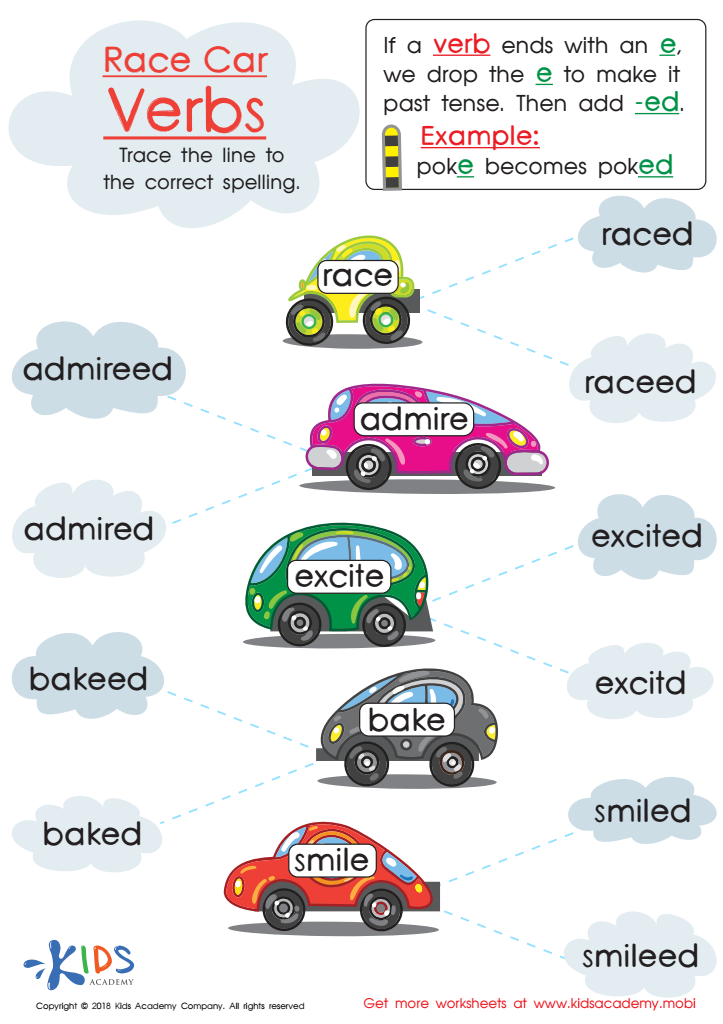
Race Car Verbs Worksheet
Help your child learn to spell and write with this fun car-themed worksheet! Read the words in the center of each car and review their past tense versions in the smoke. Have your learner trace the line from each car to the correctly spelled word – and don't forget to drop the 'e' before adding an -ed ending!
Race Car Verbs Worksheet
Worksheet
Join Kids Academy for Free
Who is primarily going to use this learning content?


.jpg)





Verb identification is a crucial skill for early language development in children aged 3-7. At this formative stage, language acquisition is rapid and lays the foundation for future learning across all subjects. Recognizing and understanding verbs enhances children’s communication skills, enabling them to express actions, describe experiences, and understand instructions more clearly. This, in turn, fosters both effective verbal interactions and better listening comprehension.
For parents and teachers, fostering verb identification skills supports overall cognitive development. It nurtures logical thinking, as children learn to connect actions with subjects and objects within a sentence. This connection is vital for developing proper sentence structure and grammar.
Additionally, a robust grasp of verbs enriches children’s reading abilities. As they decode and understand the role of verbs in sentences, their literacy skills improve. This early literacy foundation is predictive of later academic success since it influences reading fluency and comprehension.
Engaging activities like interactive storytelling, games, and playful sentence construction help children grasp verb identification in enjoyable and meaningful ways. Therefore, paying attention to verb identification not only supports language proficiency but also enhances broader educational outcomes, making it imperative for parents and teachers to nurture this skill during the crucial early years.








