
Weather Vocabulary Normal Worksheets for Ages 3-7
3 filtered results
Difficulty Level
Grade
Age
-
From - To
Subject
Activity
Standards
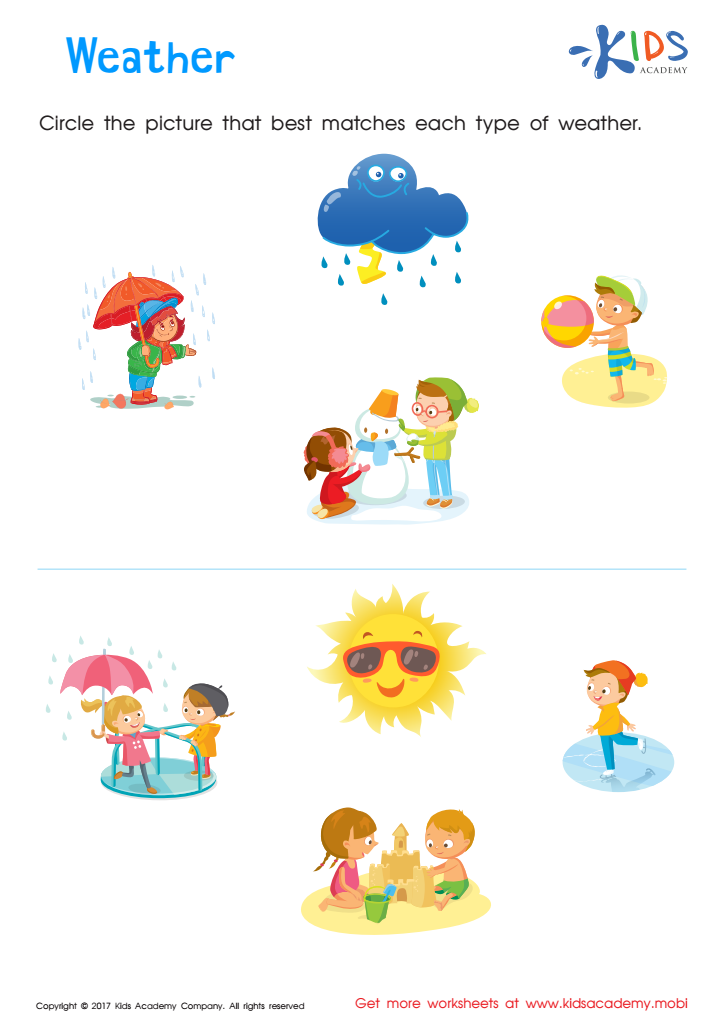
Introduce your child to the exciting world of weather with our "Weather Vocabulary Normal Worksheets for Ages 3-7." These engaging printables, designed for preschool and early elementary learners, help children grasp key weather-related terms through fun and interactive activities. Featuring colorful illustrations, matching exercises, and easy-to-understand instructions, these worksheets enrich vocabulary, enhance comprehension, and inspire curiosity. Perfect for classroom use or at-home learning, our weather vocabulary worksheets ensure young students build a solid foundation in language and science. Download today and make learning about weather a breeze!
Favorites
With answer key
Interactive
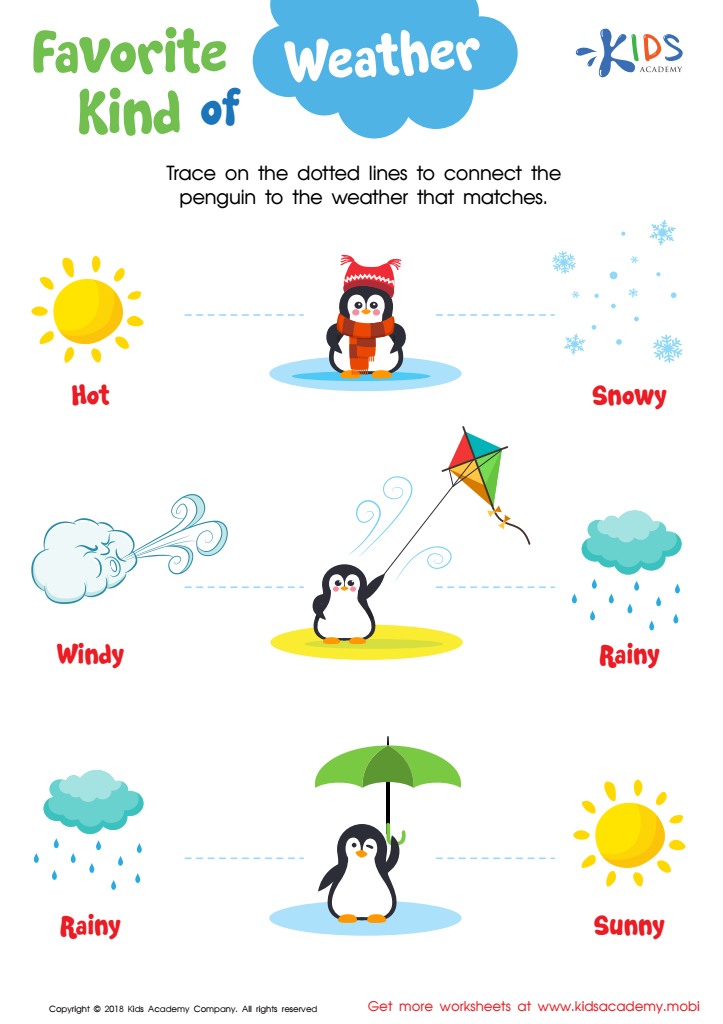
Favorite Kind of Weather Worksheet
!
Help your child understand weather and seasons with this fun worksheet featuring a cute penguin. They'll learn to recognize types of weather and associate them with seasons. To practice their fine motor skills, they'll trace lines to select the right seasons and weather. Kids will make a new friend while broadening their knowledge of nature.
Favorite Kind of Weather Worksheet
Worksheet
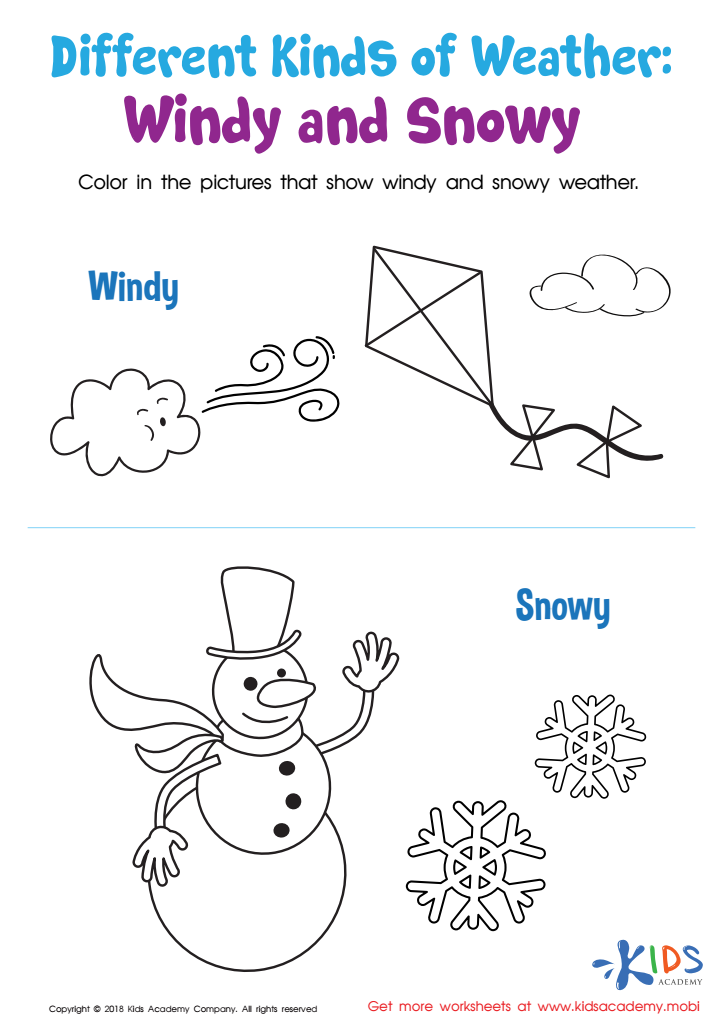
Different Kinds of Weather: Windy and Snowy Worksheet
Invite your little learner to practice their fine motor skills and learn about nature with this fun and charming PDF worksheet! Reinforce weather patterns and examine their environment as they color, giving them a foundation for understanding how weather affects them. No matter the weather, your learner will have a blast!
Download (PDF)
 Assign to My Students
Assign to My Students
Different Kinds of Weather: Windy and Snowy Worksheet
Worksheet
Join Kids Academy for Free
Who is primarily going to use this learning content?







Understanding weather vocabulary is crucial for young children aged 3-7 for several reasons that extend beyond basic knowledge. First, it promotes safety. When children are familiar with terms like "rain," "storm," "sunny," and "snow," they become better prepared to respond to weather conditions, understanding how to dress appropriately or how to stay safe in adverse weather.
Secondly, weather is a natural part of our everyday conversation and including it in early education helps kids develop their language skills. Learning weather vocabulary enhances speaking, listening, and comprehension abilities. Teachers and parents often use weather conditions as context for teaching days of the week, seasons, and even simple geography.
Furthermore, discussing weather is a great way to introduce basic scientific concepts. It stimulates children's curiosity about the world around them. Through learning about rain, sunshine, clouds and wind, children can grasp introductory ideas about the water cycle, temperature, and natural phenomena.
Creating weather-related activities, such as drawing weather-themed pictures or using weather charts, can make learning more interactive and fun. Investing time in teaching weather vocabulary helps develop a well-rounded, observant, and knowledgeable child. Thus, teachers and parents should care because it nurtures survival skills, language development, and a love for science.








