Problem-Solving Skills Normal Addition Facts Worksheets for Ages 3-7
5 filtered results
-
From - To
Unlock the power of early math skills with our Problem-Solving Skills Normal Addition Facts Worksheets designed for children aged 3-7! These engaging resources help build a solid foundation in addition while fostering critical thinking and problem-solving abilities. Each worksheet features visually appealing designs and age-appropriate challenges that encourage young learners to explore numbers creatively. Tailored for home or classroom use, our worksheets promote a fun, interactive environment for mastering basic addition facts. Equip your little ones with essential skills for confidence in math and beyond. Enhance their learning experience today with our thoughtfully crafted worksheets!
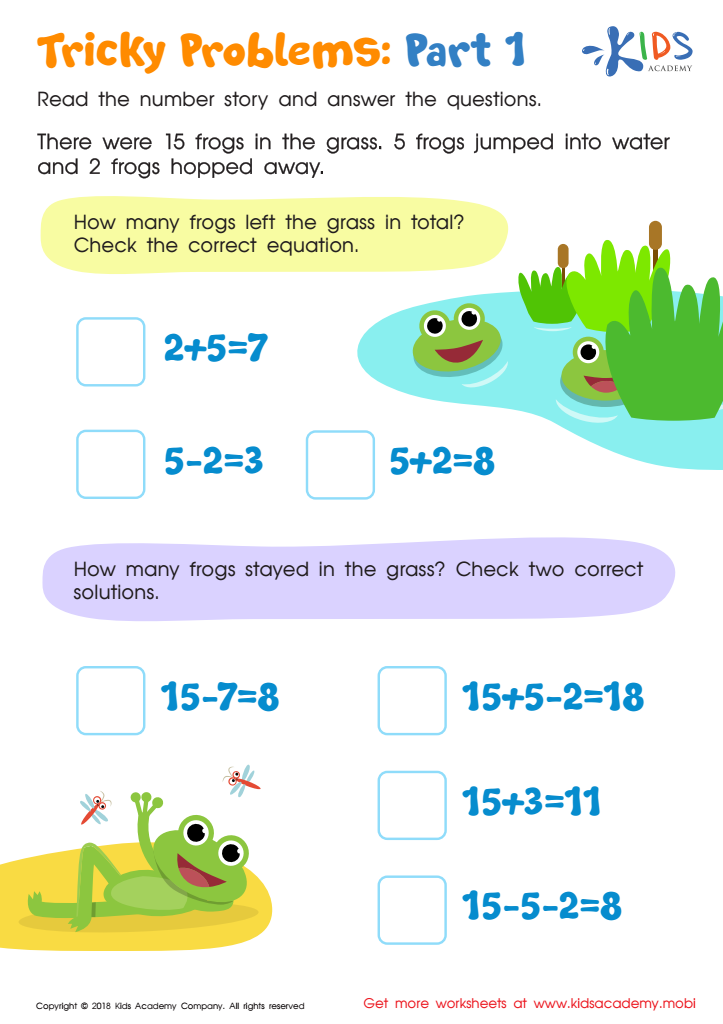
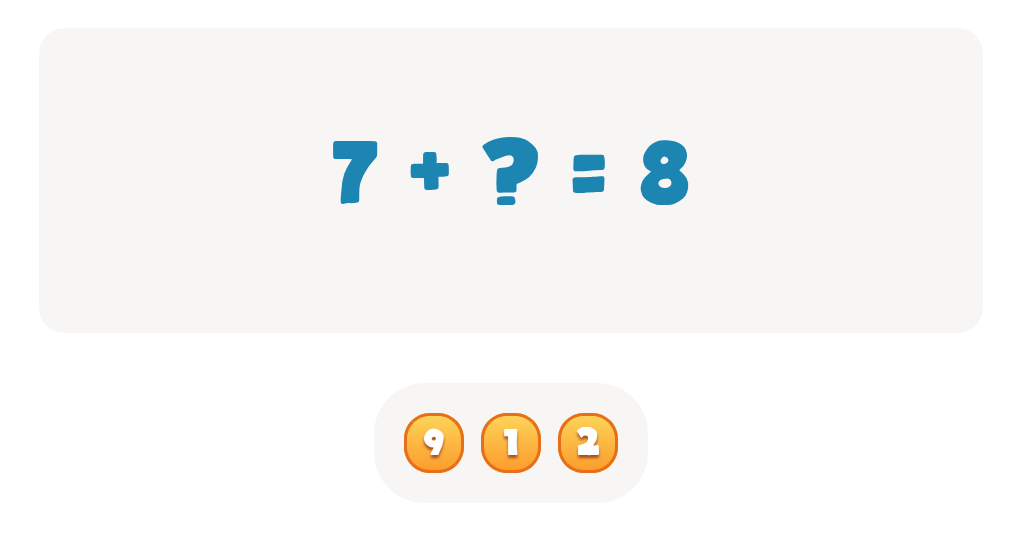
Tricky Problems Worksheet: Part 1
 Assign to My Students





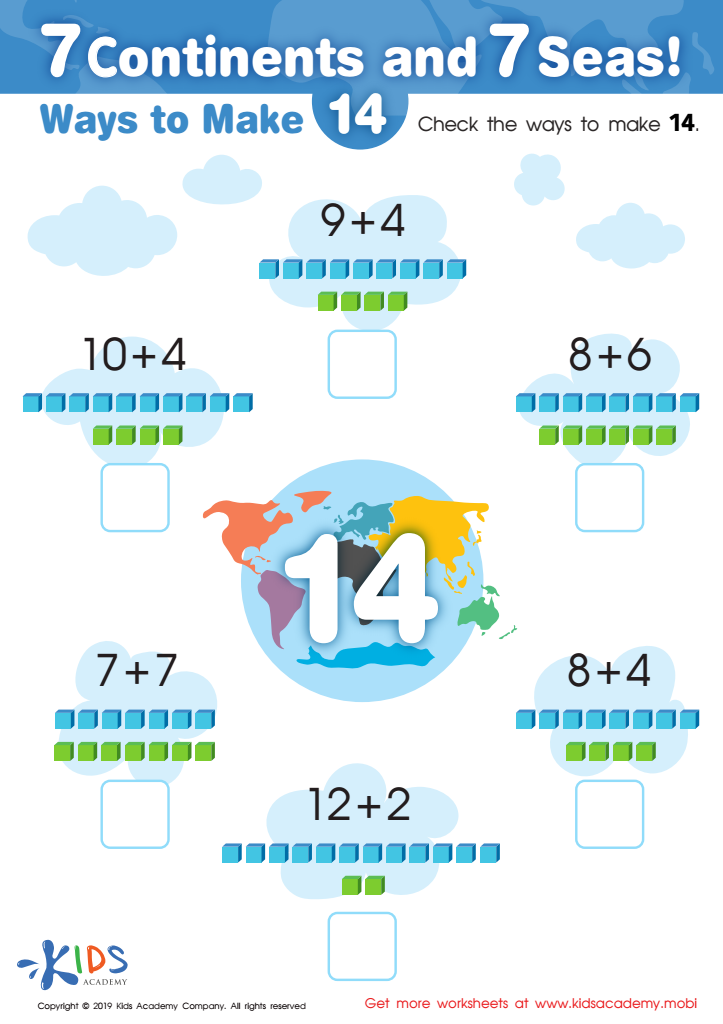
7 Continents and 7 Seas Worksheet
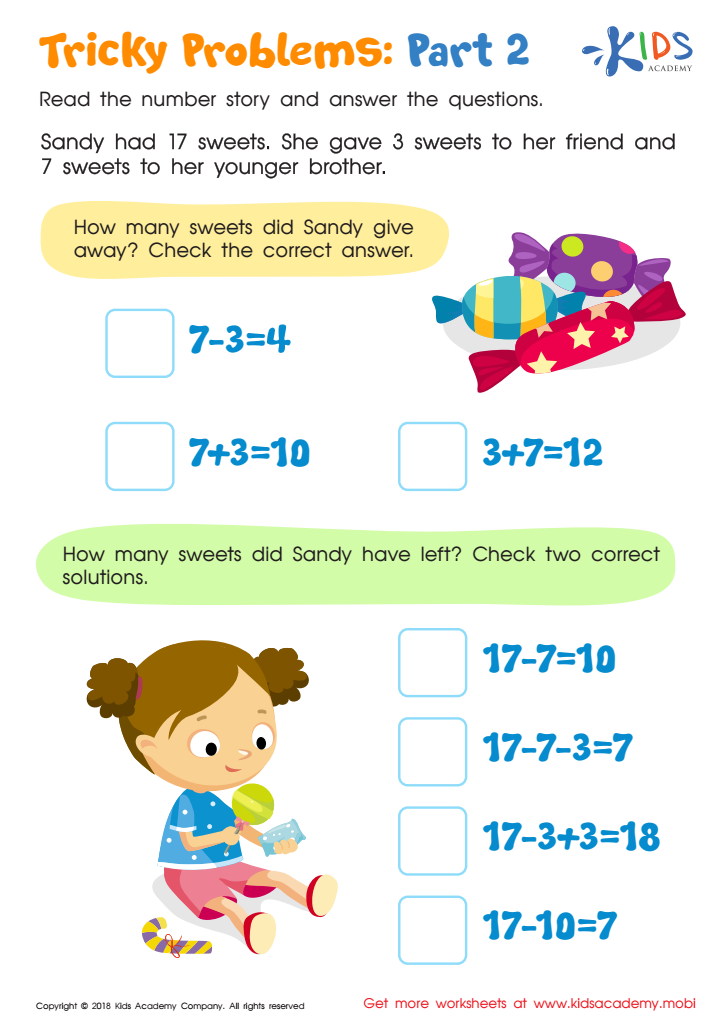
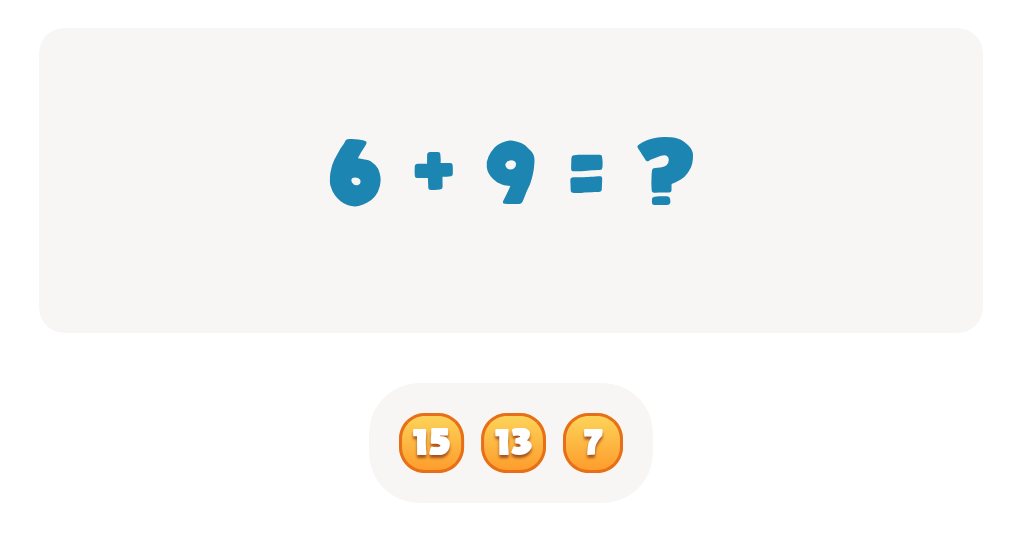
Tricky Problems Worksheet: Part 2
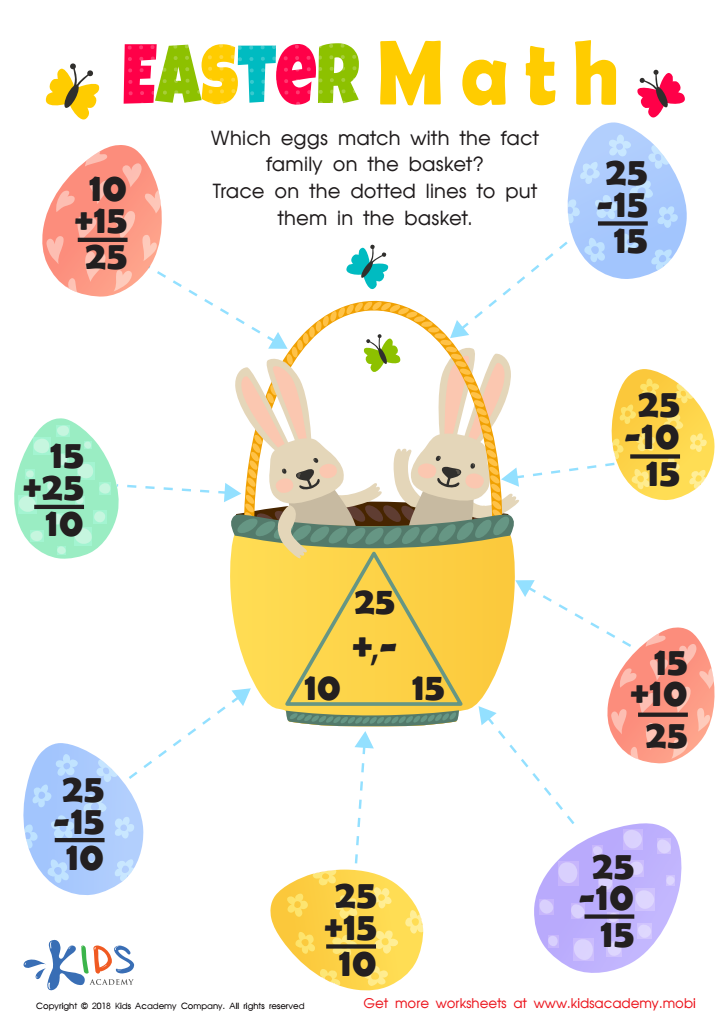
Fact Families: Easter Math Worksheet
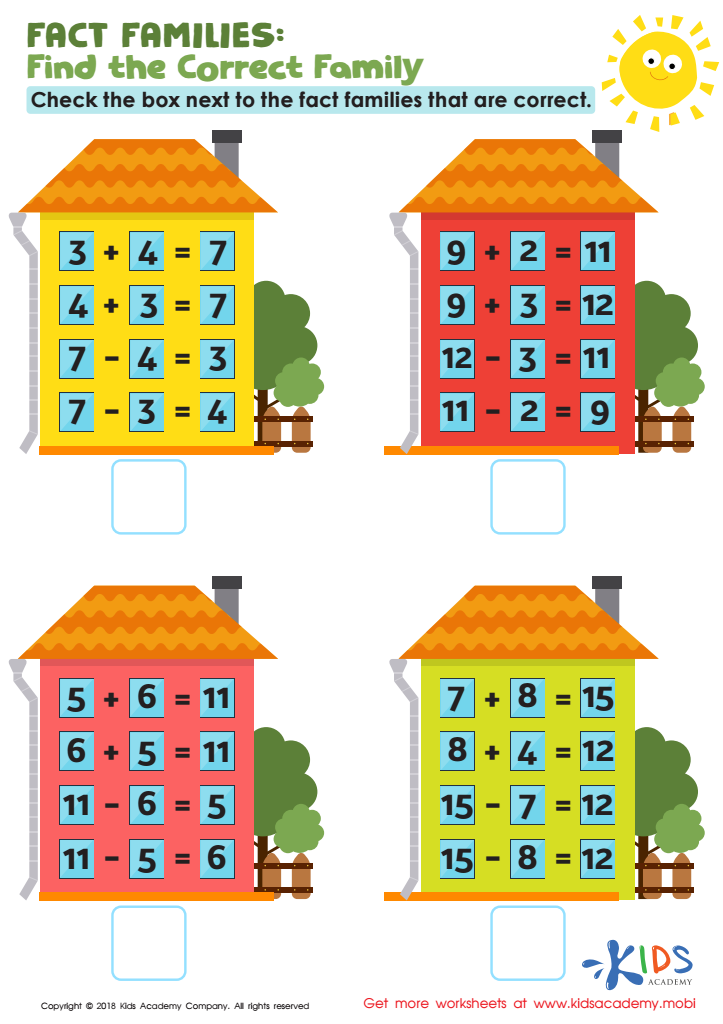
Fact Families: Find Correct Family Worksheet







.jpg)
Problem-solving skills and mastery of normal addition facts are crucial for children aged 3-7, forming the foundational blocks for their cognitive development. During these formative years, children's brains are highly receptive to learning fundamental concepts, making it essential for parents and teachers to foster these skills.
Understanding problem-solving enhances a child's critical thinking abilities, encouraging them to approach challenges methodically. By engaging with simple addition problems, young learners develop not only numerical fluency but also a sense of confidence in their skills. Mastering these facts fosters automaticity, allowing children to focus on more complex mathematical concepts later in their education.
Additionally, learning through play and problem-solving activities promotes collaboration and communication, essential skills for functioning in the classroom and beyond. Parents and teachers play a crucial role by providing interactive and engaging methods for learning, thus nurturing a positive attitude toward math.
Moreover, proficient problem-solving and addition skills are interconnected, forming a vital part of early academic success. When parents and teachers prioritize these areas, they contribute significantly to a child's overall intellectual and emotional growth, preparing them for future academic challenges. Therefore, attention to problem-solving and addition skills isn't just academic; it's an investment in a child's lifelong learning journey.








