Hand-eye Coordination Normal Addition & Subtraction Worksheets for Ages 3-7
3 filtered results
-
From - To
Enhance your child's mathematical skills and hand-eye coordination with our engaging Normal Addition & Subtraction Worksheets designed for ages 3-7. These worksheets seamlessly integrate math practice with fun activities that boost fine motor skills, ensuring children stay stimulated and focused. Each worksheet encourages young learners to practice basic addition and subtraction while engaging in interactive tasks that develop their hand-eye coordination. Our resources are perfect for parents and educators looking to support early math skills in a playful and effective manner. Explore our collection today to foster confidence and foundational skills in your little ones!
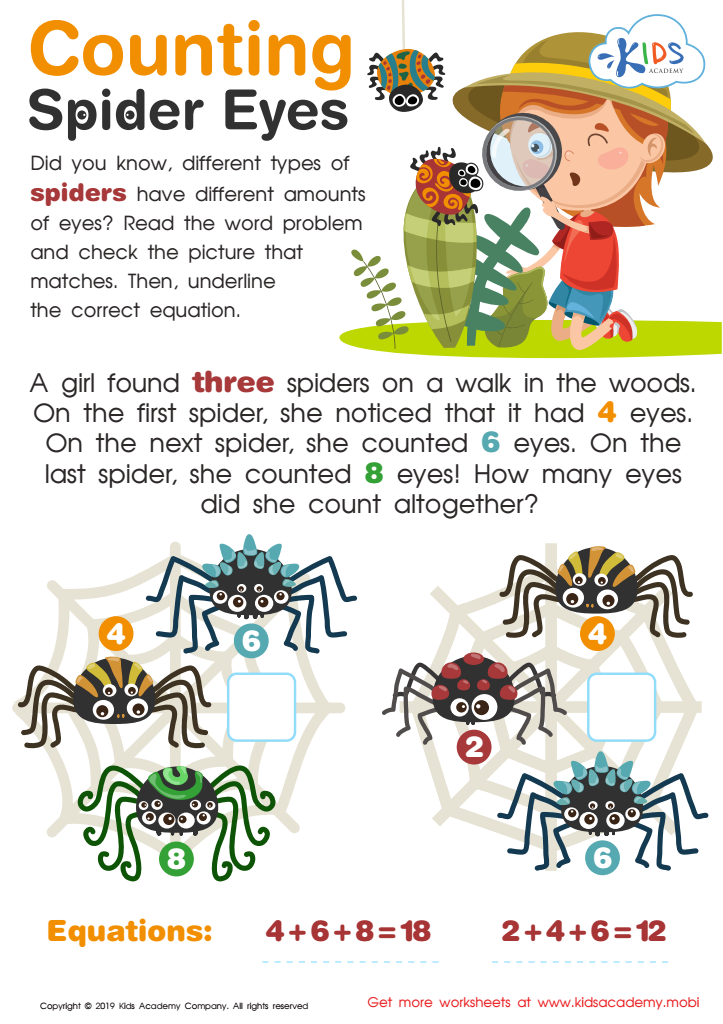
Counting Spider Eyes Worksheet
 Assign to My Students
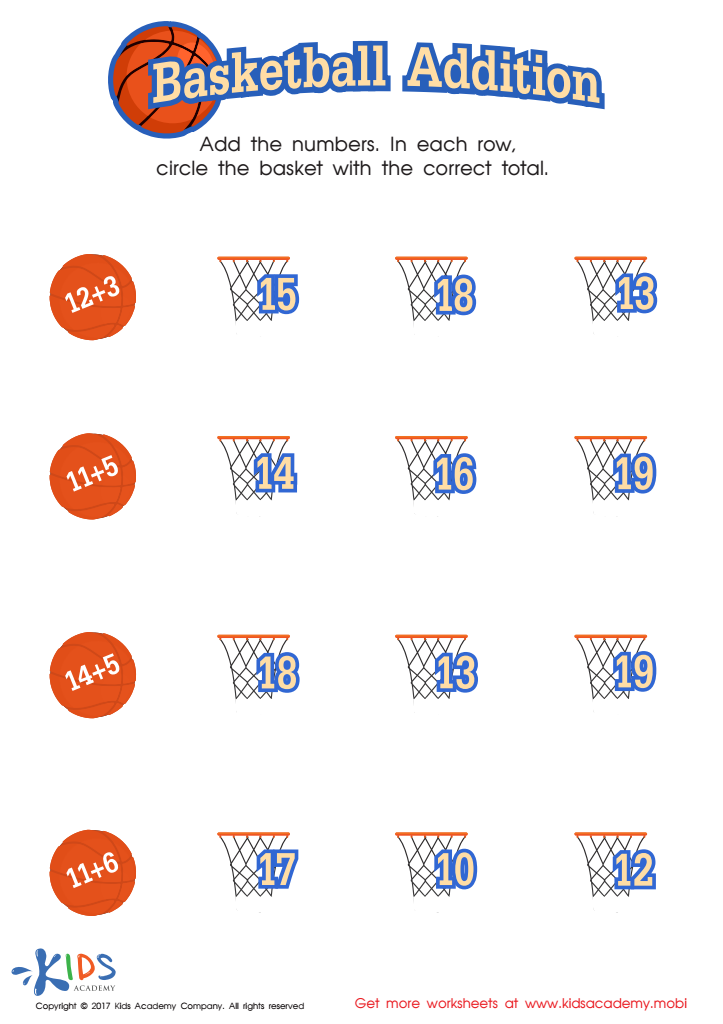
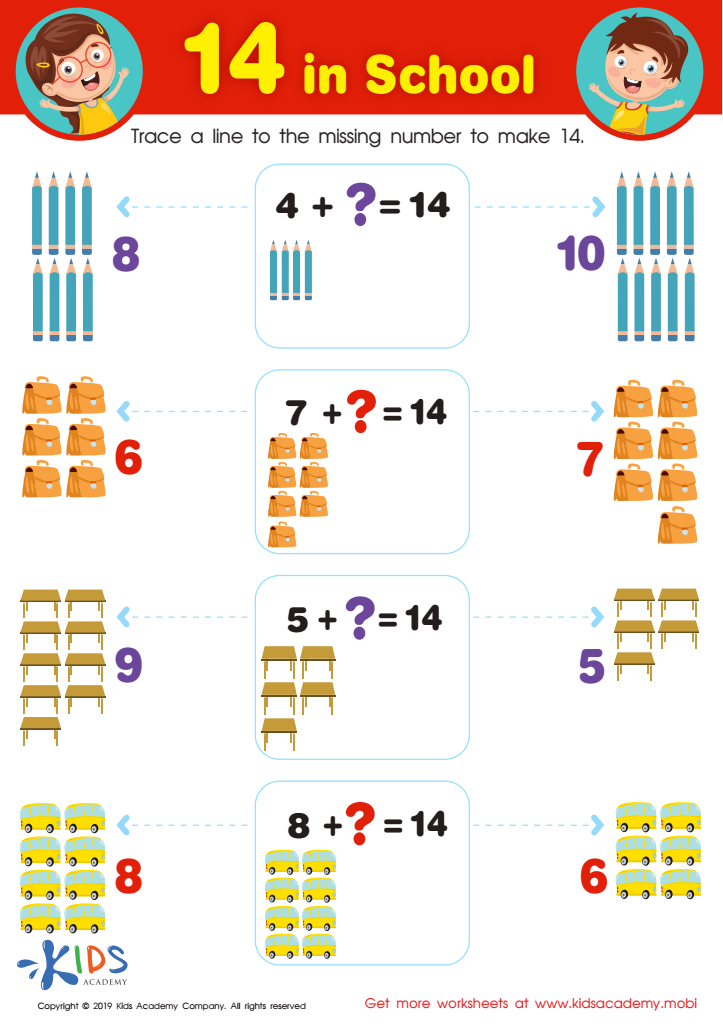
14 in School Worksheet








Hand-eye coordination and foundational math skills, such as normal addition and subtraction, play crucial roles in the development of children aged 3-7. Parents and teachers should prioritize these skills because they are interconnected and contribute significantly to a child's holistic growth.
Firstly, hand-eye coordination is essential for a range of everyday activities, from writing to sports. Good hand-eye coordination strengthens fine motor skills, which are vital for academic tasks like drawing, tracing letters, and eventually writing. As children manipulate objects or use tools (like counting blocks), they enhance their coordination, preparing them for future challenges.
Simultaneously, normal addition and subtraction are core mathematical concepts that form the basis for more advanced math skills. Engaging children in these mathematical operations helps cultivate critical thinking and problem-solving abilities. Games, interactive activities, and real-life applications can make learning fun, making it easier for young learners to grasp these concepts.
Furthermore, establishing strong foundational skills in this crucial developmental window fosters confidence and positive attitudes towards learning. Children who master hand-eye coordination and basic math are typically better prepared for future academic pursuits, leading to long-term educational success. Therefore, fostering these skills should be a key focus for parents and educators alike.








