
Subtraction skills Normal Addition & Subtraction Worksheets for Ages 3-7
5 filtered results
Difficulty Level
Grade
Age
-
From - To
Subject
Activity
Standards
Boost your child's subtraction skills with our engaging worksheets, designed for ages 3-7. Ideal for early learners, these printables make mastering subtraction fun and interactive. Featuring a variety of colorful activities, they help children grasp basic subtraction concepts through play. Each worksheet supports skill development through step-by-step instructions, encouraging hands-on learning. Parents and educators can easily integrate these fun exercises into their teaching routines, reinforcing essential math skills in a stress-free way. Start nurturing a strong mathematical foundation in your child today with our normal addition and subtraction worksheets, perfect for fostering confidence and competence in early learning settings.
Favorites
With answer key
Interactive
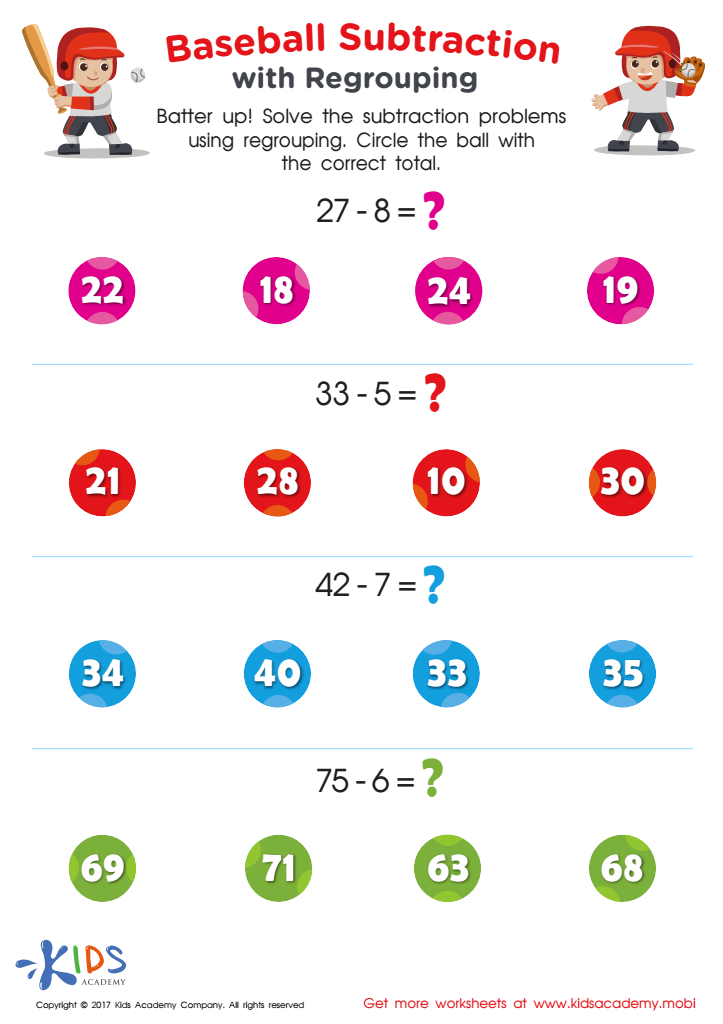
Subtraction With Regrouping for 2nd Grade Worksheet
Kids solve two-digit subtraction problems using regrouping and color in the baseballs.
2nd graders may find regrouping for subtraction tricky, so give them a helping hand with this fun worksheet! They practice two-digit subtraction and regrouping by coloring in baseballs as they solve the problems. Let them practice the skill and enjoy the game at the same time.
 Assign to My Students
Subtraction With Regrouping for 2nd Grade Worksheet
Worksheet
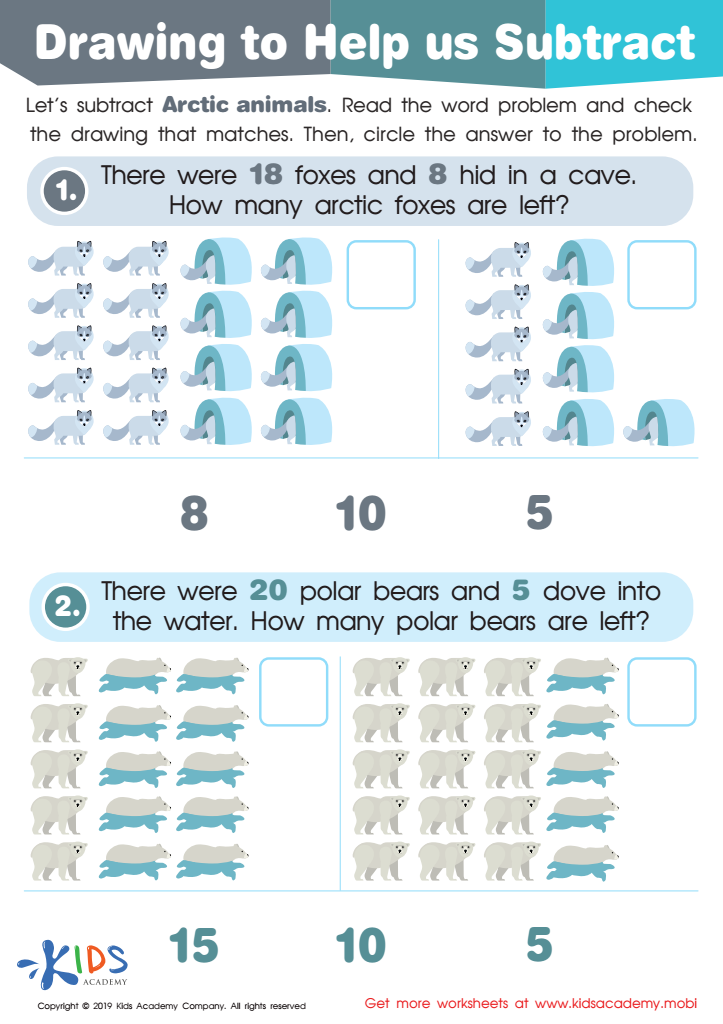
Drawing to Help Us Subtract Worksheet
Math is made fun with this free worksheet featuring Arctic animal pictures to solve basic subtraction word problems. Kids read the problem and choose the correct drawing of the animals to represent the solution. They'll have a blast with their cool animal friends while learning math!
Drawing to Help Us Subtract Worksheet
Worksheet
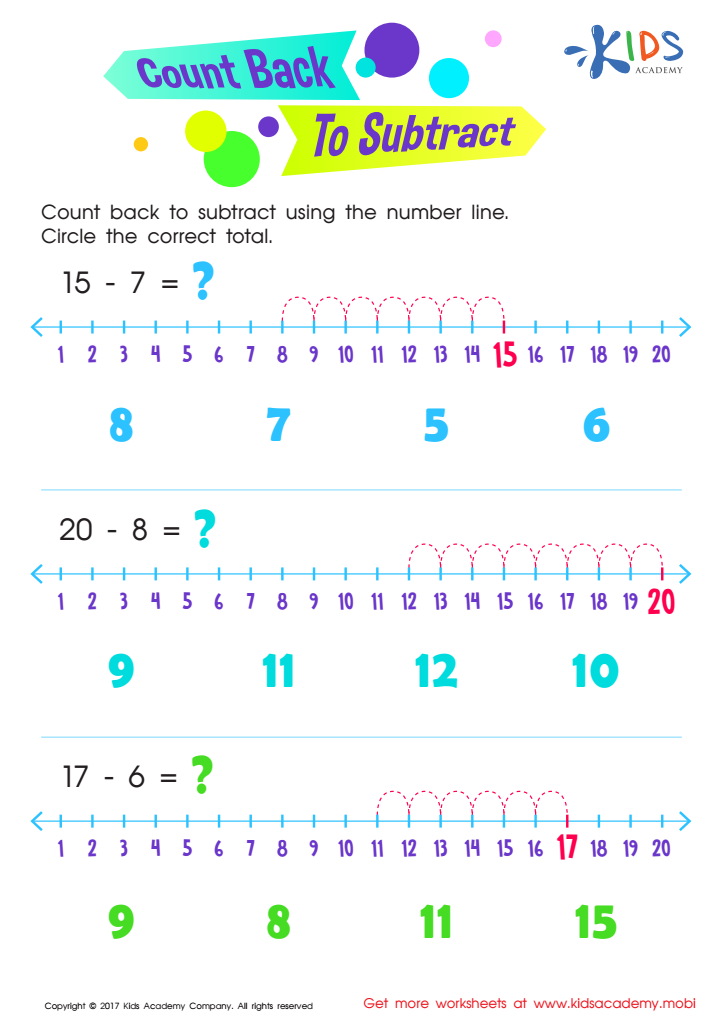
Count Back to Subtract Substraction Worksheet
With this worksheet, your child can visually see and count each number they’re subtracting.
This worksheet provides a number line to help your child master subtraction visually. Counting back on the line will give them a deeper understanding of the concept. It's a great way to teach subtraction and help children gain confidence with the subject.
Count Back to Subtract Substraction Worksheet
Worksheet
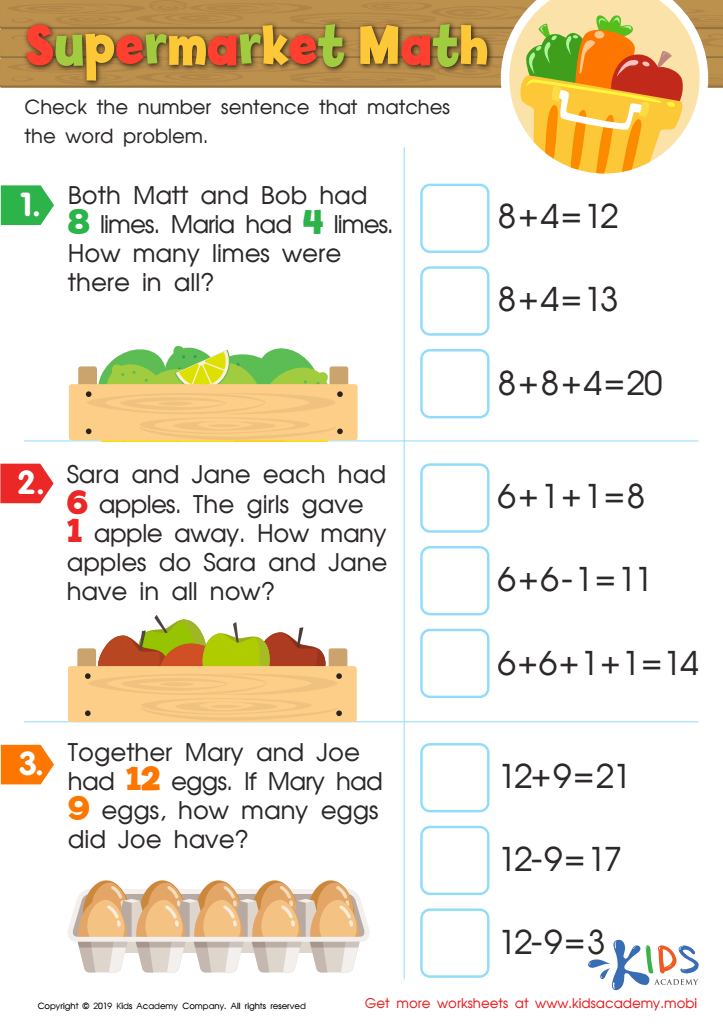
Supermarket Math Worksheet
Take your kids to the supermarket and ask what they're looking forward to buying. Help them solve the three questions in the worksheet by interpreting each one into an equation, then choose the right answer.
Supermarket Math Worksheet
Worksheet
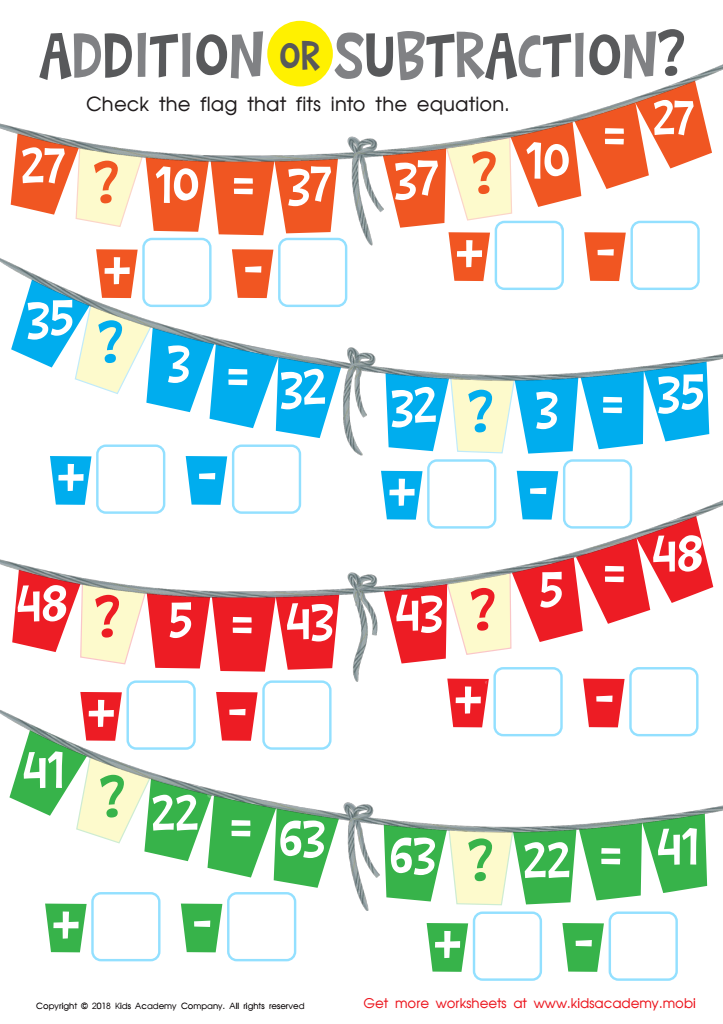
Addition or Subtraction? Worksheet
Help your math whiz's number skills advance with these colorful flag equations! With the free PDF, they'll learn to solve addition and subtraction facts by following the correct orders of operation. And the best part? They'll develop a deeper understanding of how the different operations work together within equations. Give it a try and watch their skills soar!
Addition or Subtraction? Worksheet
Worksheet
Join Kids Academy for Free
Who is primarily going to use this learning content?








Subtraction skills, alongside addition, are foundational to early mathematics understanding for children aged 3-7. Mastering these skills fosters critical thinking and problem-solving abilities that are essential for everyday life and future academic success. At this age, children's cognitive capacities are rapidly expanding, making it an ideal time to introduce these fundamental concepts.
First, subtraction helps children develop an understanding of number relationships. As they learn to subtract, they grasp the idea of "taking away," which reinforces their comprehension of addition as "putting together." This dual knowledge creates a solid mathematical foundation.
Furthermore, subtraction skills emerge in various real-life contexts, enhancing children's ability to navigate their environments. For instance, when sharing snacks or toys, children use subtraction to understand quantities and fairness. This practical application instills a sense of confidence and independence in problem-solving.
Parental and teacher engagement in teaching these skills ensures that children receive consistent reinforcement, making learning enjoyable and effective. Games, storytelling, and hands-on activities can transform subtraction from a mere academic skill into a fun and relatable experience. Ultimately, fostering subtraction skills not only equips children for future academic challenges but also enriches their interpersonal interactions and everyday decision-making.








