Visual perception Normal Addition & Subtraction Worksheets for Ages 3-7
3 filtered results
-
From - To
Enhance your child's early math skills with our Visual Perception Normal Addition & Subtraction Worksheets designed for ages 3-7. These engaging worksheets help young learners develop essential visual perception abilities while practicing basic addition and subtraction concepts. By incorporating fun illustrations and interactive exercises, children will improve their problem-solving skills and number recognition in a stimulating environment. Ideal for at-home learning or classroom activities, these worksheets foster a strong foundation in mathematics through enjoyable visual tasks. Download our printable worksheets today to make learning math an exciting adventure for your little ones as they grow and thrive!
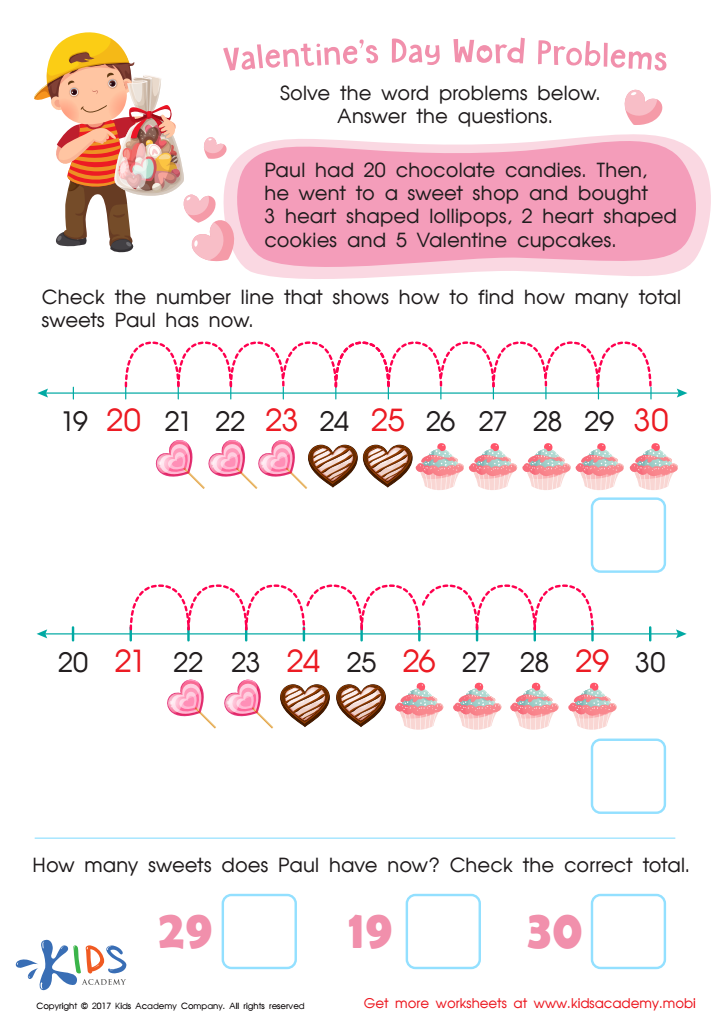
Valentines Day 2 Printable
 Assign to My Students
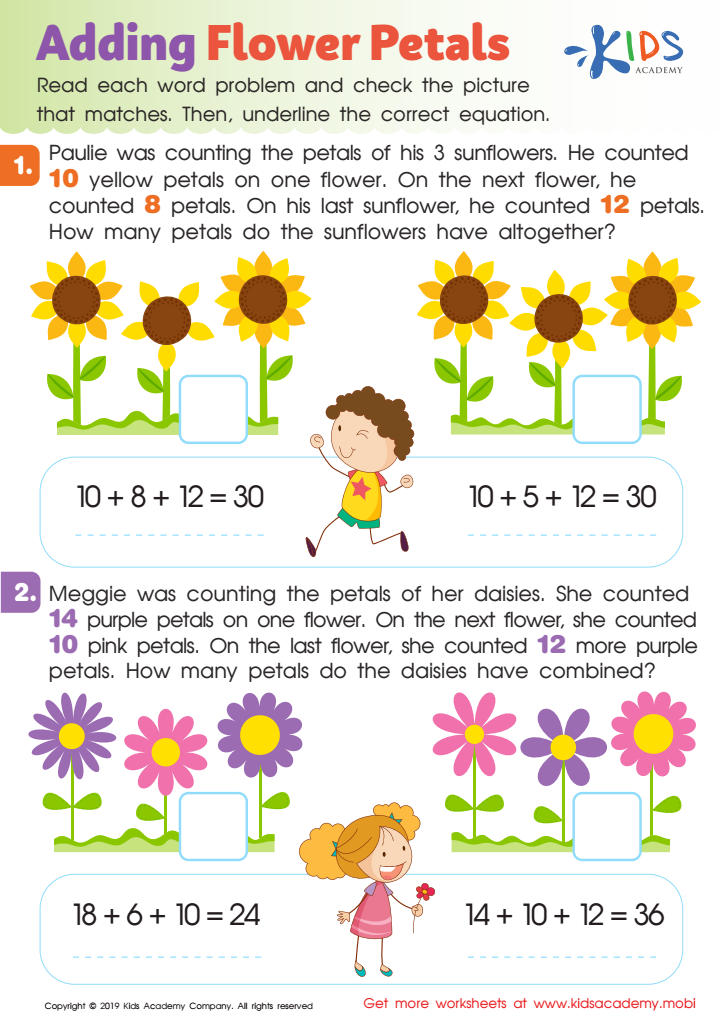
Adding Flower Petals Worksheet

Find 10 Barrels Worksheet








Parents and teachers should prioritize visual perception skills and their connection to normal addition and subtraction for children ages 3-7 because these foundational skills are crucial for overall academic success. Visual perception involves the ability to interpret and make sense of images and spatial relationships, which are vital in recognizing numbers, shapes, and patterns.
In early childhood mathematics, skills such as counting, number recognition, and understanding basic addition and subtraction rely heavily on children's ability to perceive and manipulate visual information. For instance, children often learn to count objects by visually clustering them, and understanding addition involves visualizing movement—such as combining sets of counters. Strengthening visual perception can enhance children's problem-solving abilities, as they learn to envision numerical scenarios.
Furthermore, a solid foundation in these skills fosters confidence in young learners, reducing anxiety around math as they advance. When caregivers emphasize visual perception's role in math, they create a supportive learning environment, facilitating a greater appreciation for the subject. As these children transition into more abstract mathematical concepts, strong visual perception skills will ease their journey. Investing in these aspects at a young age ultimately prepares them for lifelong learning and comprehension in math and beyond.








