Basic Addition Skills Normal Numbers Worksheets for Ages 3-7
6 filtered results
-
From - To
Unlock your child's potential with our Basic Addition Skills worksheets designed specifically for ages 3-7! Our engaging, printable resources focus on normal numbers, helping young learners build foundational math skills through fun and interactive activities. Each worksheet provides clear instructions and colorful illustrations to capture children's attention and make learning enjoyable. As they practice addition, kids develop critical thinking and problem-solving skills essential for their academic journey. Perfect for parents and teachers alike, these worksheets are great for use at home or in the classroom. Start enhancing your child's math abilities today with our thoughtfully crafted addition worksheets!
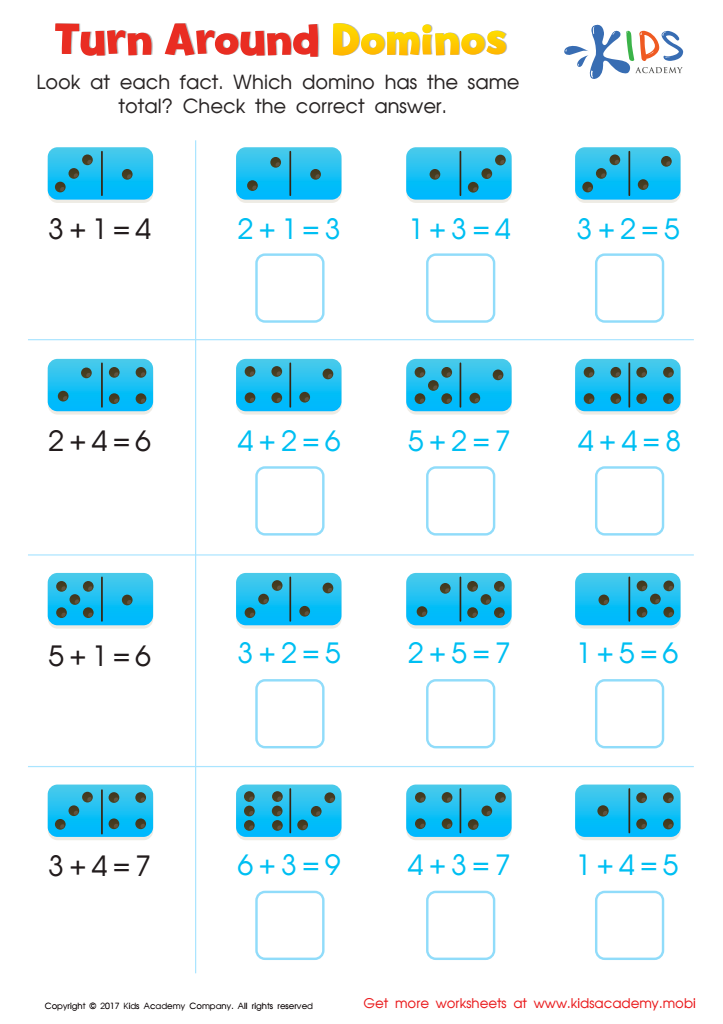
Turn Around Dominos Worksheet
 Assign to My Students
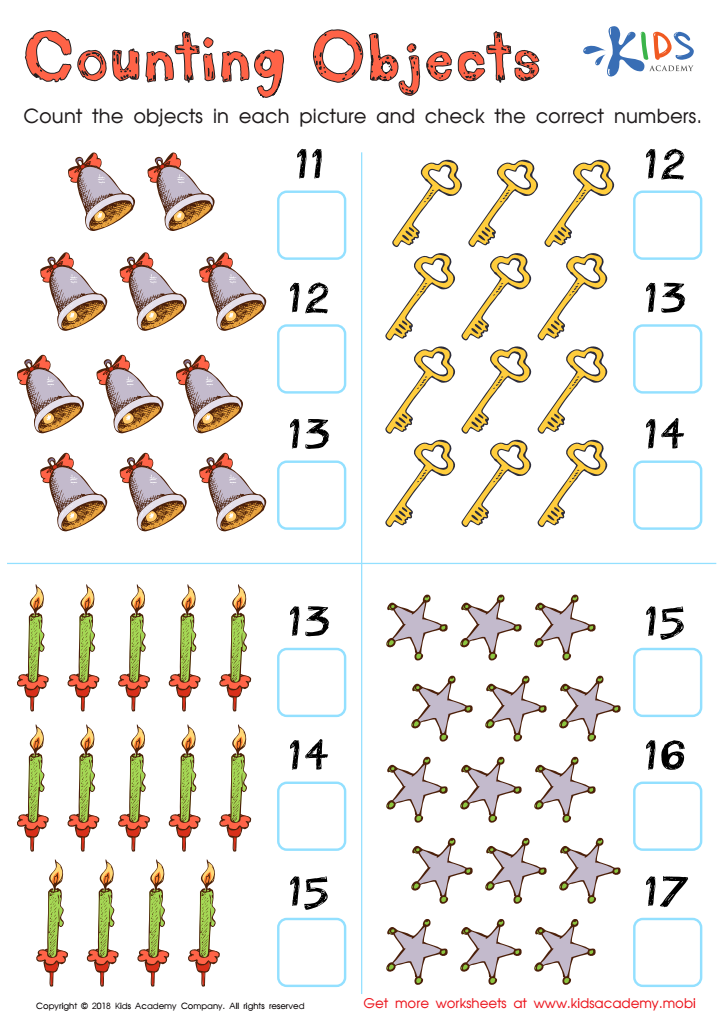
Counting Numbers Worksheet For Kindergarten
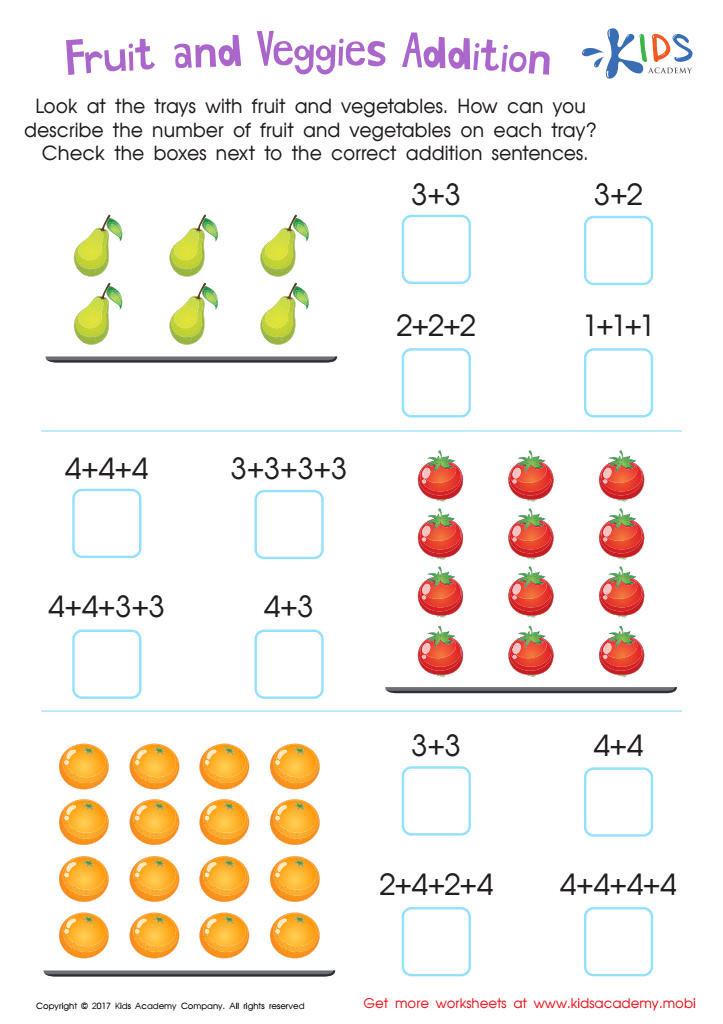
Fruit and Veggies Worksheet
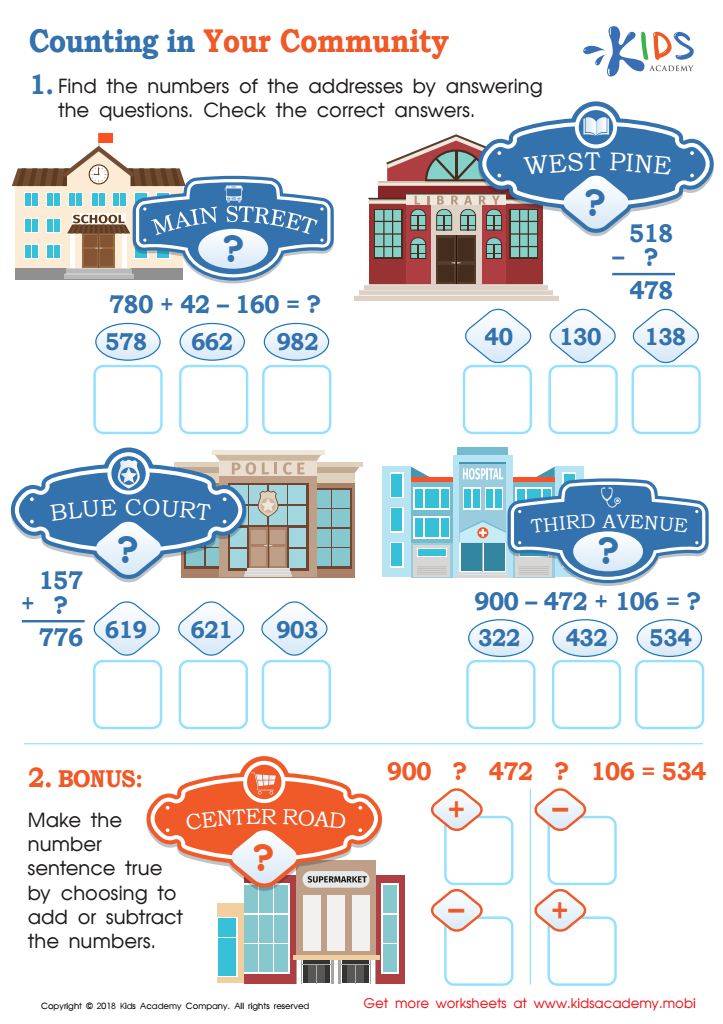
Counting in Your Community Worksheet
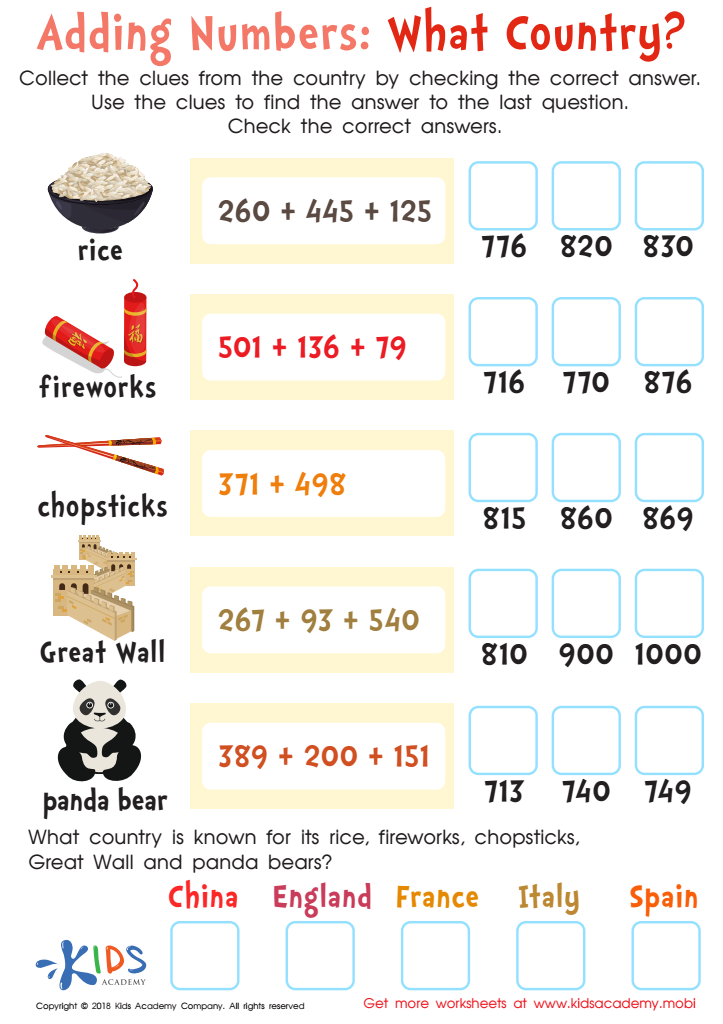
Adding Numbers: What Country Worksheet
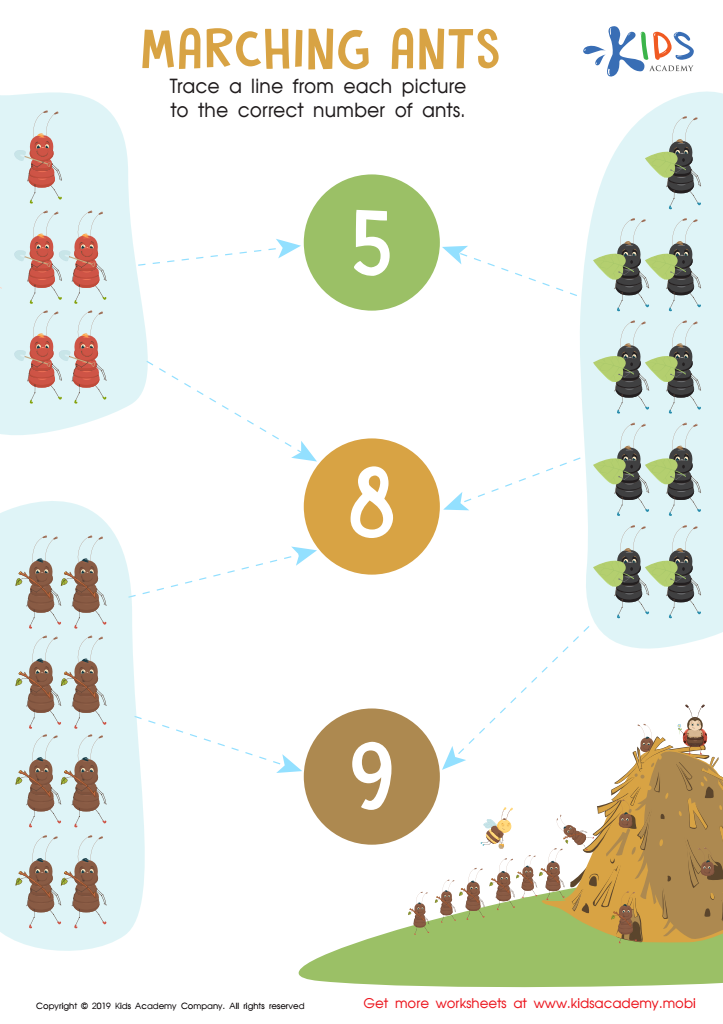
Marching Ants Worksheet








Basic addition skills are foundational for children's mathematical understanding and overall cognitive development, making it essential for parents and teachers to prioritize these skills for children aged 3-7. At this stage, children develop critical thinking and problem-solving abilities, which are enhanced through understanding basic math concepts like addition. Mastering addition helps young learners build number sense and understand the relationship between quantities, setting the groundwork for more complex mathematical operations later on.
Additionally, early mastery of addition can boost children's confidence and enjoyment of math, encouraging a positive attitude towards learning and inquiry. Engaging children in fun and interactive activities involving basic addition can encourage social skills and cooperative play, making learning an enjoyable experience. Furthermore, these skills not only support academic achievement but are also applicable in everyday life, helping children navigate situations like sharing snacks or counting toys.
By fostering basic addition skills early on, parents and teachers provide children with both the academic foundation necessary for future success and the skills they need to engage meaningfully with the world around them. Investing in these early math skills is a critical step in promoting lifelong learning and curiosity.








