Our Matching Skills Normal Math Worksheets for ages 3-7 engage young learners in a fun and educational way! Designed to enhance early learning, these worksheets focus on developing essential matching skills, critical for any math foundation. Through engaging activities, children learn to identify and match numbers, shapes, and patterns, boosting their cognitive and fine motor development. Whether at home or in the classroom, these printable resources provide a fantastic way to foster a love for math while mastering crucial skills. Perfectly suited for preschool through early elementary students, inspire confidence and excitement in your child’s mathematical journey today!

Check out this FREE Trial Lesson on Math for age 3-7!

Match Exactly the Same

Favorites
With answer key
Interactive
  • 3-7
  • Matching skills
  • Math
  • Normal
Fruits Matching Worksheet

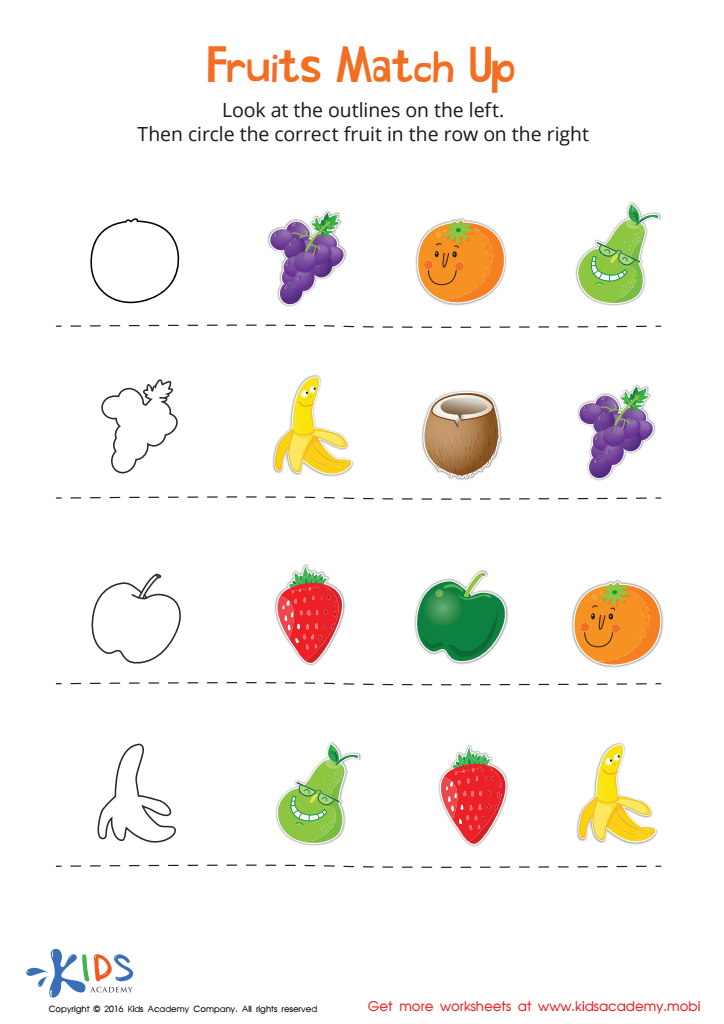
Fruits Match Up Worksheet

Motivate your child to count and sharpen their spatial reasoning skills with this vivid fruit worksheet.
Fruits Match Up Worksheet
Worksheet
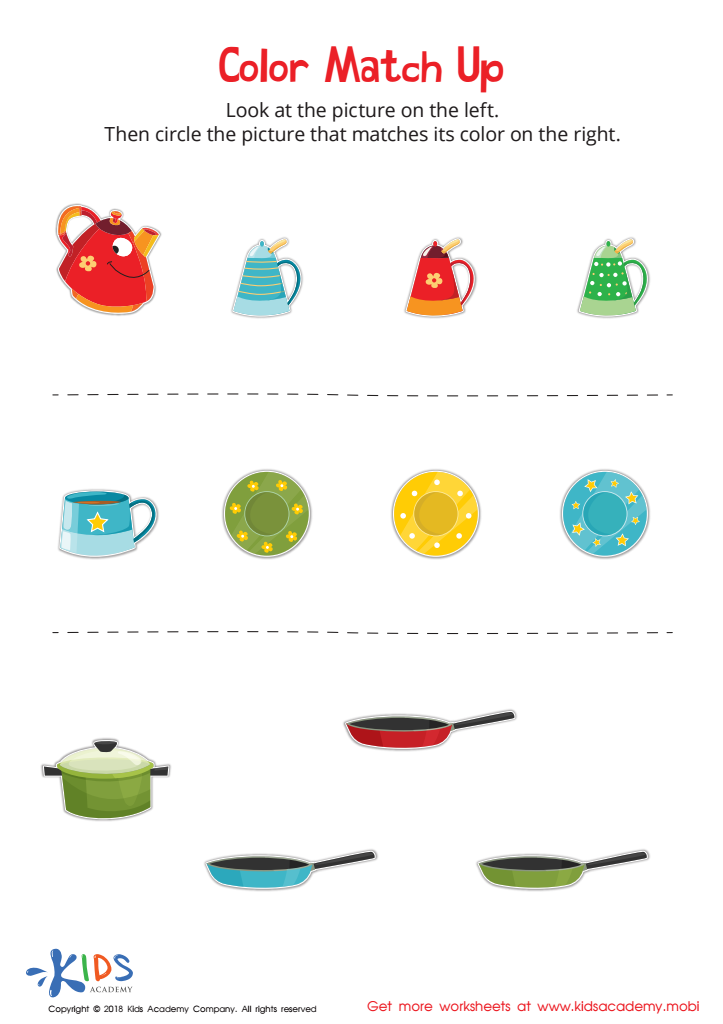
Free Preschool Color Matching Worksheet

Color Match Up Worksheet

Color Match Up Worksheet
Worksheet
Preschool Matching Worksheets

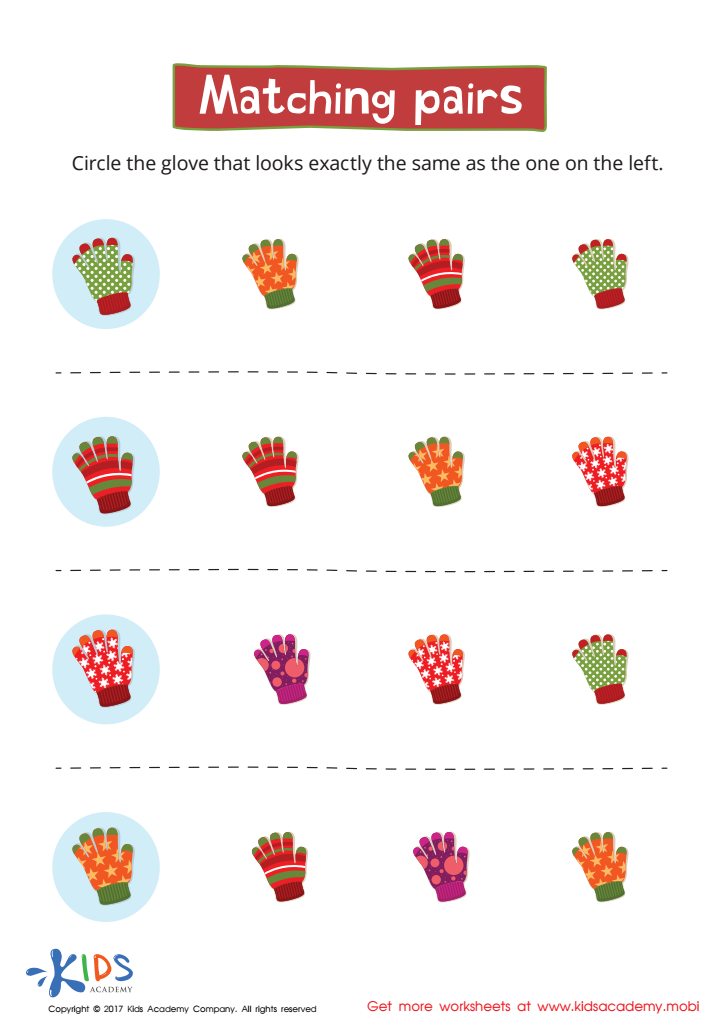
Matching: Matching Pairs Worksheet
Winter's here! Get your child ready with a fun matching worksheet. Challenge them to sort mitten designs, recognize directions, and match mittens in other rows. This helps preschoolers hone problem-solving skills and recognize shapes. Print out more seasonal activities for a diverse summer experience!
Matching: Matching Pairs Worksheet
Worksheet
Food Matching Worksheet

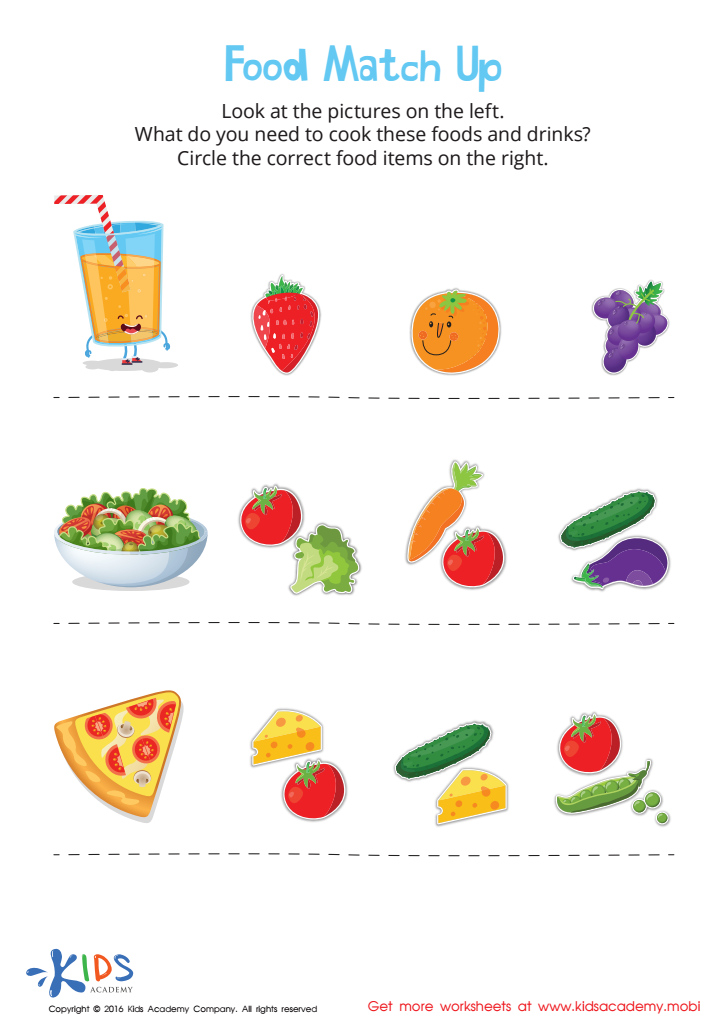
Food Match Up Worksheet

This worksheet will help your preschooler develop early math and cognitive skills. It challenges them to pay attention to details, understand how smaller parts make a whole, and increase important matching skills. Use it to give them a hands-on learning experience in the kitchen, and watch them understand how ingredients come together to make something delicious!
Food Match Up Worksheet
Worksheet
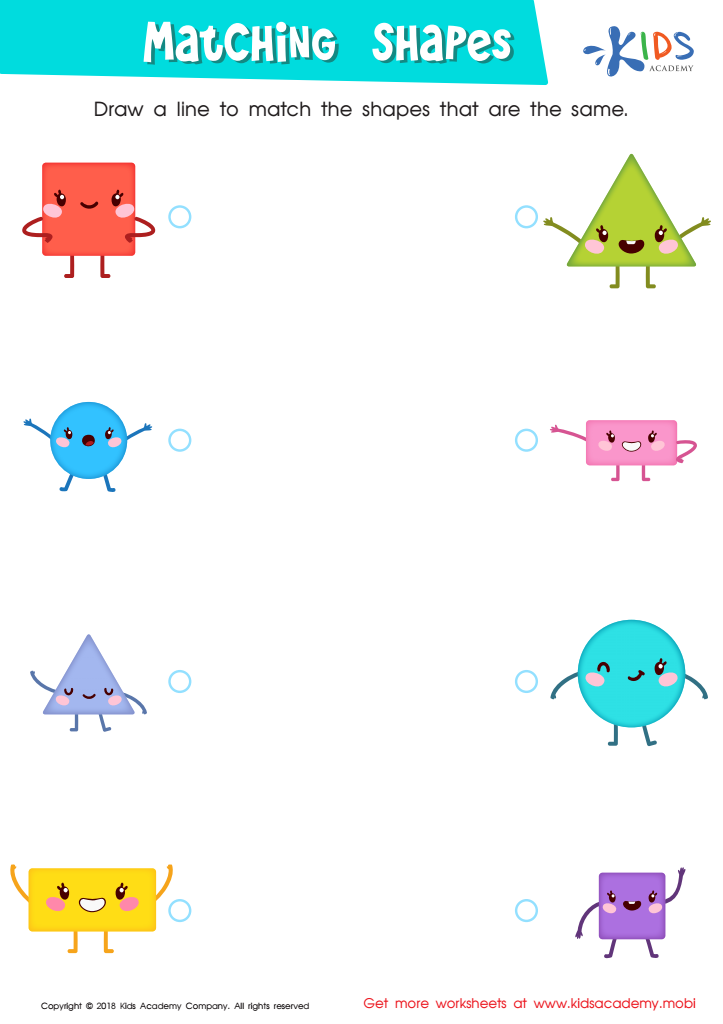
Matching Shapes Worksheet

Matching Shapes Worksheet

Introduce your students to the 4 most common shapes: squares, triangles, rectangles and circles. When they progress, show them other shapes like rhombuses and parallelograms. Use this matching shapes worksheet to help them match two identical shapes. Print out the worksheet and instruct them to draw lines connecting them.
Matching Shapes Worksheet
Worksheet
none
none

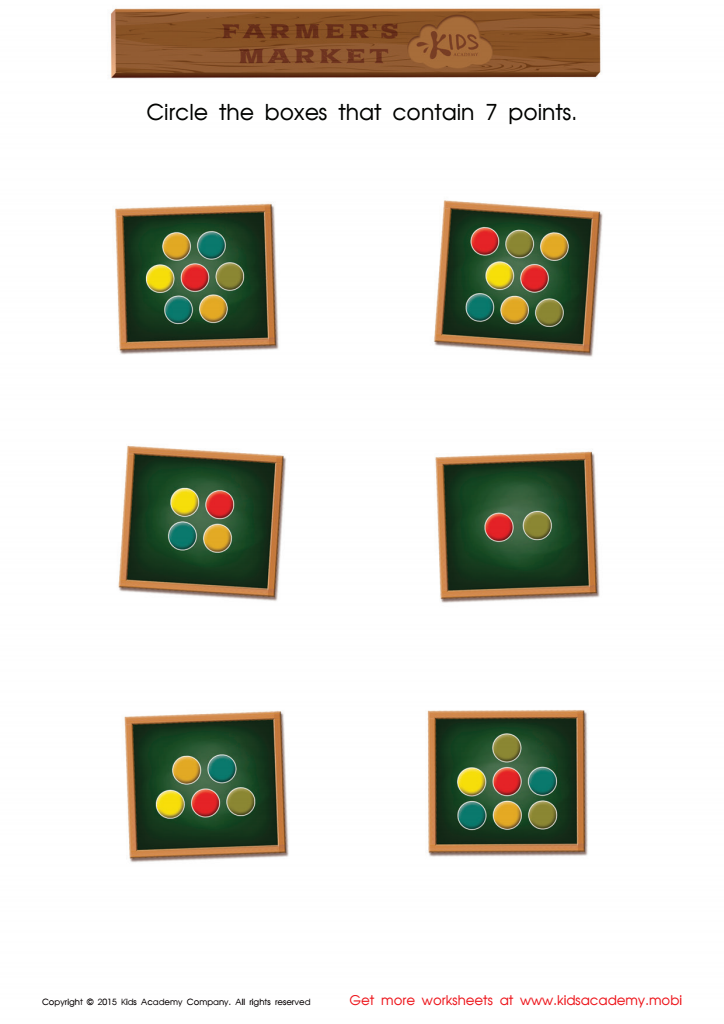
Count and Match Points 7 Math Worksheet
Help your child count and recognize similar numbers by using this fun, colorful worksheet. Guide them to count the dots in each box, then circle those with a total of 7. It's a great way for your child to see how different arrangements lead to the same number.
Count and Match Points 7 Math Worksheet
Worksheet
Bubble Matching Fun Worksheet

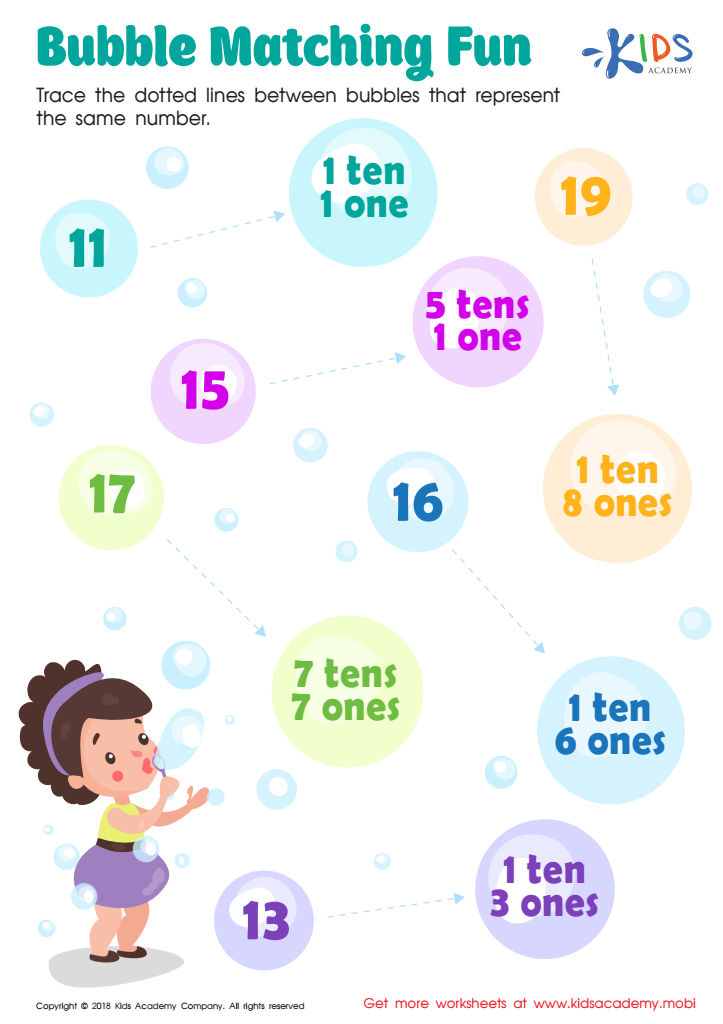
Bubble Matching Fun Worksheet

Try this fun worksheet to stimulate your young one's learning! Test their number matching skills by having them trace the dotted lines between bubbles representing the same numbers. Look through the exercise with your child and watch their understanding of how two numbers can add up to the same value grow!
Bubble Matching Fun Worksheet
Worksheet
Matching Numbers to Amounts Worksheet


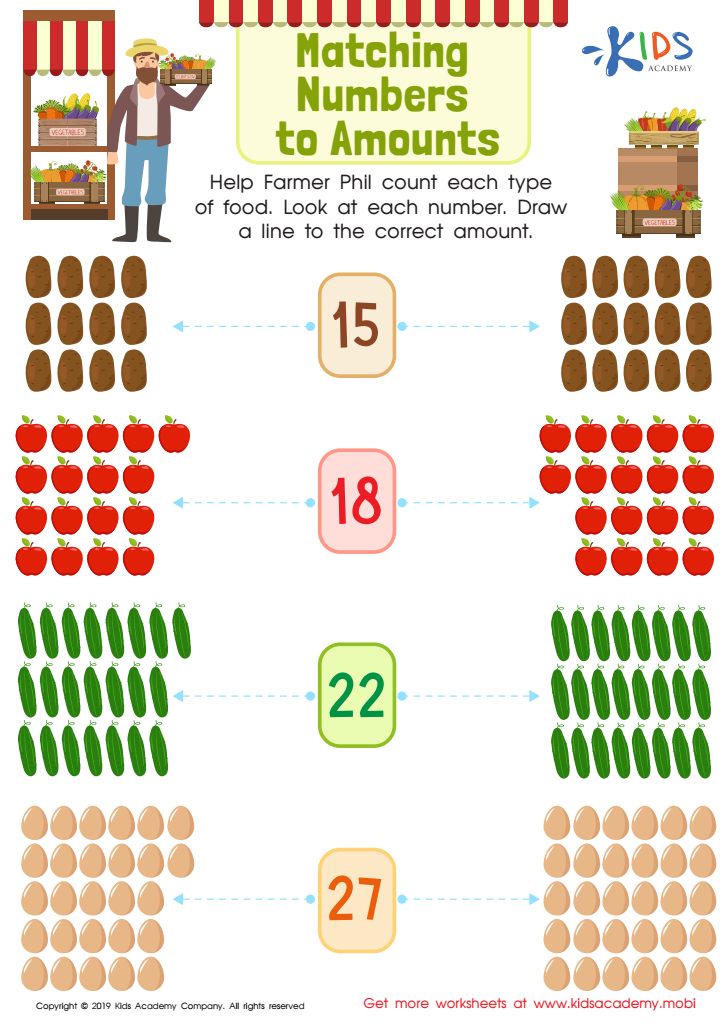
Matching Numbers to Amounts Worksheet

Farmer Phil needs your kid's help! Ensure they know the basics of math such as counting, adding and subtracting. Before beginning, help your child identify and count the different foods in the picture. Then, draw a line to the correct amount.
Matching Numbers to Amounts Worksheet

Worksheet


Matching skills and basic math proficiency are crucial for young children aged 3-7 as they form the bedrock for future academic success and cognitive development. During this pivotal stage, children's brains are highly receptive to new concepts, and fostering these skills prepares them for more complex problem-solving and higher-order thinking.

Matching activities, such as pairing shapes, numbers, or colors, enhance children's memory, attention to detail, and ability to notice patterns and relationships. These fundamental cognitive skills are essential not only in mathematics but also in everyday tasks and other academic subjects. Additionally, matching activities can be enjoyable and engaging, creating a positive learning environment that encourages curiosity and exploration.

Normal math skills, including counting, simple arithmetic, and understanding number concepts, are equally vital. They provide the foundation for later mathematical proficiency and everyday applications like telling time, handling money, and measuring ingredients in recipes. Early mathematical success fosters a positive attitude toward math, which is crucial since a positive self-concept in math can influence a child's willingness to engage with and persist in learning the subject as they grow older.

Thus, focusing on developing matching skills and basic math concepts in early childhood equips children with essential tools for lifelong learning and problem-solving, laying the groundwork for academic achievement and practical life skills.