Recognizing Patterns Normal Math Worksheets for Ages 3-7
3 filtered results
-
From - To
Unlock your child’s potential with our delightful "Recognizing Patterns Normal Math Worksheets" designed for ages 3-7. These expert-crafted worksheets help young learners build critical thinking and problem-solving skills through engaging activities. From colorful shapes to cute animals, children will explore and identify patterns in a fun, interactive way. Perfect for use at home or in the classroom, our worksheets not only support early math education but also enhance cognitive abilities and attention to detail. Foster your child's love for learning and set the foundation for future math success with our carefully designed, enjoyable pattern recognition exercises.
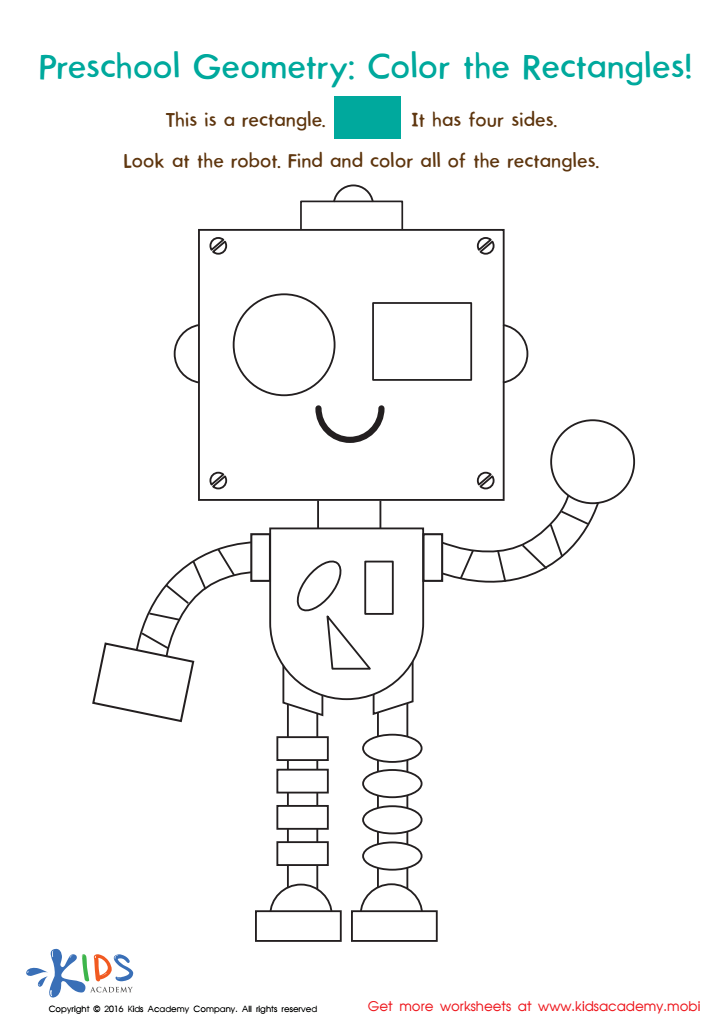
Geometry Worksheet
 Assign to My Students
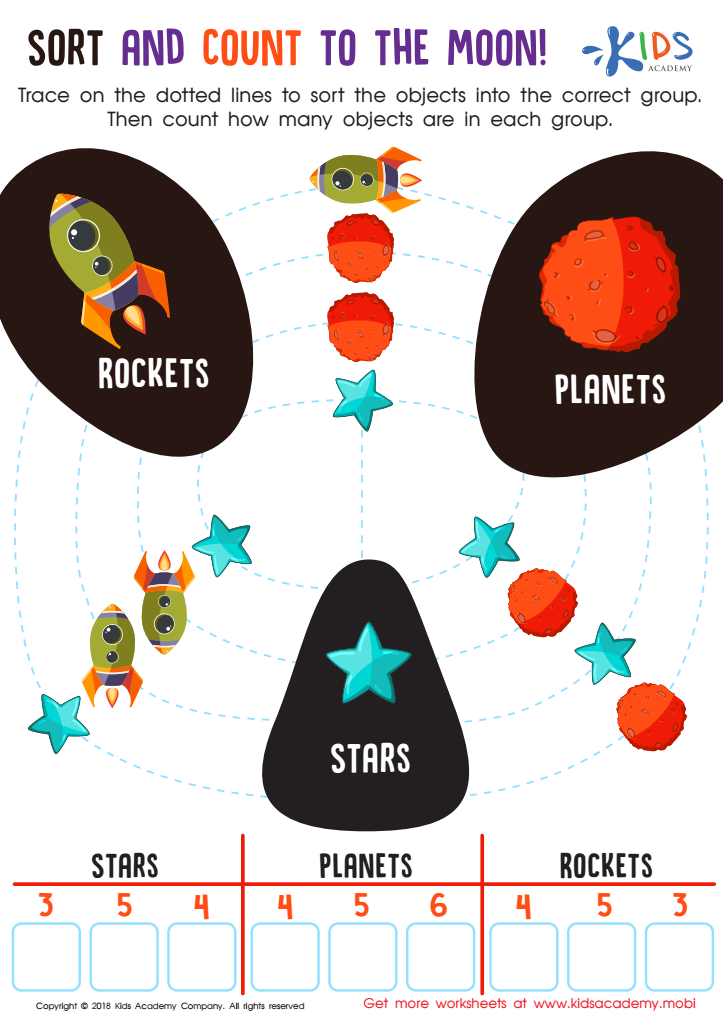
Sort and Count to the Moon Worksheet
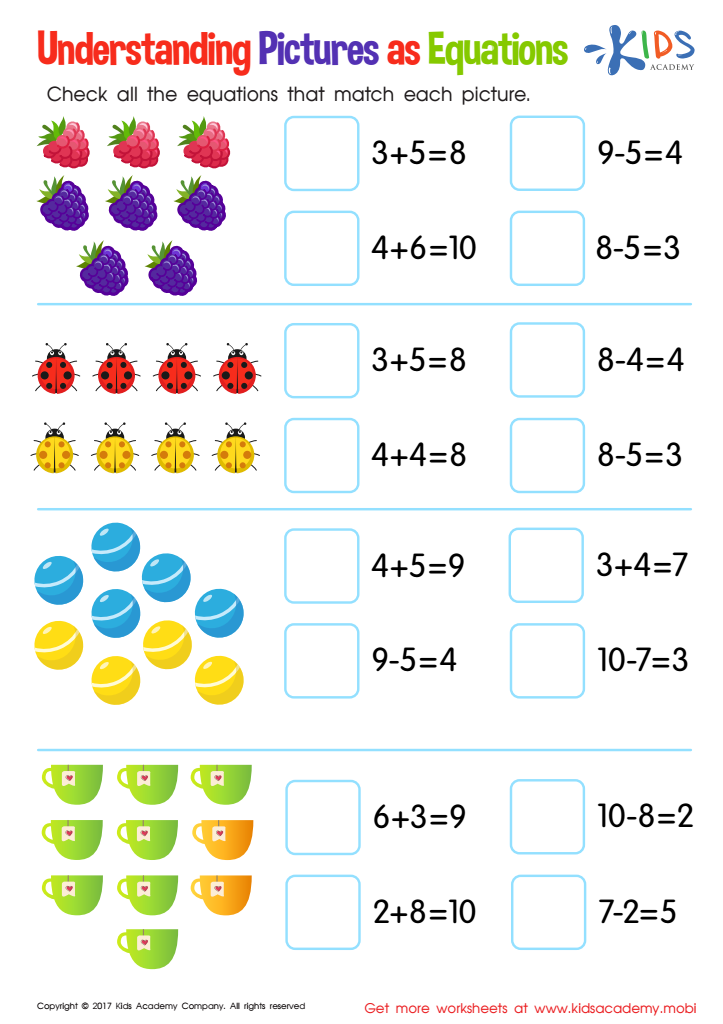
Understanding Pictures as Equations Worksheet


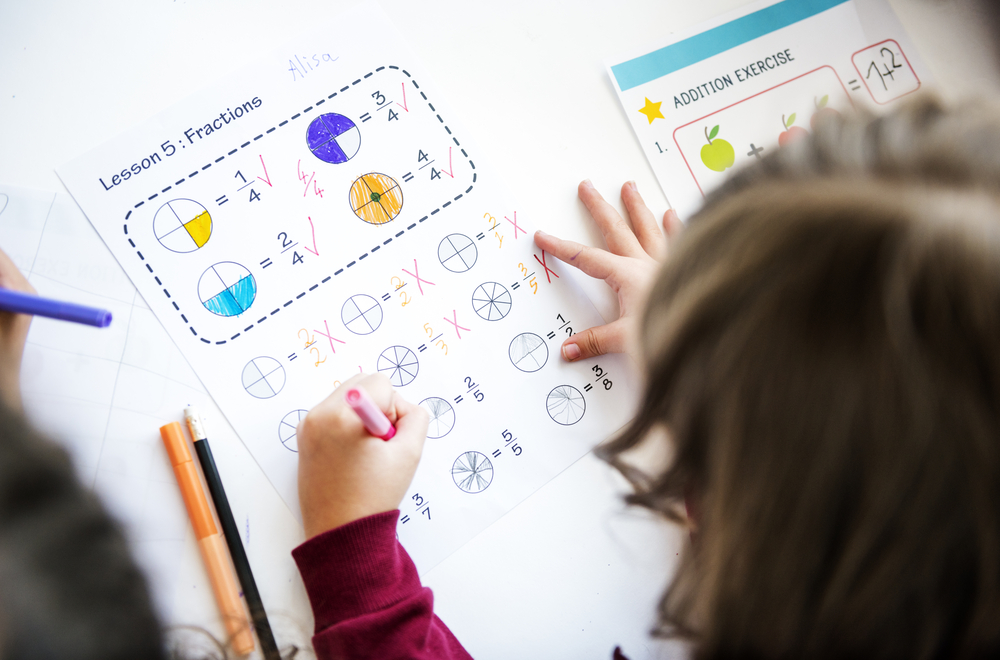


Recognizing patterns in early childhood lays a crucial foundation for mathematical understanding and cognitive development. For children aged 3-7, identifying patterns is not just a math skill; it is a vital component of problem-solving and critical thinking. When children recognize patterns, they learn to observe, predict, and understand relationships and structures in the world around them.
At this age, children are naturally curious and are constantly exploring and making sense of their environment. Patterns help them to organize their experiences and to make predictions. For instance, understanding the sequence of days in a week or the steps in a routine grows from recognizing patterns. This cognitive skill extends to more complex concepts, such as understanding numerical sequences and operations in mathematics. Without a firm grasp of patterns, children may struggle with more abstract math concepts later in their education.
Furthermore, recognizing patterns enhances a child's ability to understand and use language, as many aspects of language and reading involve recognizing and interpreting patterns, such as phonics, rhymes, and sentence structures. Encouraging pattern recognition through playful activities and simple exercises nurtures cognitive abilities, promotes academic readiness, and boosts confidence, preparing them for the more complex math challenges to come. For teachers and parents, fostering this skill offers a significant head start in a child's educational journey.








