Understanding directions Normal Math Worksheets for Ages 3-7
3 filtered results
-
From - To
Enhance your child's learning journey with our "Understanding Directions Normal Math Worksheets" designed for ages 3-7. These engaging and interactive worksheets help young learners master basic direction skills essential for their math development. Children will explore concepts like "up," "down," "left," and "right" through fun activities that promote critical thinking, spatial awareness, and problem-solving abilities. With colorful illustrations and age-appropriate challenges, these worksheets provide an ideal tool for early education, making learning both effective and enjoyable. Foster your child's confidence in navigating directions while building a strong foundation in math that supports their overall growth. Download now for an exciting learning experience!
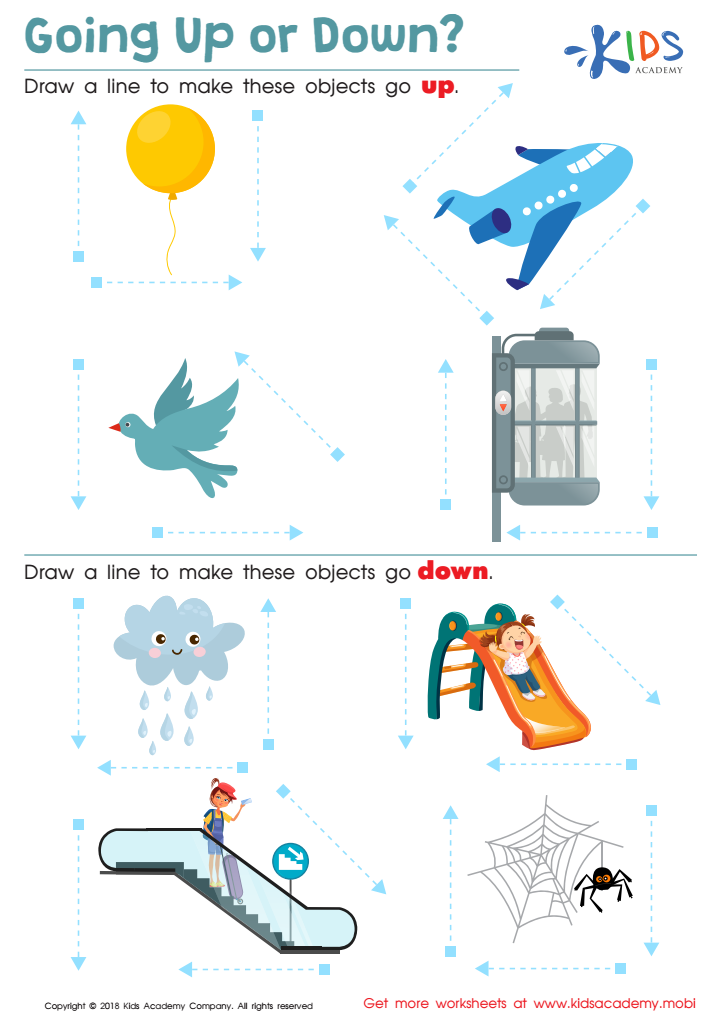
Going up or Down? Worksheet
 Assign to My Students
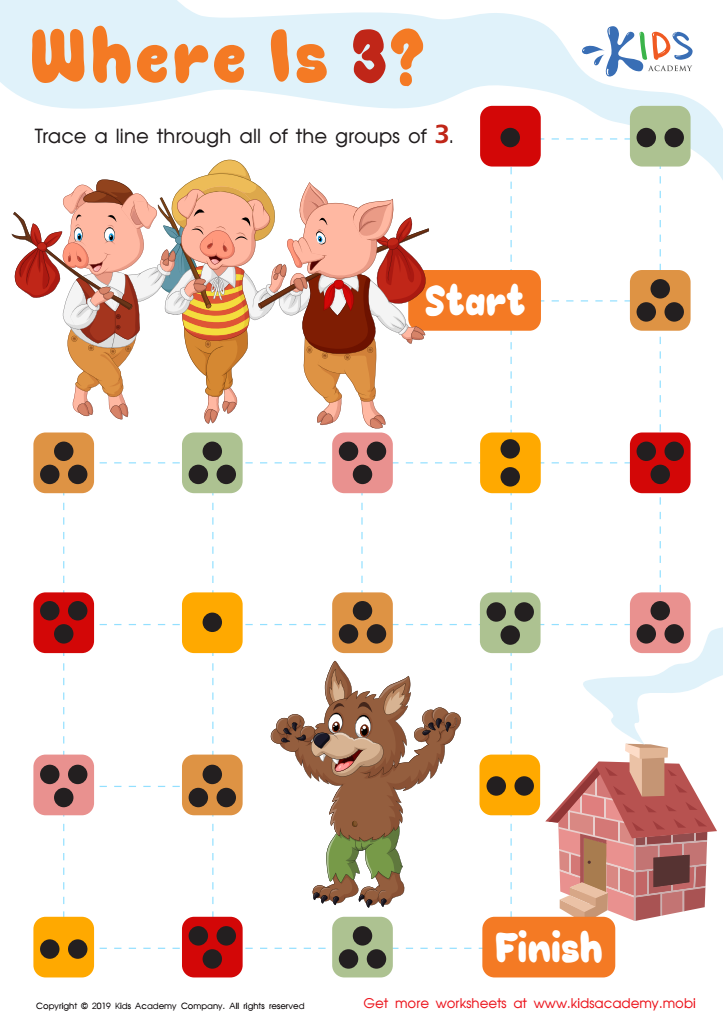
Where Is 3? Worksheet
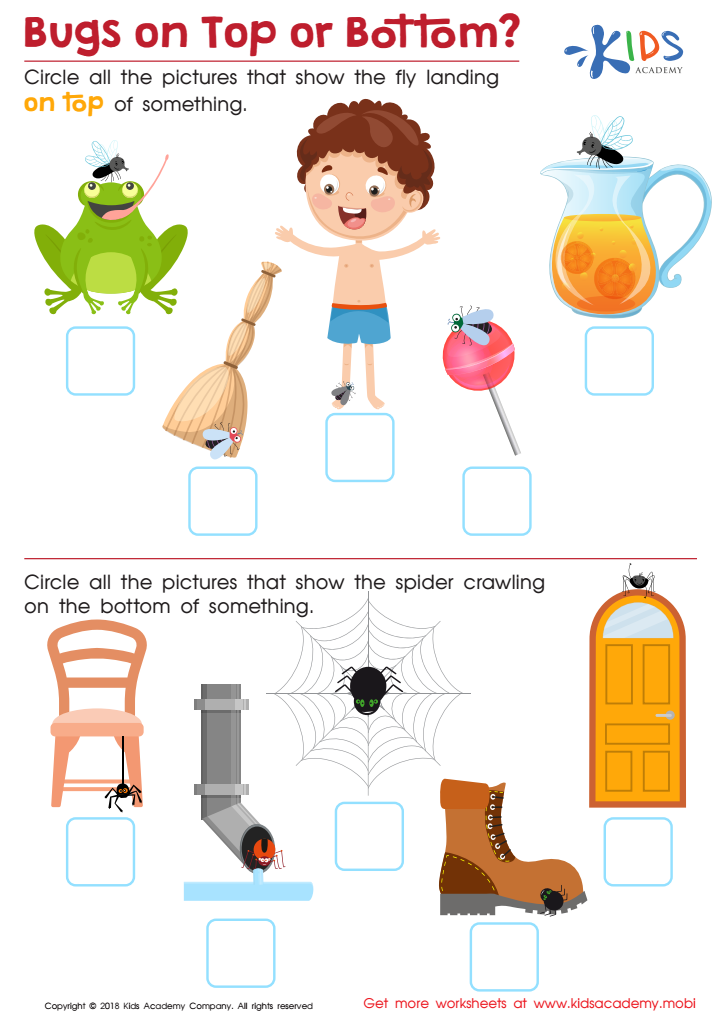
Bugs on Top or Bottom? Worksheet








Understanding directions in normal math for children aged 3-7 is crucial for several reasons. At this early developmental stage, children are laying the foundation for their mathematical skills, and effective comprehension of directions plays a vital role in this process. Parents and teachers should prioritize teaching children how to understand and follow directions because it shapes their ability to solve problems, engage in critical thinking, and develop focused attention.
Following directions often involves various skills, such as listening, processing information, and sequencing tasks, all of which contribute to overall cognitive development. When children learn how to interpret mathematical instructions accurately, they are better equipped to grasp concepts like addition, subtraction, counting, and measurements. Moreover, this understanding fosters independence and confidence in their abilities, mitigating frustration during learning activities.
An integrated approach that emphasizes understanding directions can enhance communication between children and caregivers, promoting a stronger learning environment. Additionally, as children progress in their education, these foundational skills are essential for succeeding in more advanced math topics. Ultimately, supporting children in understanding directions not only boosts their current learning but also paves the way for lifelong skills that are critical in various aspects of life.








