Understanding fact families Normal Math Worksheets for Ages 3-7
3 filtered results
-
From - To
Welcome to our engaging "Understanding Fact Families" math worksheets, designed for children aged 3-7. These resources help young learners grasp the fundamental concepts of addition and subtraction through fun, interactive activities. Fact families showcase the relationship between numbers, allowing kids to see how they connect and build a strong mathematical foundation. Our printable worksheets feature colorful illustrations and age-appropriate exercises that make learning enjoyable and effective. By exploring fact families, children will develop crucial problem-solving skills and enhance their mathematical understanding. Join us in fostering a love for math and nurturing confident learners as they embark on their educational journey!
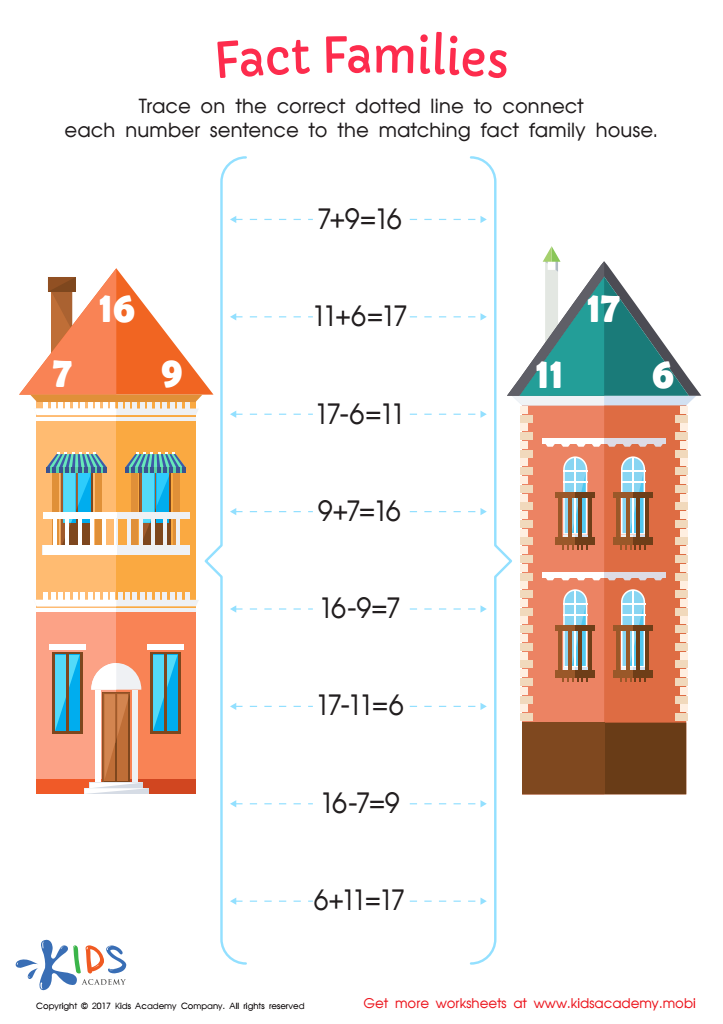
Fact Families — Add and Subtract Worksheet
 Assign to My Students
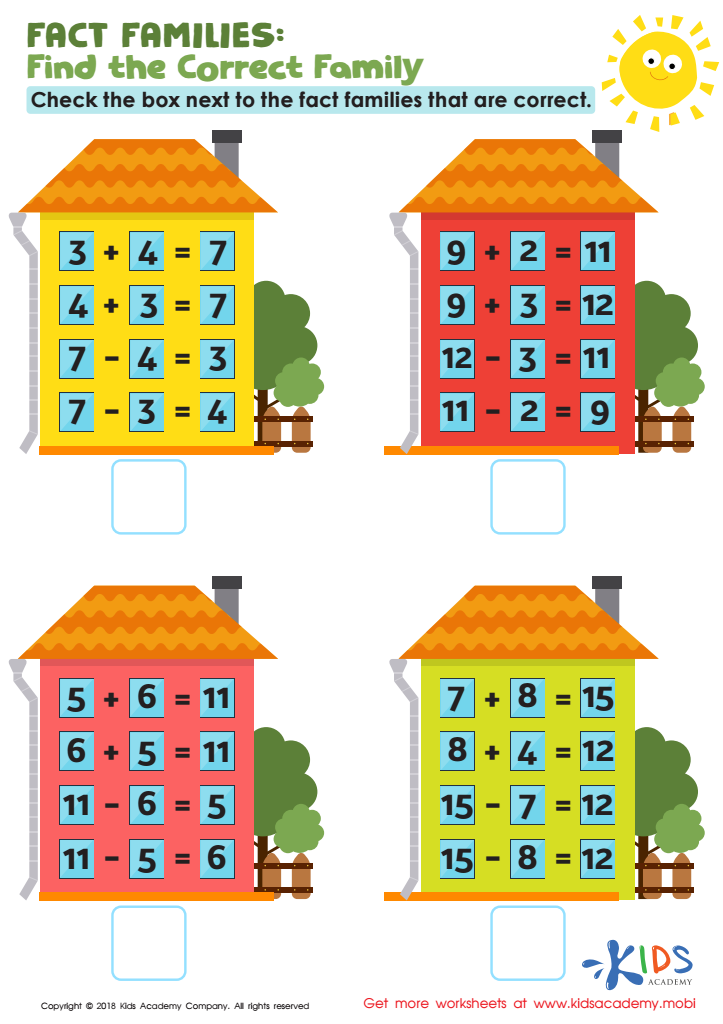
Fact Families: Find Correct Family Worksheet
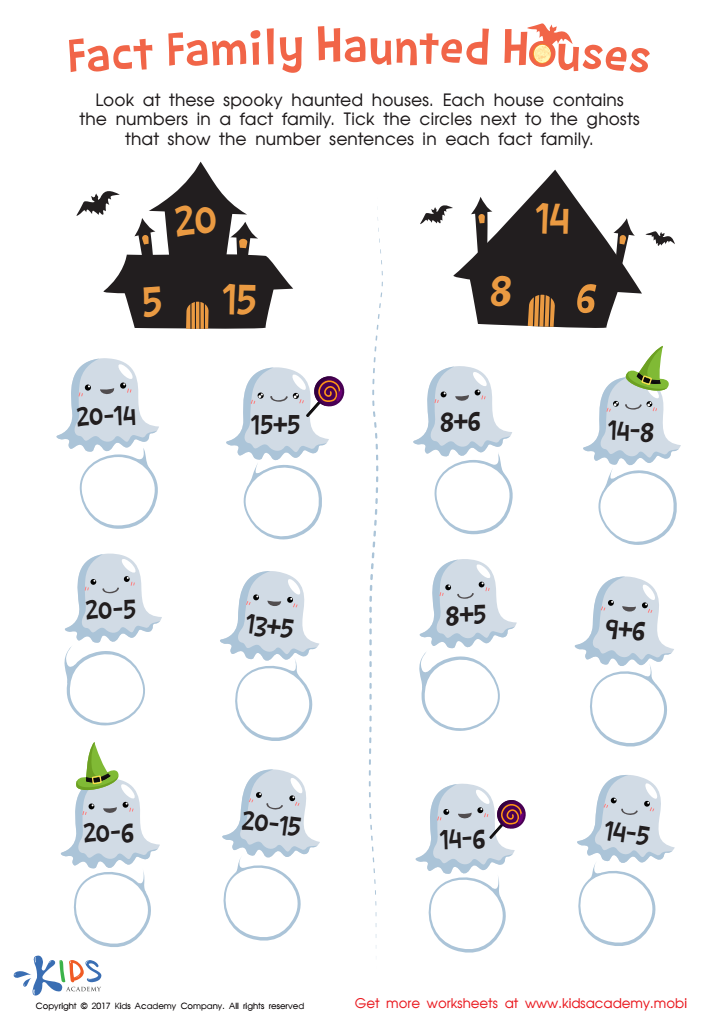







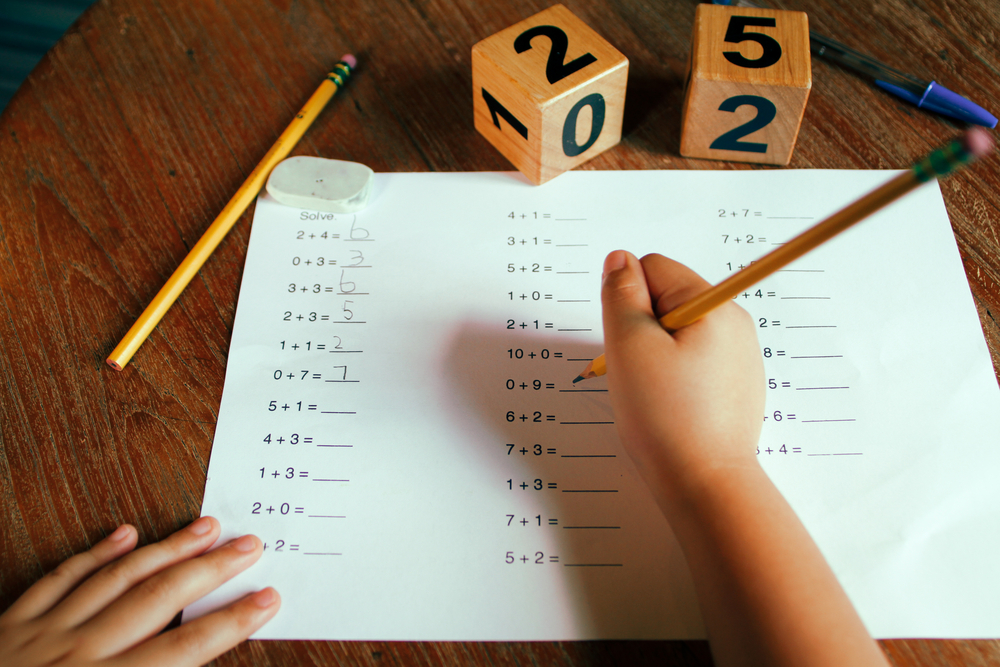
Understanding fact families is essential for parents and teachers of children aged 3-7 as it lays the foundation for their mathematical development. A fact family consists of related addition and subtraction (or multiplication and division) facts that use the same numbers. For example, the numbers 2, 3, and 5 can illustrate the relationships: 2 + 3 = 5, 3 + 2 = 5, 5 - 2 = 3, and 5 - 3 = 2. Recognizing these relationships helps children see the connection between operations, fostering a deeper understanding of numbers.
This comprehension promotes flexible thinking, allowing young learners to approach problems creatively. It builds confidence in problem-solving skills, making math less intimidating and more engaging. As they begin to recognize patterns within fact families, children enhance their ability to connect new concepts with what they already know, making learning more meaningful.
Moreover, children's ability to explain their thinking during this process supports language development, as they articulate their understanding of mathematical relationships. Early exposure to fact families can also ease the transition to more complex mathematical concepts, preparing children for future success in math as they progress in their education. Thus, caregivers' and educators' support in mastering this area is crucial.








