Understanding Quantities Normal Math Worksheets for Ages 3-7
3 filtered results
-
From - To
Introducing our "Understanding Quantities" normal math worksheets, designed for children ages 3-7. These engaging and interactive worksheets help young learners grasp the concept of quantities through fun activities that promote counting, comparing, and recognizing different amounts. With bright colors and age-appropriate illustrations, our materials captivate children's attention while enhancing their foundational math skills. Each worksheet is crafted to encourage independent learning and critical thinking, making math both enjoyable and effective. Perfect for home or classroom use, these worksheets support early numeracy development and set kids on the path to math mastery. Start building a solid quantitative foundation today!
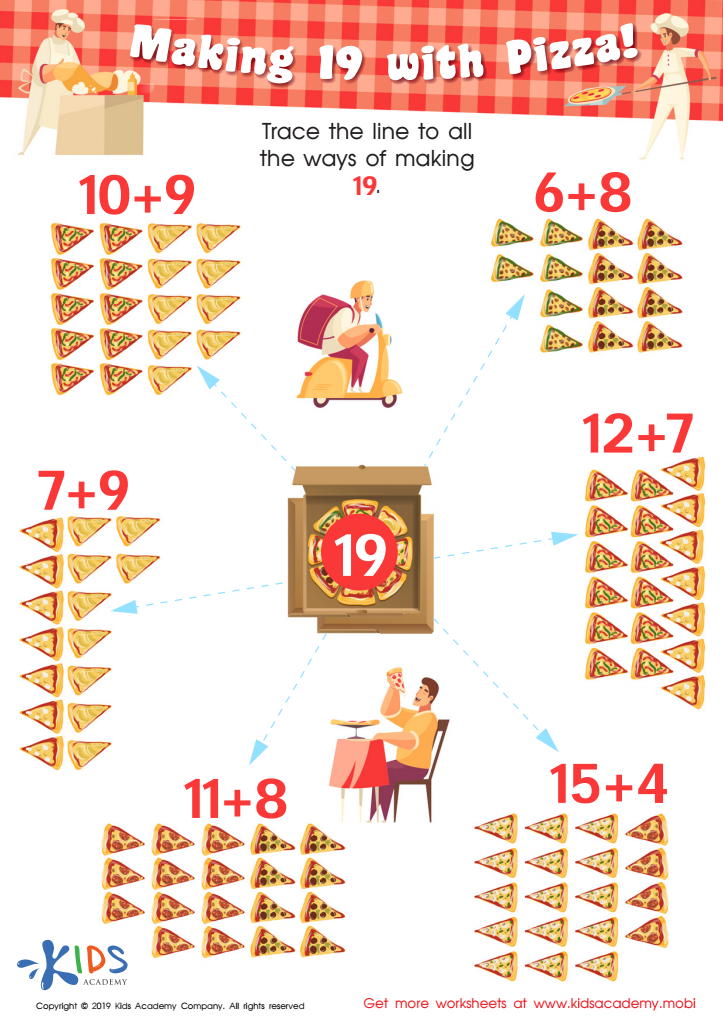
Making 19 with Pizza! Worksheet
 Assign to My Students
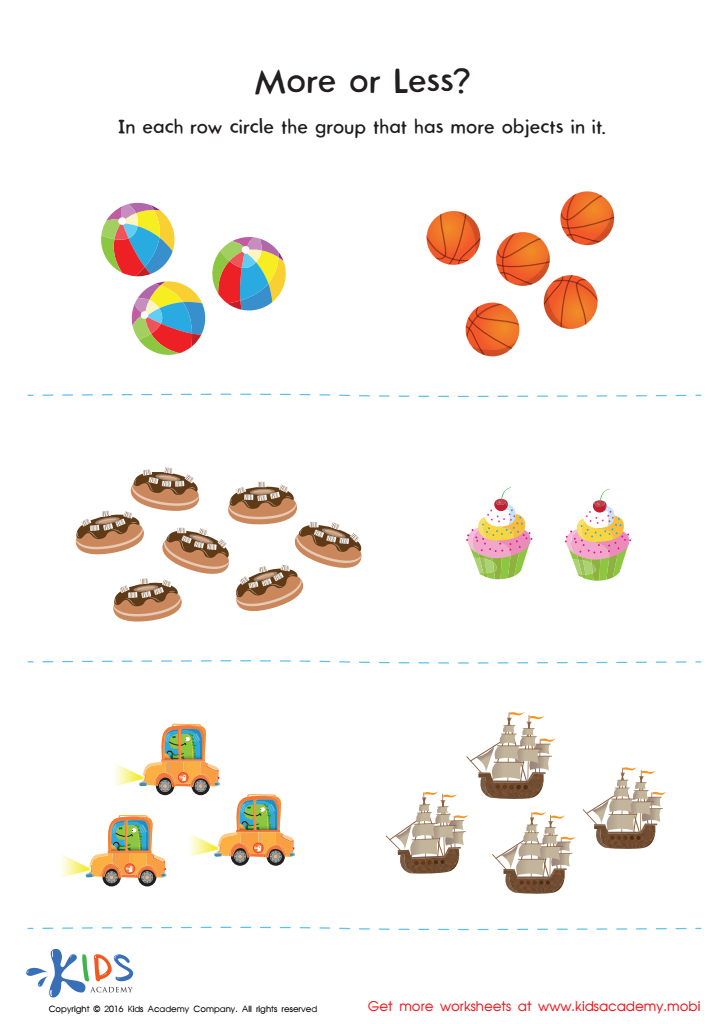
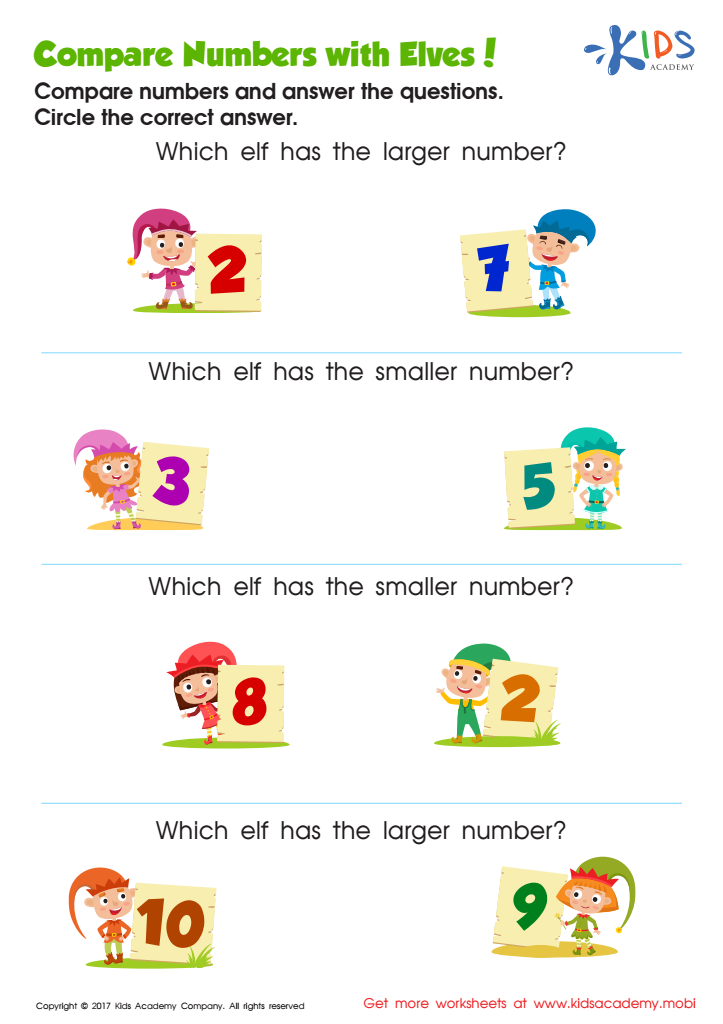
Comparing Numbers Worksheet for Kindergarten



.jpg)
.jpg)


Understanding quantities is fundamental for children aged 3-7 as it forms the bedrock for future mathematical skills. During these formative years, children develop essential cognitive abilities that influence how they perceive numbers and relationships. When parents and teachers prioritize early math concepts, such as understanding quantities, they equip children with the tools needed for problem-solving and critical thinking.
A solid grasp of quantities enhances children's abilities to compare, group, and manipulate numbers, setting a strong foundation for more complex mathematical concepts such as addition, subtraction, and even basic algebra. Engaging in activities that introduce quantities—like counting objects, measuring ingredients for a recipe, or recognizing patterns—instills confidence and curiosity in children, leading to a more positive attitude towards mathematics as they grow.
Moreover, skills learned through exploring quantities extend beyond academics; they foster skills such as spatial awareness, analytical thinking, and decision-making. By integrating fun, interactive learning activities into daily routines, parents and teachers can create a rich learning environment that cultivates both numerical understanding and a lasting love for learning. Ultimately, caring about understanding quantities is an investment in a child’s cognitive development and academic success.








