Normal Nursery Rhymes Worksheets for Ages 3-7
3 filtered results
-
From - To
Discover a delightful collection of Normal Nursery Rhymes Worksheets designed for children aged 3-7. These engaging activities promote literacy and language skills while introducing young learners to beloved nursery rhymes. Each worksheet sparks creativity and imagination through colorful illustrations and interactive tasks, making learning enjoyable and fun. Perfect for parents and educators, these worksheets can enhance a child's understanding of rhythm and rhyme while developing phonetic awareness. Explore activities that include tracing, coloring, and matching exercises, all centered around classic nursery rhymes. Empower your child's love for learning with these enchanting, age-appropriate resources that strengthen foundational skills in an exciting way!
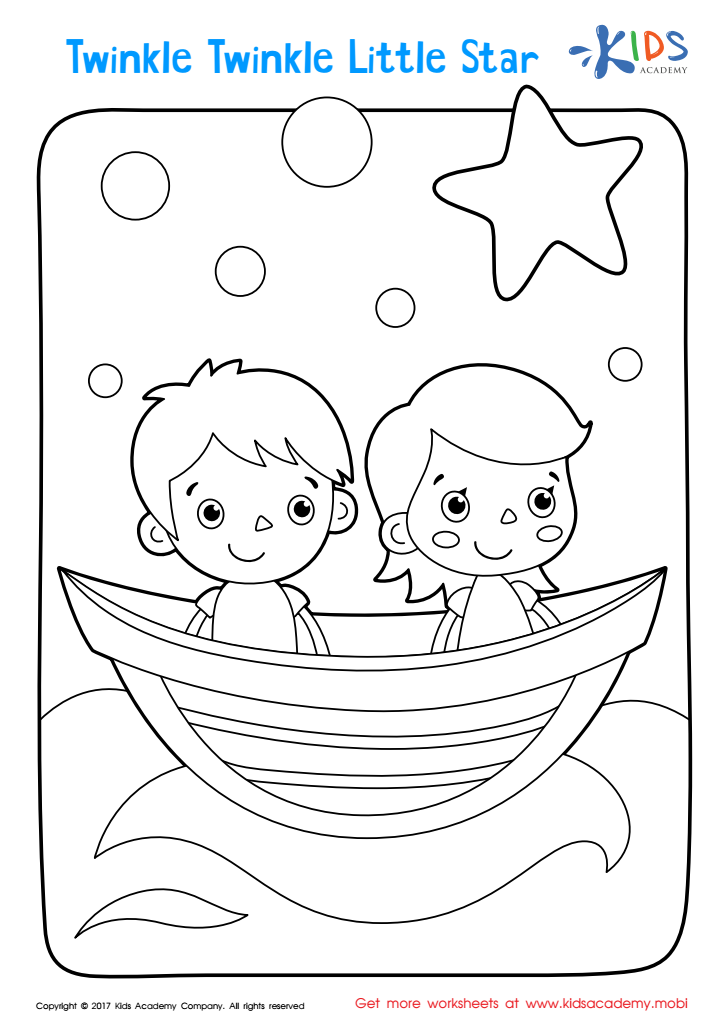
Twinkle Twinkle Little Star Coloring Page
 Assign to My Students
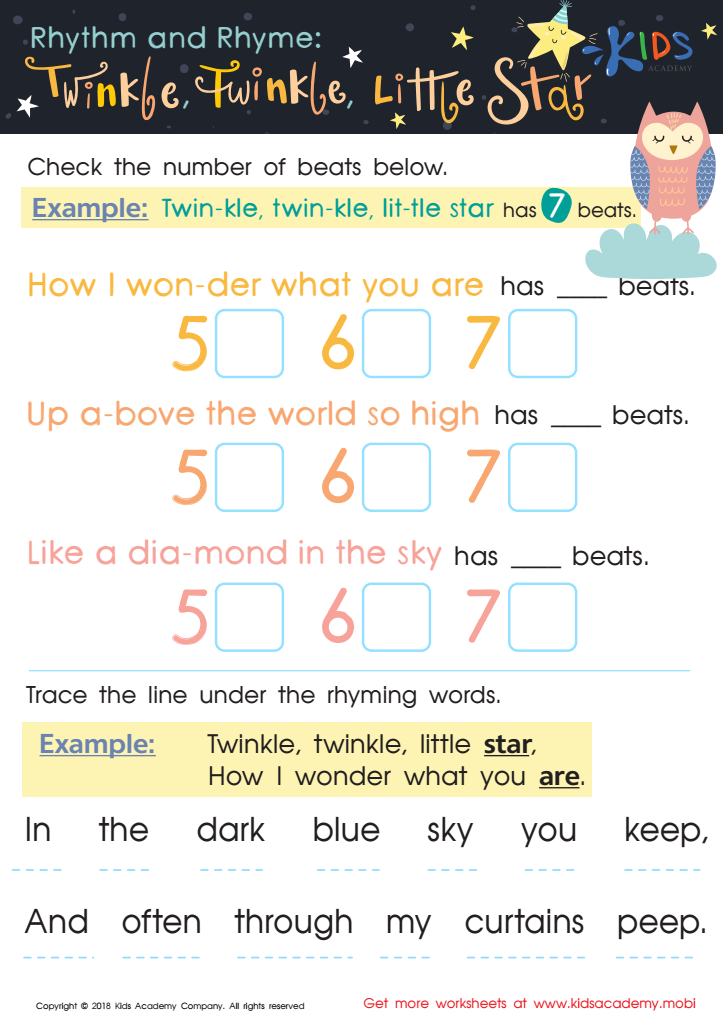
Rhythm and Rhyme: Twinkle, Twinkle, Little Star Worksheet
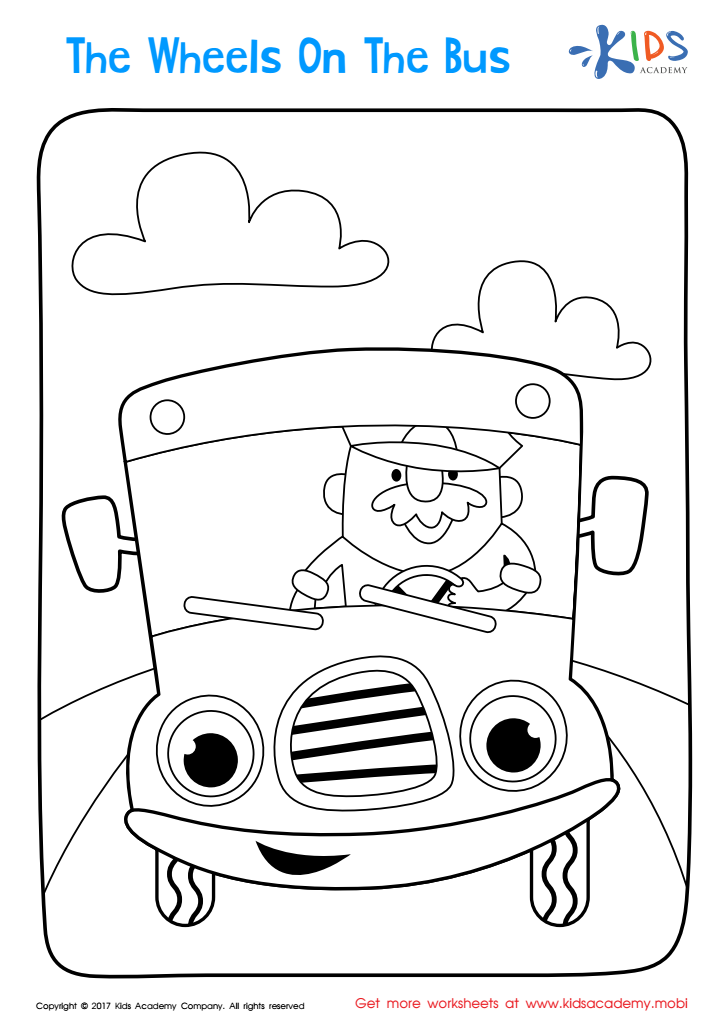
The Wheels on the Bus Coloring Page
Assign to My Students







Nursery rhymes serve as an essential educational tool for children aged 3 to 7, enriching their developmental journey in numerous ways. Firstly, these rhythmic verses enhance language skills. The melodic patterns help children develop phonemic awareness, a crucial foundation for reading. By memorizing and reciting nursery rhymes, children expand their vocabulary and learn to articulate words more effectively.
Moreover, nursery rhymes foster cognitive development. They introduce concepts such as counting, rhythm, and storytelling, allowing kids to grasp sequence, rhyme, and repetition—key components in early literacy. Engaging with these simple stories encourages imagination and creativity, cultivating narrative skills.
Socially and emotionally, nursery rhymes promote bonding, as shared singing fosters a sense of community between parents, caregivers, and children. This interaction strengthens relationships, enhances trust, and creates a nurturing environment essential for children's emotional well-being.
For teachers, utilizing nursery rhymes in the classroom can create an interactive learning atmosphere. They can serve as a springboard for discussions about themes, morals, and cultural heritage. Overall, nursery rhymes are much more than mere entertainment; they are a powerful educational resource that aids in holistic development, making them vital in the early formative years.