Filters

30 filtered results

Clear all filters
Favorites
With answer key
Interactive

30 filtered results

Difficulty Level

Grade


Check out this FREE Trial Lesson on Reading Fiction for age 3-7!

Illustrations in a Text

Favorites
With answer key
Interactive
  • 3-7
  • Critical Thinking
  • Reading Fiction
  • Normal
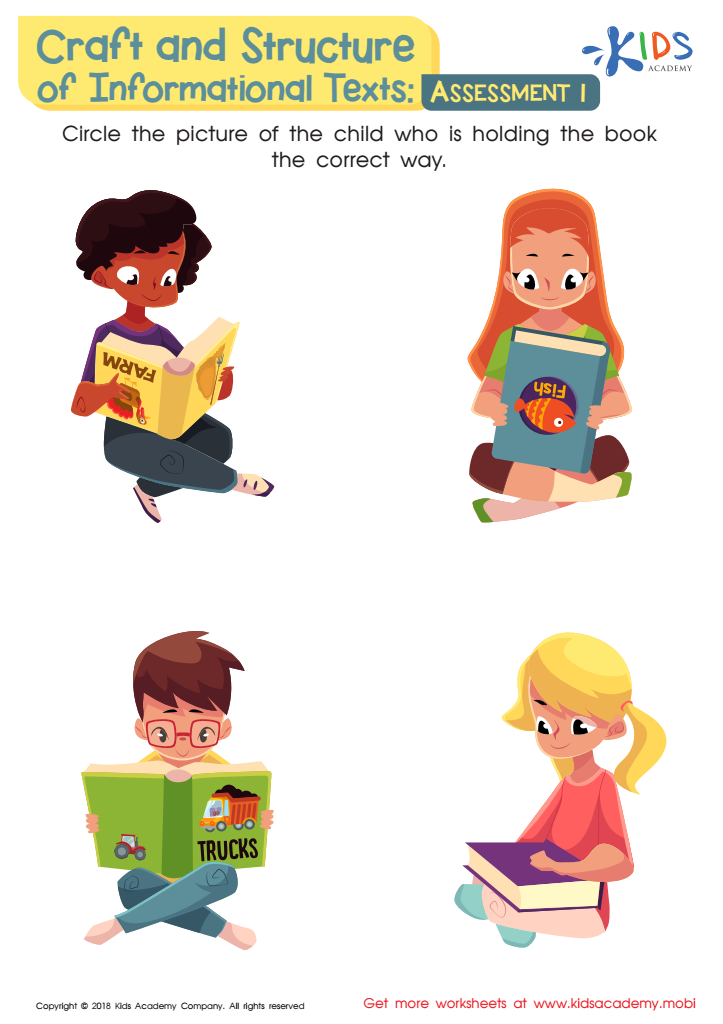
Craft and Structure of Informational Texts: Assessment 1 Worksheet

Craft and Structure of Informational Texts: Assessment 1 Worksheet

Young children need to know how to hold books correctly when they start reading. This assessment worksheet helps them show they know what to do. They'll look at the pictures and circle the child who is holding the book correctly. It's a great way to tell they are well on their way to becoming lifetime readers!
Craft and Structure of Informational Texts: Assessment 1 Worksheet
Worksheet
Worksheet: The Boy Who Cried Wolf

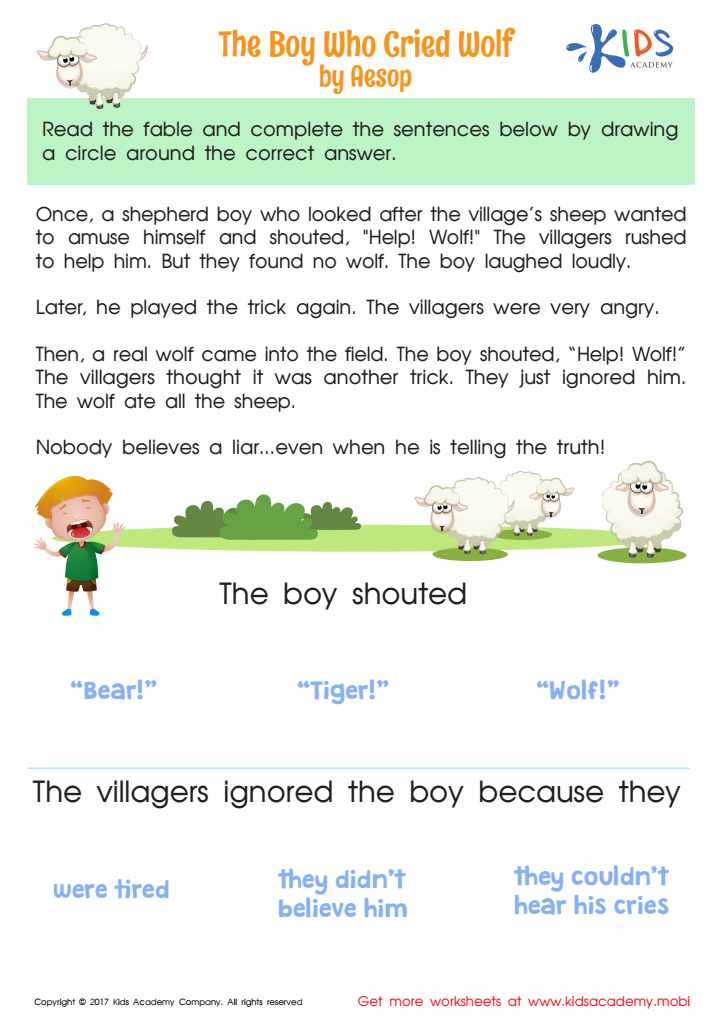
The Boy Who Cried Wolf Worksheet

Test your child's reading comprehension with The Boy Who Cried Wolf worksheet. Read the fable, then answer the questions. Use the text to help your child check their answers are correct. Boost reading skills in a fun, interactive way!
The Boy Who Cried Wolf Worksheet
Worksheet
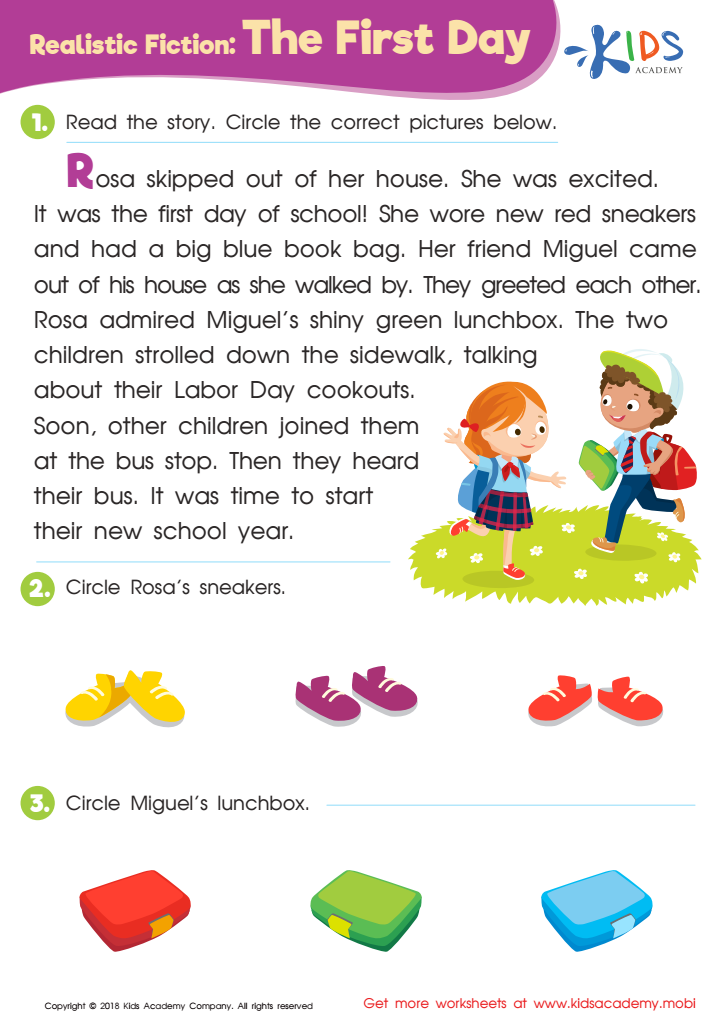
Realistic Fiction: The First Day Worksheet

Realistic Fiction: The First Day Worksheet

Fiction is made-up events, so story-writing is fiction writing. In this worksheet, there's a short story about Rosa, her friend Miguel, and their first day back at school. Read the story aloud to your kids and help them circle the right pictures to the questions. Repeat if needed.
Realistic Fiction: The First Day Worksheet
Worksheet
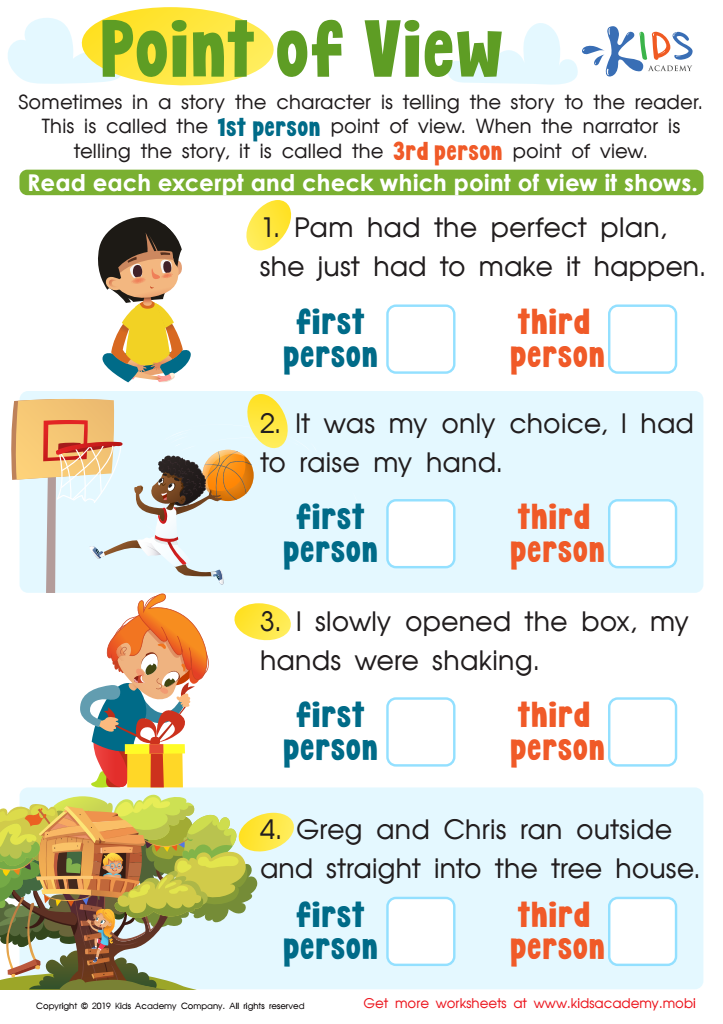
Point of View Printable

Point of View Printable

Teach your kids about points of view with this worksheet! In a story, characters can tell the story in first person or it can come from a narrator in third person. Read the excerpt in the worksheet and ask your kids to identify which point of view it is.
Point of View Printable
Worksheet
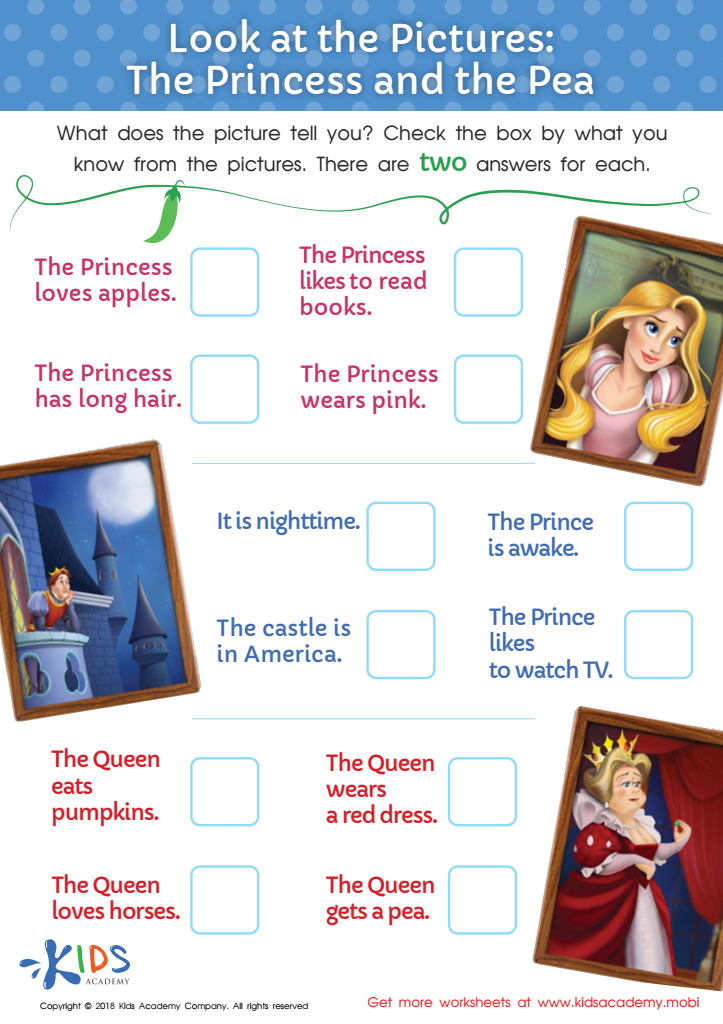
Look at the Pictures: The Princess and the Pea Worksheet

Look at the Pictures: The Princess and the Pea Worksheet

Early readers can benefit from picture clues to understand stories and text. Looking at images helps them learn the meaning of words and comprehend events. Use this worksheet on The Princess and the Pea to let students observe and learn from the pictures. It's a great way to help them comprehend early reading materials.
Look at the Pictures: The Princess and the Pea Worksheet
Worksheet
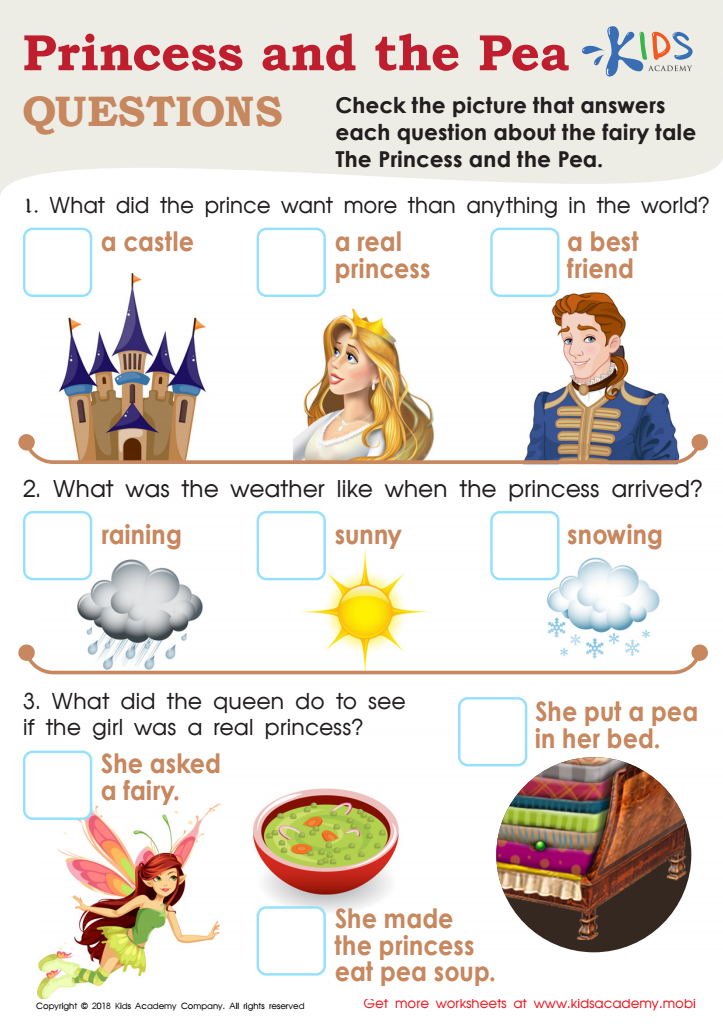
Princess and the Pea Questions Worksheet


Princess and the Pea Questions Worksheet

Your kid knows The Princess and the Pea inside-out? Test their knowledge with this worksheet. Ask your little one to read the questions and match each one to the picture. It's a fun way to see just how much attention they've paid to their bedtime story.
Princess and the Pea Questions Worksheet
Worksheet


Critical thinking is a vital skill that lays the foundation for future learning, and integrating this skill within normal reading of fiction for ages 3-7 can significantly enhance cognitive development. During these formative years, children are naturally curious and receptive to new ideas. Engaging with stories not only fuels their imagination but also prompts them to ask questions, make predictions, and draw connections to real-life scenarios—essential components of critical thinking.

When parents and teachers encourage critical thinking through reading fiction, they help children develop the ability to analyze narratives, understand diverse perspectives, and evaluate information critically. This also fosters creativity, as children learn to envision different possibilities and outcomes based on the stories they encounter. Furthermore, discussions about characters' motivations and plot devices can enhance vocabulary and comprehension skills.

Additionally, exposing young learners to fiction that challenges them to think critically prepares them for the complexities of the modern world. It nurtures their ability to solve problems, make informed decisions, and approach challenges with an open mind. Ultimately, caring about critical thinking in reading fiction helps cultivate a generation of thoughtful, empathetic, and skilled problem solvers who are ready to engage meaningfully with their environment.