Filters

8 filtered results

Clear all filters
Favorites
With answer key
Interactive

8 filtered results

Difficulty Level

Grade


Enhance your child’s vocabulary with our engaging Normal Plants and Animals Worksheets designed specifically for ages 3-7. These colorful and interactive resources help young learners explore the world of flora and fauna, introducing essential terms in a fun and relatable way. Each worksheet is crafted to encourage curiosity and promote learning through activities such as matching games, word searches, and fun facts about plants and animals. Ideal for classroom use or home learning, these worksheets spark a love for nature while building essential language skills. Dive into a world of words with our captivating vocabulary expansion materials today!

Check out this FREE Trial Lesson on Plants and Animals for age 3-7!

Animal Adaptations

Favorites
With answer key
Interactive
  • 3-7
  • Vocabulary expansion
  • Plants and Animals
  • Normal
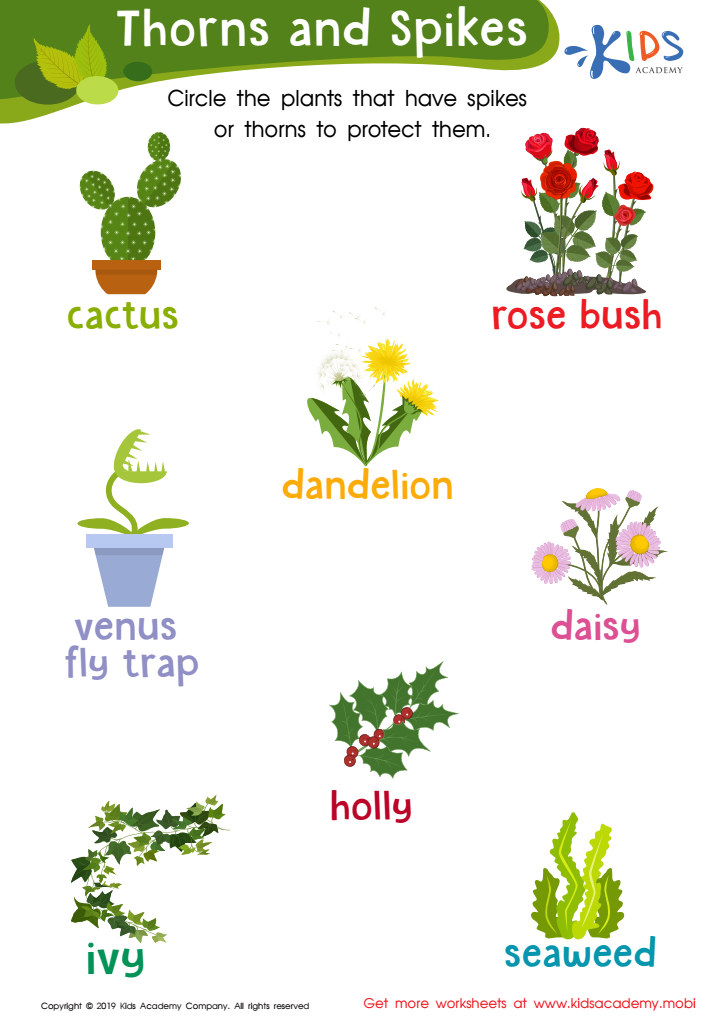
Thorns and Spikes Worksheet

Thorns and Spikes Worksheet

Can your students name and identify the plants and flowers in this worksheet? Ask them to read out the names and circle the ones with spikes or thorns. Help them appreciate nature's beauty and understand how plants protect themselves.
Thorns and Spikes Worksheet
Worksheet
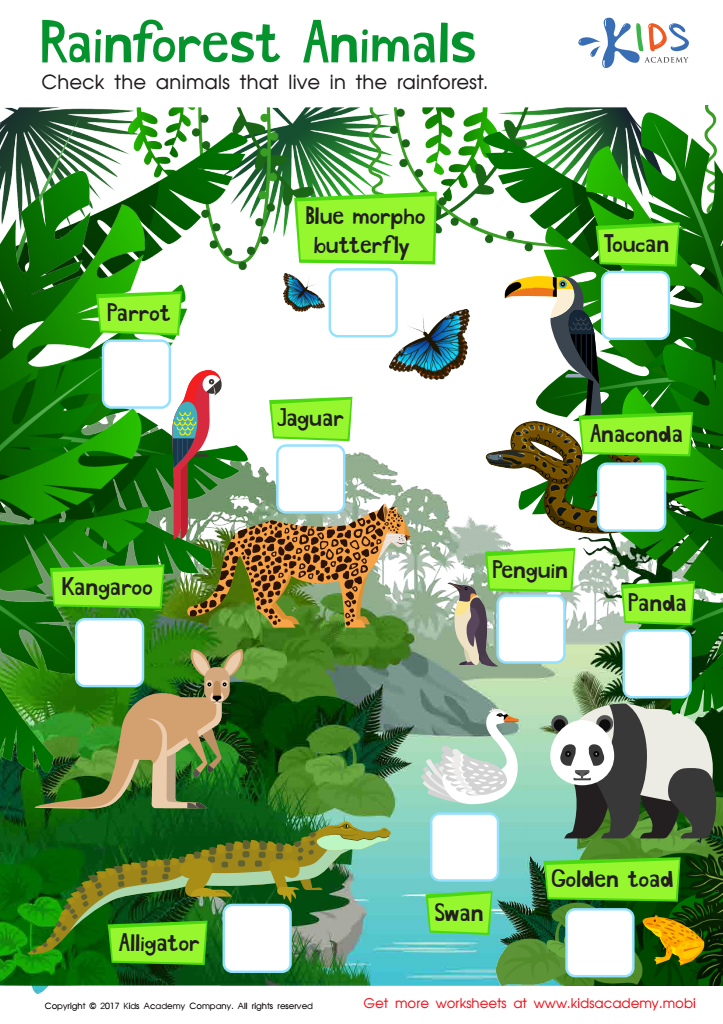
Rainforest animals worksheet

Rainforest Animals Worksheet
Kids love the bright, vivid pics of rainforest animals in this worksheet. It fuels their interest in life science and brings joy to their learning. It encourages them to study these animals in detail.
Rainforest Animals Worksheet
Worksheet
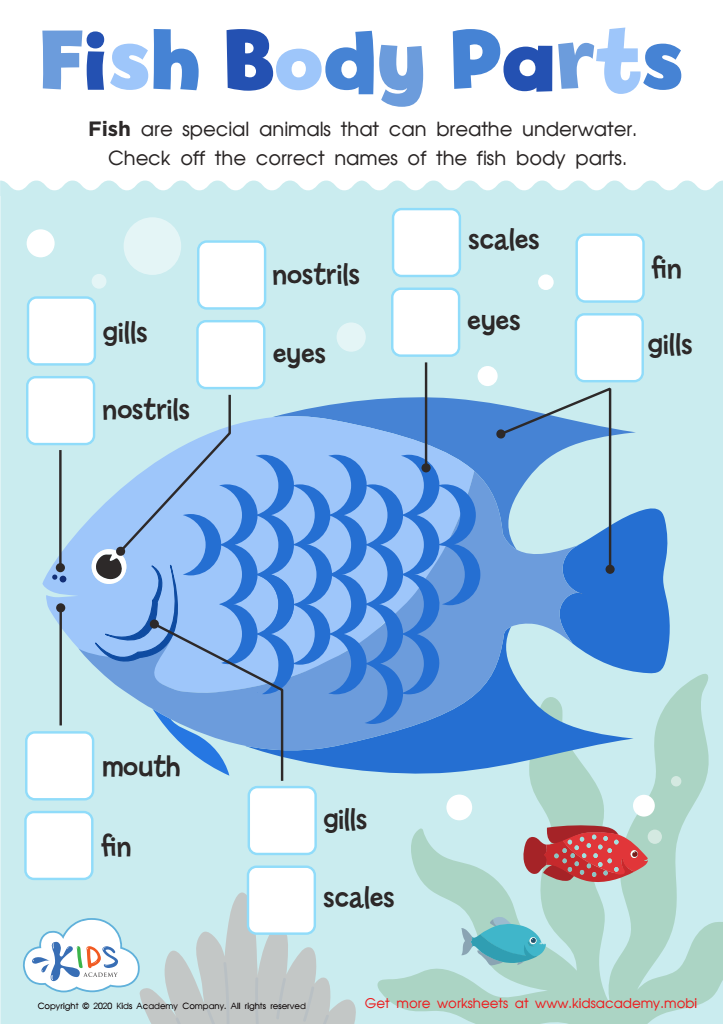
Fish Body Parts Worksheet

Fish Body Parts Worksheet

Fascinate kids with fish: teach them about these amazing creatures with this free Kids Academy printable worksheet. Let little learners study the vibrant blue fish, identify its different body parts, and discover why it can survive underwater. From gills to fins, your child will gain an early appreciation for life science!
Fish Body Parts Worksheet
Worksheet
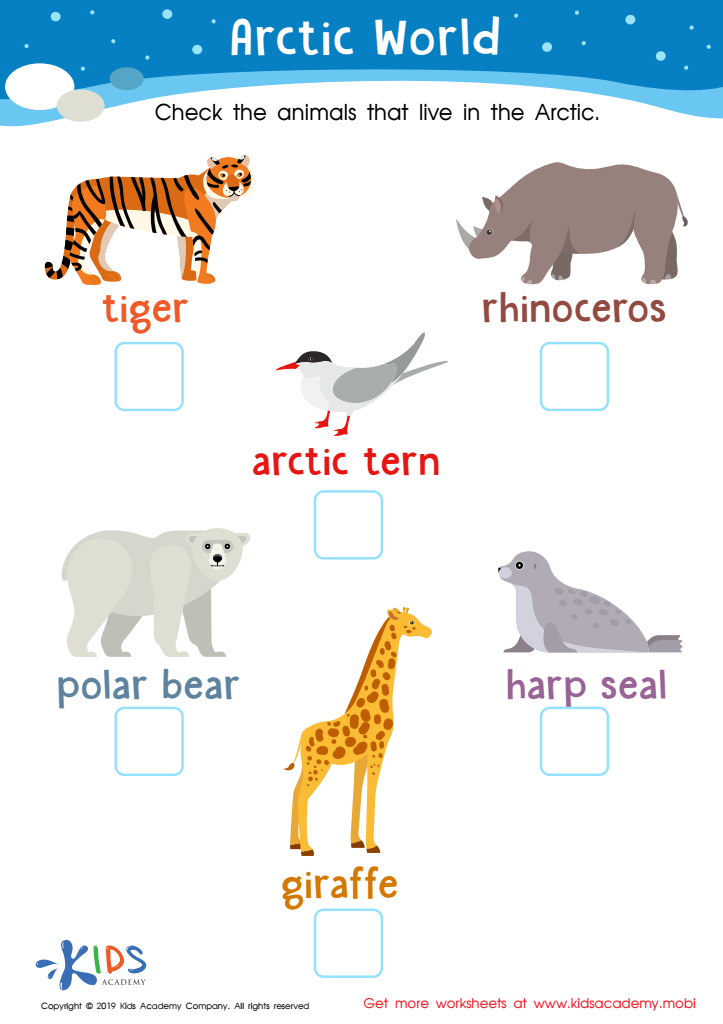
Arctic World Worksheet

Arctic World Worksheet

Ask your students if they know where the Arctic is located and what lives there. If not, use a world atlas to show them. The Arctic is very cold and snow-covered; native animals have adapted to survive the harsh conditions. Look at the animals in the worksheet and help your students decide which ones live in the Arctic.
Arctic World Worksheet
Worksheet
Classifying animals worksheet 2nd grade

Classifying Animals Worksheet

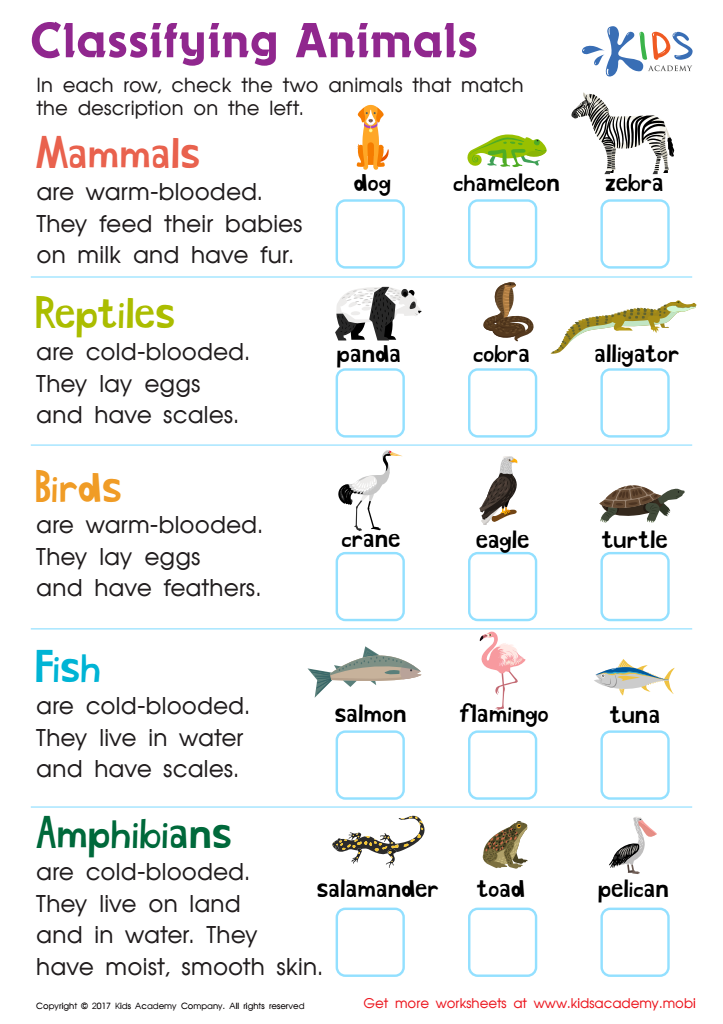
Print the 2nd grade animal classification worksheet and help kids study the differences between mammals, reptiles, birds, fish and amphibians. Let them pick two examples from the options given.
Classifying Animals Worksheet
Worksheet
Plant Care Worksheet

Plant Care Worksheet

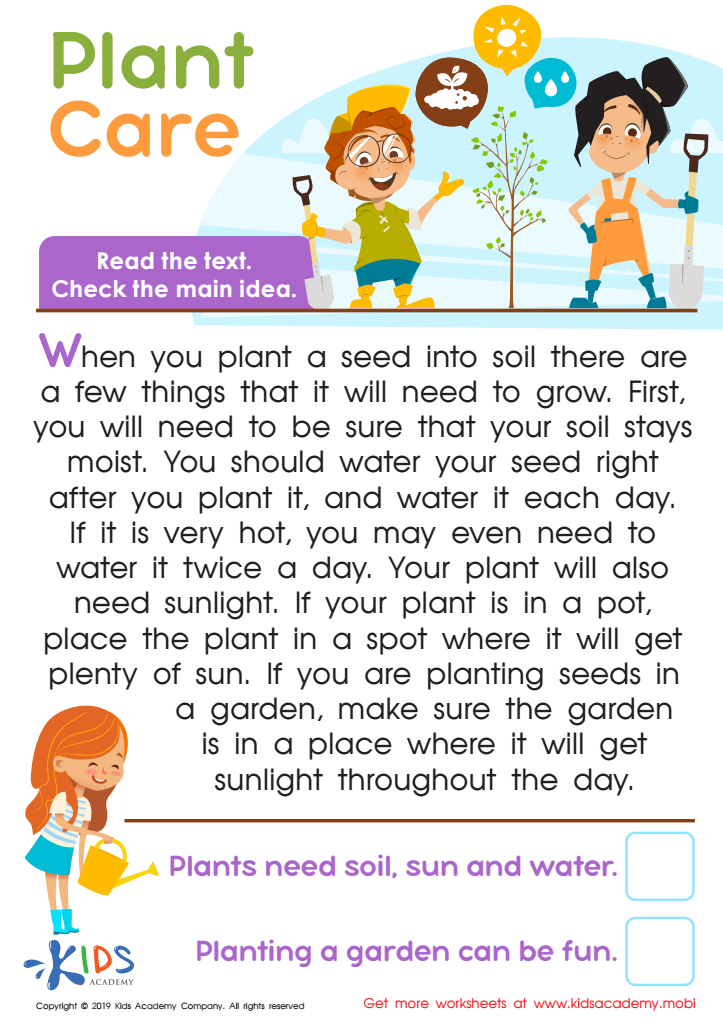
Encourage your children to read by helping them practice. Print out the worksheet and read the text with them. Help them understand the words and find the main idea. This will improve their reading skills and prepare them for school.
Plant Care Worksheet
Worksheet
Octopus facts worksheet for kids

Octopus Facts Worksheet For Kids

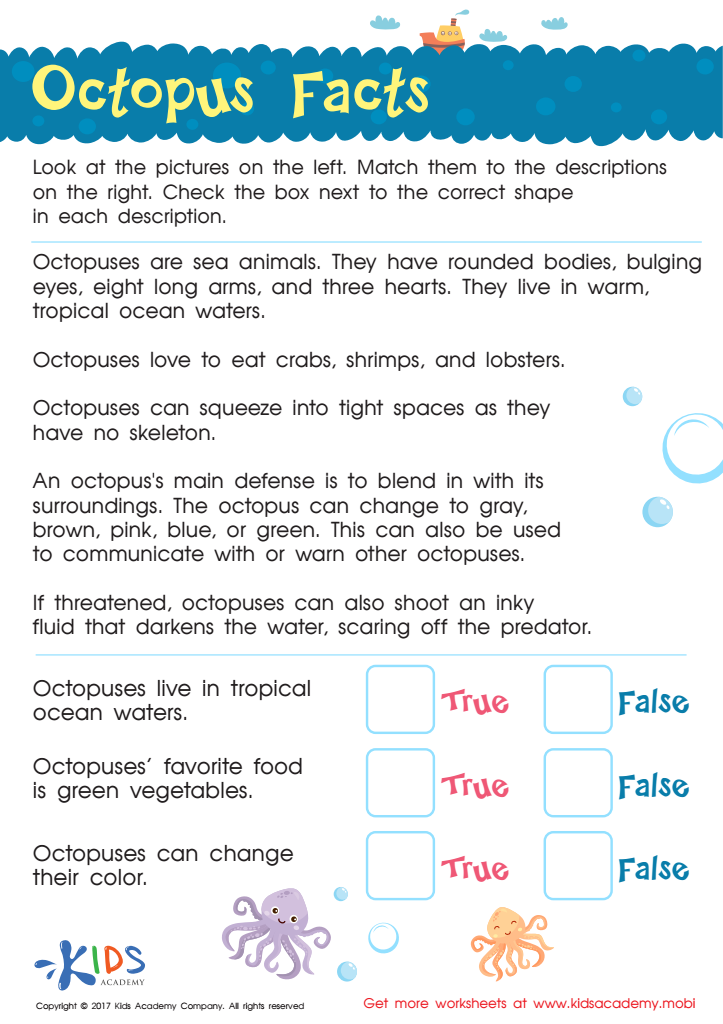
Let your child dive into the world of octopuses with this fun worksheet. It offers invaluable practice in reading non-fiction texts, while they learn interesting facts about these strange sea creatures. It's a great way to help them hone their skills in reading comprehension.
Octopus Facts Worksheet For Kids
Worksheet
Siblings Quiz Worksheet

Siblings Quiz Worksheet

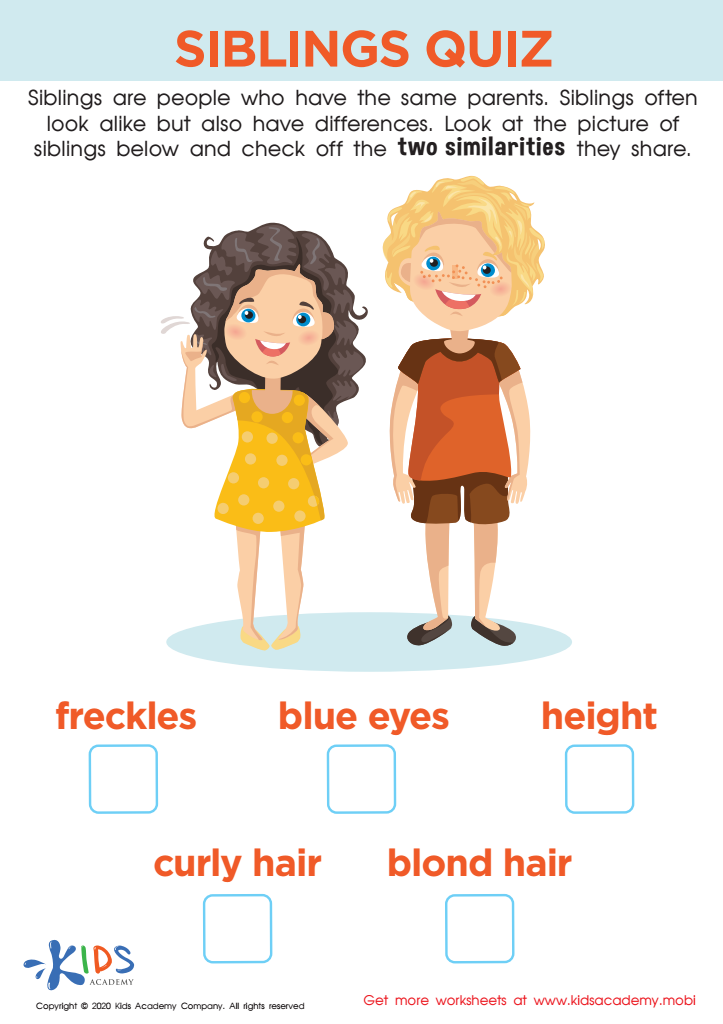
Your children may know a sibling is a sister or brother, but not realize what it means to be one. Siblings share the same parents, which means they share many genes. They are alike in many ways, but also have their own unique traits. Help your future scientist understand this early biology concept with this fun worksheet. They'll be tasked with finding similarities between two siblings on the page.
Siblings Quiz Worksheet
Worksheet


Vocabulary expansion in children, particularly on topics like normal plants and animals, is vital for their cognitive and language development. For children aged 3-7, this period serves as a foundational time for learning. Early exposure to rich vocabulary about the natural world enhances their observational skills and enables them to articulate their thoughts and feelings more effectively.

Parents and teachers should care about this for several reasons. First, a robust vocabulary allows children to engage more deeply with their environment, fostering curiosity and a love for learning. When children learn specific terms related to plants and animals—like "photosynthesis," "habitat," or the names of various species—they become equipped to explore topics in science and nature with greater understanding and interest.

Secondly, a rich vocabulary lays the groundwork for literacy skills. Children are more likely to be successful in reading and writing when they have strong language foundations. Finally, discussing plants and animals presents opportunities for practical learning experiences—such as going to a local park, planting seeds, or visiting a zoo—that instill appreciation and respect for nature.

In summary, vocabulary expansion around normal plants and animals enriches children's lives, supports their academic success, and nurtures a lifelong love of nature.