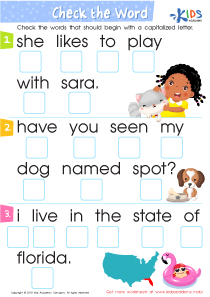
Normal Punctuation Worksheets for Ages 3-7
8 filtered results
-
From - To
Enhance your child's writing skills with our Normal Punctuation Worksheets designed for ages 3-7! These engaging and age-appropriate worksheets help young learners understand the fundamentals of punctuation, including periods, commas, question marks, and exclamation points. Each activity is designed to spark creativity while reinforcing important concepts in a fun and interactive way. Our resources are perfect for classroom use or at-home learning, encouraging children to express themselves clearly and confidently. With colorful illustrations and simple instructions, these worksheets provide a solid foundation for your child's writing journey. Explore our collection today and watch your little ones thrive as they master punctuation!
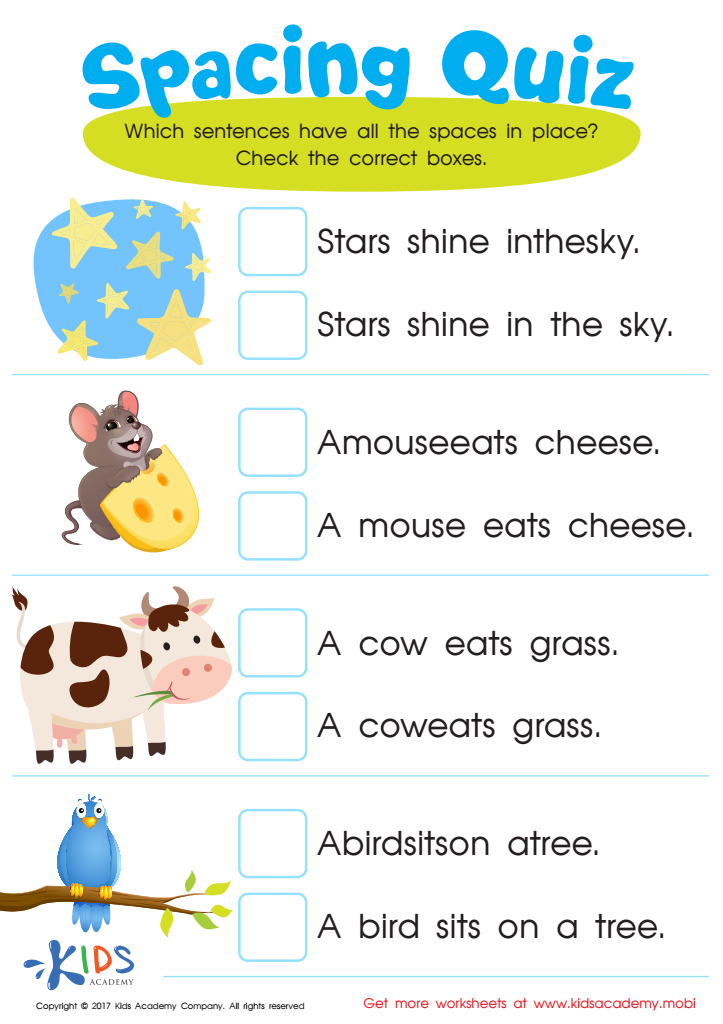
Spacing Quiz Worksheet
 Assign to My Students
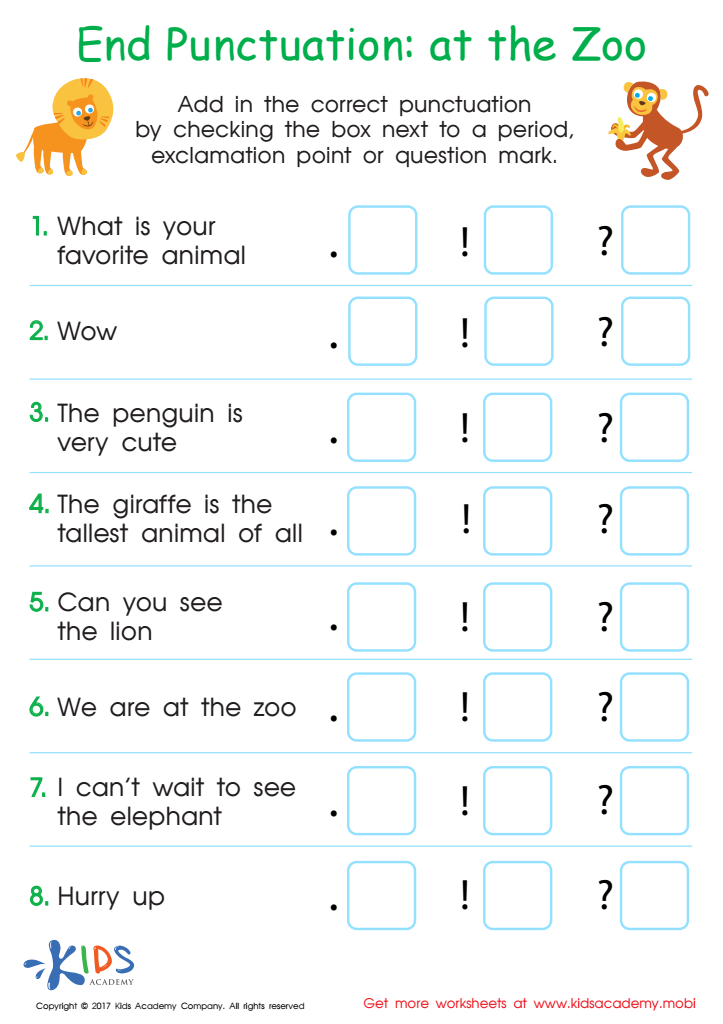
End Punctuation: At the Zoo Worksheet
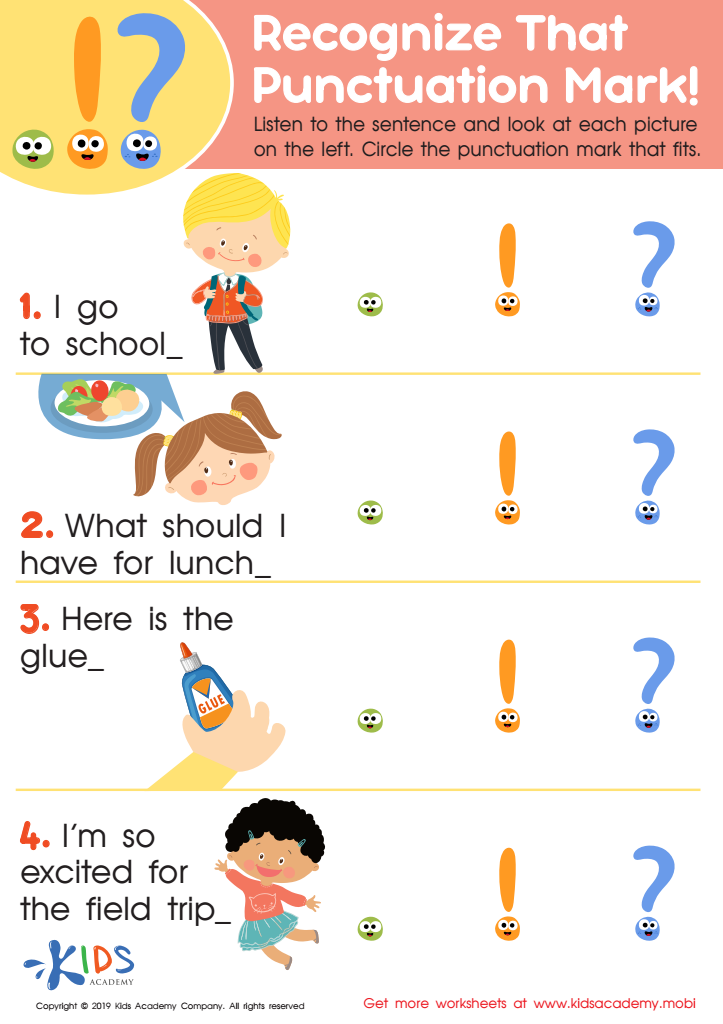
Recognize Punctuation Marks Worksheet
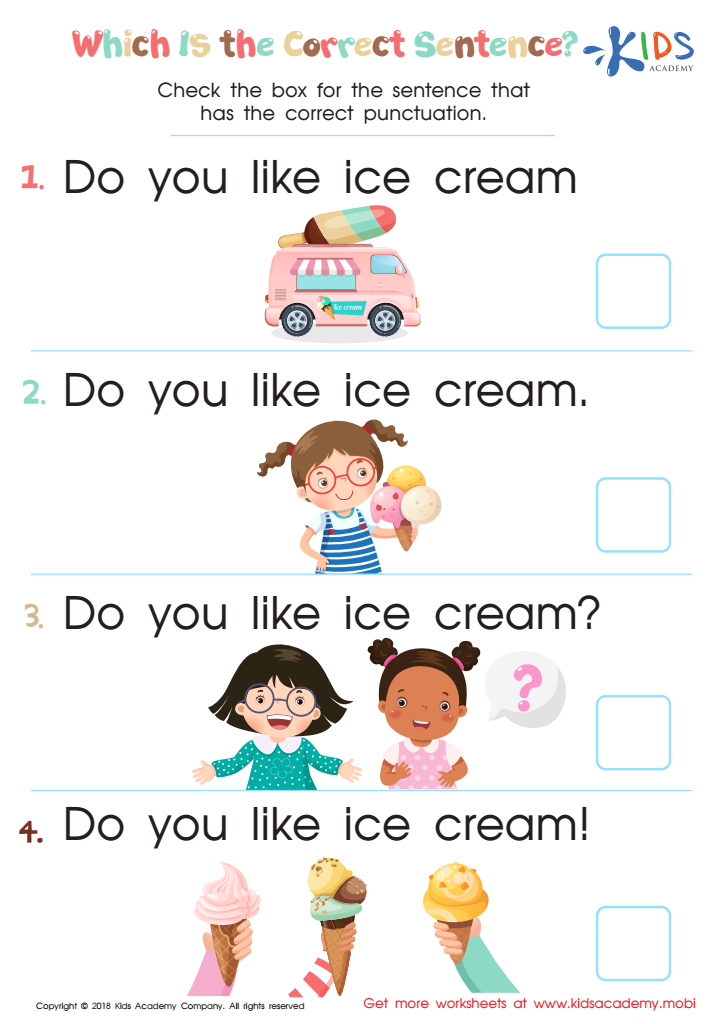
Which is the Correct Sentence? Worksheet
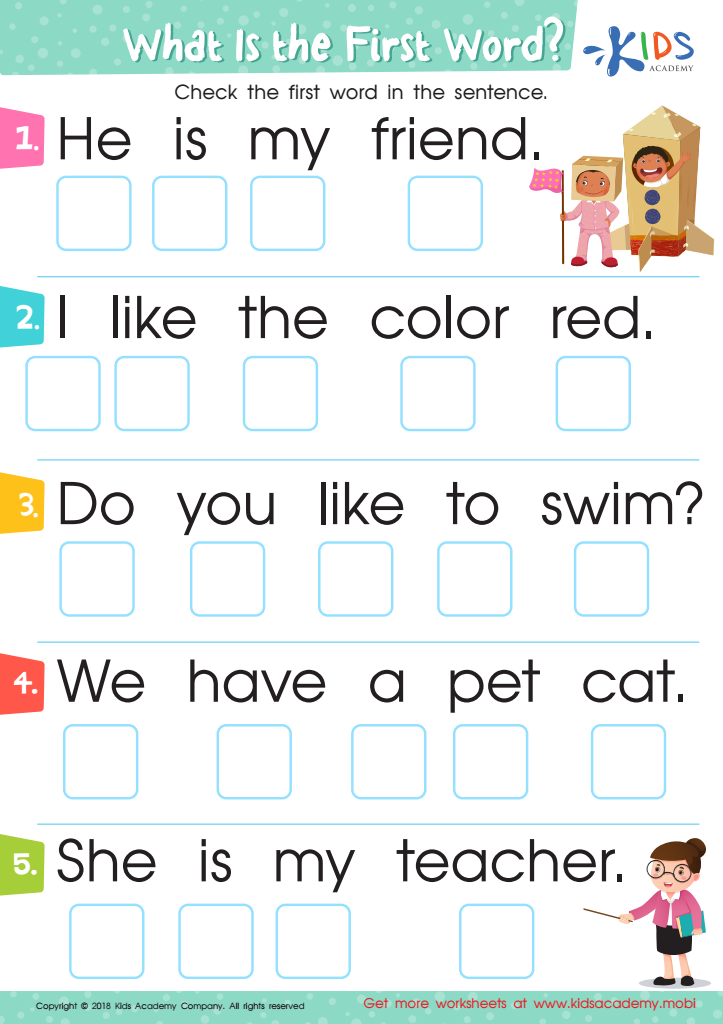
What is the First Word? Worksheet
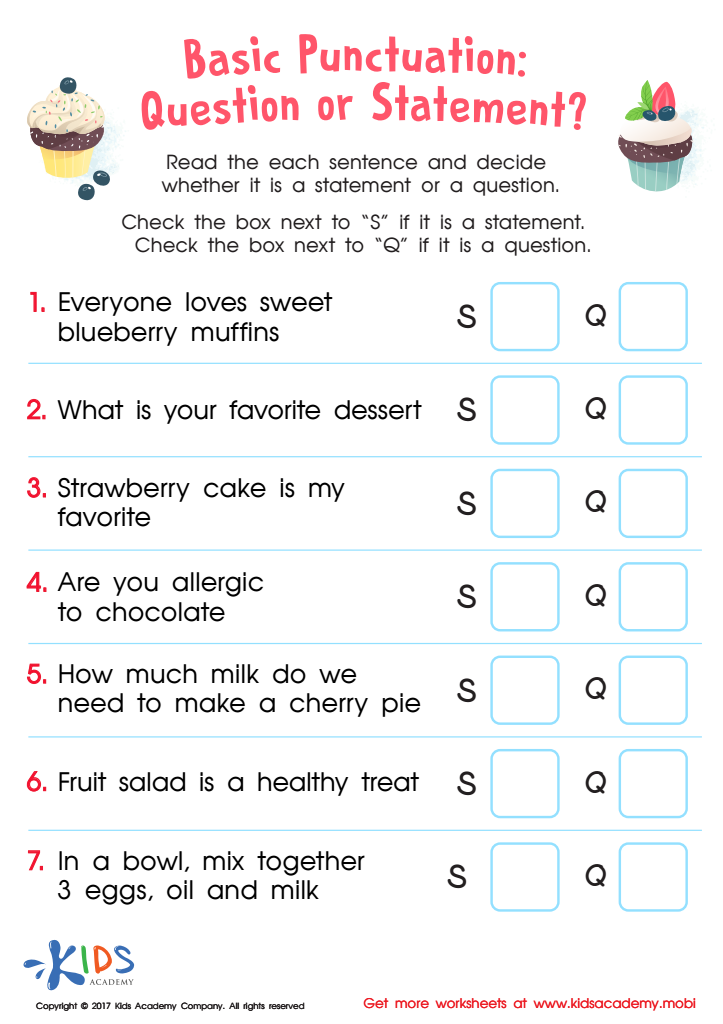
Basic Punctuation: Question or Statement Printable
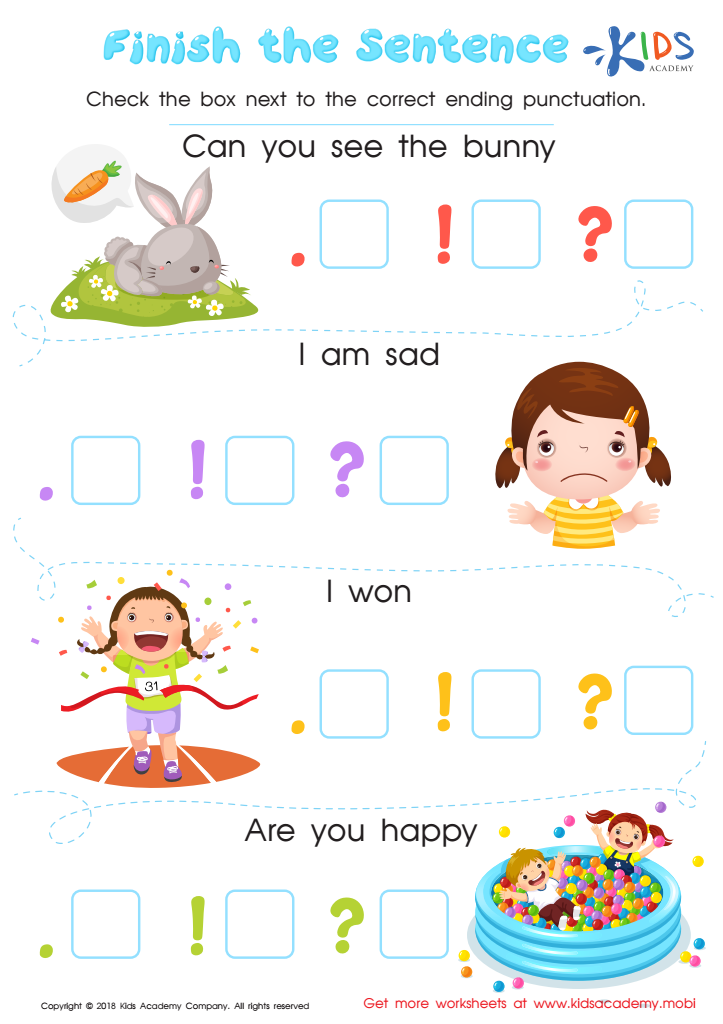
Finish the Sentence Worksheet
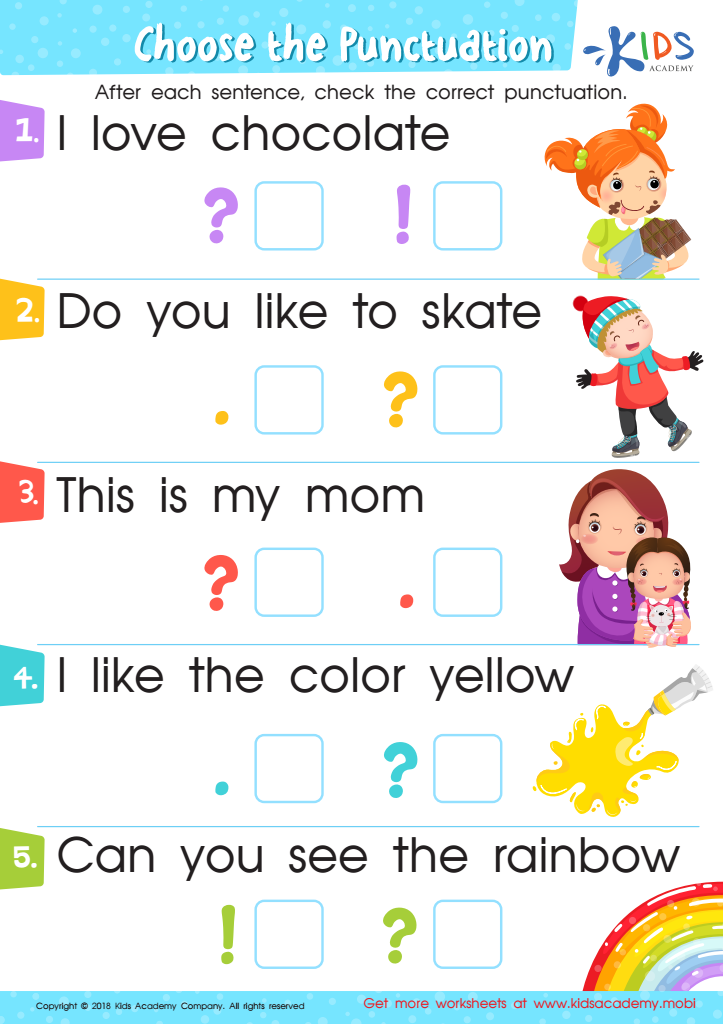
Choose the Punctuation: Assessment Worksheet








Parents and teachers should prioritize normal punctuation for children ages 3-7 because it lays the foundation for effective communication and reading comprehension. At this developmental stage, children are starting to grasp the basics of language and are eager to express themselves. Introducing them to punctuation marks like periods, question marks, and exclamation points helps children understand how sentences function and conveys meaning. For instance, a period signals the end of a thought, while a question mark prompts curiosity.
Additionally, familiarizing young learners with punctuation enhances their reading skills. As they encounter these marks in stories and books, they begin to make connections between written language and spoken language, improving their overall fluency and comprehension. Correct punctuation also fosters better writing habits. Encouraging kids to use punctuation when they form sentences helps them organize their thoughts and develop clearer ideas.
Moreover, developing punctuation skills supports social skills like listening and speaking. It teaches children to pause and reflect during discussions, promoting respectful communication. In summary, by cultivating an understanding of normal punctuation, parents and teachers empower young children to become confident communicators, supportive readers, and aspiring writers, setting the stage for future academic success.