Categorizing animals Normal Worksheets for Ages 3-8
3 filtered results
-
From - To
Explore our engaging "Categorizing Animals Normal Worksheets" designed for children ages 3-8! These worksheets provide a fun and interactive way for young learners to develop their categorization skills by sorting animals into various groups. Perfect for preschool and early elementary students, our materials encourage critical thinking and enhance vocabulary as children learn to identify and classify animals by their characteristics, habitats, and classifications. With colorful images and simple instructions, these worksheets make learning enjoyable and effective. Help your child discover the exciting world of animals and boost their understanding of science concepts with these educational resources. Get started today!
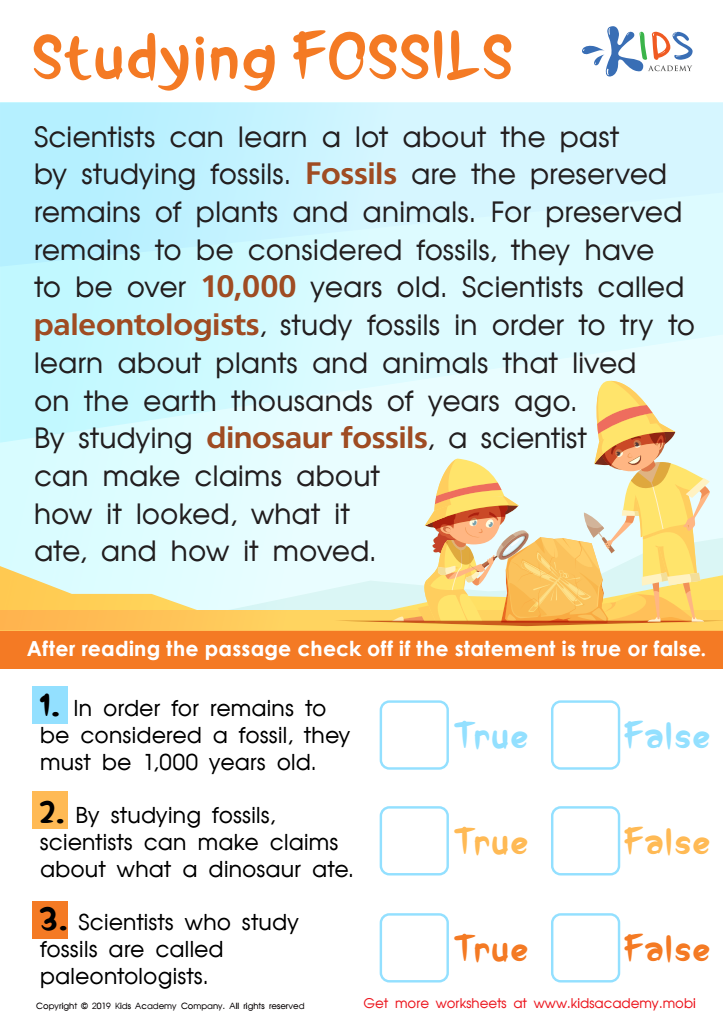
Studying Fossils Worksheet
 Assign to My Students
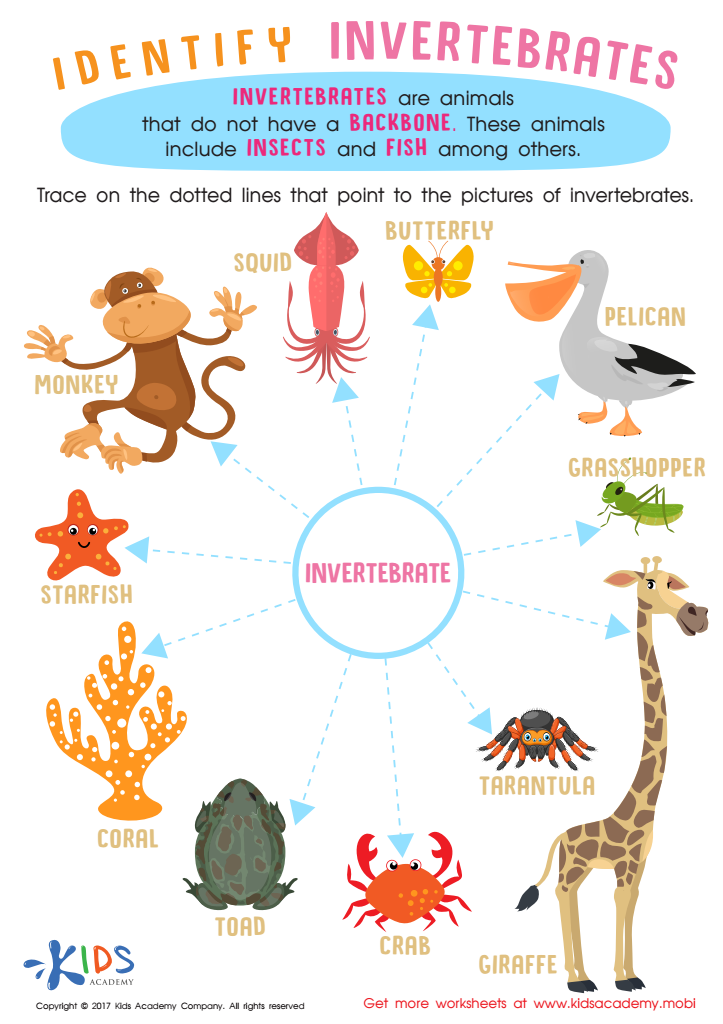
Invertebrates Worksheet for Grade 3
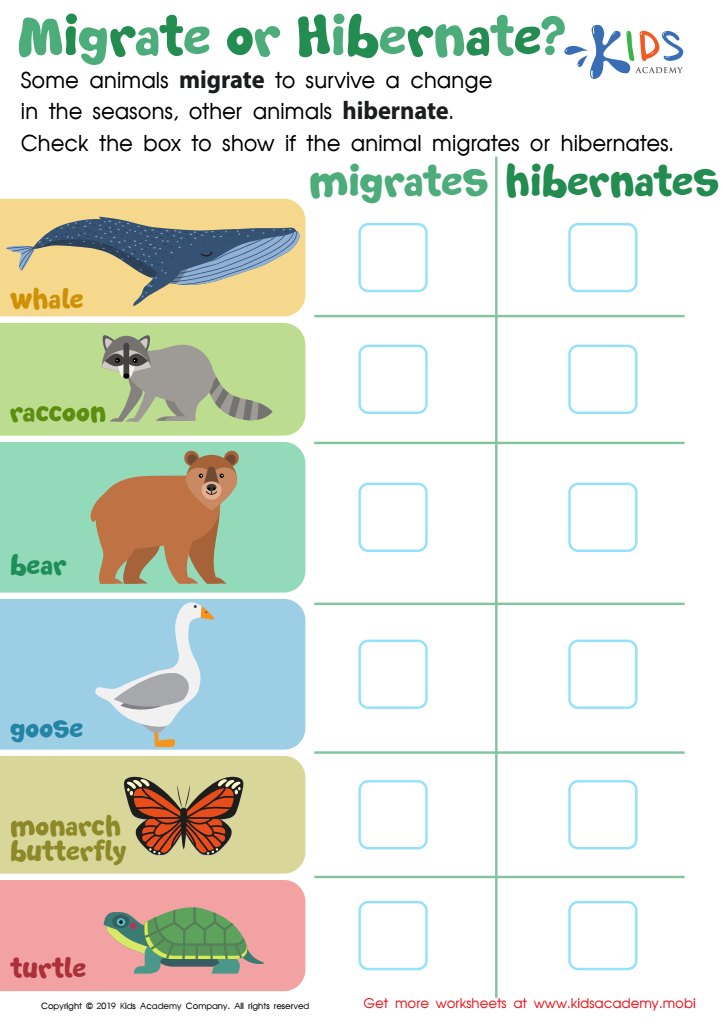
Migrate or Hibernate? Worksheet






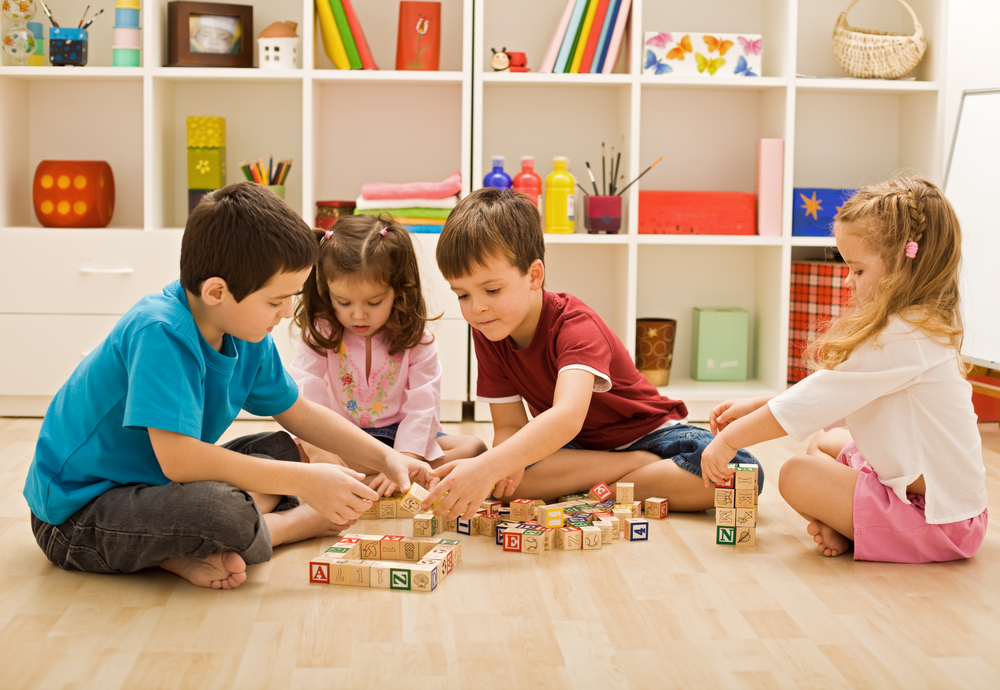
Categorizing animals is essential for children aged 3-8 as it lays a foundational understanding of the natural world, fostering curiosity and critical thinking. This activity encourages observational skills as children learn to identify and differentiate between various species based on characteristics such as appearance, habitat, and diet. For both educators and parents, engaging kids in categorization provides an opportunity to introduce rudimentary scientific concepts like classification and biodiversity in a fun, accessible manner.
Beyond mere identification, categorizing animals helps children make connections, enhancing their cognitive skills. It supports language development through the introduction of new vocabulary related to animals and their classifications, such as mammals, reptiles, birds, and amphibians. Additionally, understanding animal categories promotes empathy, as children learn about different life forms and the importance of each species within the ecosystem.
Moreover, promoting categorization activities can foster teamwork and communication skills when children work together to group animals, either through play or structured activities. Involving parents in these discussions can enhance bonding time while also encouraging children to explore their environment and appreciate various life forms. Ultimately, introducing the concept of categorizing animals builds a strong, interdisciplinary foundation that complements essential skills essential for lifelong learning.








