Comparing sizes Normal Worksheets for Ages 3-8
3 filtered results
-
From - To
Introduce your little learners to the concept of size comparison with our engaging "Comparing Sizes Normal Worksheets," designed specifically for children ages 3-8. These interactive worksheets support young students in developing crucial early math skills by identifying and comparing objects based on size. Featuring colorful visuals and fun activities, they'll captivate your child’s attention while promoting cognitive and motor skills. From big versus small to long versus short, our worksheets make learning a playful experience. Perfect for home or classroom use, these resources encourage independent learning and boost confidence in mathematical understanding. Explore our collection and watch their skills grow!
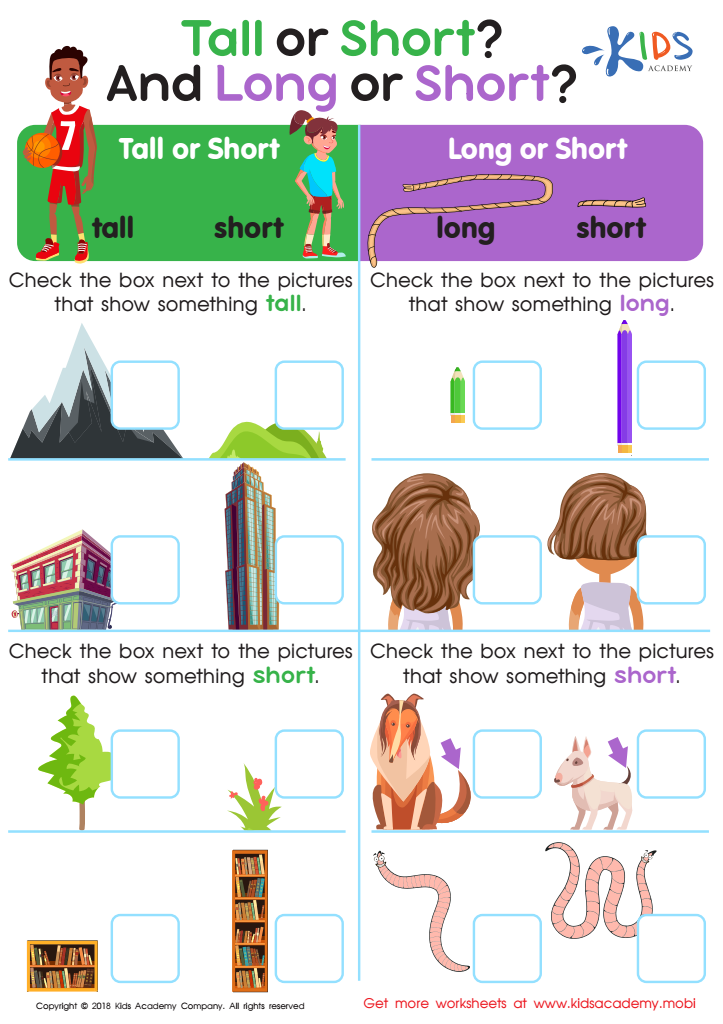
Tall or Short and Long or Short? Worksheet
 Assign to My Students
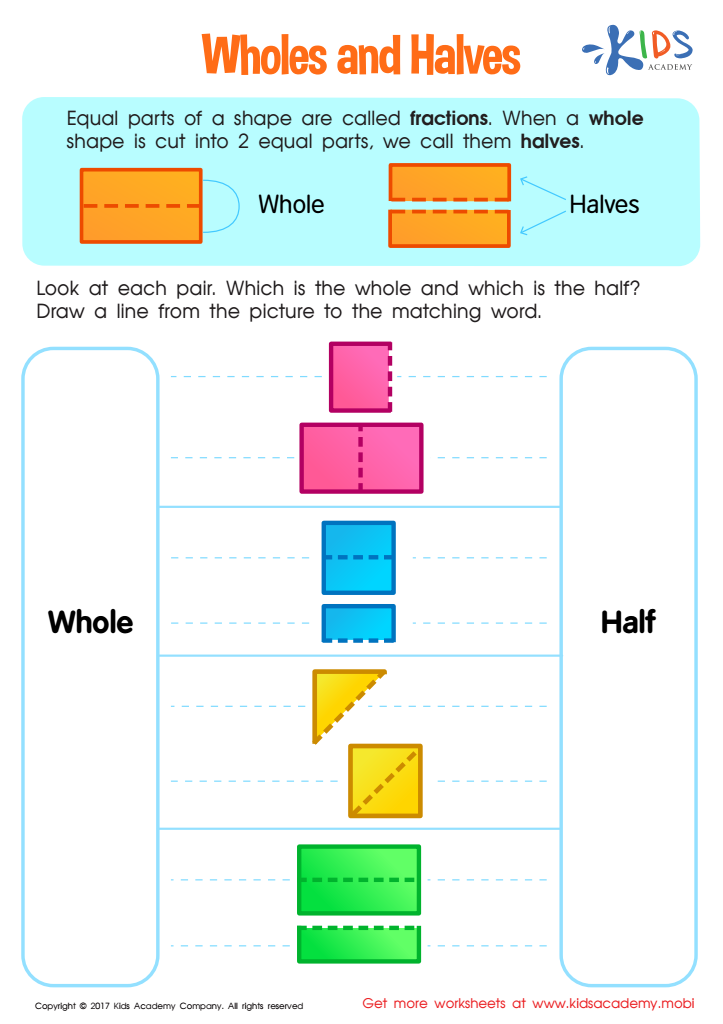
Wholes and Halves Worksheet
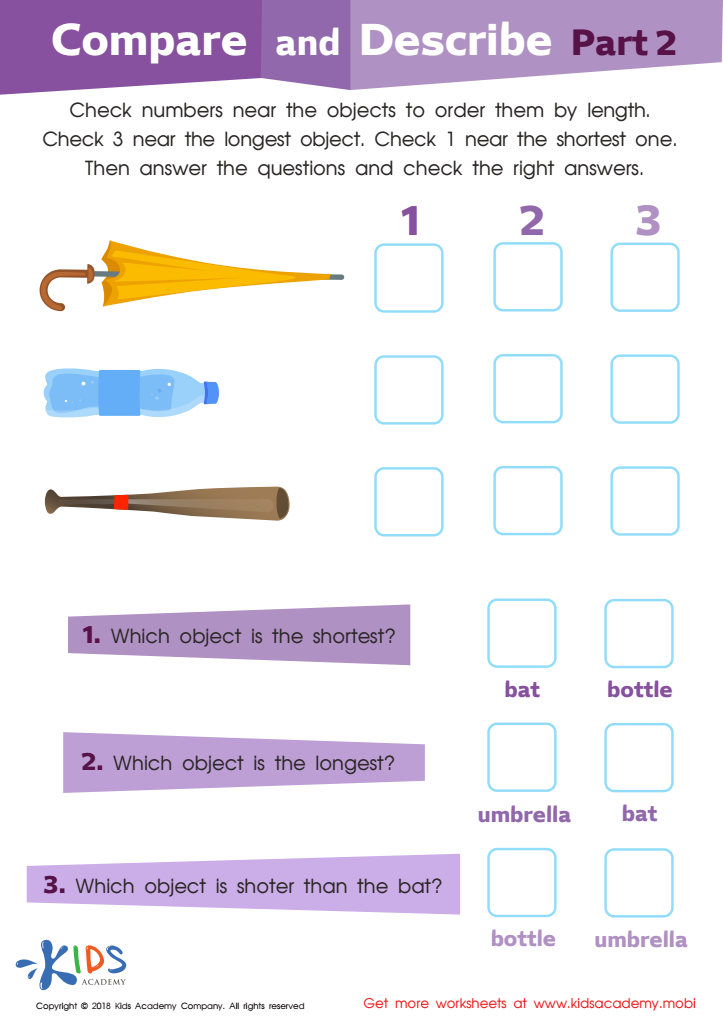
Compare and Describe: Part 2 Worksheet








Understanding and comparing sizes is a fundamental skill for children aged 3-8, crucial for their cognitive development and daily life interactions. Parents and teachers should prioritize this concept because it lays the groundwork for critical thinking and problem-solving abilities. When children learn to compare sizes, they grasp essential mathematical principles, such as measurement and understanding quantities, which are foundational for future math skills.
Additionally, comparing sizes helps develop language and vocabulary as children learn terms like "bigger," "smaller," "taller," and "shorter." This enriches their communication skills, enabling them to express themselves effectively. Moreover, these activities encourage observational skills as children learn to focus on specific attributes and differences in objects, fostering attention to detail.
Socially, comparing sizes can promote collaborative learning through group activities and discussions, which harness peer interactions and encourage teamwork. When children engage in these comparisons, they also learn to take turns and share, enhancing their social skills.
In summary, emphasizing size comparisons in early education nurtures critical foundational skills across multiple domains—cognitive, linguistic, mathematical, and social—ensuring healthy developmental progress and preparing them for future learning challenges.








