Decision making Normal Worksheets for Ages 3-8
3 filtered results
-
From - To
Kids Academy presents "Decision Making Worksheets for Ages 3-8," designed to cultivate critical thinking in young learners. These engaging activities empower children to make choices and understand consequences through fun exercises tailored to their developmental stage. From simple selections to more complex scenarios, each worksheet encourages kids to weigh options and practice good decision-making. Perfect for parents and educators, our resources support cognitive growth, fostering independence and confidence. Enhance your child's problem-solving skills and guide them towards making thoughtful decisions with our expertly crafted worksheets. Accessible and practical, these tools make learning an enjoyable journey.
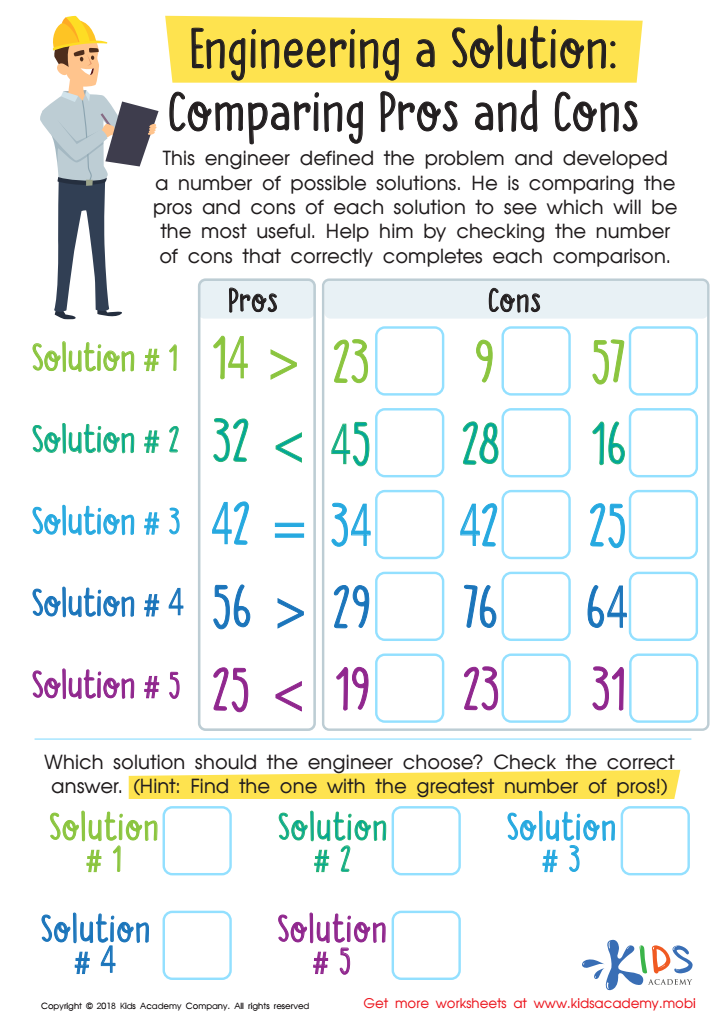
Engineering a Solution: Comparing Pros and Cons Worksheet
 Assign to My Students
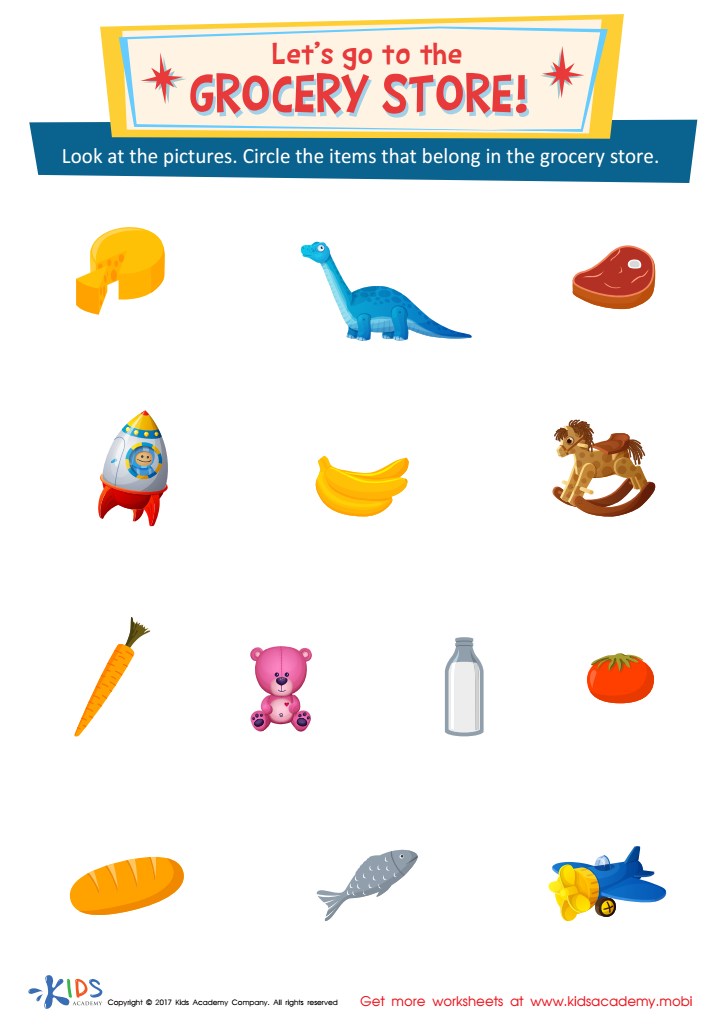
Grocery Store Worksheet
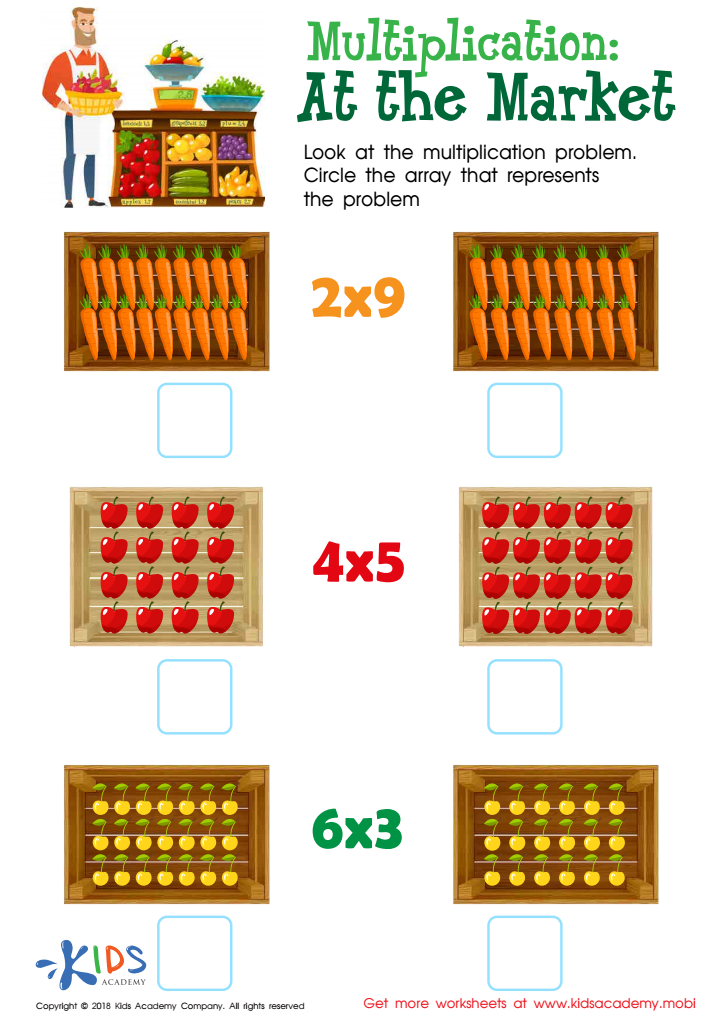
At the Market Worksheet








Parents and teachers should prioritize decision-making skills in young children aged 3-8 because these formative years are crucial for cognitive and social development. Teaching decision-making fosters independence, boosts self-confidence, and enhances problem-solving abilities. Children who learn to make choices early are better equipped to navigate challenges and adapt to change.
At this age, children are naturally curious and open to learning new concepts. Introducing them to decision-making helps them understand the cause-and-effect relationship, which is fundamental for critical thinking. It encourages them to think ahead, weigh options, and consider potential outcomes. Moreover, decision-making teaches responsibility, as children learn to own the consequences of their choices—both positive and negative.
In a classroom setting, these skills pave the way for better academic performance. Children become more engaged in learning and are less likely to be disruptive when they feel a sense of ownership over their actions. For parents, nurturing decision-making at home helps children develop respect for rules and boundaries, making everyday routines smoother.
Ultimately, teaching decision-making from an early age lays the foundation for a child's future success, enabling them to grow into thoughtful, autonomous, and capable individuals. Investing in this crucial skill benefits not only the child but also the broader community.








